
Choosing a hotel furniture manufacturer is not a search for the longest factory profile or the lowest first quotation. It is a controlled decision about whether one manufacturer can translate the current design into approved, repeatable furniture for the required rooms, public areas, programme and destination.
A sound selection uses two stages: first screen the manufacturer’s evidence against the project brief; then release the preferred candidate only after drawings, materials and a representative sample have passed agreed gates. Keep mandatory risks outside the weighted score. A strong average must never cancel an unresolved compliance, capacity, sample or contracting problem.
Begin with a manufacturer-fit brief
Before comparing companies, convert the project into a short manufacturer-fit brief. This keeps the evaluation about the actual work rather than generic hospitality experience. Include the furniture schedule by room or area, quantities, current drawings, key materials and finishes, destination market, required approval route, installation boundary and milestone dates. Mark every missing input as an open decision.
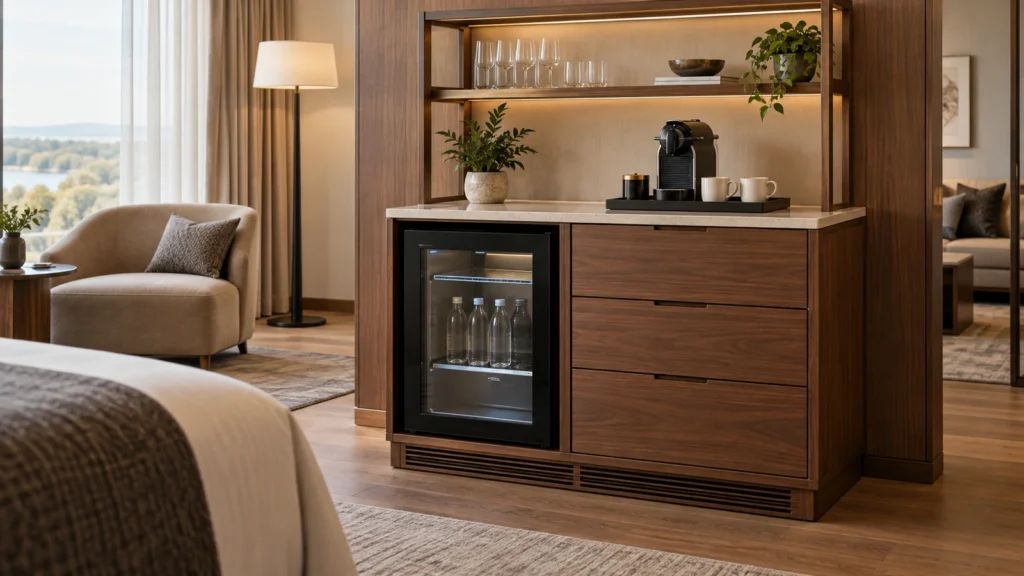
Then classify the manufacturing challenge. A guestroom package may combine beds, headboards, wardrobes, desks and upholstered seating. A lobby can add sculptural pieces, stone, metal and complex upholstery. Fixed furniture introduces site interfaces and tolerances that loose-furniture experience alone may not prove. Gainwell’s product directory illustrates why category coverage should be reviewed by space and system, not reduced to a single “hotel furniture” label.
| Project input | Capability to test | Useful evidence |
|---|---|---|
| Furniture schedule and quantities | Relevant category mix and repeatable production | Comparable scope, proposed production route and capacity plan |
| Design drawings and interfaces | Shop-drawing and engineering depth | Redacted drawing workflow, query log and approval responsibilities |
| Materials and finishes | Mixed-material coordination and control | Material schedule, finish samples and approved reference method |
| Destination requirements | Applicable testing, documentation and packing | Project-specific compliance matrix and packaging proposal |
| Programme and site phases | Capacity, sequencing and change control | Milestone plan, bottleneck assumptions and escalation route |
Ask for evidence, not adjectives
“Experienced,” “custom,” “high quality” and “large capacity” are prompts for questions, not selection evidence. Turn each claim into a request that can be inspected and connected to the proposed factory, scope and date.
| Claim to test | Request this evidence | Warning sign |
|---|---|---|
| Relevant hotel experience | References with a comparable furniture mix, quantity range and approval complexity | Only brand logos or unrelated residential work |
| Engineering capability | Example shop drawings, coordination questions, revision control and named technical roles | Drawings are treated as sales illustrations |
| Production capacity | Proposed production location, current load assumptions, critical processes and contingency path | A monthly headline with no connection to the live programme |
| Quality control | Incoming, in-process, first-piece and final inspection records tied to approved references | A certificate is presented as proof that every item will conform |
| Delivery readiness | Item coding, packaging basis, release record and responsibility at handover | “Export experience” without a project-specific release method |
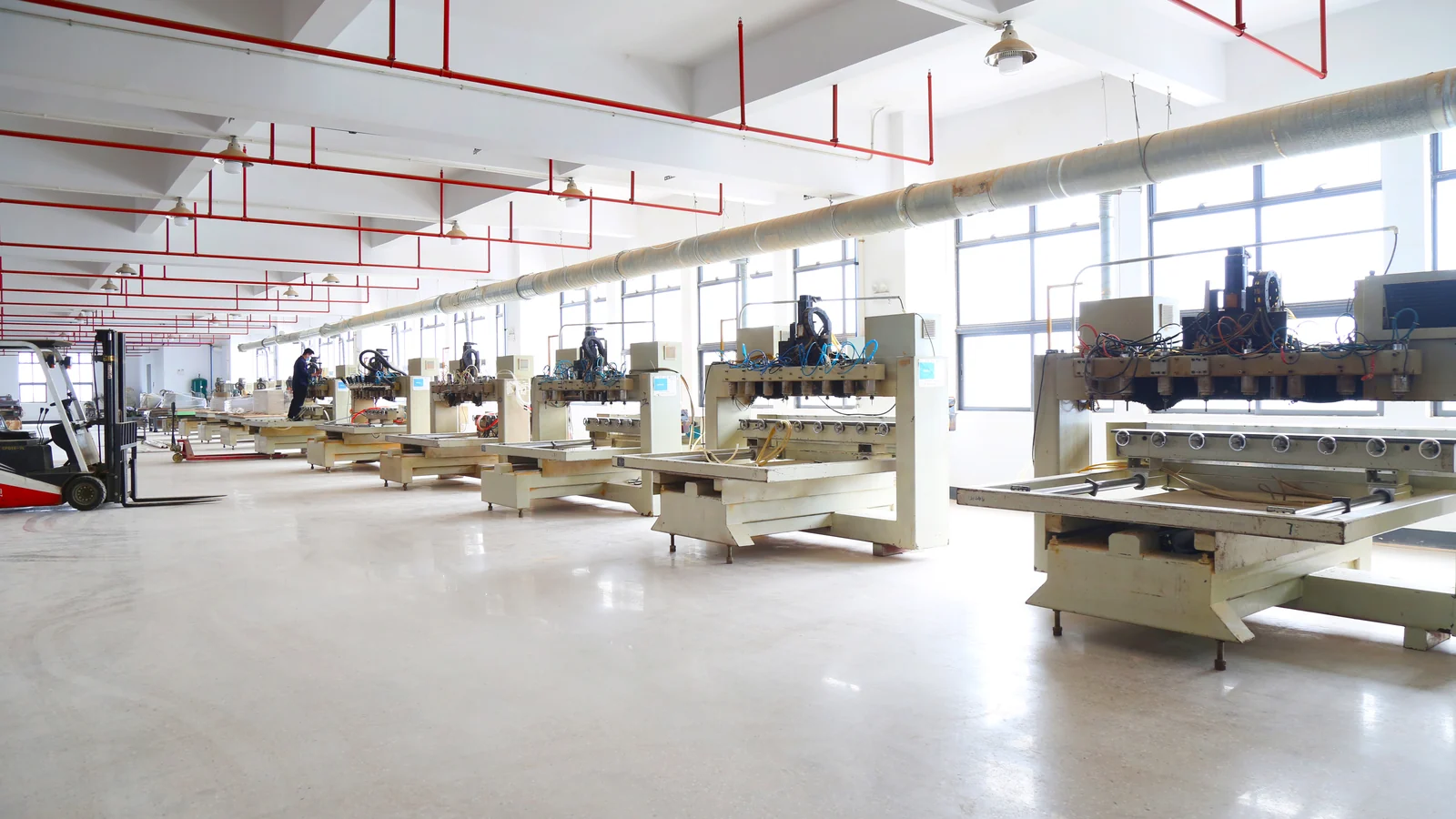
Gainwell’s current capabilities page publishes a connected workflow covering technical development, prototypes, manufacturing, quality control and delivery support. It also states the important limit: production location, tests, capacity, programme and delivery responsibilities must be reconfirmed for the live project. Apply that same evidence boundary to every manufacturer on the shortlist.
Verify technical development before judging capacity
Capacity is useful only after the product is buildable. Ask who converts design intent into dimensions, sections, fixing methods, material transitions, hardware direction and production details. Establish how queries are recorded, who can approve a change and which revision becomes the production baseline.
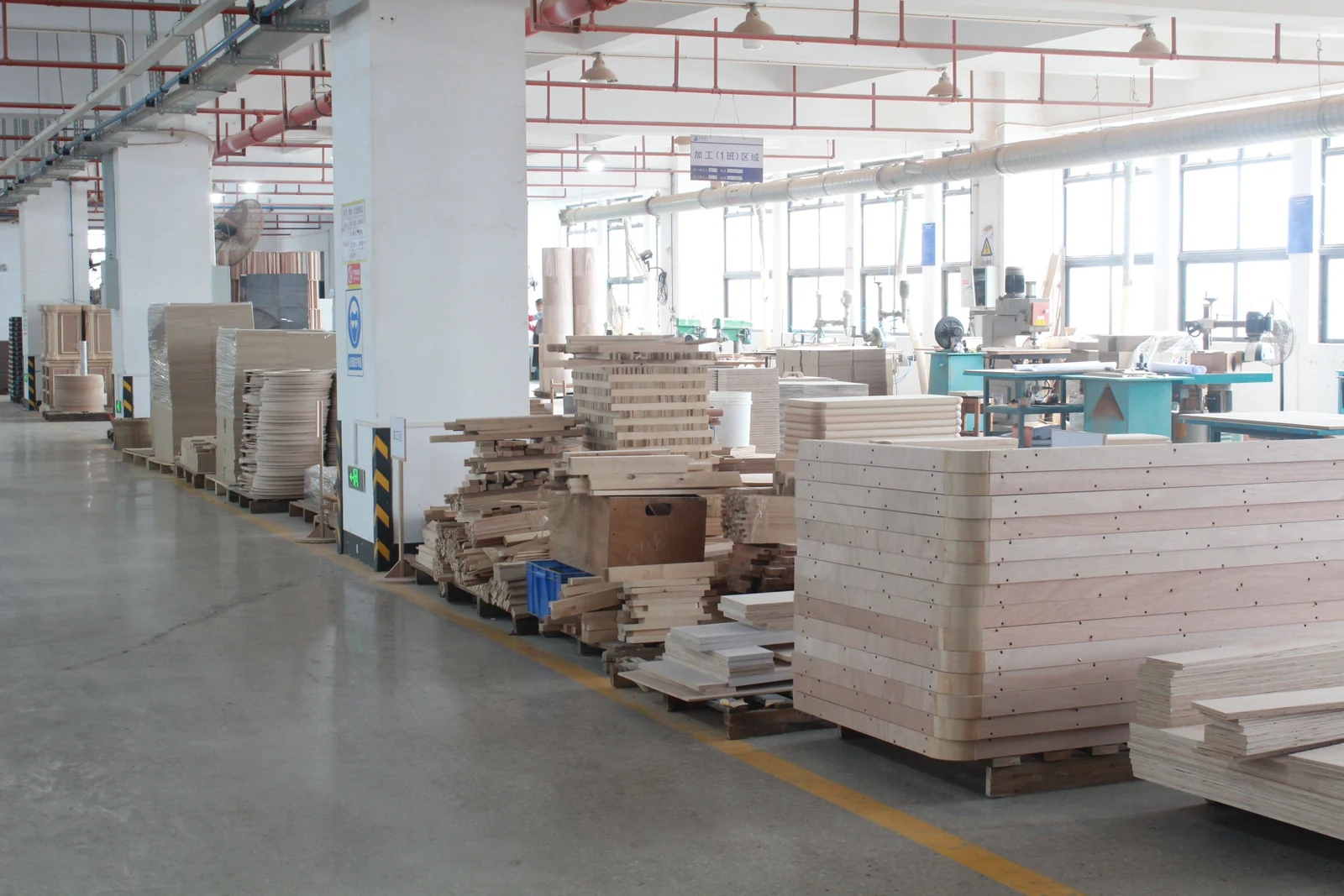
A manufacturer may be capable in one material or category but dependent on partners for another. That is not automatically a problem. The buyer needs visibility: which work is performed at the proposed facility, which work is subcontracted, how incoming work is inspected and who owns the combined result. A factory tour—physical or live virtual—should follow the proposed process path, not only the cleanest showroom route.
Make the sample a release gate
A polished sample is not the end of evaluation. It is the physical bridge between drawings, material references and repeatable production. Define in advance what the sample must resolve: dimensions, proportion, comfort, construction, service access, hardware, visible surfaces, finish, upholstery and interfaces with adjacent work.
Use one controlled comment record. Each observation should have an owner, decision, due date and revised status. If the manufacturer changes an internal construction detail, material, hardware item or finish process after approval, the change route should state whether a new sample, partial mock-up or documented approval is required.
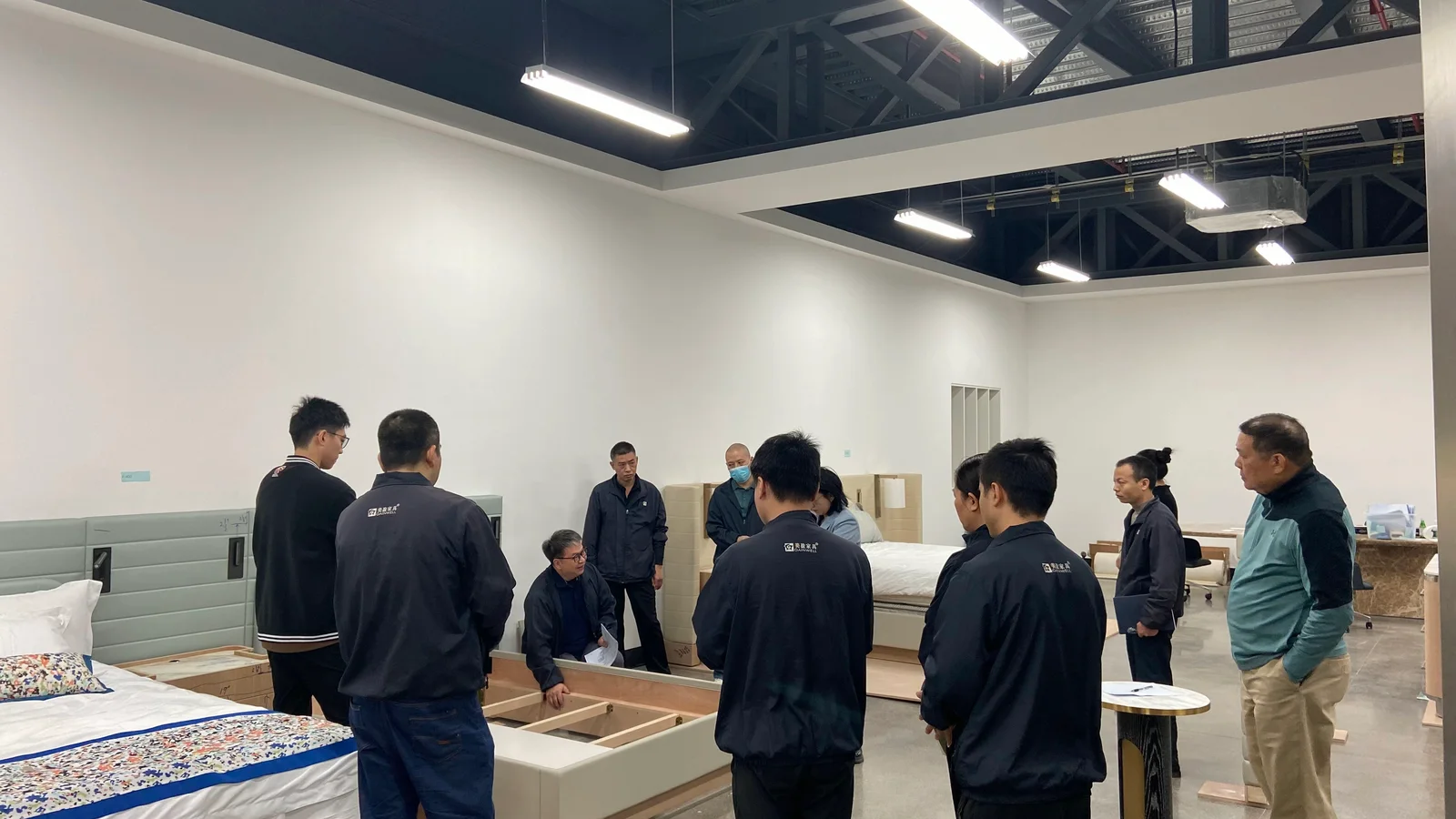
Do not authorize full production because the room looks generally correct. Release only when the signed drawings, finish references, hardware schedule, approved comments and sample status agree. Any accepted exception should be explicit rather than hidden in meeting notes.
Test whether the approved standard can repeat
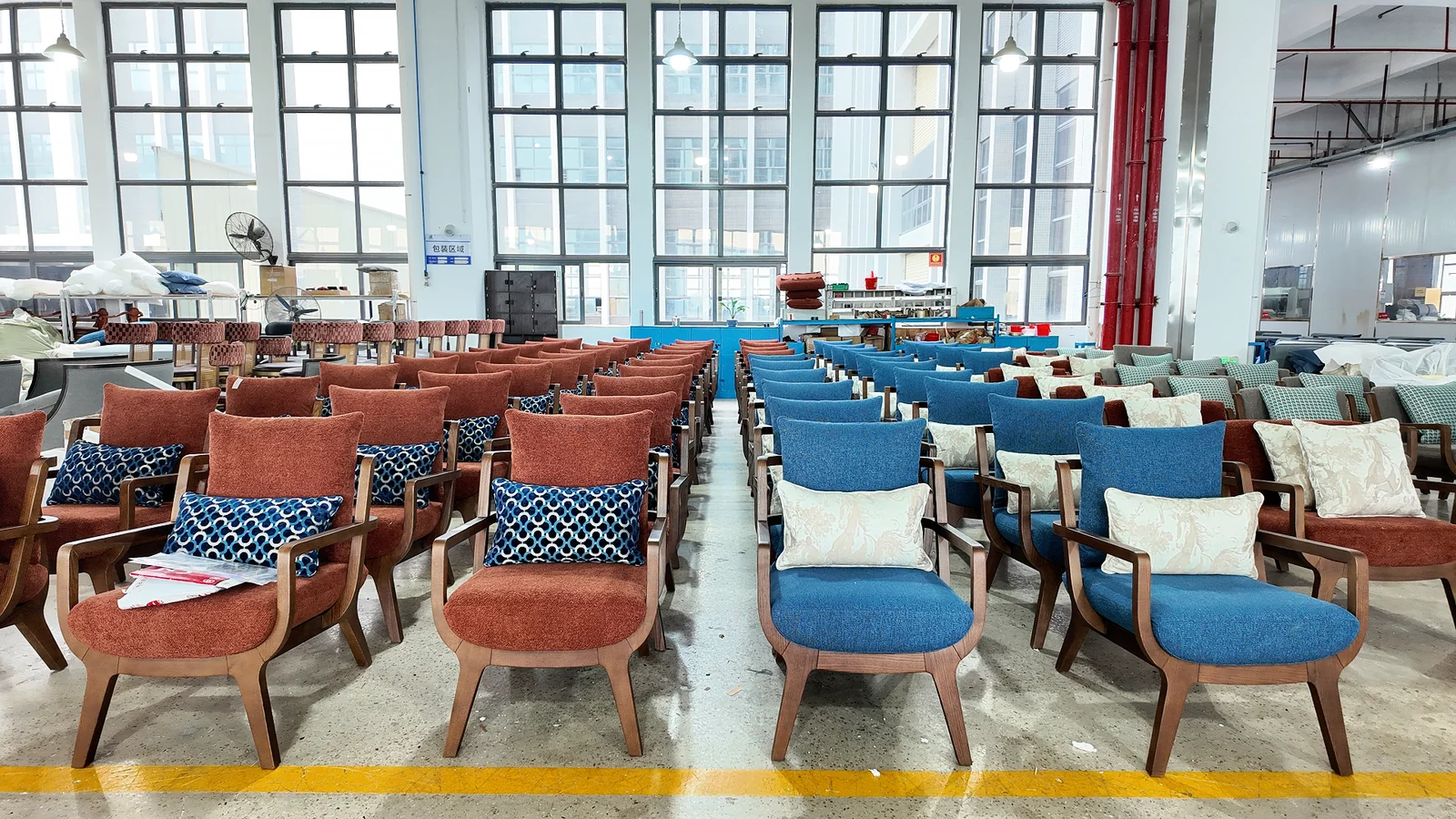
The selection decision must cover the gap between one approved sample and a production batch. Ask how the manufacturer controls incoming materials, first pieces, critical process stages, finish references, final inspection and nonconforming work. The useful question is not “Do you have QC?” but “What record shows that this item, revision and batch were compared with the approved standard?”
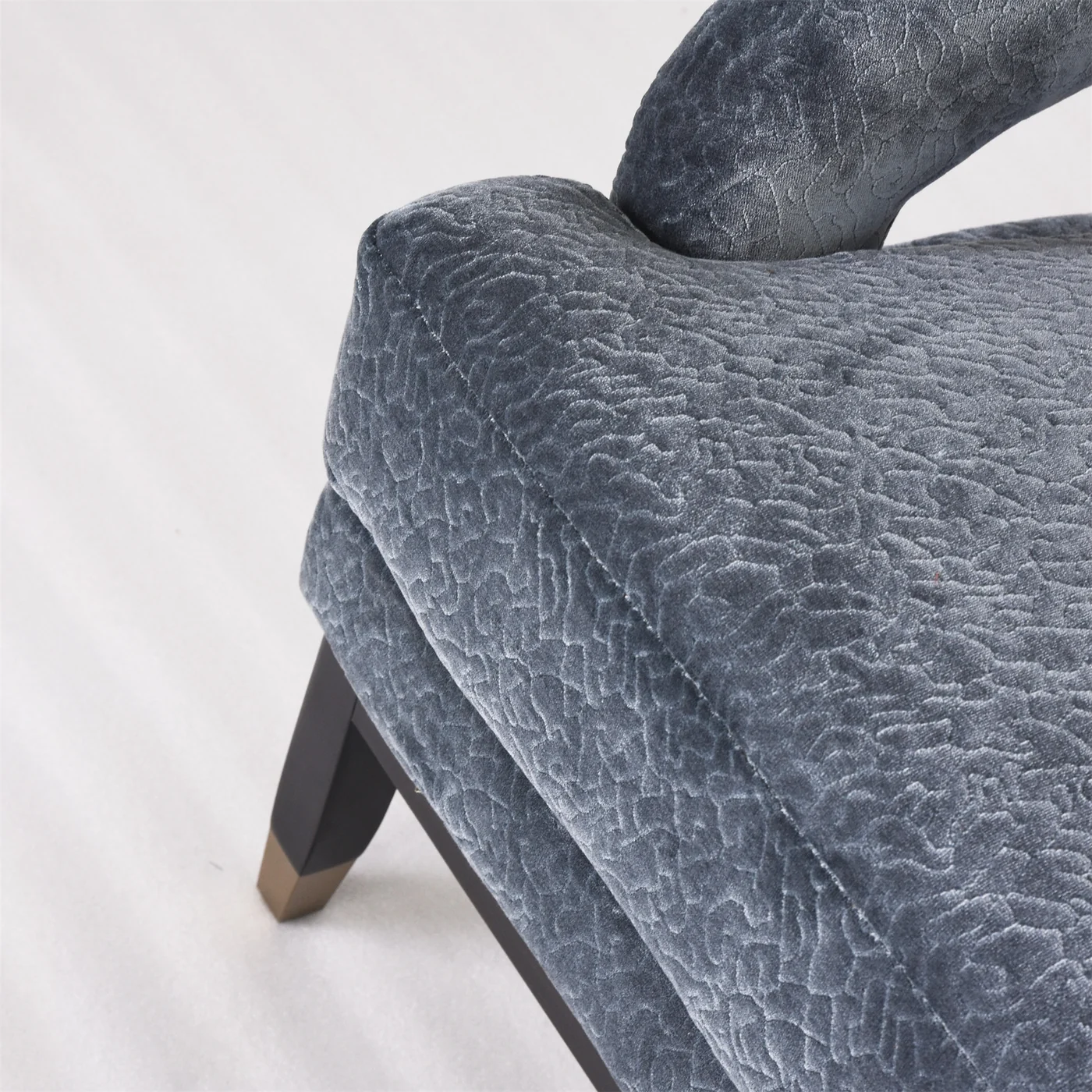
Inspect the high-risk details that matter for the real furniture. On upholstery, this may include seam position, pattern direction, cover transitions, foam and comfort references, and exposed feet. On casegoods, it may include substrate preparation, veneer or finish matching, edges, hardware alignment and interfaces. Requirements and test methods must come from the current project specification and destination rules, not from generic internet thresholds.
If a manufacturer presents ISO 9001 evidence, check the certificate’s issuing body, covered entity, site, scope and validity. The International Organization for Standardization describes ISO 9001 as a quality-management-system standard and explains that certification is performed by independent certification bodies, not ISO itself. A valid, relevant certificate can support due diligence; it does not replace product specifications, samples, inspections or project acceptance.
Normalize the commercial comparison
Do not score quotations until bidders are pricing the same scope. Align quantities, revisions, materials, finish assumptions, hardware, samples, testing, packaging, delivery basis, installation support, spares, warranty terms, exclusions and currency conditions. Record allowances and unresolved inputs separately.
This is where manufacturer selection meets—but does not duplicate—the full procurement process. Gainwell’s hotel furniture procurement guide covers scope freeze, quotation comparison, approvals and shipment release. Here, the narrower question is whether the manufacturer’s proposed commercial basis confirms or weakens the evidence gathered during the shortlist.
A cheaper unit price may depend on a different substrate, fewer samples, excluded tests, weaker packaging, an incomplete hardware scope or a delivery point that moves work to the buyer. Ask every bidder to return a deviation schedule. Silence should not be treated as compliance.
Use a scorecard with a red-flag override
A weighted scorecard helps a team compare evidence consistently. A practical starting allocation might cover technical development, relevant manufacturing fit, sample performance, repeatability controls, programme credibility, commercial clarity and project communication. The weights should reflect the live project rather than a universal formula.
However, keep mandatory gates outside the arithmetic. Use a red-flag override: if any critical condition remains unresolved, the candidate cannot be appointed regardless of its total score. Typical override conditions include:
- the contracting entity or proposed production site is unclear;
- a required destination test, certificate or document cannot be confirmed for the exact scope;
- the representative sample has an unresolved safety, function, construction or interface issue;
- the programme relies on capacity or subcontracting that the candidate cannot evidence;
- a material deviation is hidden, unpriced or awaiting an unnamed approval;
- the manufacturer will not accept a controlled drawing, sample, inspection and change record.
This rule prevents a common decision error: averaging away a risk that can stop production, approval, delivery or use. The score ranks acceptable candidates; the override determines whether a candidate is acceptable at all.
Make the appointment conditional on a controlled baseline
End the evaluation with one of three outcomes. SHORTLIST means the evidence supports progression to a sample or commercial clarification. SHORTLIST WITH CONDITIONS means named evidence must close by a defined date and approval authority. DO NOT PROGRESS means a mandatory gate is open or the submitted evidence does not match the project.
Before appointment, assemble the controlled baseline: scope and quantities, issued drawings, material and finish references, approved sample status, deviation schedule, test and inspection plan, production location, programme, packaging basis, delivery responsibilities, warranty terms and change authority. This is also the point to verify current legal, financial, insurance and contractual information through the buyer’s appropriate advisers.
If the team is still discovering where to find potential sources, the separate guide on where hotels buy furniture addresses sourcing routes. Manufacturer selection begins after potential sources exist and converts broad capability claims into a defendable shortlist decision.
Look for a line of evidence from design to destination
The best hotel furniture manufacturers for a particular project are not defined by a universal ranking. They are the candidates whose current evidence matches the required scope and whose controls remain visible from technical review through sample approval, production and handover.
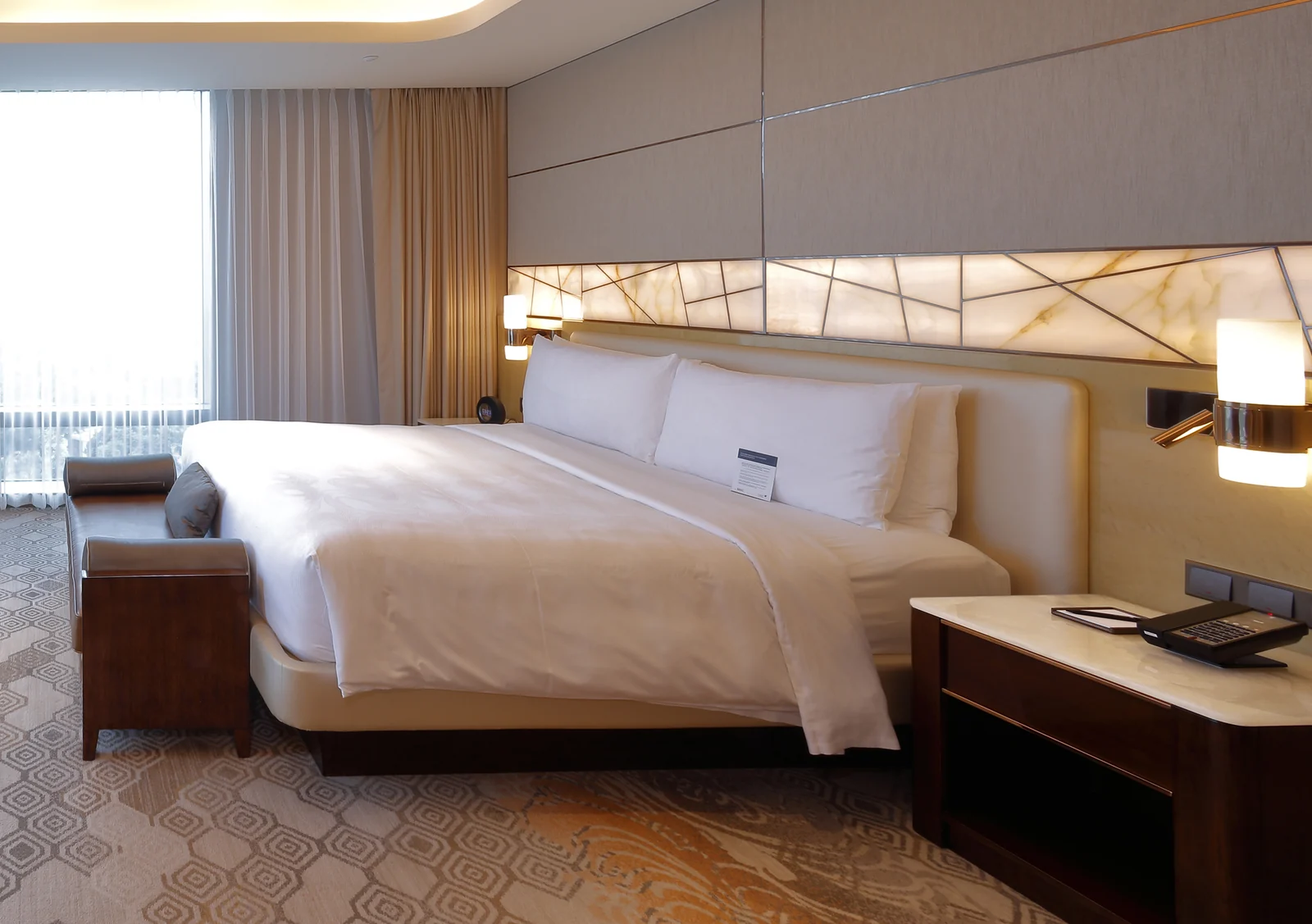
Gainwell states that its workflow connects drawings, mock-ups, mixed-material manufacturing, inspection and project-coded delivery across its hospitality furniture operations. For a project-specific review, share the current furniture schedule, drawings, destination market, approval route and programme through the Gainwell project enquiry. Exact capacity, factory allocation, tests, dates, prices and responsibilities require confirmation against the live scope.
Frequently Asked Questions
What should I look for in a hotel furniture manufacturer?
Look for evidence that matches the actual project: relevant furniture categories, shop-drawing capability, material coordination, representative samples, repeatable production controls, a realistic programme and clear commercial boundaries. Ask which factory and partners will perform the work. Keep any unresolved compliance, sample, capacity or contracting issue outside the weighted score as a mandatory gate.
How do I verify a hotel furniture manufacturer?
Verify the contracting entity, proposed production site, references, technical team, certificates within their stated scope, current workload assumptions and inspection method. Review redacted records and follow the proposed product route during a physical or live virtual factory review. Then test the claims through drawings, finish samples and a representative furniture sample.
Should I choose the hotel furniture manufacturer with the lowest price?
Not until every quotation uses the same scope and assumptions. Normalize quantities, revisions, materials, hardware, samples, tests, packaging, delivery basis, installation support, warranty terms and exclusions. Compare value only after deviations are visible. A low total that depends on missing work or a different specification is not a like-for-like result.
Why is a hotel furniture mock-up important?
A mock-up turns drawings and finish references into a physical approval object. It lets the team review dimensions, proportion, comfort, construction, interfaces and appearance before project quantities are committed. Its value depends on a controlled comment record and a clear rule for carrying the approved standard into production.
Does ISO 9001 certification prove furniture quality?
ISO 9001 addresses an organization’s quality management system. A current certificate relevant to the entity, site and scope can support due diligence, but it does not by itself prove that a specific furniture item meets the project drawings, materials, performance requirements or approved sample. Keep product controls and acceptance evidence separate.
What should be approved before hotel furniture production starts?
Approve the applicable drawings, material and finish references, hardware, representative sample or mock-up status, test and inspection plan, accepted deviations, production location and change authority. Commercially, confirm scope, quantities, programme, packaging, delivery responsibilities, warranty terms and unresolved conditions. Do not release production while a mandatory gate remains open.