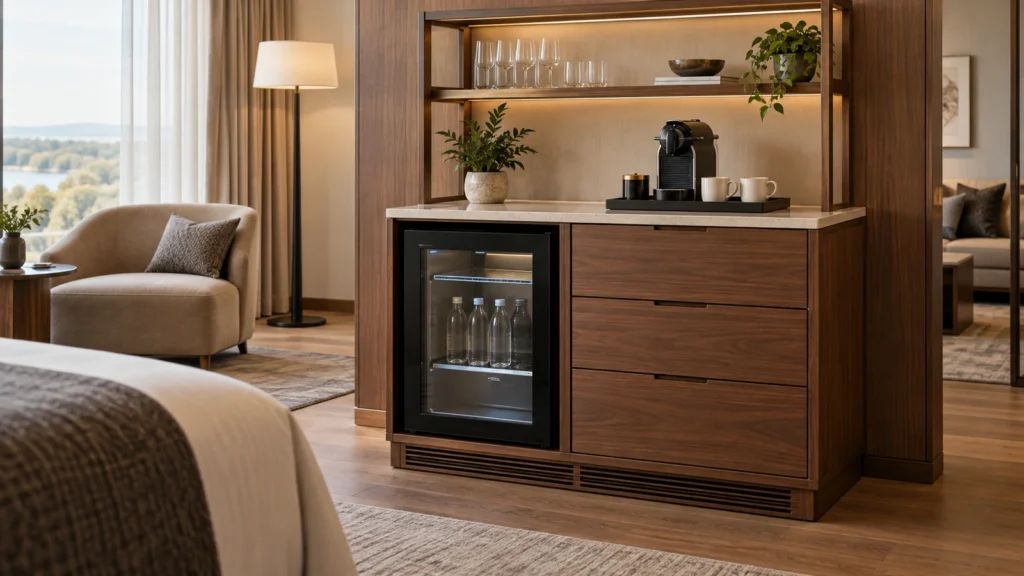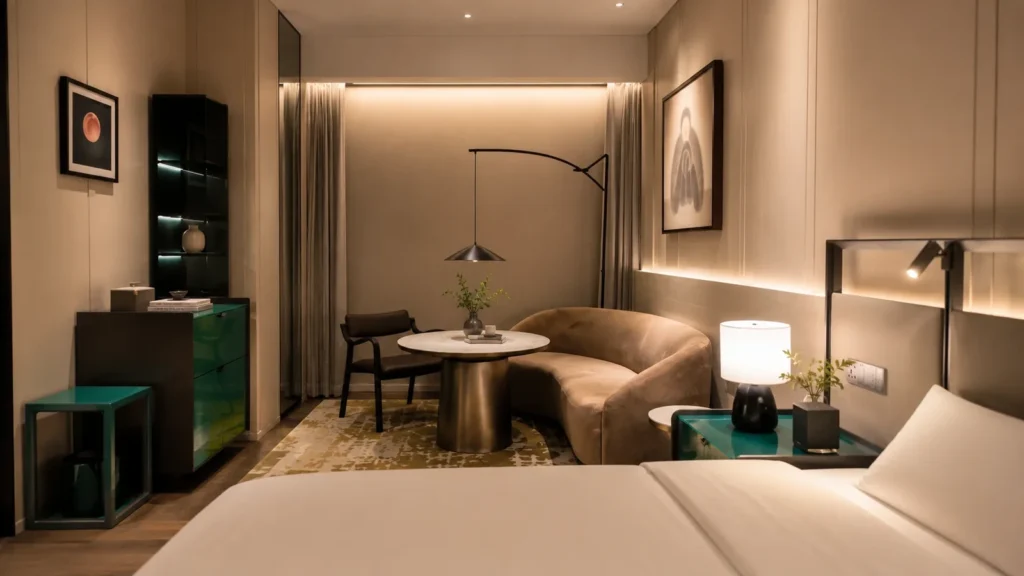

There is no single answer to what furniture a Hilton guestroom takes, because Hilton is not one product. The portfolio spans luxury, lifestyle, full-service, focused-service and extended-stay brands, and the furniture expectation moves substantially across that range. This guide helps owners, franchisees and project teams work out which expectation applies to their property, what the guestroom package contains at that level, which compliance regime governs it, and what changes when a Property Improvement Plan arrives.
Design standards for any branded property are issued by the brand to the owner through its own channels. This guide does not reproduce them. It covers what is publicly established about brand positioning, what commercial-grade construction generally requires at each level, and the regulatory standards that apply regardless of brand.
Start with the brand, not the furniture category
The most common specification error on a branded project is treating "hotel furniture" as one grade. A guestroom desk for a focused-service property and a guestroom desk for a luxury property share a name and very little else — different substrate, different finish system, different hardware, different expected service life.
Before pricing anything, establish which brand within the portfolio the property carries, and whether it is a new build, a conversion or a renewal. Those two facts determine more of the specification than any design preference.
Map the portfolio to furniture expectations
| Portfolio tier | Representative brands | Guestroom furniture profile |
|---|---|---|
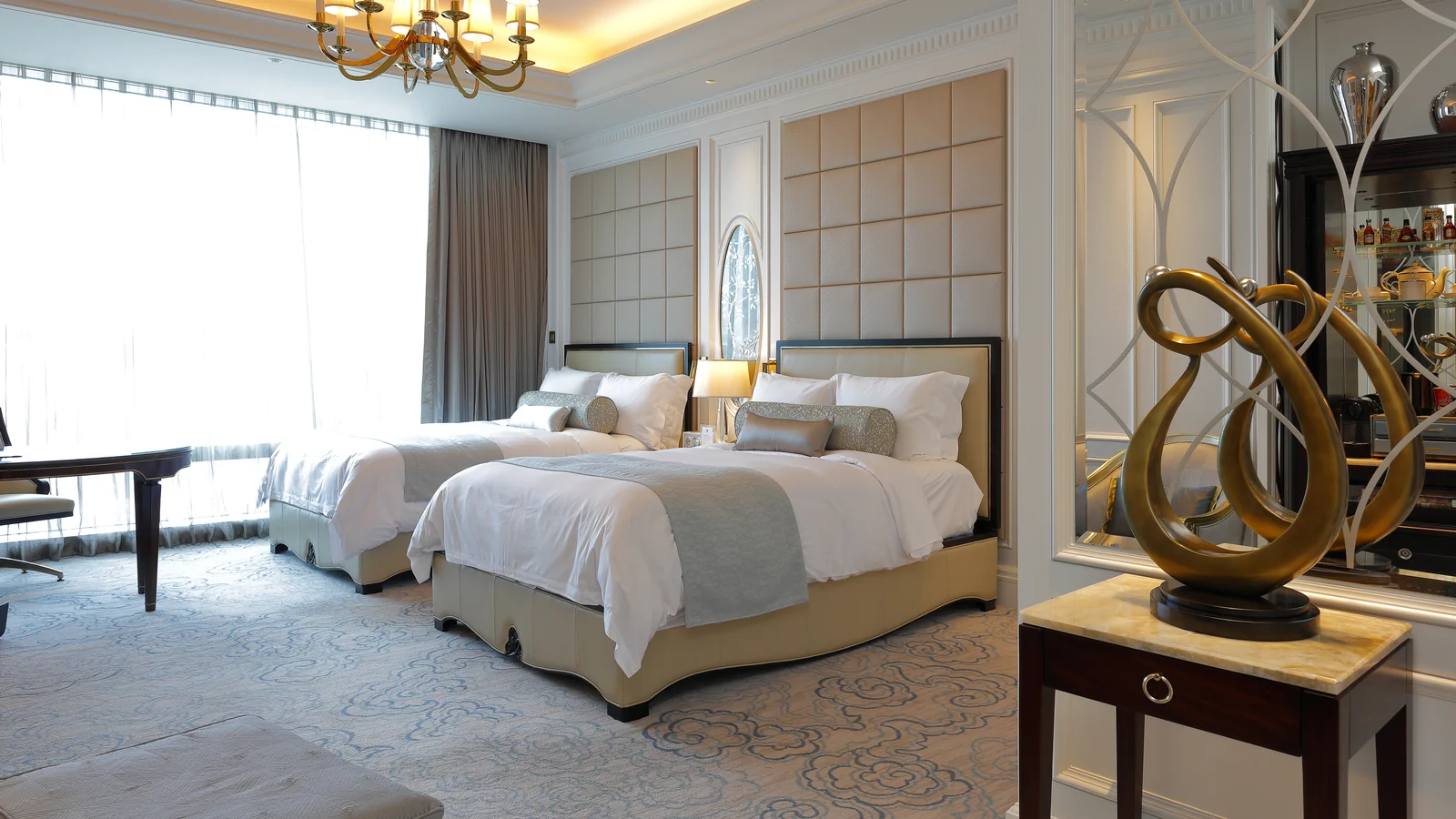
| Luxury | Waldorf Astoria, Conrad, LXR | Bespoke casegoods, mixed materials, stone and metal detailing, high-specification finishes, significant public-area feature work |
| Lifestyle and collection | Curio Collection, Canopy, Tapestry Collection, Motto | Property-specific design intent, custom pieces, greater variation between properties within the same brand |
| Full service | Hilton Hotels & Resorts, DoubleTree, Signia, Embassy Suites | Substantial custom casegood packages built to a consistent program across a large room count |
| Focused service | Hilton Garden Inn, Hampton, Tempo | Standardised, high-durability packages; unit cost and replacement cycle dominate |
| Extended stay | Homewood Suites, Home2 Suites | Kitchenette-adjacent joinery, higher wear tolerance, longer guest dwell time |
Treat this as an orientation to expectation, not as a specification. The controlling document is always the standard issued to the property.
Build the guestroom package list before you price it
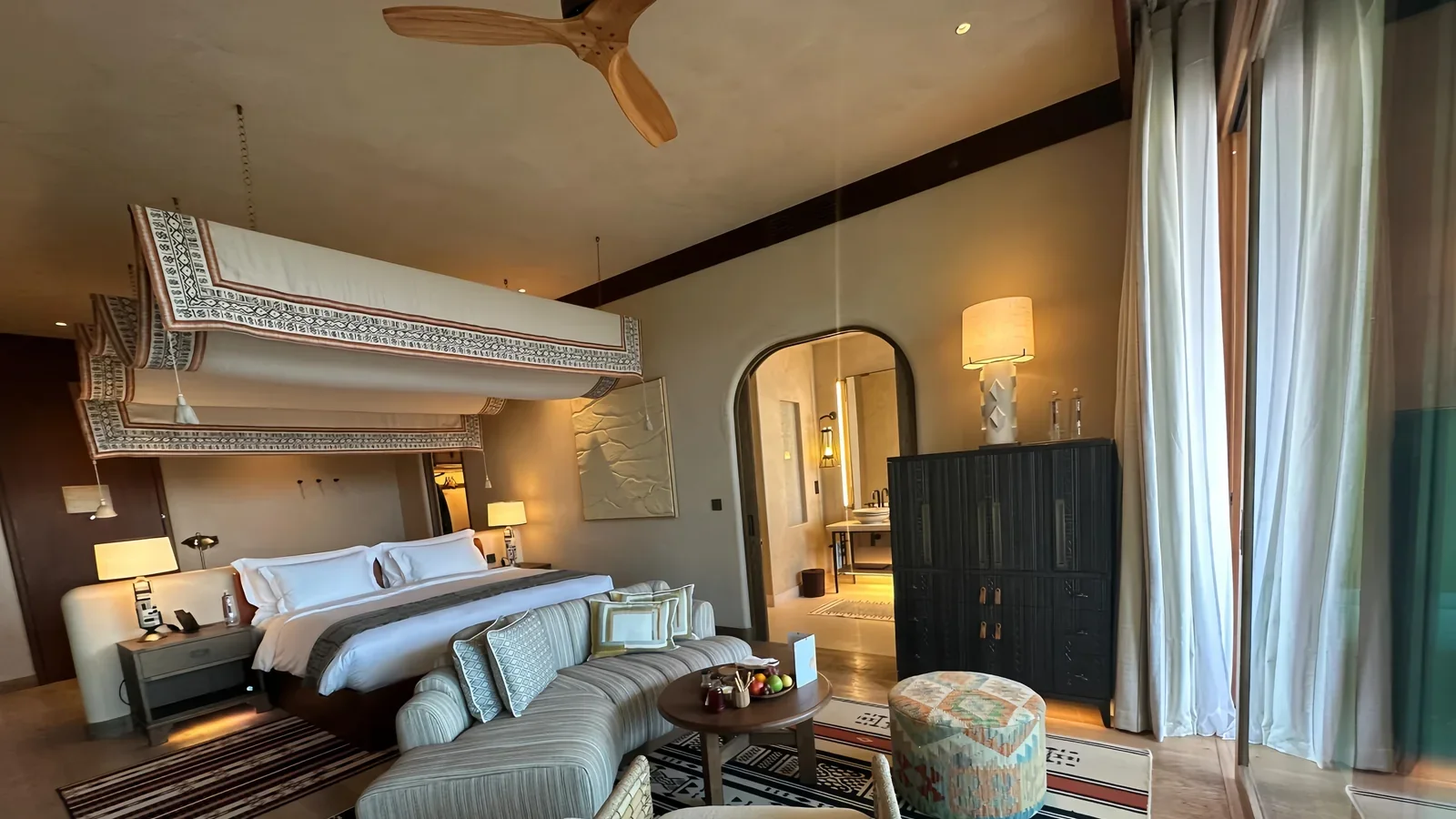
Whatever the tier, price against a written list. Our guide to hotel FF&E scope and responsibilities sets out where the furniture package ends and adjacent scopes begin, which is the boundary most often disputed on branded projects. A quotation that does not state what it includes cannot be compared to another one.
A typical guestroom package contains:
- Bed base and headboard
- Nightstands or floating bedside units
- Desk, work surface or console, with any return
- Wardrobe, or open hanging unit with shelving
- Luggage bench or luggage rack
- Lounge or accent chair, and ottoman where specified
- Media console or television surround

- Minibar or refreshment unit
- Bathroom vanity, where vanity sits in the furniture package rather than millwork
- Mirrors, where these are in the furniture scope
At luxury and lifestyle tiers, add feature and public-area pieces. At focused-service tiers, expect a tighter list with more standardisation between rooms.
Set the performance thresholds the standard assumes
Brand standards define outcomes. The construction that delivers those outcomes is where quotations diverge.
| Element | What to specify | Why it matters at brand level |
|---|---|---|
| Substrate | Type, thickness, density, moisture content range | Determines whether a vanity or luggage bench survives to the next renewal |
| Veneer or laminate | Species, thickness in millimetres, or HPL grade | Thin veneer cannot be refinished at renewal; it must be replaced |
| Hardware | Manufacturer and model for slides, hinges, catches | The most frequent silent substitution, and the most common early failure |
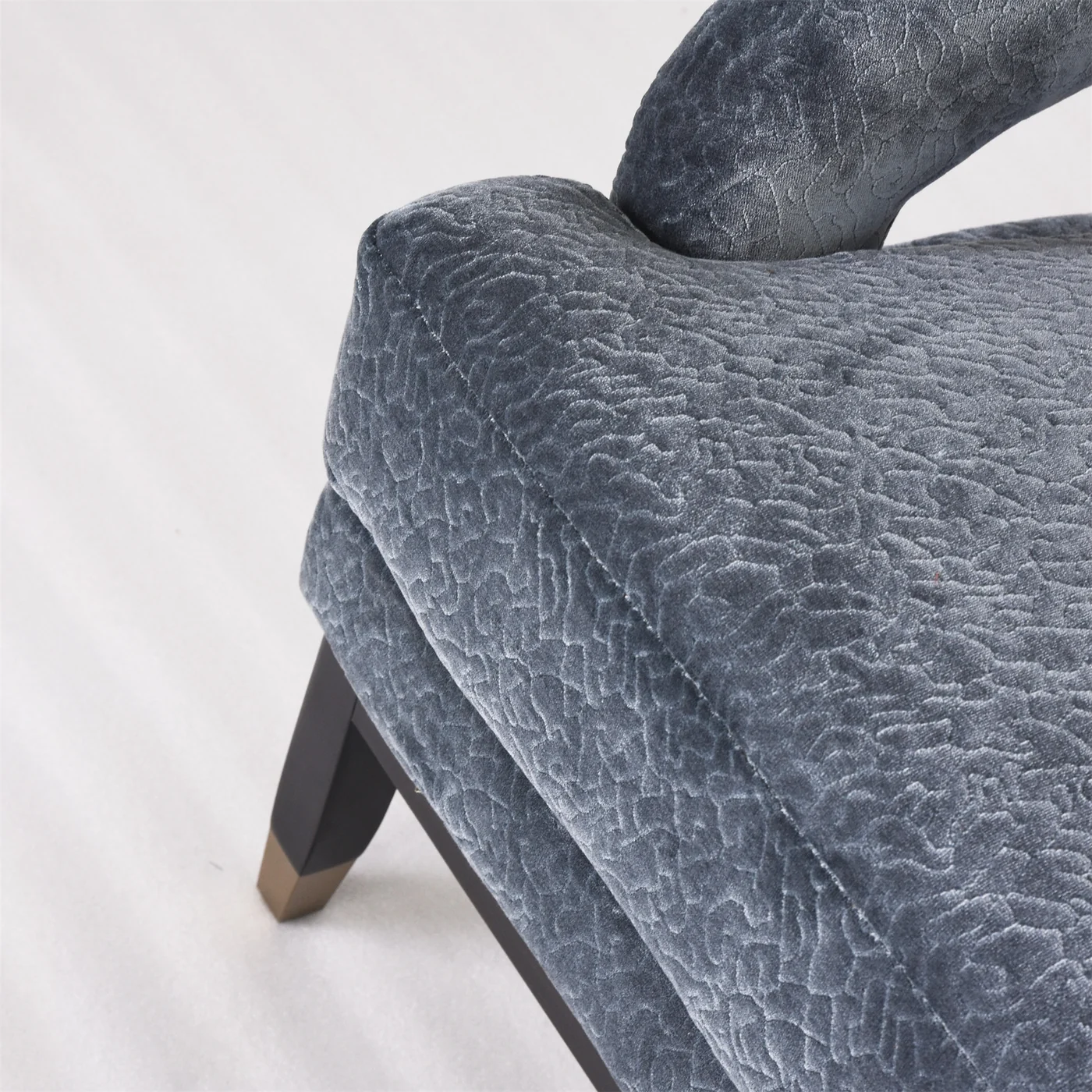
| Upholstery | Abrasion rating and test method | Commercial guestroom seating generally sits well above 30,000 double rubs; public-area seating higher |
| Foam | Density, not thickness | Thickness alone does not describe performance |
| Finish system | Coating type and number of coats | Determines resistance to heat, alcohol and cleaning chemistry |
| Edge treatment | Material and thickness | Edges fail first on desks and case pieces in daily use |
Material selection against these thresholds is covered in more detail in our guide to selecting hospitality furniture materials for high-use interiors. Write these into the RFQ. A supplier quoting against outcomes rather than construction is quoting against nothing.
Confirm which compliance regime governs the property
This is where projects lose money, and it has nothing to do with the brand.
| Destination | Upholstery and foam | Wood substrates and emissions |
|---|---|---|
| United States | CAL TB 117-2013; CAL TB 133 where the occupancy classification requires it | CARB Phase 2; EPA TSCA Title VI |
| United Kingdom and EU markets | BS 5852; BS 7176 with the relevant hazard classification; Crib 5 where specified | Market-specific emissions requirements; FSC or equivalent chain of custody where the specification calls for it |
Accessibility requirements apply separately and are dimensional rather than material — clearances, reach ranges and approach dimensions on desks, wardrobes and vanities, governed in the United States by ADA.
Treat BS 5852 and CAL TB 117 as different questions
These are not interchangeable, and a supplier presenting one when the property needs the other is answering a question that was not asked.
If the property is in the United States, BS 5852 documentation tells you nothing about compliance. CAL TB 117-2013 is the relevant upholstery standard, with CAL TB 133 applying to certain occupancy classifications.
If the property is in the United Kingdom or an EU market, the reverse applies, and this is the more expensive direction to get wrong — a shipment of upholstered furniture arriving without the correct fire-performance documentation is not a specification dispute, it is a delivery that cannot be installed.
For a manufacturer supplying both markets, these are separate test programmes on separate components. Ask which reports exist, for which market, rather than asking whether the supplier is "compliant."
Verify test reports at component level, not company level
A certificate held by a factory is not a certificate held by the item in your specification.
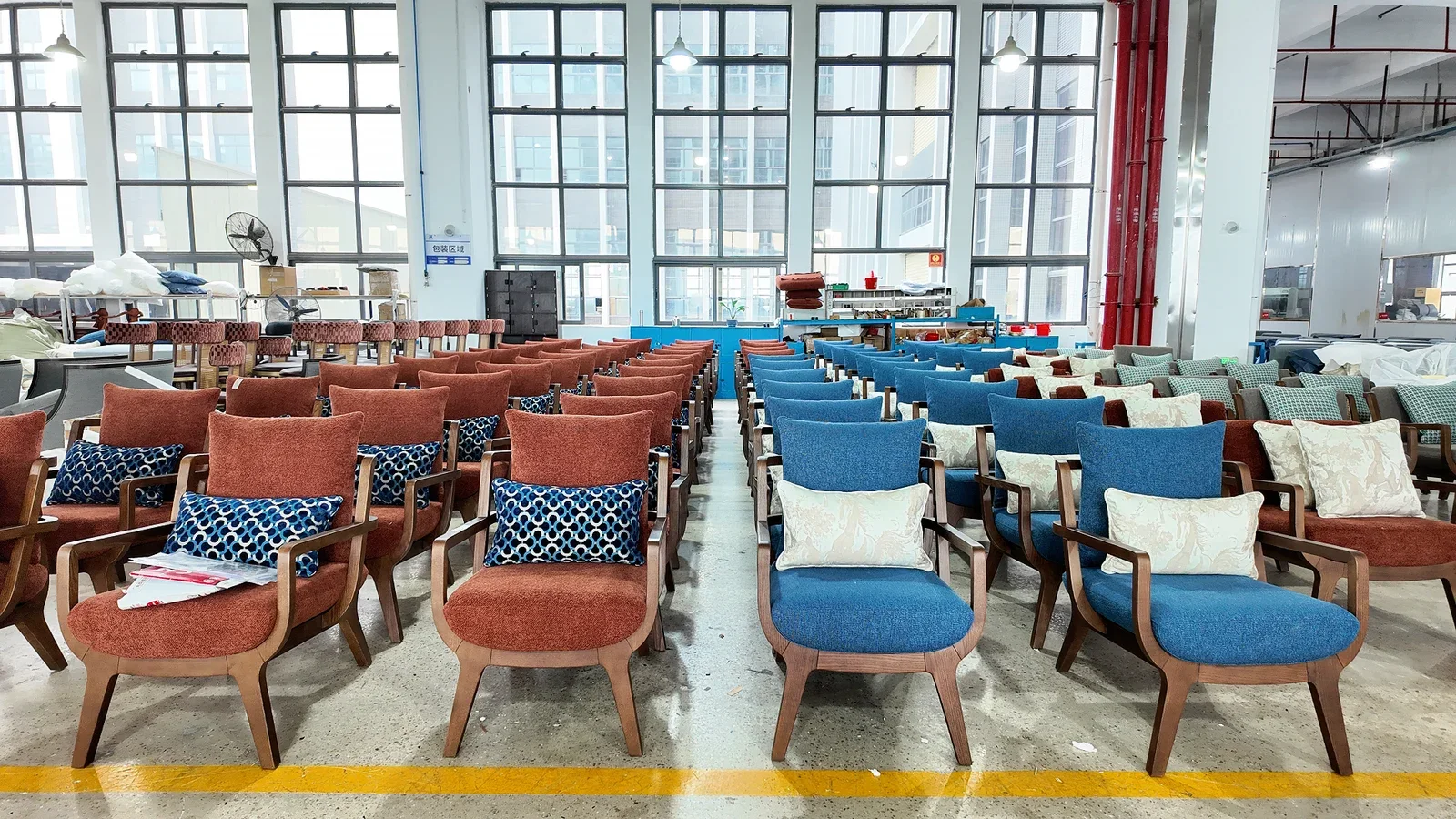
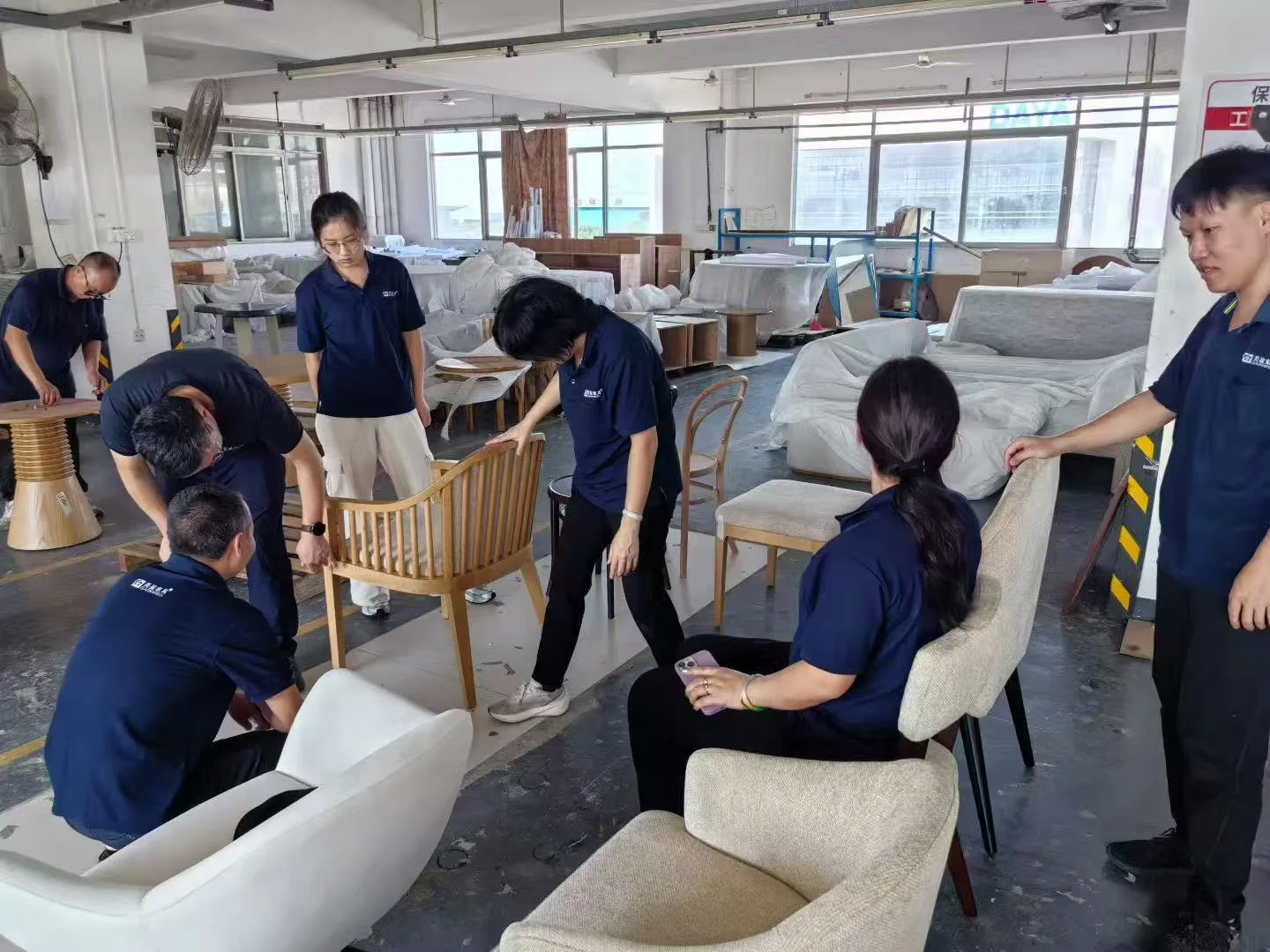
Request, for each relevant component: the specific test report, the component or assembly it covers, the issuing laboratory, the issue date, and whether the report covers the exact material combination being supplied. A foam and fabric combination that passed in one configuration has not necessarily passed in another.
Gainwell's certification position, as an example of what to ask a supplier to itemise: CARB for wood-based panel emissions, FSC chain of custody for timber, ISO 9001 and ISO 14001 for quality and environmental management systems, LGA testing on specified assemblies, and China Environmental Labelling certification. Where a European fire-performance report such as BS 5852 is required by the destination market, that is a separate programme and should be confirmed report by report rather than assumed from a supplier's general certification list.
Understand what a PIP changes and what it does not
A Property Improvement Plan is issued by the brand against current standards. It is not written against the property's renewal cycle, and the two frequently disagree.
The cycle most operators work to is soft goods on roughly a five-year interval and casegoods on roughly seven. A PIP can arrive at any point in that cycle and will not adjust for where the property sits within it.
Read the scope as three categories rather than one instruction to replace.
Separate what must be replaced from what can be refinished
| Category | Typical contents | Cost position |
|---|---|---|
| Must be replaced | Failed substrates — swelling at vanity bases, delamination near wet areas, water damage; seating with compromised frames; items dimensionally incompatible with the new standard | Full replacement |
| Can usually be refinished | Sound-core casegoods with solid timber or thick veneer; seating with intact frames | Roughly one-third to one-half of replacement, depending on condition |
| Can often remain | Fixed millwork outside the scope; low-traffic pieces still meeting the standard | Confirmation cost only |
Two conditions determine whether refinished furniture passes brand inspection: finish consistency across the whole run, and hardware matching the current standard. Where part of the inventory is refinished and part is new, both must read as one property under the same lighting. Approve a control sample before work proceeds beyond the first room.

Veneer at 0.2 mm and below generally cannot be refinished — there is insufficient material to work back to.
Sequence the mock-up room against brand sign-off
Build and approve one physical room before committing the full quantity. The expensive failures on branded programmes are consistently on projects where mass production began against drawings that had never been built.
Our guide to reviewing a hotel furniture prototype before production covers what to inspect and in what order. Establish before production: who from the brand signs off, whether sign-off is on the physical room rather than renderings, what the approval covers, and how long the review takes. Put the answer in the programme.
Ask suppliers the questions that reveal brand-programme experience
- Which brand programmes have you produced complete guestroom packages for, and in which years?
- Which operations are performed in-house and which are subcontracted?
- What is your process for holding finish consistency across a several-hundred-room run?
- Which fire-performance and emissions reports do you hold, for which components, for my destination market?
- What is your mock-up process, and who bears the cost if the first room is rejected?
- What happens commercially if a finish batch is rejected at installation?
Know what supplier claims about brand relationships actually mean
Hotel brand names and logos on a manufacturer's website indicate that the manufacturer states it has supplied a property carrying that brand. They do not establish current approved-vendor status with the brand, and they should not be read as doing so.
This distinction matters because it is easy to test. Ask for two or three named recent properties, then contact the developer, procurement firm or contractor directly. A supplier with real programme history will provide them.
Applied honestly, the same test applies to us. Gainwell has manufactured for properties across Greater China, Asia Pacific, the Middle East and North America, including Waldorf Astoria in Qatar — a Hilton portfolio brand — alongside Ritz-Carlton Macau, JW Marriott Riyadh, Palazzo Versace Macau, Nikko Style Niseko HANAZONO and Novotel Apartment Makkah. That is a record of properties supplied. It is not a claim of approved-vendor status with any brand, and no supplier's project list should be read as one.
Worked example: specifying a focused-service conversion
A 140-key property converting into a focused-service Hilton brand, PIP issued, United States.
The controlling constraints are the brand standard for that specific brand, CAL TB 117-2013 on upholstery, CARB Phase 2 and TSCA Title VI on wood substrates, and ADA dimensional requirements.
The specification decision is not "what looks like the brand." It is: which existing casegoods have sound cores and thick enough veneer to refinish; which have failed and must be replaced; what the replacement items must meet in substrate, hardware and finish to survive to the next renewal; and whether the mixed inventory can be brought to a single visual standard.
The furniture budget follows from those answers. It does not follow from the room count.
Prepare a specification pack for brand review
- Brand and tier confirmed, with the controlling standard identified
- Written guestroom package list, item by item
- Construction specification: substrate, veneer, hardware, foam, fabric, finish, edging
- Compliance schedule by destination market, with the specific reports required
- PIP scope categorised into replace, refinish and retain
- Mock-up programme with named approver and review duration
- Supplier evidence, including verifiable recent references
Frequently Asked Questions
What furniture is normally included in a Hilton guestroom package?
The package commonly includes sleeping, bedside, storage, work, luggage and seating elements, but the exact items depend on the specific Hilton brand, room type, region and current project documents. Build the schedule from the controlling brand standard and approved design package rather than copying a list from another property.
Do all Hilton brands use the same guestroom furniture specifications?
No. Hilton's portfolio includes different brand positions and operating models, and specifications can also vary by region, prototype, property condition and approval date. Confirm the named brand and the current controlling documents before using dimensions, finishes, hardware or performance requirements from another programme.
How does a Property Improvement Plan affect guestroom furniture?
A PIP identifies required property changes, but the furniture response still needs an item-by-item decision. Classify existing pieces as retain, refinish or replace, then connect replacements to current brand, code and project requirements. Confirm approval responsibilities and timing before assuming that a visually similar item will be accepted.
Does supplying one Hilton property make a manufacturer an approved Hilton vendor?
Not necessarily. A project reference shows that a supplier states it worked on a named property; it does not by itself prove current portfolio-wide approval. Ask the brand, owner or purchasing representative to confirm any required vendor status for the actual programme, and verify recent references directly.
What compliance information should a Hilton guestroom furniture schedule include?
List each item's destination, material and applicable project requirement, then identify the exact report, declaration or approval needed. Upholstery, composite wood, electrical components, accessibility interfaces and wall fixing can follow different rules. The project team should confirm the current requirements; a brand name alone is not a compliance specification.