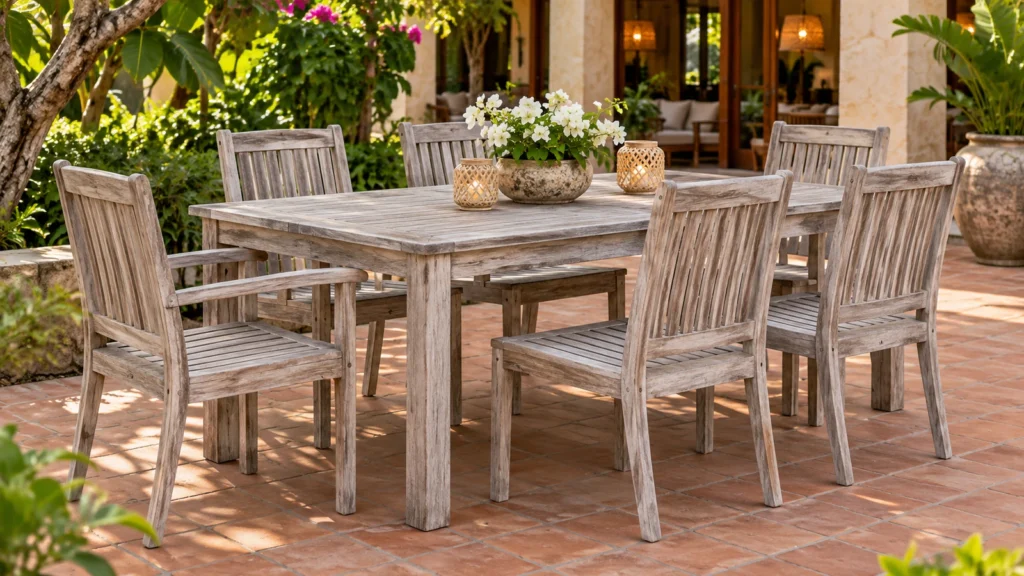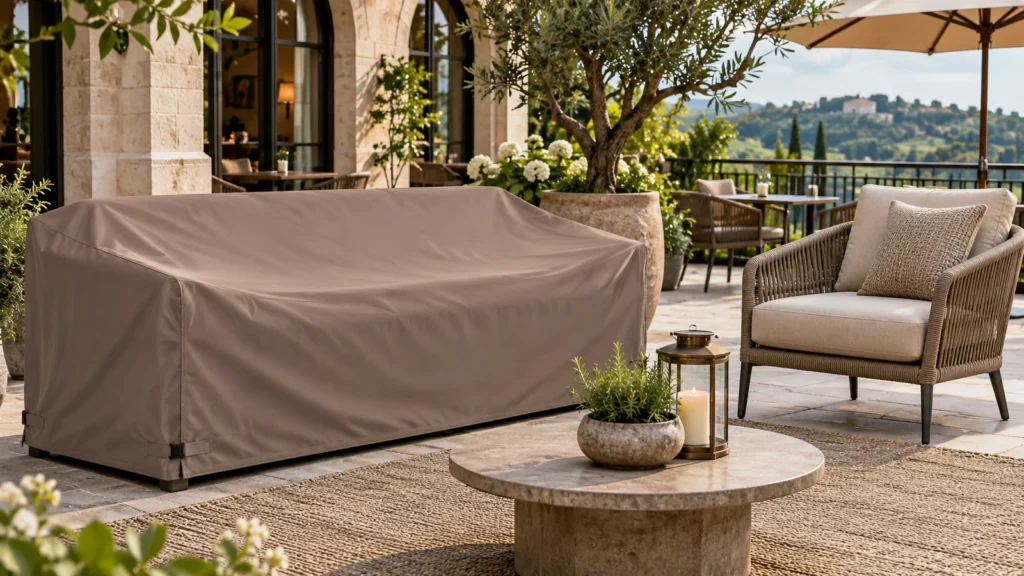

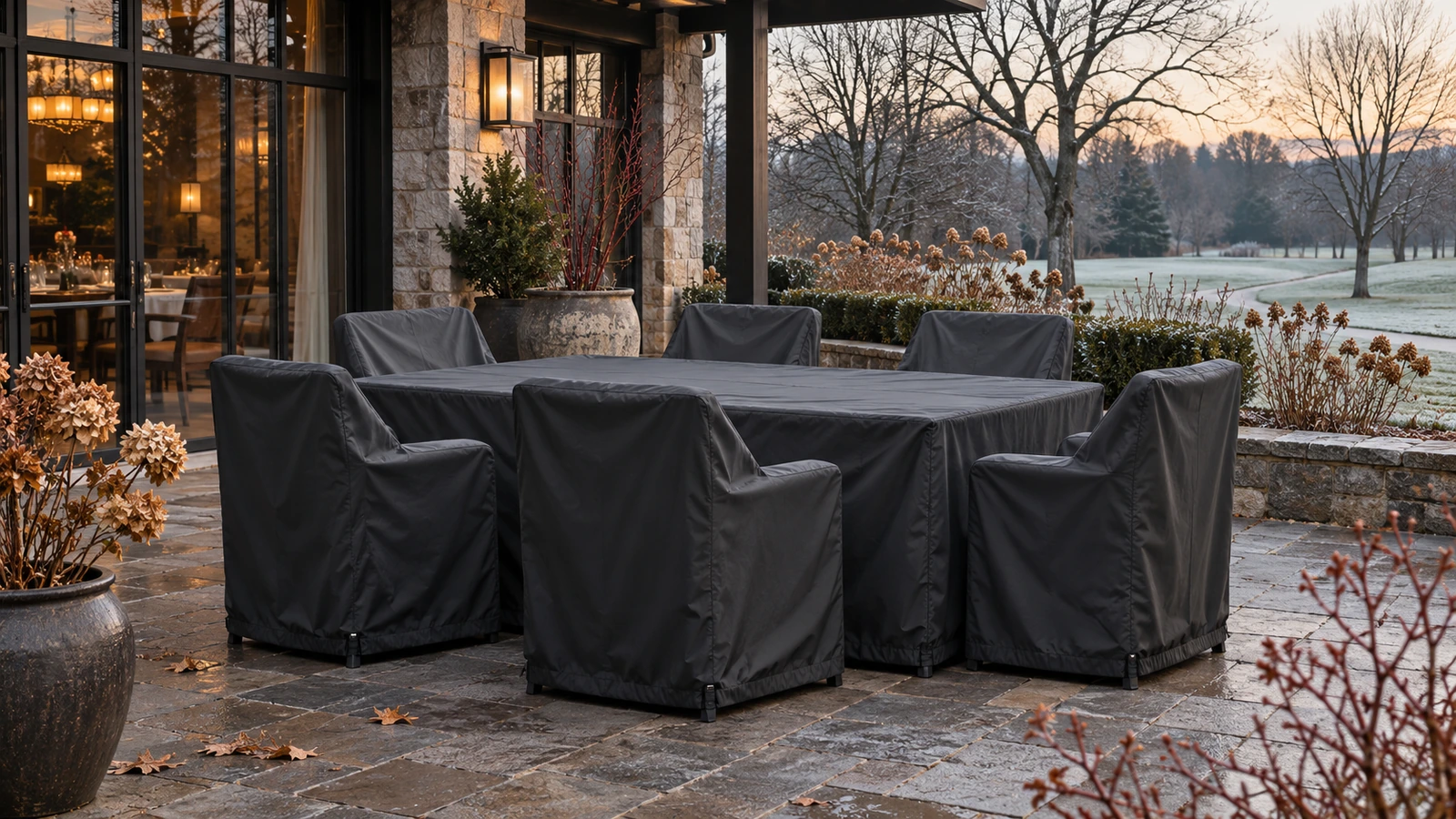
Protect hotel outdoor furniture in winter by deciding what can stay in place, what needs an approved cover and what should move into protected storage. Make the decision for each furniture configuration and zone, including cushions and removable fittings. Clean and prepare the items before closure, then inspect them before reopening.
A frame that can remain outdoors does not necessarily make the whole chair or lounger suitable for winter exposure. Water may collect in joints, cushions may remain damp, and strong wind can change whether covered furniture is safe to leave in place. The plan needs to cover both the weather and what staff can realistically do when a terrace is closed.
Check Winter Exposure and the Hotel’s Operating Pattern
Start by distinguishing areas that close for the season from those that open whenever conditions permit. A dining terrace used on dry winter days needs furniture staff can check and reset promptly. A pool deck closed for several months may allow more items to be removed, provided there is somewhere appropriate to store them.
Record rain or snow exposure, shelter, wind and whether the furniture can dry in place. A roof can reduce direct rainfall without preventing wind-driven moisture. For properties with several exterior areas, integrated resort furniture solutions illustrates the wider context in which furniture groups are planned. The winter plan should still be based on the exposure and operating routine of each individual zone.
Map the furniture by exposure as well as by outlet. Two identical chairs may need different plans if one sits against a sheltered wall and the other stands at the open end of a roof terrace. Note where water collects, which edges are exposed to wind and where staff can reach a protected area without crossing a guest route. Include items that move during normal service, such as chairs brought out for events. The relevant location is where they will spend the closure, which may differ from the position shown on the usual furniture plan.
Decide What Can Stay Outside, Be Covered or Move into Storage
Compare the manufacturer’s permitted winter conditions with what the site can provide. Leave an item exposed only where its configuration and conditions allow it and staff can monitor it. Choose a cover where it is compatible with the furniture and the hotel can manage fit, drying, wind and inspection. Move an item to protected storage where its instructions require it or the outdoor arrangement cannot be maintained reliably.
Make separate decisions for the frame, top, cushions, mechanisms and removable accessories. The mix of outdoor seating, tables and loungers shows why one rule cannot cover every item. A table left in place and a lounger with a removable pad can follow different routes without disrupting a common operating plan.
A practical plan gives each group a destination. For example, a sheltered dining zone might keep approved tables in position, move removable cushions to dry storage and place spare chairs in a protected area. At the same property, a fully exposed pool deck may need a different arrangement for loungers and side tables. Record which components go with each choice. Ask the supplier about the complete product when you are uncertain about a mixed-material piece, since the frame, surface, fittings and upholstery may have different care requirements.
Prepare Frames, Cushions and Removable Parts Before Closure
Use approved care methods to remove dirt and deposits, then check whether the furniture and its detachable components are ready to be covered or stored. Inspect feet, joints, connections and the underside of seats. If the construction has drainage openings, make sure they are accessible and clear as specified; do not add openings or modify the frame to solve an unverified problem.
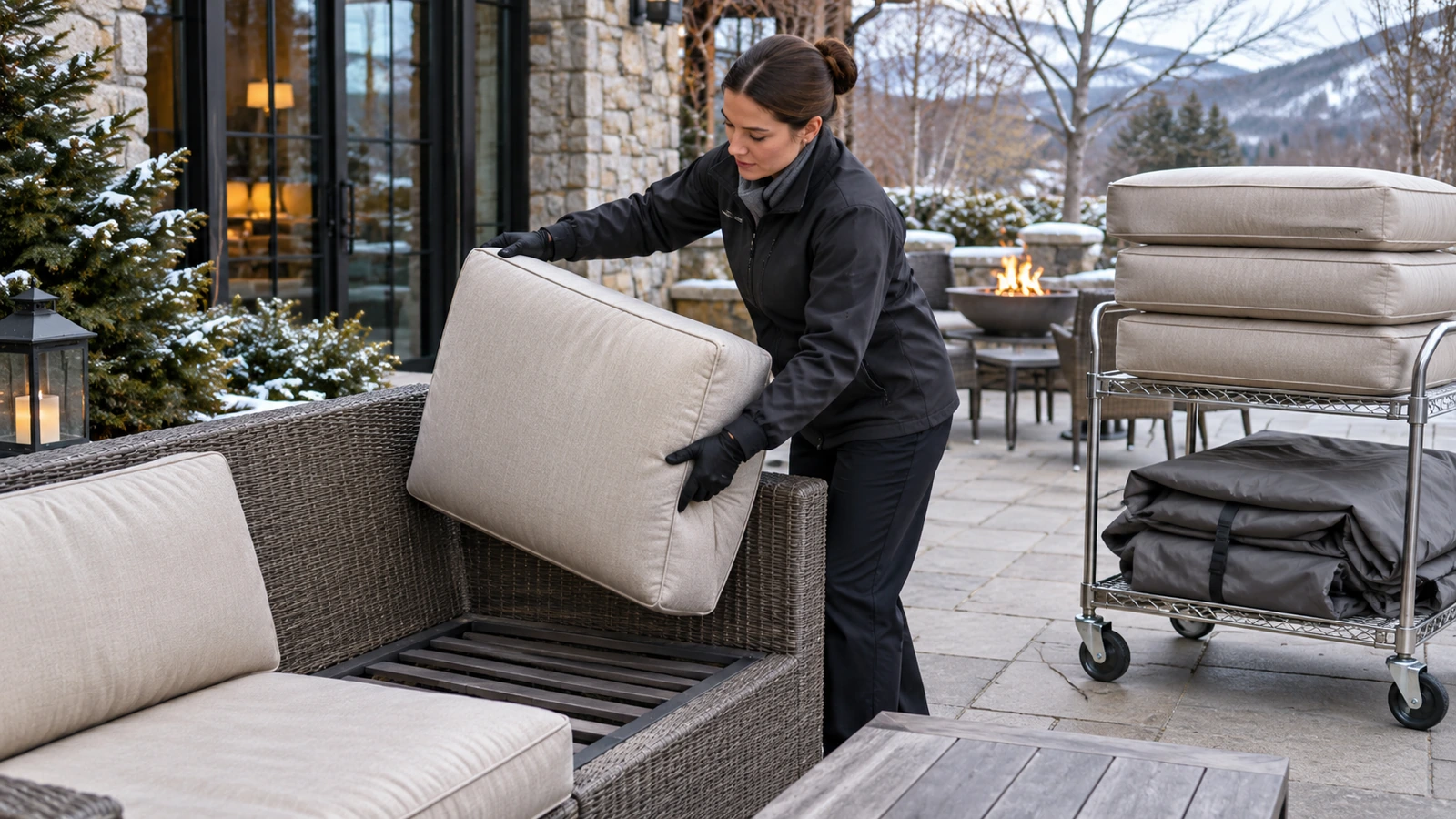
Label each removable part against the furniture model and location. Record anything needing repair before closure, so a damaged chair or damp cushion is not returned to the guest area by mistake when the season changes.
Set aside a holding area for items that cannot move directly into storage. A chair with a loose component needs an assessment, and a washed cushion needs time to dry before packing. Keep these two cases visibly separate so the issue is apparent to the team that picks up the work. For each area, record the number of complete items, detached parts and pieces awaiting action. This also gives housekeeping or engineering a way to reconcile a missing cover or cushion before outdoor service resumes.
Protect Furniture That Will Remain Outdoors
Fit covers to the configuration for which they were selected. Check the cover’s shape, fastenings and any prescribed support so it does not sag onto vulnerable surfaces or form unintended pockets. Follow the instructions on whether cushions should be removed and how the cover is secured. A cover does not make it appropriate to leave furniture in place under all conditions.
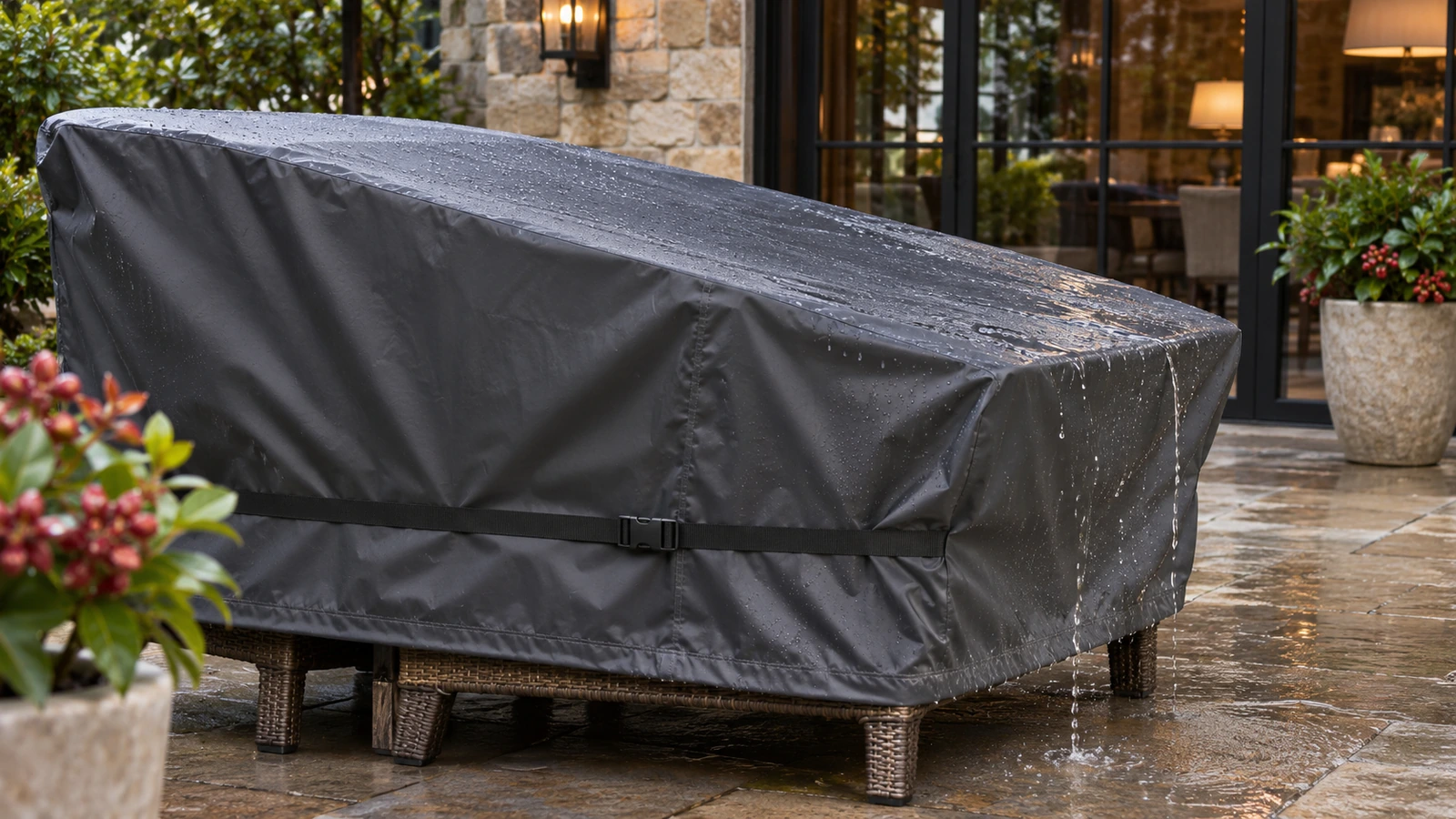
Use the property’s weather procedure to decide when furniture needs moving or when access to an exposed area should be restricted. Avoid relying on an improvised tie, weight or fixed threshold that has not been established for the site and product. Arrange any necessary action while the area can still be accessed safely.
Plan where covered pieces will sit for the duration of the closure. Keep them away from known collection points for runoff where possible and preserve access needed for inspection. Check that straps are routed as intended and that fabric is clear of vulnerable corners. On a terrace with occasional winter service, identify where removed covers will go during opening hours. A wet cover folded next to dry cushions can undo the preparation work, while a cover left loose in a service route creates another handling problem.
Move and Store Furniture Without Creating New Damage
Confirm the moving route and the intended handling points before dismantling or stacking. A stack that fits the storage room may still damage finishes or be difficult to move through a door. Use only the approved stacking arrangement, separate parts that need different care and keep the items identifiable once stored. Where the storage layout or handling route needs more work, see the guide to hotel outdoor furniture storage.
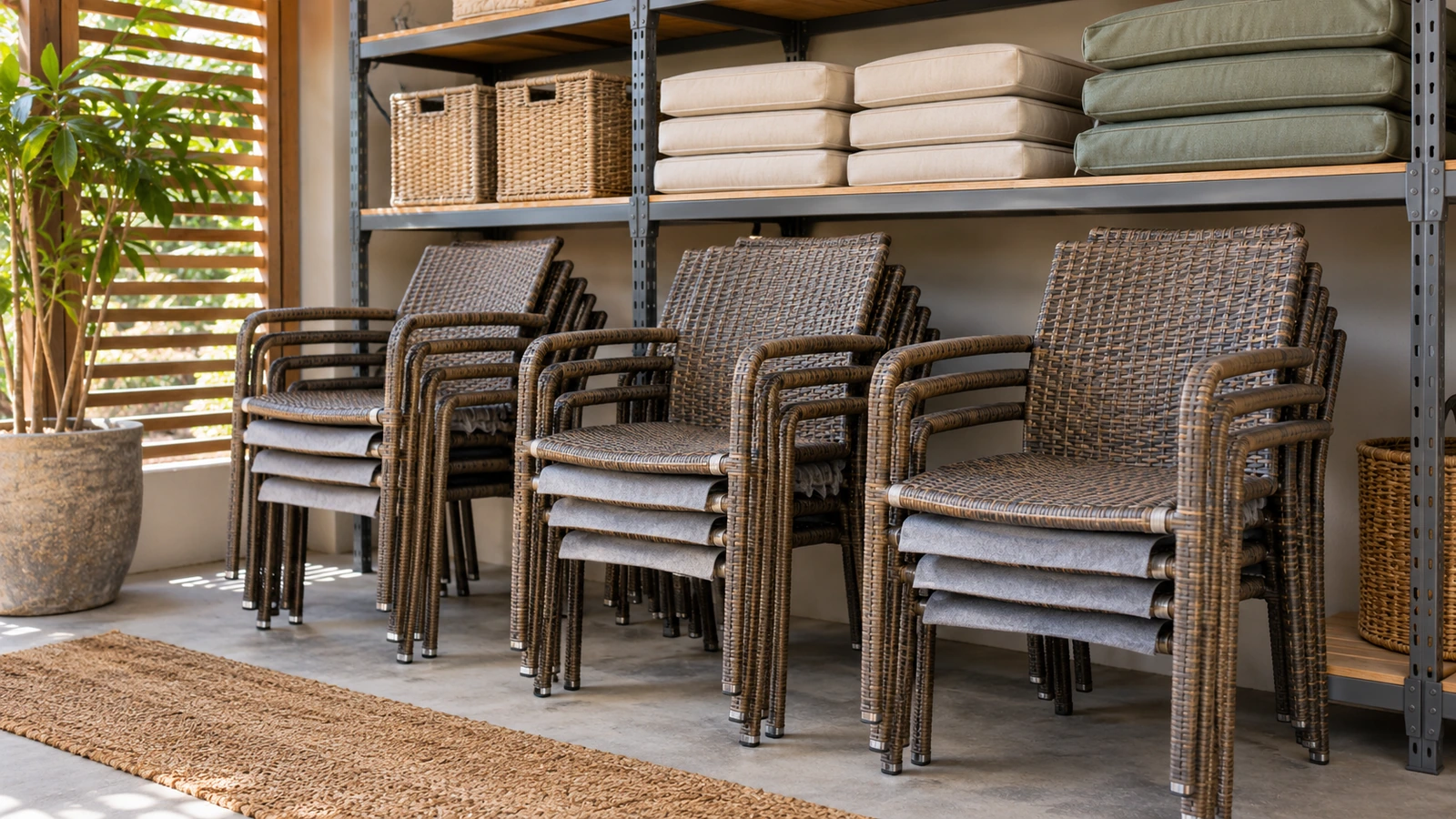
Check the capacity of the destination before the first move. Count the permitted stacks or individual parking positions and allow room to get a specific piece out without shifting the whole stock. Put units expected to return first near the accessible side of the storage area. Store matching components where staff can identify them without opening several containers. If a table top needs a particular orientation or support, record it on the move plan. A spare space is only suitable when it also supports the furniture in the required way.
Check the storage environment as well as the available floor area. If the building is unheated or used for several purposes, look for condensation, leaks and traffic that could disturb the stored furniture. Follow the supplier’s requirements for separation, supports and protective materials. Keep a clear inspection route to the back of the group, where problems can be harder to spot. For furniture moved in stages, use the same layout record each time so items can be found without unpacking neighbouring stock.
Set Inspection Triggers During the Winter Closure
Give each area a named person or team responsible for deciding when to check it. Useful triggers include a displaced cover, water visible in a low point, a leak in a storage room or a request to open the terrace temporarily. Define what staff can correct and what needs escalation. An inspection should not put staff into an exposed area when access is unsafe.
Link each check to an observable condition and an action. After heavy weather, for example, the assigned person can look for shifted covers, pooled water or contact between pieces that have moved. During a longer closure, a scheduled walk-through can also reveal moisture in the storage area or a displaced stack. Give staff a clear point of contact for anything beyond routine adjustment. Record recurring observations by furniture ID or zone so the spring review can distinguish an isolated event from a problem with the winter setup.
Inspect Furniture Before Reopening the Area
Remove protection using the approved method and inspect the furniture in the configuration guests will use. Check the surface, feet, joints and any movement or adjustment features. Refit only compatible, dry cushions and parts. Separate furniture needing simple care from items with loose connections, damage or uncertain stability. Hold the latter back until the appropriate assessment or repair is complete.
Use the reopening check to improve the next closure. A recurring wet contact point or a stack that consistently damages a finish is evidence that the protection routine or furniture configuration needs attention.
Reopen by zone if the property has more stock than it can inspect at once. Start with the furniture needed for the first service and leave pending repairs in a separate area. Compare the number of assembled units with the closure record, then check the pieces in their actual positions on the terrace. A set may seem complete in storage while still missing a component needed for the planned layout. Give the reopening team a way to report these gaps before guests arrive.
Give the first operating shift a short list of checks to make once the area is back in use. An attendant may notice a cushion fastener that does not line up or a glide that no longer sits correctly on the floor. Record the issue against the item and route it through the usual maintenance process. The spring check is also a chance to confirm which protective materials are fit to clean, label and retain for next winter.
Choose Furniture That Fits Your Winter Operating Plan
If the property regularly moves furniture in and out of service, the ease of moving, stacking and separating components matters as much as appearance. Gainwell can discuss hotel outdoor furniture configurations around those needs. The intended winter routine and available storage space give the discussion a clear starting point.
Before choosing a new range, walk through one seasonal change with a representative chair, table or lounger. Identify where staff grip it, whether the intended trolley can carry it, and how it sits in the available storage position. Include the time required to detach, label and refit accessories. A sample can answer handling questions that overall dimensions on a specification sheet may leave open.
Frequently Asked Questions
What If the Hotel Has No Indoor Storage?
Identify the most protected practical location and confirm what the manufacturer allows for each item. If no available arrangement meets those conditions, explore an alternative storage option or keep only furniture that can remain outdoors under the documented conditions.
Can Winter Covers Stay On When the Terrace Reopens Briefly?
Covered furniture should not be offered for guest use unless the arrangement is specifically intended for that purpose. Prepare and inspect the furniture before reopening, then allow for any cleaning and drying needed before it is covered again.
How Should Removable Parts Be Matched to the Right Furniture in Spring?
Record the model, zone and component reference before removal and keep them with the stored parts. Confirm fit when refitting; pieces that appear identical may have different attachments or dimensions.