


Reduce recurring spider webs on hotel outdoor furniture by checking the places routine cleaning misses, removing webs with a method suited to the surface and following up at the same locations. Inspect the underside of seats and tables, cushion supports and the inside of covers. Where staff find an active spider they cannot identify, a suspected egg sac or a location they cannot safely reach, follow the hotel’s pest management procedure.
A sweep across the seat can leave the original problem untouched if the web starts beneath a rail or inside a fold in the cover. The useful first step is to locate where the webs recur and decide which checks belong in the normal furniture reset. Cleaning can reduce the visible problem, but it cannot guarantee a spider-free outdoor area.
Find Where Webs Keep Returning
Inspect the piece in its normal position before moving it. Look at the lower edges, underside supports and gaps between the furniture and a wall or planter. Where the instructions allow, also check beneath removable cushions and around the places they attach. Compare several nearby items: a web on one chair may be incidental, while webs recurring along the same row can help the team identify a missed surface or a location requiring further investigation.
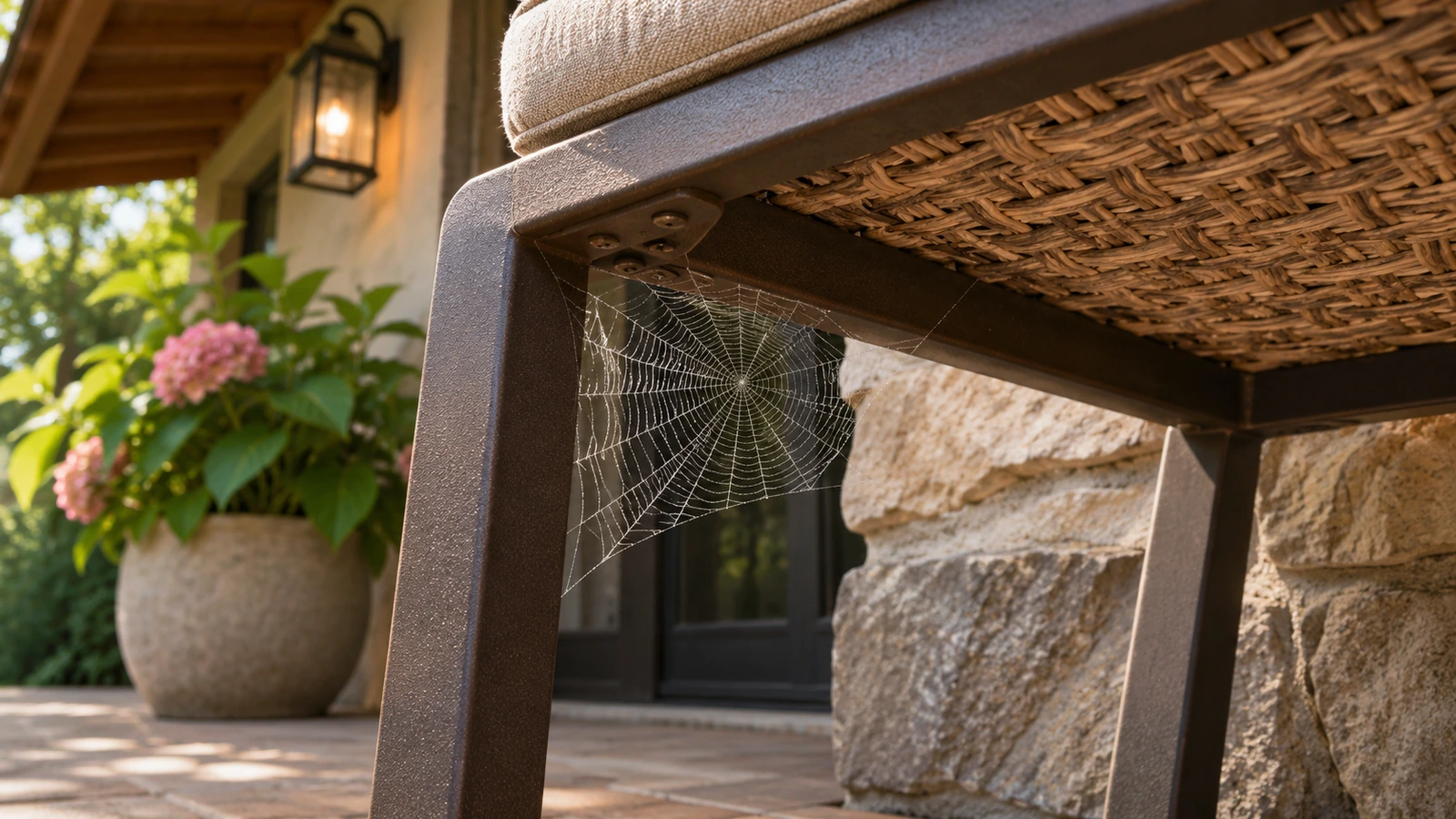
Record the specific point rather than marking the whole terrace as affected. A note such as “underside of the two tables against the wall” gives the next shift a useful place to check. Avoid attributing the cause to a particular species or surrounding feature without suitable assessment.
Compare the places where webs return with the way the furniture is arranged overnight. A chair pushed tightly beneath a table may be easy to wipe from above while its rear supports remain out of reach. On loungers, look for sheltered points beneath the adjustable back where the team can inspect safely. A web in the same corner every morning is more useful to document than a count of all the webs seen on the terrace. Record the location before resetting the furniture so staff can reproduce the inspection the next day.
Decide What Housekeeping Can Handle
Define the conditions under which routine staff can remove an accessible web using approved equipment. An empty web on an easily reached table support is different from an active or unidentified spider in a concealed space. If staff see a suspected egg sac, cannot safely reach the location or cannot establish what they are dealing with, keep the item or area out of use as appropriate and pass it to the responsible team.
Check that furniture can be moved or inspected without lifting it unsafely or turning over a heavy piece. Access difficulty is a reason to change the handling method or escalate the task, not a reason to reach into a blind space. The property’s procedure should tell staff whom to contact and when it is safe to resume the reset.
Agree on a simple handoff with the team responsible for pest management. An accessible, unoccupied web on a routine route may be handled under the hotel’s cleaning procedure. If staff see an unidentified spider, a possible egg sac or a web in a space that cannot be reached safely, keep the observation separate from the normal cleaning log and follow the property’s escalation procedure. Give the team a clear way to indicate which pieces are ready for service and which still require attention before the area opens.
Remove Webs Without Damaging Furniture Surfaces
Use an approved dry removal method where appropriate, working gently around finishes and fittings. A smooth tabletop, a textured weave and an upholstered pad do not respond to the same tools. On a coated surface, avoid contact that could scratch it; around woven material, avoid tools that can catch or pull strands; near upholstery, use only the method suitable for the cover. If a separate mark remains, treat it according to the furniture’s instructions rather than extending the whole task to a wet wash.
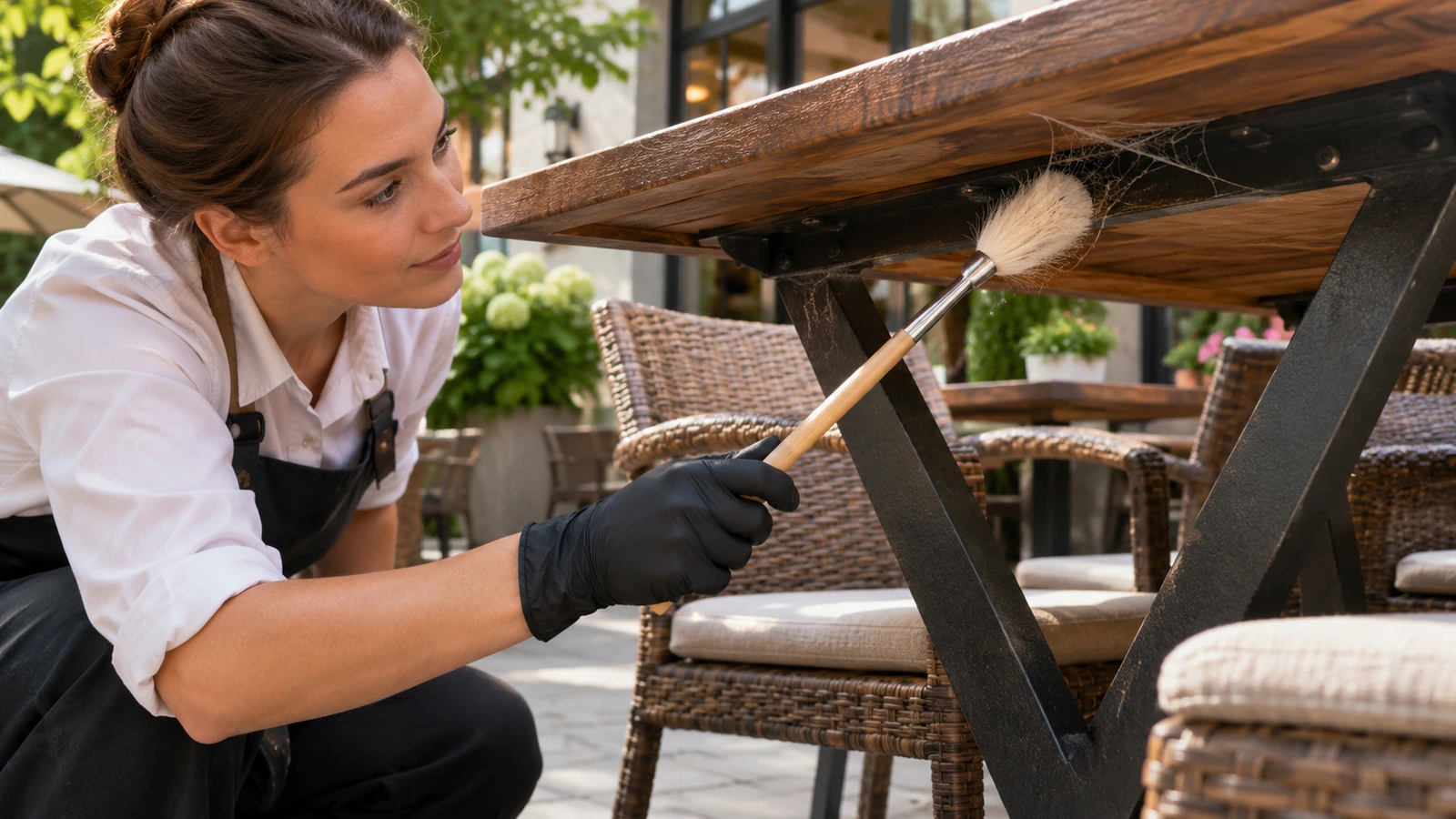
Check the corners and supporting parts that anchor the web as well as the readily visible strands. Work from accessible surfaces and avoid forcing tools into joints or under fittings. Stop if the surface changes, the furniture is damaged or the next area cannot be reached safely.
Match the tool to the contact surface. A broad wipe can work on an approved smooth surface, while textured weave may catch fibres or hold debris in the gaps. Start at the attachment points you can reach safely and collect removed material in the manner specified by the property’s cleaning procedure. If strands are caught in a mechanism, get the appropriate team to inspect it before trying to dislodge them. In a guest-facing area, make the final check with the seat in its normal position so any web remnants are visible from the approach.
Check Cushions, Covers and Stored Furniture Before Resetting
When removing a cover, check its inside, hems and fastener areas before placing it in storage. A cover that appears clear from above can still have webs underneath. Check removable cushions and the surfaces beneath them according to the furniture’s handling instructions. Keep items requiring further cleaning separate from those ready to refit.
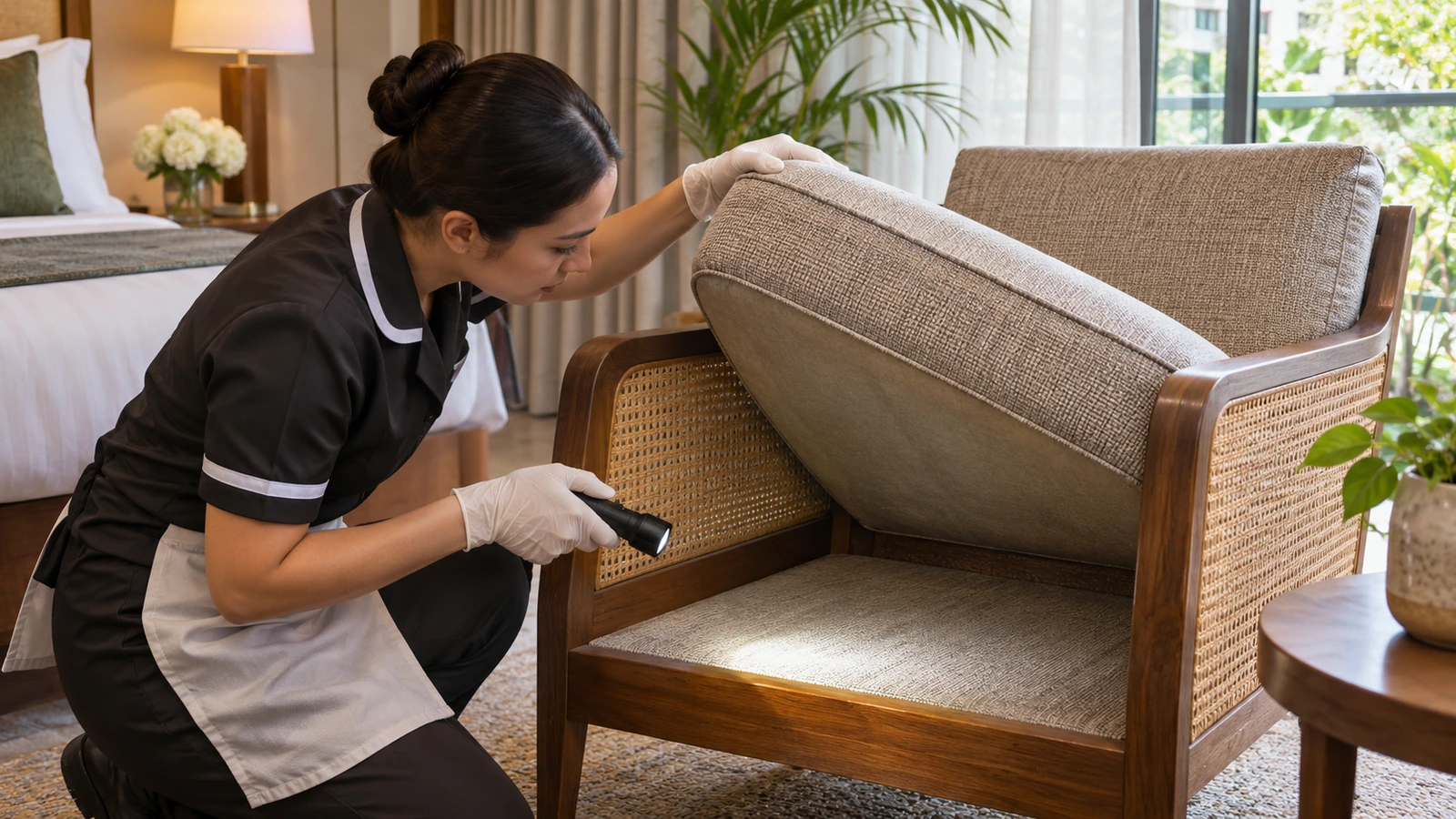
Apply the same principle to furniture brought out of storage. Inspect the contact areas between stacked pieces where the approved handling method allows separation. Record inaccessible points for the team responsible for further inspection rather than treating a quick visual check of the top as sufficient.
Treat covers and cushions as separate items when resetting an area. Place an inspected cover on a clean surface before folding it, and check the chair where the cover’s edges and straps sat. For stacked chairs, inspect a manageable group as it is unstacked using the approved handling method. Mark stock awaiting inspection so it stays separate from furniture ready for the terrace. This matters when an event team collects extra seating shortly before service and has little time to recheck each piece after it has been placed.
Improve Cleaning Access Where Webs Recur
If webs repeatedly return beneath the same rail or seat, review whether staff can reach that point during an ordinary reset. A small change to where a table is positioned may improve access, provided it preserves the agreed layout. Where the design itself makes inspection difficult, record the feature so it can be considered during a future replacement. Compare the undersides and support arrangements of outdoor seating and tables rather than expecting any particular furniture design to prevent spiders.
For surfaces that need a separate cleaning method after the web is removed, refer to outdoor furniture cleaning by material. Keep routine web removal distinct from cleaning stains or treating damaged finishes.
Try a small layout change where access is the issue. Leaving enough working space behind a group of chairs during the morning reset may expose the lower rails without changing the guest layout. If a planter, service station or railing prevents staff from reaching the same furniture edge every day, check whether the equipment or cleaning sequence can be adjusted. Ask the team to repeat the inspection after the change. A practical fix should make the missed point visible and reachable using the time and tools available on the regular route.
Set Follow-Up Checks for Each Outdoor Zone
Build the follow-up into work that already happens. At a dining terrace, the check may fit the opening reset; at a pool deck, it may fit the inspection after covers come off; in a rarely opened area, it may fit the return-from-storage check. Choose triggers around exposure and recurrence rather than imposing the same frequency on every zone.
For a property reviewing several outdoor settings, integrated resort furniture solutions shows the wider furniture planning context. The useful operating decision remains local: who checks each group, which surfaces must be reached and what should happen when the same location is flagged again.
Set different checks for different operating patterns. A breakfast terrace may need attention before the first seating, while a function deck may benefit from a check after furniture is pulled out of storage and before the event setup is complete. When a web returns, note whether it is in exactly the same spot and whether the furniture had been moved in the meantime. A few consistent observations give the responsible team more to work with than repeated reports that simply say an area was cleaned again.
Escalate Repeated or Uncertain Findings
Send the responsible team the zone, furniture reference, exact location, timing and details of any previous approved cleaning. Explain whether an item or guest area has been held back. Patterns across several pieces or repeated findings despite access and cleaning changes may need investigation beyond the furniture itself. Decisions about pest treatment belong with the property’s authorised team; this guide concerns inspecting and maintaining furniture.
Where several pieces are affected, note whether they share a storage bay, sit along the same edge of the terrace or were moved from the same event area. Photograph the affected point from a safe position if the property’s procedure allows it. Tell the receiving team whether the furniture is currently in use, waiting to be reset or already held aside. After assessment, ask which observation should trigger another report. This helps shift teams handle repeat cases consistently and gives the property a record of what happened after the first intervention.
Make Outdoor Seating Easier to Inspect and Clean
When recurring maintenance problems influence a furniture refresh, Gainwell can discuss hotel outdoor furniture with accessible undersides, practical support details and removable components in mind. A description of the areas staff struggle to reach can help clarify what the next furniture selection needs to improve.
During a sample review, ask an attendant to demonstrate how they would check the underside, remove a cushion and reach the areas that collect debris. Pay attention to whether the frame can be inspected from the normal working position and whether routine access depends on lifting or dismantling it. Compare that sequence with the actual shift schedule. On a high-turnover terrace, a seat that is straightforward to inspect during a standard reset is more practical than one that requires a separate visit from another team.
Frequently Asked Questions
Do Furniture Covers Keep Spiders Away?
A cover is not a reliable pest barrier. Include its inside face, folds and fastening points in the inspection, and check the furniture before returning it to service after a long period under cover.
Why Do Webs Return After the Seats Are Cleaned?
The web may start at an area that the seat cleaning does not reach, such as a support or the space behind the furniture. Record where it returns and check nearby accessible points. If the pattern continues, pass the record to the responsible team.
Should Hotels Spray Repellent Directly on Outdoor Cushions?
Any pest treatment should follow the hotel’s authorised process. The responsible team should establish whether a proposed product is appropriate for the use area and compatible with the cushion’s materials and care requirements. Avoid treating seating independently with an unapproved product.