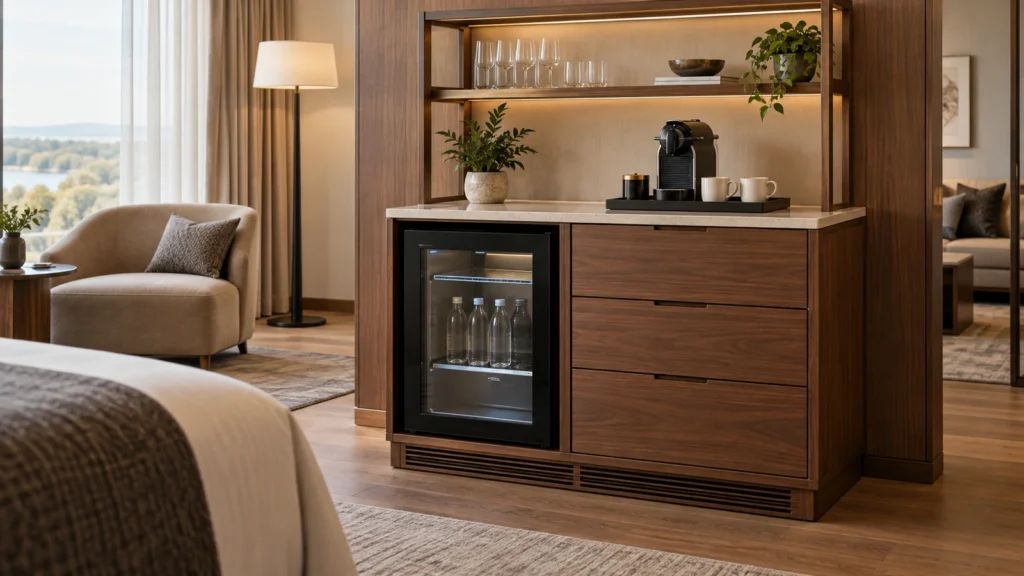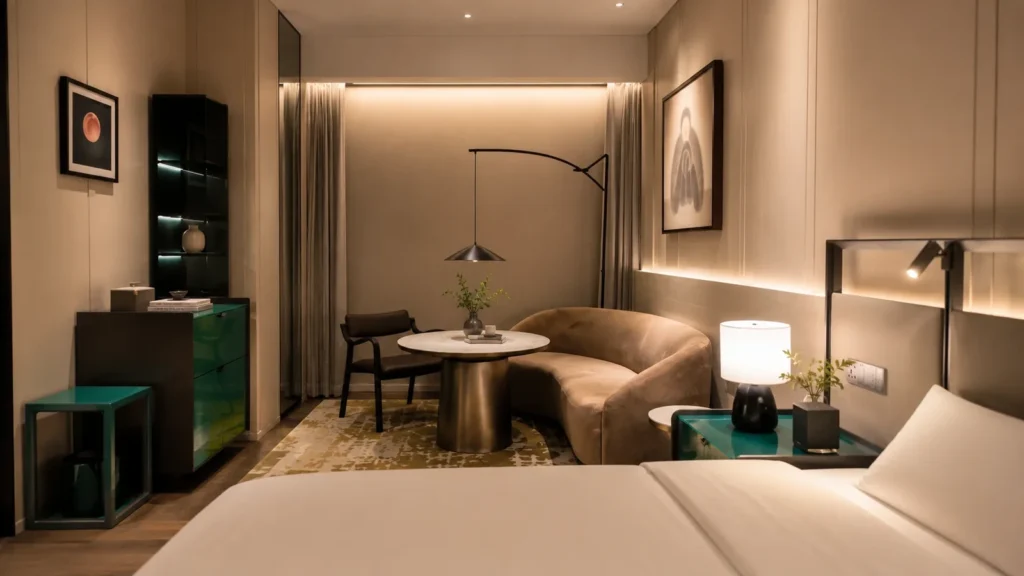

Hotel FF&E is the project-specific set of furniture, fixtures, and equipment used to furnish and support defined hotel spaces. The phrase is useful, but it is not a complete scope. One team may include decorative lighting, mirrors, window treatments, and integrated power; another may place some of those items in construction, electrical, or specialist packages.
The practical task is to turn the label into a room-by-room boundary that answers four questions: what the item is, where it belongs, who supplies and installs it, and what evidence is required at handover.
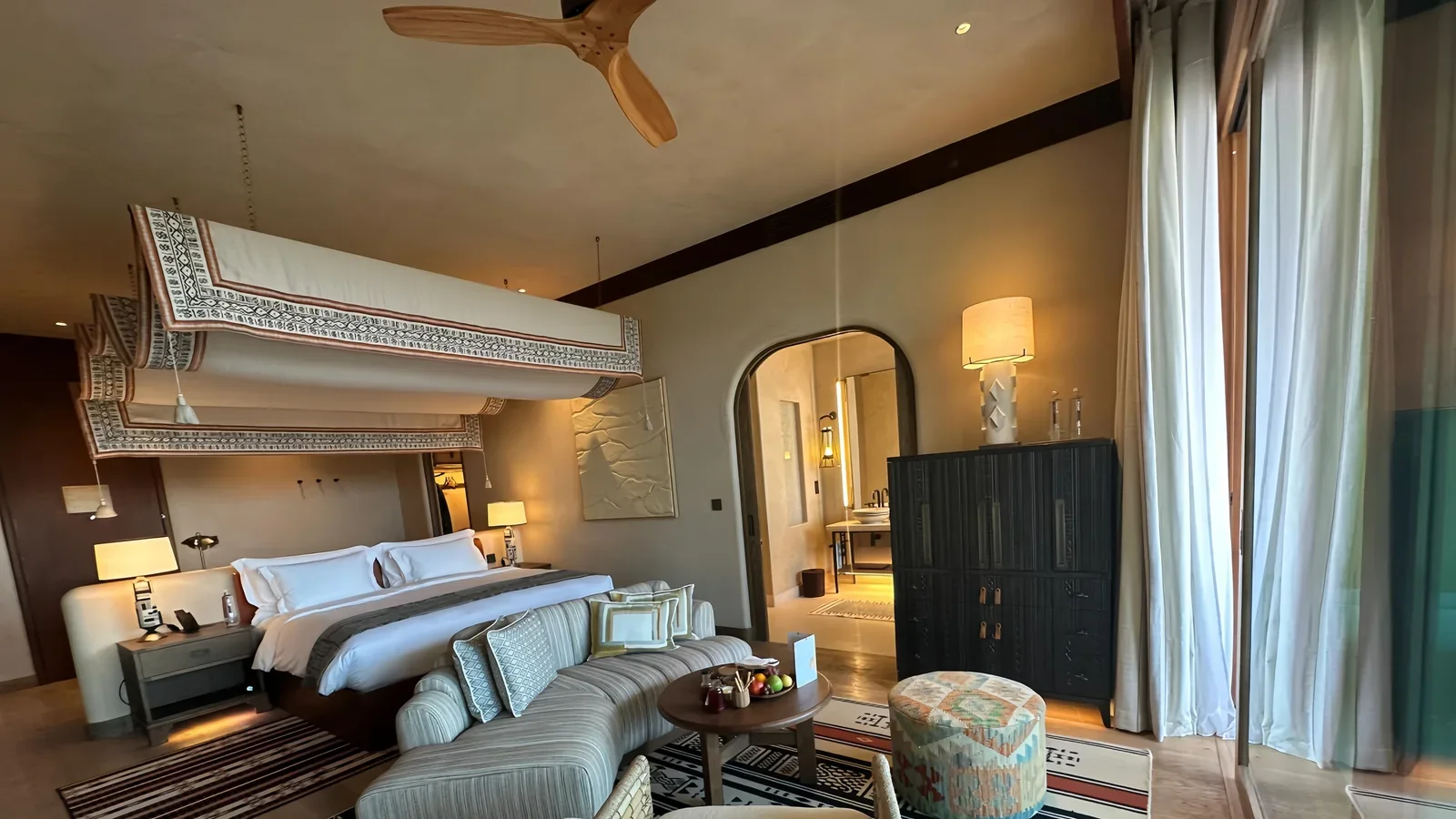
Start with a hotel-specific definition
Gainwell’s current hospitality furniture directory groups loose and fixed systems used across hotel environments. For a hotel project, the FF&E definition becomes useful only when it is tied to the property programme, room types, public areas, operating model, and package structure.
Typical furniture-related scope may include guestroom beds and headboards, casegoods, wardrobes, desks, tables, seating, benches, sofas, loose mirrors, and selected fitted units. Public areas may add lobby seating, reception or concierge furniture, restaurant and bar furniture, meeting-room pieces, and custom architectural features. Outdoor hospitality areas introduce a different material, drainage, exposure, storage, and maintenance context.
That list is illustrative. It does not make any item automatically part of the furniture supplier’s contract.
Map FF&E by hotel space before mapping it by supplier
| Space | Furniture questions | Common boundary questions |
|---|---|---|
| Guestrooms and suites | Room-type repetition, handed units, beds, headboards, casegoods, seating, tables | Wall fixing, power, floor finishes, mattresses, mirrors, stone, lighting |
| Lobby and lounge | Seating mix, focal pieces, circulation, grouping, replacement access | Built-in elements, floor boxes, artwork, planters, decorative lighting |
| Restaurant and bar | Table mix, chair count, banquettes, service clearances, cleanability | Fixed counters, equipment, power, floor anchoring, upholstery requirements |
| Meeting and function | Flexible layouts, storage, stacking or moving, technology interfaces | AV equipment, partitions, power, back-of-house storage |
| Outdoor hospitality | Exposure, weight, storage, cushions, maintenance access | Drainage, anchoring, landscape, local wind and safety requirements |
| Back of house | Operational furniture, desks, storage, staff-area requirements | Equipment, shelving systems, owner-supplied and operator-supplied items |
Gainwell’s luxury-hotel solution overview demonstrates why one project may connect guestrooms, suites, lobbies, and public-area furniture. The project still needs separate item codes and responsibility records for each area.
Use five questions to test every scope line
- What is the exact item? Name the component, item code, current drawing or product reference, and any included accessories.
- Where is it counted? Link it to a room type, room number, public-area zone, or operational space.
- Who develops and approves it? Identify design, technical review, brand or operator input, and approval authority.
- Who supplies, delivers, installs, and connects it? Separate these verbs; they may belong to different parties.
- What proves completion? Define required inspection, location, operation, finish, documentation, and exception closeout.
If the team cannot answer one question, mark the row as unresolved rather than assigning it by assumption.
Separate the item from its interfaces
A headboard may be furniture, but the wall build-up, blocking, power outlets, switches, reading lights, cable routes, and final fixing responsibility are interfaces. A minibar cabinet may be supplied as furniture while power, ventilation, equipment, and plumbing belong elsewhere. A stone top may be included, nominated, or supplied by another trade.
Create an interface column beside the item description. Record the related drawing, required information date, responsible party, and hold point. This is especially important for fixed furniture and architectural millwork, where field dimensions and adjacent finishes can control fabrication release.
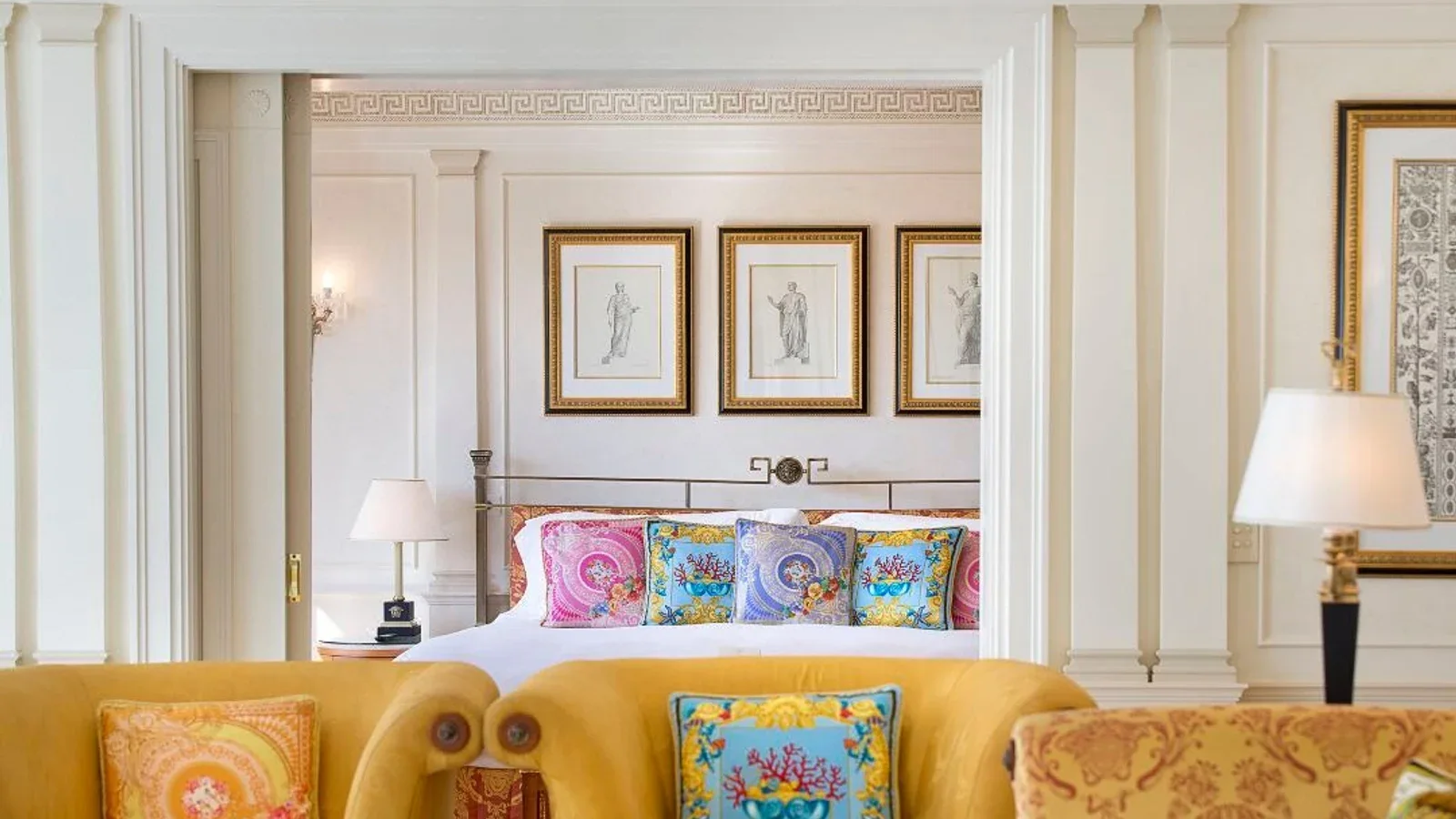
Bring the operator into scope decisions before handover
Operations may not own the procurement process, but it supplies decisions that affect use: cleaning access, replacement routes, spare storage, room reset, movable layouts, housekeeping equipment, accessibility requirements, maintenance records, and the information needed to identify a replacement item later.
Ask operators to review observable tasks rather than approve abstract descriptions. Can housekeeping move the chair to clean? Can a damaged panel be accessed without dismantling unrelated work? Does the hotel know where spare upholstery or hardware is recorded? Can a replacement fit through the same route?
Build a concise hotel FF&E control pack
A useful early-stage pack can be small if the information is connected:
- a space and room-type schedule;
- an item register with quantities and current references;
- an inclusion, exclusion, and interface column;
- a responsibility matrix covering development, approval, supply, delivery, installation, connection, and handover;
- an approval and information-release schedule;
- an exception register for unresolved scope.
This pack becomes the bridge to later procurement, manufacturing, logistics, installation, and asset records. It also prevents the broad term “hotel FF&E” from hiding missing packages.
The boundary is complete when no item is owned only by a label
Do not aim for a universal FF&E list. Aim for a project list in which each item, quantity, interface, and handover has a responsible workstream. Contracts, brand standards, applicable requirements, and the final operator brief remain authoritative.
Gainwell’s hotel furniture product scope can support the furniture side of that review. To discuss a live project, share the room and area schedule, current drawings, expected furniture packages, interface list, and target decision dates. Request a scope review.