


Repair outdoor furniture by identifying whether the damage affects its appearance, operation or ability to support a load. A sound item with a small finish defect may need local surface work. A failed glide or worn cushion may be replaceable. A cracked frame, loose load-bearing joint or unexplained loss of stability needs assessment before the item is offered to guests again.
The purpose of the repair determines the method and the checks that follow it. Matching a new finish does not prove that a table stands securely, and replacing a failed component does not resolve a recurring problem if the new part is exposed to the same conditions that damaged the original.
Identify Whether the Damage Affects Appearance, Use or Support
Inspect the item in its current condition and record its model, location and the movement or activity during which the problem was found. A mark on a tabletop, a chair that rocks and a lounger backrest that fails to hold position call for different responses. Check accessible components without loading or using an item that shows signs of structural damage. Separate it from guest use when its condition is uncertain.
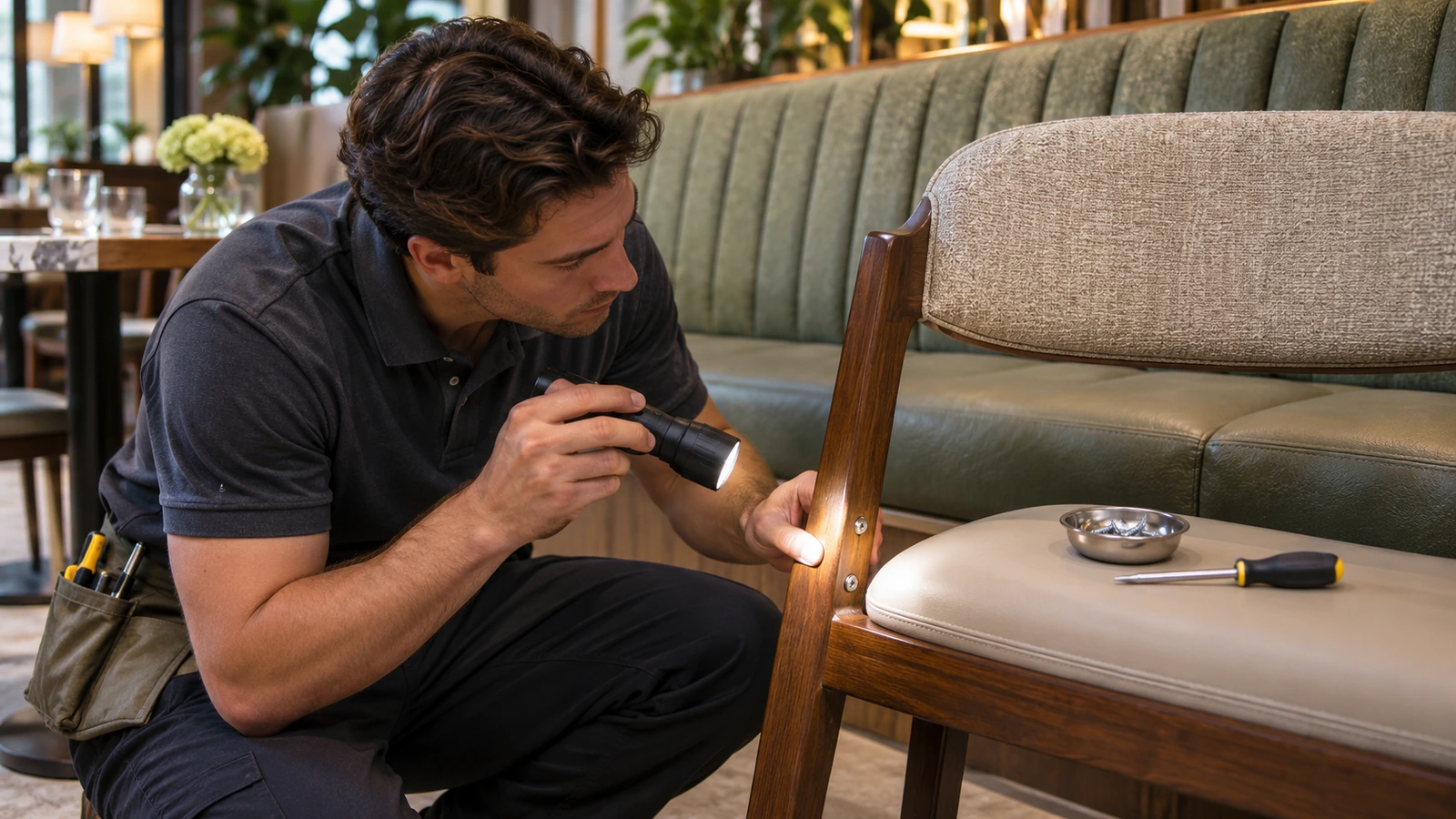
Look beyond the visible symptom. A missing glide can leave a chair uneven; a similar movement can also come from a bent leg or loose connection. Compare with the product information or an undamaged item to identify what has changed, while recognising that a visual comparison cannot establish structural adequacy.
Start with the circumstances of the fault. A dining chair that wobbles in one part of a terrace may be sitting on an uneven surface, while a similar chair that moves at the same joint in several positions needs closer assessment. Photograph the contact points, record whether any parts are missing and compare the piece with a sound item of the same model. If the failure affects support or safe movement, hold the item out of service while its cause is investigated. This also prevents a second shift from returning it to the floor by mistake.
Decide When a Surface Repair Is Enough
Surface repair is appropriate to consider when the item is otherwise sound and the damage is confined to the finish or another non-structural surface. Identify the material and existing finish, then check the supplier’s instructions for compatible preparation and repair. A local scratch on a coated frame can require a different response from widespread coating lift or a soft, deteriorated substrate.
Test the appearance where appropriate and assess the result after the required drying or curing period. If the affected area extends into a joint or the substrate condition cannot be determined, investigate the cause before coating over it. A colour match alone is not an acceptance check.
Define what the repaired surface has to withstand. A mark under a table apron is viewed differently from a worn armrest that guests grip and staff wipe throughout the day. Check the supplier’s finish information before selecting a preparation or touch-up method and protect adjacent fabrics or fittings during the work. For multiple pieces, trial the method on one representative area and inspect it under the light of the intended setting. Include the normal service cleaning method in the compatibility check where the repair instructions allow it.
Replace a Worn Part Without Creating a New Fit Problem
Confirm the part against the furniture model, its mounting and the job it performs. A replacement glide needs to sit at the intended height and fit the leg securely; a cushion must fit its support and attachments; a lounger mechanism must match the permitted movement and locking arrangement. Use the supplier’s replacement method when available.
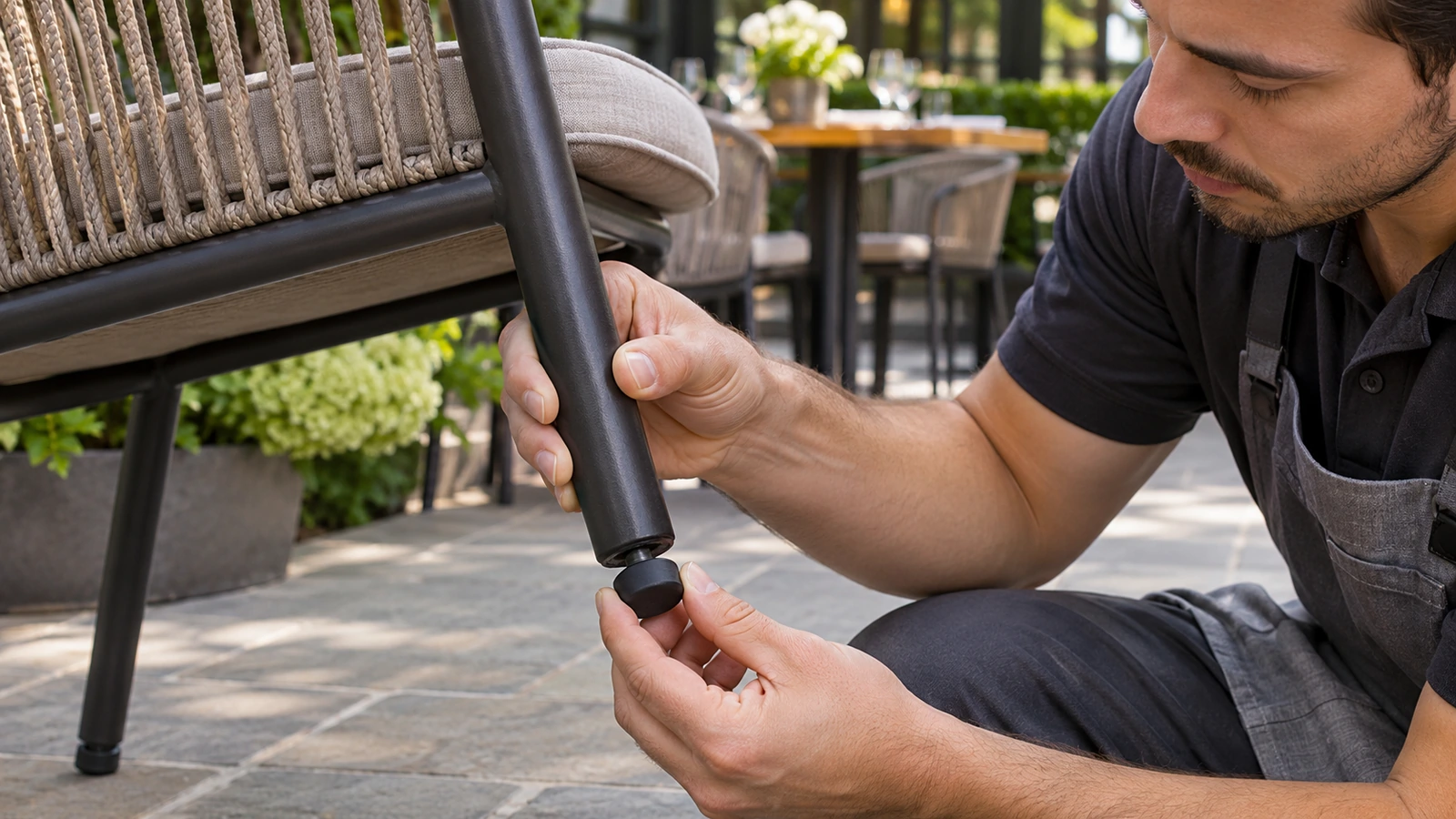
Where several parts work together, check whether any associated fittings must also be replaced. After installation, review the effect on the complete item. A new glide that makes one leg sit higher than the others, for example, may leave the original stability problem unresolved. Avoid adapting components that affect support or safe movement without an approved basis.
When ordering a replacement, give the supplier the model reference and a photograph of the part in place, along with the dimensions or markings requested. A glide, hinge or cap may have changed between production runs, even where the furniture still carries the same name. Keep the old part until the replacement has been confirmed, provided it can be stored safely. If a component repeatedly works loose, ask about the condition of its mounting point. Installing another part into a damaged fixing can leave the original fault unresolved.
Know When Damage Needs Specialist Assessment
Remove items with cracked frames, distorted supports, suspect welds or unstable load-bearing connections from use. Record where the damage is, whether it followed an impact or recurring operation, and which other items might be affected. A service team should be able to tell immediately which furniture is awaiting assessment and which can be used.

A supplier or suitable repair specialist can determine whether the item is repairable and what verification is needed. A general welding method, new screw or informal load check cannot replace that assessment. Where a repair has failed again, share its history rather than repeating the same intervention by default.
Prepare a short record for the specialist that shows where the damage began, what movement was observed and whether similar furniture has the same issue. Identify prior work if the frame has already been straightened, joined or refinished. This information can affect both the proposed repair and the assessment of adjacent connections. Ask for the conditions the item must meet before service and what evidence will support that release. Keep an item isolated until the responsible person has made that decision.
Compare Repair With Whole-Item Replacement
Ask whether a suitable part or compatible repair method is available, how long the item will be out of service and whether the repair can restore its intended use. Consider the effect on matching pieces and whether the hotel can maintain the repaired configuration. The lowest immediate cost may be less useful if the same defect is likely to leave the item unavailable again.
If replacement is justified, review outdoor chairs, tables and loungers against the use that exposed the original weakness. Specify accessible connections or replaceable wear parts where they matter. When several items are approaching the same condition, the guide to hotel outdoor furniture durability can help frame the wider decision about the furniture group.
Compare the full impact of each option. A replacement seat insert may keep a matching terrace set in use, but the lead time and fitting work still need to fit the service plan. A new unit may be easier to source yet differ in footprint, stack height or finish. For a heavily used outlet, estimate how many seats will be unavailable at the same time under each option. Include any stock already held as spares, since it may allow the hotel to repair items in batches while retaining the planned layout.
For a mixed batch, make the decision item by item using the same criteria. A recent chair with a confirmed worn glide and sound mount may be easy to return to service. An older one with the same visible wobble and several deteriorating connections may require a separate assessment and a different budget decision. Document the difference so the next reviewer can see why one item was kept and another was retired.
Verify the Repair Before Furniture Returns to Service
Check the repair against the reason it was carried out. Inspect finish compatibility, cure and contact surfaces for cosmetic work. For a replaced part, confirm fit, retention and correct operation in the intended configuration. For load-bearing work, use the acceptance route established by the responsible specialist; a staff member sitting on the repaired chair is not adequate evidence.
Record the check and identify who can return the item to use. Keep unresolved items separate, with their status visible during cleaning and furniture resets. This makes it less likely that a piece awaiting inspection will be placed back in a guest area.
Give each check a named owner and tie it to the original fault. For a replacement glide, confirm correct fit and stable contact in the intended location. For a moving component, check that the approved part is installed as intended and operates through its normal range according to supplier guidance. For a repair affecting support, use the verification specified by the qualified party responsible for it. Record any restrictions or follow-up checks so attendants know what to report during routine service.
Look for the Same Failure Across Similar Items
Compare failures by model, location and activity. Damage at the same point on chairs stacked each evening may direct attention to contact during stacking, while similar defects across different areas may require a broader product review. Observe the operation and compare it with the supplier’s instructions before deciding whether the solution is a change to handling, a part replacement or an updated furniture specification.
Where several zones need renewal, integrated resort furniture solutions offers context for reviewing the wider furniture package. Use the failure records to identify requirements for each area rather than assuming a single replacement model addresses every problem.
If a pattern emerges, review what happens between uses. Staff may drag a table by one corner during every reset, or the legs of stacked chairs may touch a finished edge in storage. Walk through the process with the people who handle the furniture and compare it with the supplier’s instructions. A different trolley, a change in stack position or a revised reset routine may address the cause. If the furniture still sees the same demanding use, carry that observation into the next specification.
Choose Outdoor Furniture You Can Maintain Over Time
When recurring repairs are shaping the next purchase, Gainwell can help discuss hotel outdoor furniture with replaceable parts, cleaning access and everyday handling in mind. A description of the repeated failure and the furniture’s location can help turn that experience into a clearer product requirement.
Review a sample with the maintenance team before specifying a large order. Ask which components are available separately, how to identify the correct part and what instructions the supplier provides for replacement. Where the same chair will serve several outlets, confirm whether each finish uses the same components. A common part across several models can simplify stockholding when the supplier confirms compatibility. Also ask how to handle faults that fall outside routine maintenance, so staff know when a piece can be repaired in-house and when it needs a supplier or specialist assessment.
Frequently Asked Questions
Should a Hotel Contact the Supplier Before Repairing Furniture Under Warranty?
Check the applicable terms and ask for the approved inspection or repair route before changing the furniture. Keep the purchase record, item reference, photographs and any previous repair details. Unauthorised alterations may affect how the supplier can assess the original problem.
Can a Repaired Item Be Moved to a Lower-Use Area?
Only after it has been assessed as suitable for the proposed use. Moving it does not resolve a structural concern or an uncertain connection. A different location may also bring different exposure or maintenance requirements.
What Should Be Kept With a Repaired Item’s Maintenance Record?
Record the item and location, fault, approved method, replacement part, person responsible for the work and the result of the return-to-service check. Keep photographs or supplier instructions where they help identify the repair later.