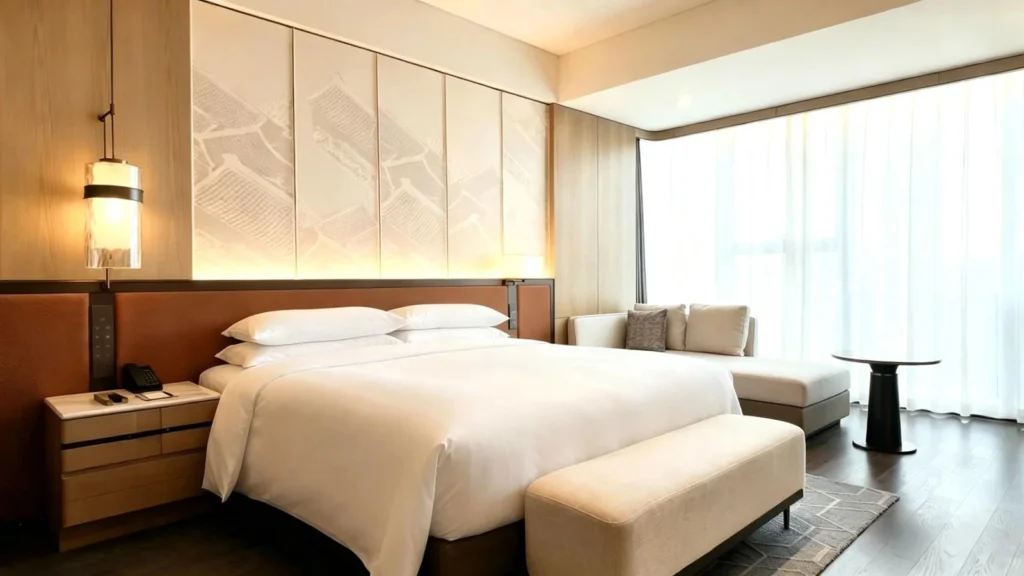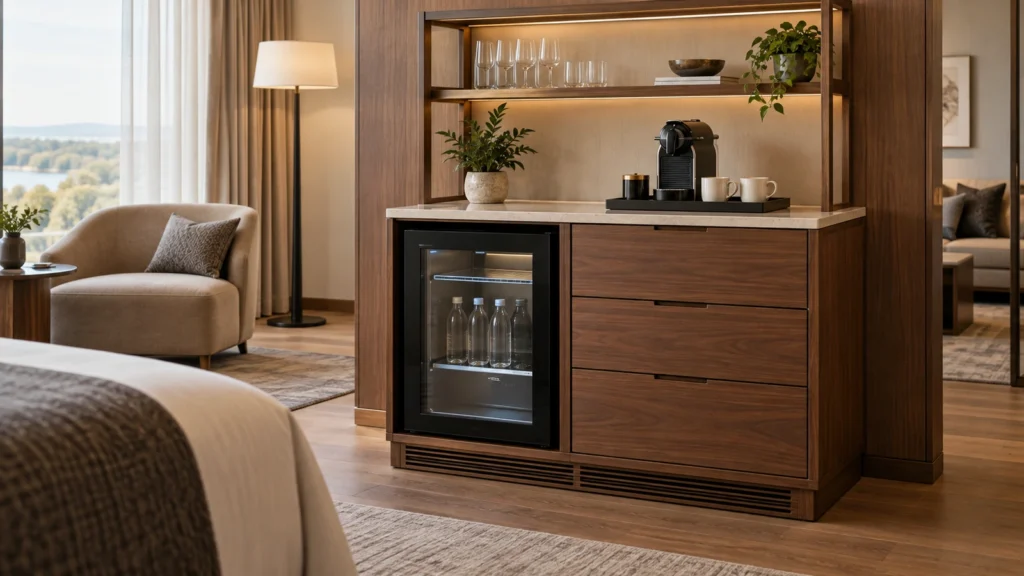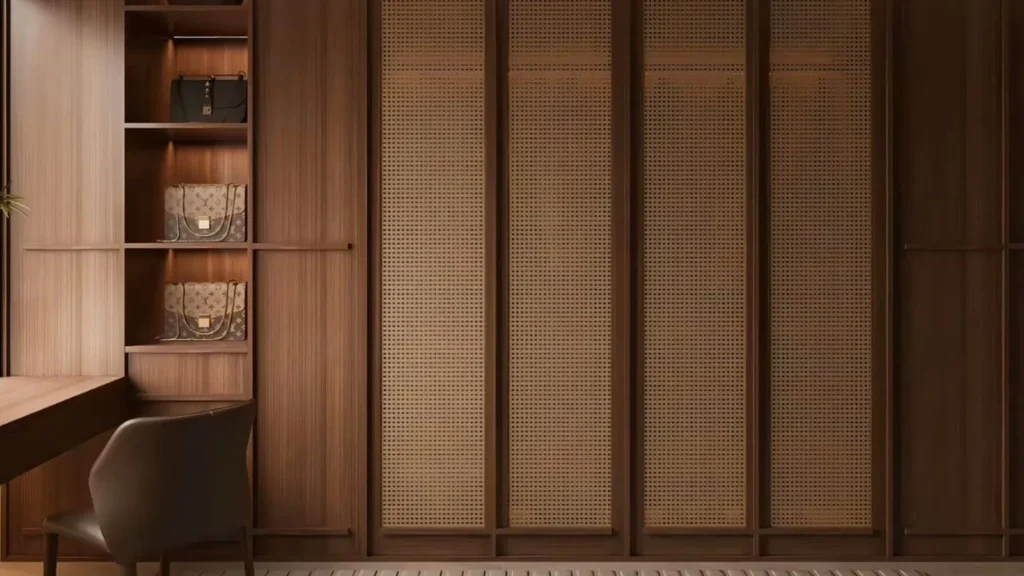

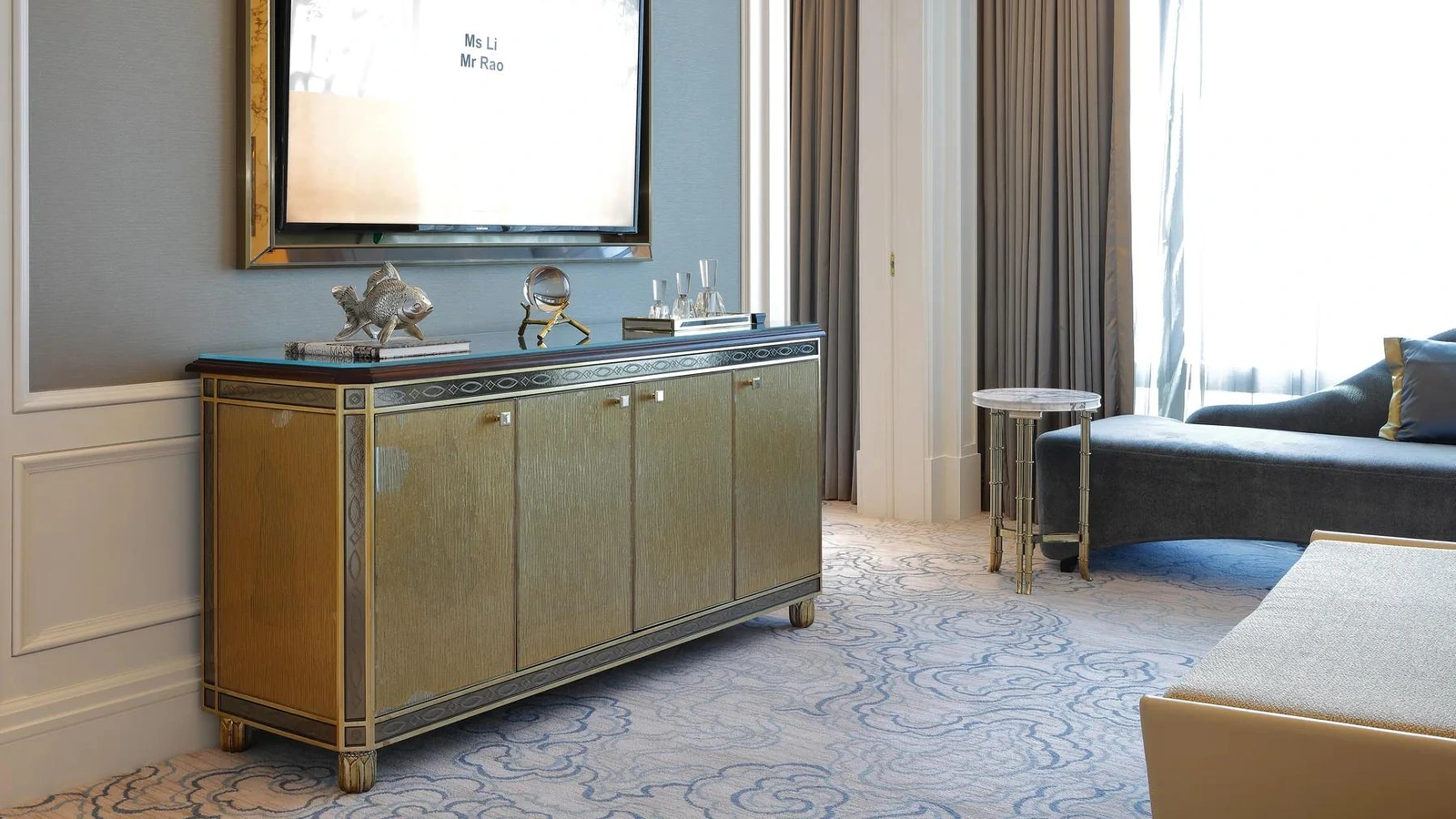
Solid wood can suit shaped edges, legs and selected framing, while wood veneer over a specified core can suit broad cabinet faces; the appropriate choice depends on each component’s form, construction, finish and operating conditions. A hotel wardrobe, dresser or bedside cabinet may use both constructions within the same item.
The useful comparison therefore starts with the component rather than the furniture label. A broad wardrobe door presents different requirements from a shaped leg, and a bedside top faces different contact from an internal shelf. Choosing one material for the entire piece can overlook these differences.
For hotel casegoods, the aim is to develop a construction that supports the intended appearance, daily use and maintenance approach within the project budget. Understanding what solid wood and veneer each contribute makes that choice more precise.
Understand Solid Wood and Veneer Construction
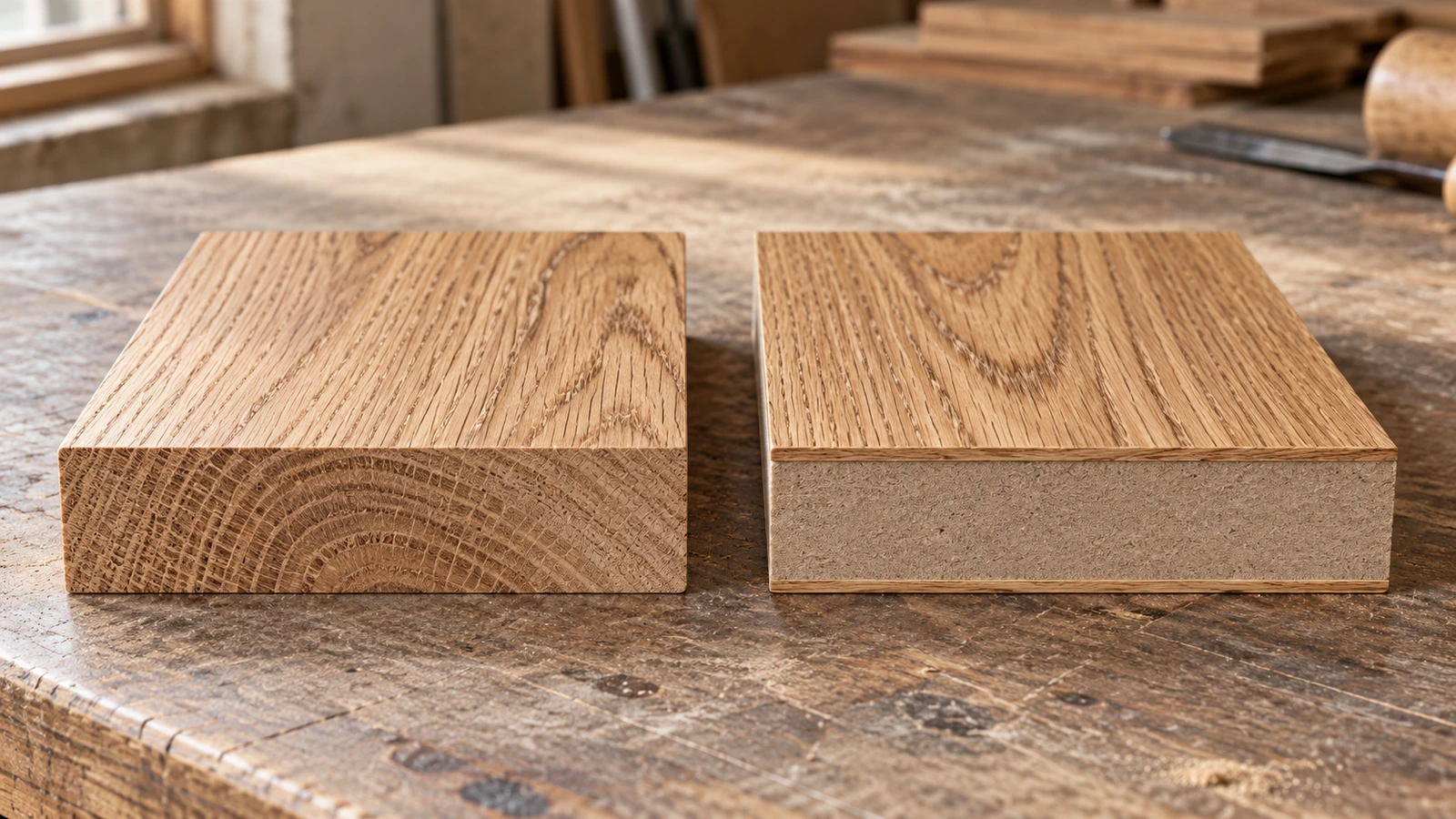
A solid wood component uses timber through its section rather than a thin wood facing over a different core. It may be made from one piece or from timber sections joined together. The description should still identify the species, component arrangement and connection details: a solid timber frame and a wide edge-glued panel are different constructions, even when both are described as solid wood.
Wood veneer is a thin layer of real wood bonded to a supporting substrate. That substrate may be plywood, MDF, particleboard or another specified material. The veneer supplies the visible timber surface, while the core, adhesive, backing and edge construction contribute to the finished panel’s behaviour. “Oak veneer,” for example, identifies the face material but does not fully describe a cabinet door.
Veneer also differs from a printed wood-effect surface. Both may reproduce a particular design direction, but natural wood veneer has the grain and variation of wood. A material schedule should distinguish them clearly so that a wood species name is not used to describe a visually similar printed finish.
These distinctions explain why solid wood and veneer are not mutually exclusive furniture categories. A cabinet can combine veneered panels, solid timber legs and a separate top. What matters is whether each construction suits its position and whether the junctions work together.
Compare Grain, Profiles and Appearance
Solid timber can be useful where the design depends on the shape of the component itself. A turned leg, profiled frame or rounded timber edge requires material through which the form can be developed. Grain direction and the way adjoining pieces meet remain visible parts of that design. The selected species and timber arrangement should therefore be reviewed alongside the profile, rather than after the shape has been fixed.
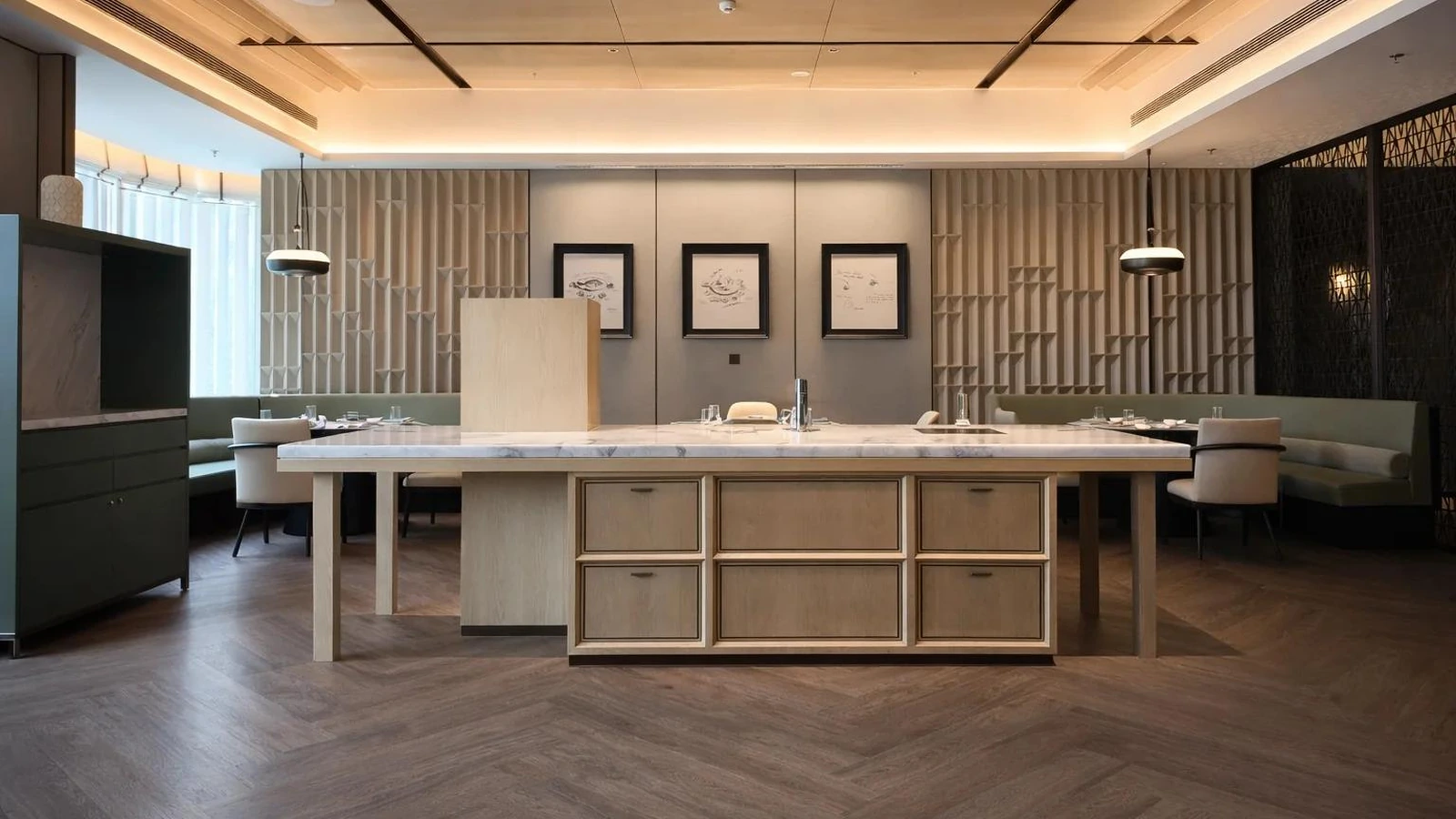
Veneer offers a different way to organise the visible surface. Its cut, selection and arrangement can establish grain direction across broad cabinet faces or create deliberate relationships between neighbouring doors and drawers. This makes it useful when the interior concept relies on a continuous or carefully composed timber appearance. The result still contains natural variation; matching describes an arrangement and an acceptable visual relationship, not identical colour in every leaf.
The junction between solid wood and veneer deserves particular attention. Even when both are sold under the same species name, differences in grain, selection and preparation can affect how the finished surfaces appear. A solid edge may read darker than the panel beside it, or a frame may interrupt a grain pattern that looked continuous in the elevation. These differences can be attractive when intentional, but they should be evaluated as part of the design.
A representative finish sample should therefore show more than a flat colour patch. Include a section of the broad face, the proposed edge and any adjacent timber detail. Review the combination under relevant lighting and agree the acceptable range of variation. This connects the desired appearance to the construction that will produce it.
Account for Movement and Panel Construction
Once the visual direction is established, the comparison needs to address what happens when the furniture is installed, operated and cleaned. Material identity contributes to performance, but the complete construction determines how that material functions in the item.
Solid wood responds to changes in moisture conditions, with movement influenced by grain direction, species and the component’s dimensions. The furniture design must accommodate that behaviour through appropriate construction and connections. A broad timber panel restrained by surrounding components presents a different question from a narrow leg or rail.
A veneered panel requires a different assessment. Its behaviour depends on the core, facing and backing arrangement, bonding and environmental conditions. Veneer over plywood is not interchangeable with veneer over MDF simply because the visible species is the same. Each proposed build-up should be evaluated for its panel size, support, fixing and intended use.
Neither construction should be treated as immune to environmental change. Storage, transport and installation conditions also matter, especially where furniture passes through different environments before the hotel becomes operational. The project specification should establish the applicable material and conditioning requirements rather than borrowing a universal value from another job.
Review Contact, Edges, Cleaning and Repair
A scratch in a clear coating, a dent in timber and a chipped panel edge are different forms of damage. Their likelihood and consequences depend on where contact occurs and how the surface is constructed. A wardrobe face may experience frequent handling around a pull, while a bedside top encounters drinks, personal items and cleaning.
Solid wood provides timber beneath the finish, but it can still dent, split or suffer coating damage. A veneered surface can also perform satisfactorily when the facing, bond, substrate and protective finish suit the application. The comparison should identify the expected contact and the detail exposed to it rather than assigning a general durability ranking.
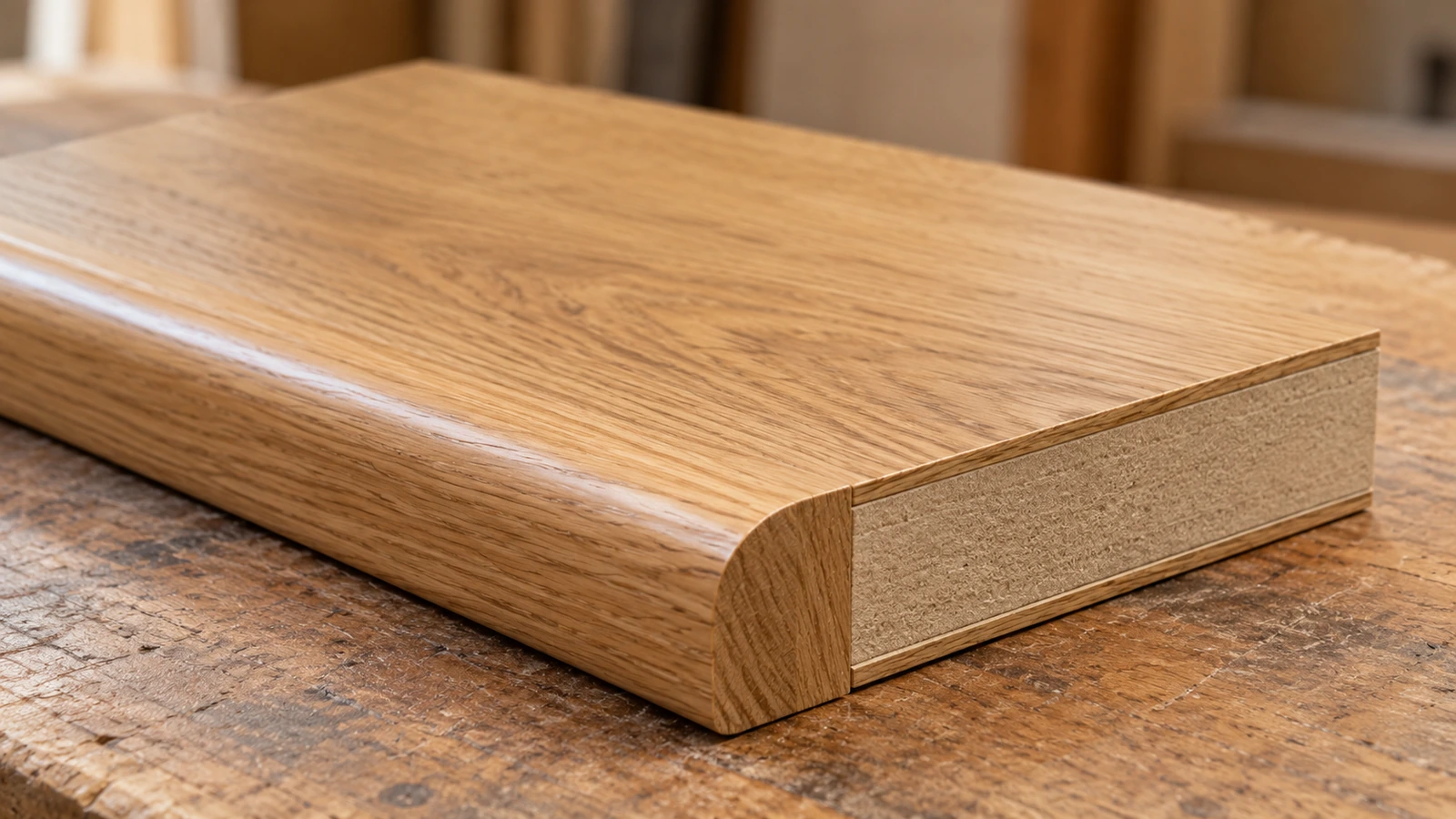
Edges often reveal the practical difference. A shaped timber lipping, a thin edge band and a mitred veneer junction do not respond to impact in the same way. Their suitability depends on geometry, attachment and use. Likewise, moisture performance cannot be established from the face material alone: joints, exposed ends, cut-outs and the underlying construction all need consideration.
Routine care should follow the approved finish system, whether the surface beneath it is solid timber or veneer. For an intact finished surface, remove loose dust with a clean, soft cloth and use only the cleaning method approved for that finish. Where damp wiping is permitted, keep the cloth lightly damp, avoid leaving moisture at joints and edges, and dry the surface promptly. Trial an unfamiliar approved cleaning product in a discreet area before wider use.
Check the surface after it has dried. A satisfactory result leaves it clean without a new change in colour, sheen or texture. If cleaning produces whitening, tackiness, colour transfer or another unexpected change, stop and obtain an assessment of the finish. Raised veneer, open joints, swelling or exposed substrate require a repair decision rather than more vigorous cleaning.
Repair options also differ by construction. Some solid timber components may allow material removal and refinishing, but profiles, coatings and previous repairs can limit that route. Veneer has a finite face thickness, so sanding or local treatment must account for the remaining surface and the condition below it. A damaged door or top may be better handled as a replaceable component where the furniture was designed for that approach.
For a wider assessment of joints, hardware, surfaces and operating conditions, the guidance on hotel furniture durability considers those risks at the assembled-item level.
Compare Cost on an Equivalent Basis
Solid wood is not automatically the more expensive option, and veneer is not automatically the economical one. Cost follows the specified materials, appearance and manufacturing work. Species, availability, selection, component dimensions and machining all affect a solid timber proposal. Veneer cost depends on the selected face, matching requirements, core, bonding, edge treatment and finishing.
A carefully matched veneer composition across several cabinet fronts can involve substantial selection and fabrication work. A comparatively straightforward solid timber component may involve less. Conversely, large or highly selected timber sections and complex shaped details can increase the cost of a solid wood scheme. The comparison becomes useful only when the design requirements are equivalent.
Consider an illustrative bedside cabinet with a timber appearance, one drawer and shaped legs. One proposal might use a veneered cabinet body with solid timber legs; another might use more extensive solid timber construction. To compare them, keep the external dimensions, drawer function, finish expectations, hardware and quantities aligned, then identify what changes inside the construction. The exercise should reveal what the price difference buys, rather than treating the two totals as interchangeable offers.
Maintenance and replacement priorities can influence value too, but they need specific support. An accessible, replaceable drawer front may be useful to the operator; its benefit depends on the connection, availability of parts and retained finish information. A material label alone cannot establish lower operating costs.
Choose Materials by Casegoods Component
The preceding comparisons point towards a component-based choice. Broad faces, shaped parts and high-contact surfaces perform different jobs, so the same furniture item can reasonably contain several material constructions. Current casegoods and storage categories illustrate the range of products involved, from bedside units and wardrobes to minibar cabinets and consoles.
For cabinet bodies, the first requirement is a coherent enclosure. Shelves, partitions and hardware must connect to a defined material, while exposed ends need an intentional finish. A concealed panel and a visible side may share some construction requirements but have different appearance priorities. The specification should make that distinction clear rather than describing the whole body with one visible wood species.
Doors and drawer fronts bring appearance and operation together. A continuous grain composition may favour a particular veneer arrangement, while a framed or profiled design may introduce solid timber components. Whichever route is chosen, the completed front must work with its hardware and surrounding clearances. A finish sample communicates appearance; the drawing explains the panel and its connections.
Legs, rails and shaped edges should be considered through their geometry. Solid timber may suit the proposed profile, but the joint, grain orientation and connection to the cabinet remain part of the decision. Where a timber edge meets a veneered face, review both the visible transition and how the two components are assembled. The edge should be a defined part of the construction, not an unspecified addition intended to conceal the core.
Tops require attention to the actual use zone. A bedside top supporting drinks and small personal items differs from a desk surface or an internal shelf. The approved material combination should address support, perimeter details, joints and cleaning. Choosing solid wood for a top does not eliminate the need to review spills and finishes, just as choosing veneer does not settle the suitability of its core.
Returning to the illustrative bedside cabinet, a practical scheme might combine a veneered body and drawer face, solid timber legs and a separately specified top. That is a design example, not a universal recommendation. Its suitability depends on the approved proportions, connections, finish and use conditions. The example shows why the material decision belongs at component level: each choice has a reason that can be explained and checked.
The strongest hotel casegoods specification is therefore more precise than “all solid wood” or “wood veneer.” It identifies what each component is made from, how it meets its neighbours and why that construction suits the intended task. Visual coherence can come from a deliberate material mix, with appearance, daily use, repair possibilities and cost considered together.
Develop Custom Hotel Casegoods with Gainwell
Gainwell develops custom casegoods with coordinated material combinations and finish sampling. Broad cabinet faces, shaped timber details and supporting components can be reviewed together through drawings and physical samples to develop the intended construction and appearance.
To discuss custom hotel casegoods, share the furniture drawings, preferred wood appearance, proposed material build-ups, quantities and operating requirements. Identify any priorities for grain matching, edge details or replaceable components so the review can focus on the choices that matter to the room design.
Frequently Asked Questions
Can a veneer approval cover a change of panel core?
A veneer appearance approval does not approve an unspecified replacement core. Record the proposed change and compare the revised panel with the accepted construction, including thickness, weight, hardware attachment, edges and any applicable performance evidence. Update the drawings and material schedule where the change is accepted, and review a revised sample where it could affect appearance or operation.
Does a sourcing certificate prove cabinet durability?
A sourcing certificate does not by itself prove the durability of a finished cabinet. Check what the certificate actually covers, including the organisation, product scope and relevant claim. Keep that evidence separate from the records used to assess panel construction, joints, hardware, finishes and the completed furniture. Both may matter to the project, but they answer different questions.
What records help match a replacement cabinet door?
Keep the door dimensions, construction, veneer species and grain arrangement, edge detail, hardware positions and finish references. Retain an approved physical reference where practical, together with the cabinet item code and final drawing revision. When ordering a replacement, compare the proposed door with the installed furniture because ageing, lighting and natural variation can affect the visible match even when the original specification is followed.