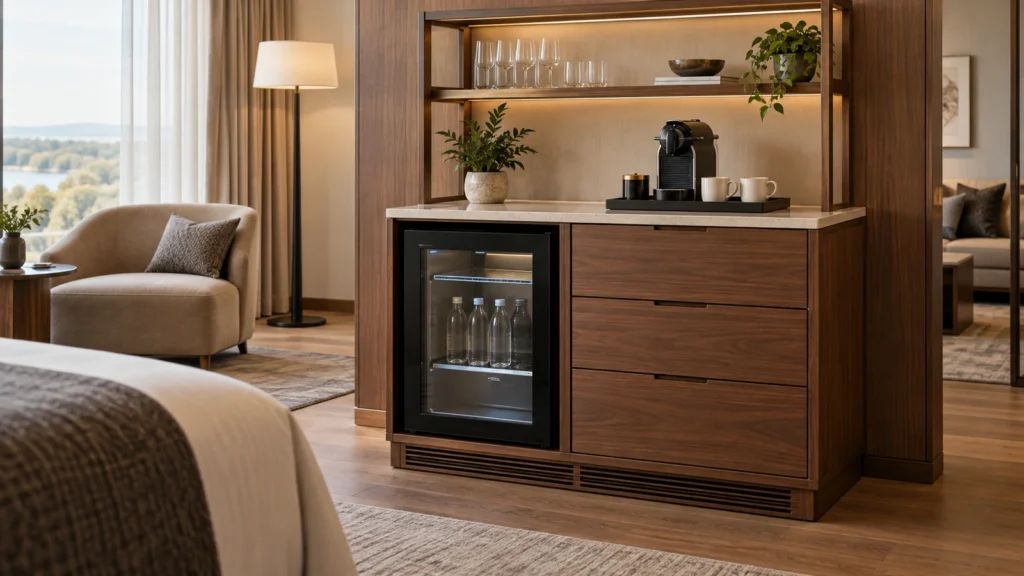

“Durable” and “contract grade” are useful intentions, but neither is a release record. A hotel chair may have a robust frame and still develop a seam, glide or finish problem. A nightstand may use an appropriate surface while its edge, hardware or floor interface remains unresolved. The material name is only one part of the assembled item.
Durable hotel furniture is furniture whose expected use conditions, plausible component failures, design responses and acceptance evidence have been connected to the same item code. The practical question is not “Will this last?” in the abstract. It is: What could fail here, what has the project done about it, and what evidence allows this revision to move forward?
Map the use condition before choosing a durability response
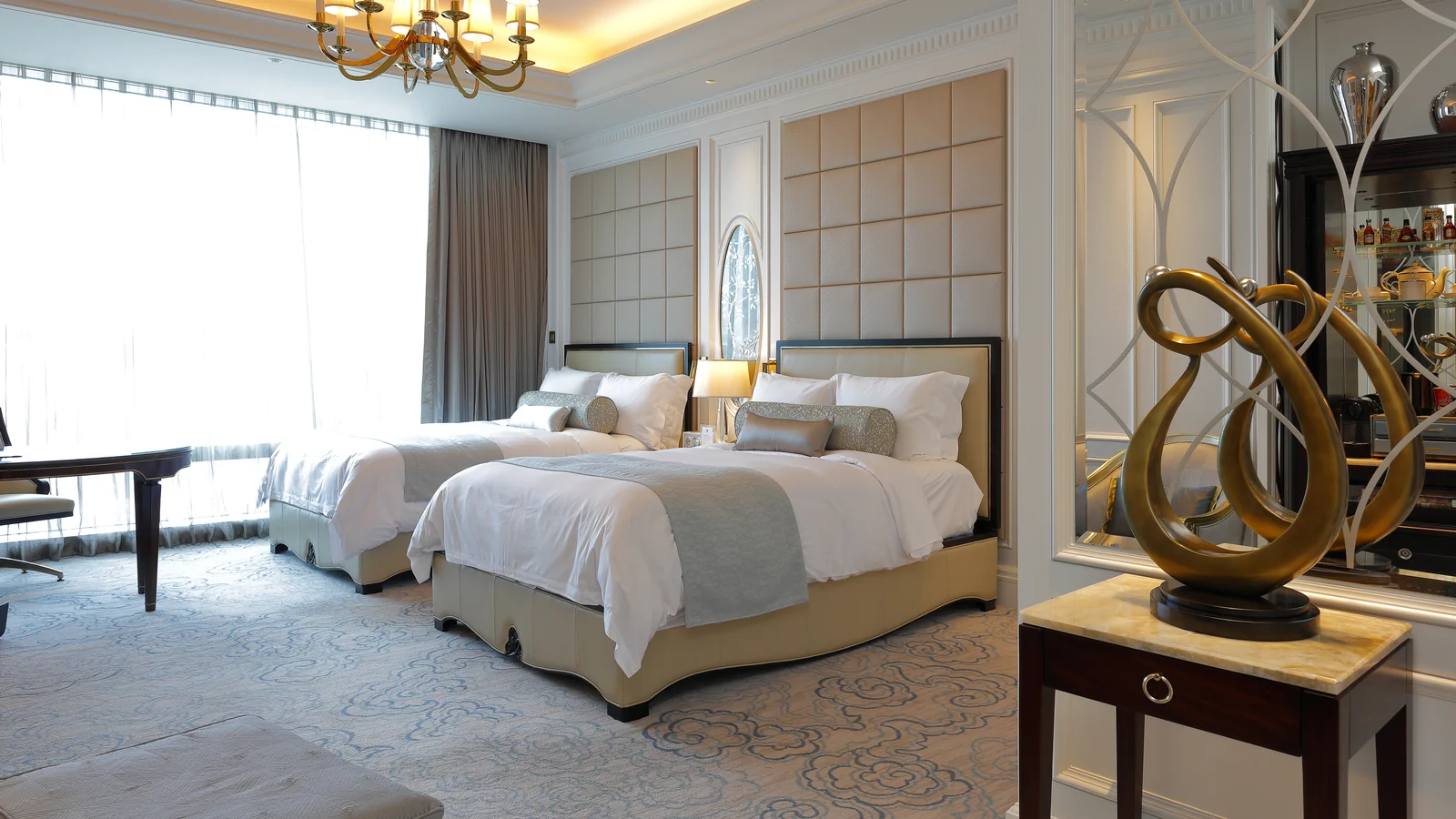
Start with the operating condition, not an adjective in the specification. Gainwell’s Luxury Hotels solution separates guestrooms, suites, lobby and lounge, and dining areas because the furniture functions differ across those zones. The same distinction belongs inside a room. A luggage bench, desk edge, lounge-chair arm and wardrobe door may share a finish language while facing different contact, movement and cleaning patterns.
For every furniture code, record the observable condition:
- who touches, moves, opens or loads the item, and at which points;
- how housekeeping reaches and cleans the surface, seam, edge and floor gap;
- where luggage, carts, footwear, vacuum equipment, spills or adjacent doors may strike it;
- which components move repeatedly and which are difficult to repair in the room;
- which site conditions, destination requirements and operator products must be confirmed.
Write the actual condition rather than “heavy use.” “Wardrobe pull and hinge operated during each guest stay” is a usable input. “Stone-like nightstand top adjacent to drinks and the operator’s nominated cleaner” is another. The project can then select an appropriate response and evidence route without pretending that one generic severity label fits every item.
Build a component failure-mode register
A failure-mode register is a design and approval tool, not a prediction that every listed problem will occur. Use one row for each important component or interface. Name the condition, the visible or functional failure that matters, the proposed response, the evidence required and the owner who must close it.
| Component group | Failure questions to test | Useful evidence before release |
|---|---|---|
| Frame and joinery | Could the item loosen, rack, shift or lose alignment under the defined handling and use? | Controlled section and fixing details, prototype observations, required project tests and in-process inspection points |
| Surface, edge and corner | Could impact, moisture, heat, cleaner contact or a cutout affect the face and edge differently? | Complete build-up, physical sample, edge detail, cleaner review, support detail and acceptance reference |
| Hardware and movement | Could hinges, runners, pulls, swivels or removable parts become noisy, misaligned or inaccessible? | Hardware schedule, fixing and access detail, repeated-operation observation and functional inspection record |
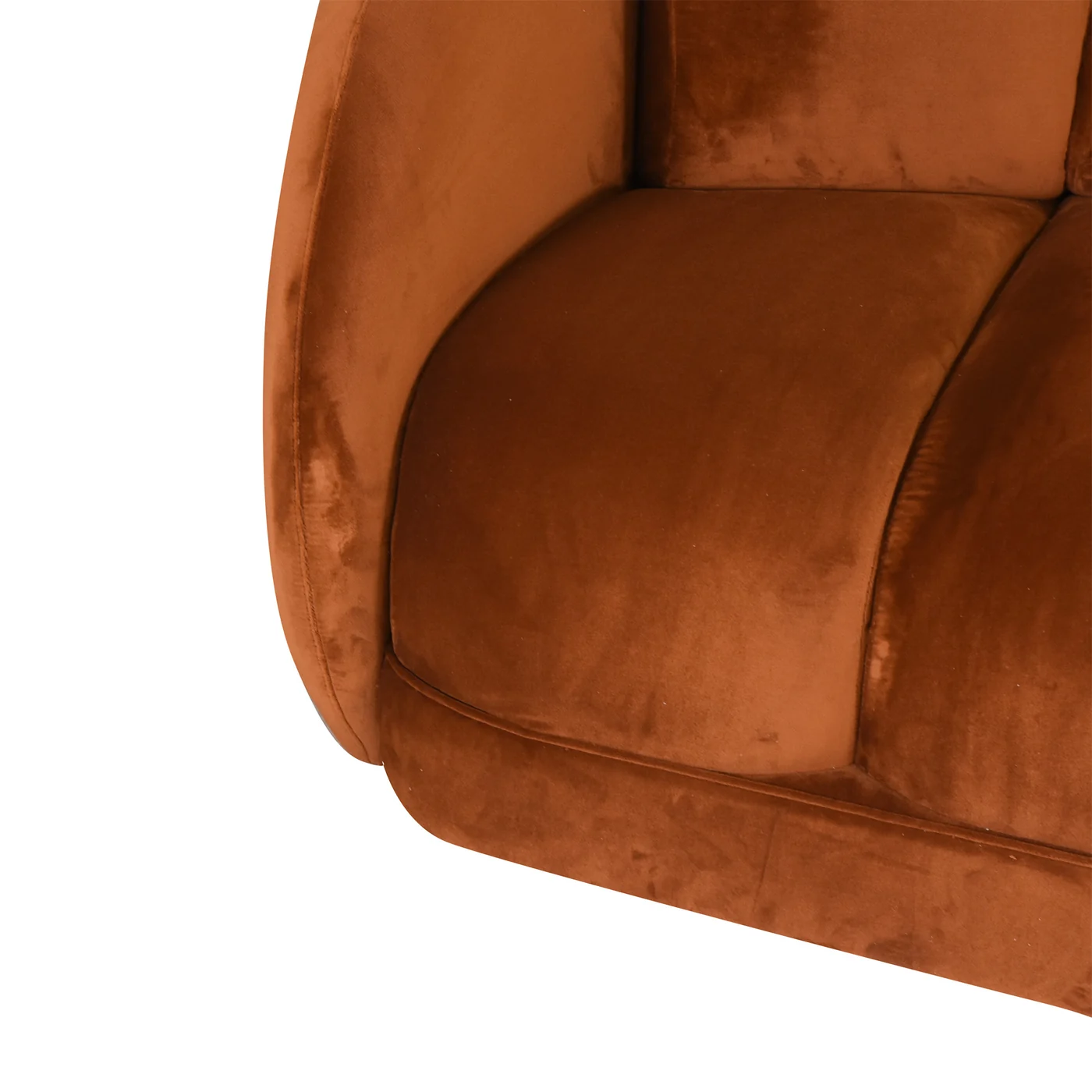
| Upholstery and seams | Could cover tension, seam placement, cushion fit, cleaning or high-contact curves create an early weak point? | Upholstery specification, seam and pattern reference, full-form sample, cleaning input and project-required test status |
| Floor and site interface | Could uneven contact, cleaning equipment, glides, wall adjacency or installation conditions affect the item? | Base and glide detail, clearances, site information, installation method and final placement check |
Keep each conclusion narrow. A photograph can show an exposed seam or a floor gap, but it does not prove hidden construction or performance. A supplier document may identify a component, but it must apply to the exact source, build-up and revision proposed. If the evidence does not match the item, mark the row open.
Use an evidence ladder, not one certificate or sample
No single record answers every durability question. Build an evidence ladder with five levels, and state which level closes each failure mode:
- Requirement: room type, use condition, component, expected function, destination input and acceptance question.
- Design definition: drawing, section, material and hardware schedule, edge or seam detail, cleaning input and named test requirement.
- Prototype evidence: observation of the complete item, movement and access checks, physical finish references, project-specific tests and a consolidated comment record.
- Production evidence: incoming-material identity, in-process checkpoints, functional checks and final comparison against the approved control reference.
- Operating evidence: snagging, maintenance findings, recurring damage location and approved corrective action returned to the item record.
An evidence gap at one level cannot always be repaired by adding more at another. A polished prototype does not replace an incomplete fixing detail. A material data sheet does not prove how a seam sits on a curved chair. A factory machine supports a process, but the project still needs an approved detail and recorded inspection result.
Evaluate upholstery as a complete high-contact system
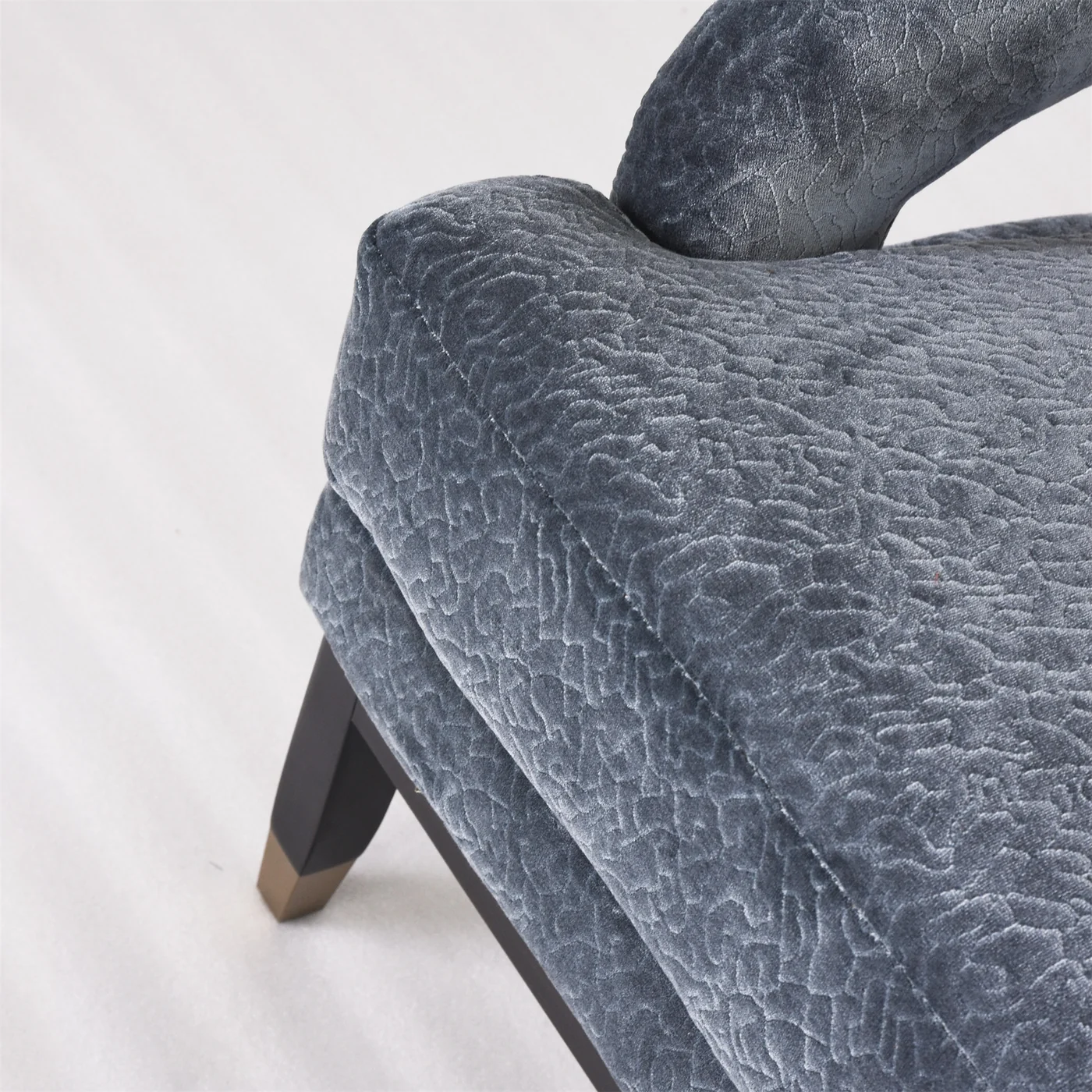
The secondary query “durable upholstery fabrics for hotel furniture high traffic” should not be answered with one fabric name or a universal rub-count threshold. Gainwell’s high-use materials guidance treats upholstery as a system that includes appearance, performance requirements, seam construction, foam, cleaning compatibility and the actual furniture form.
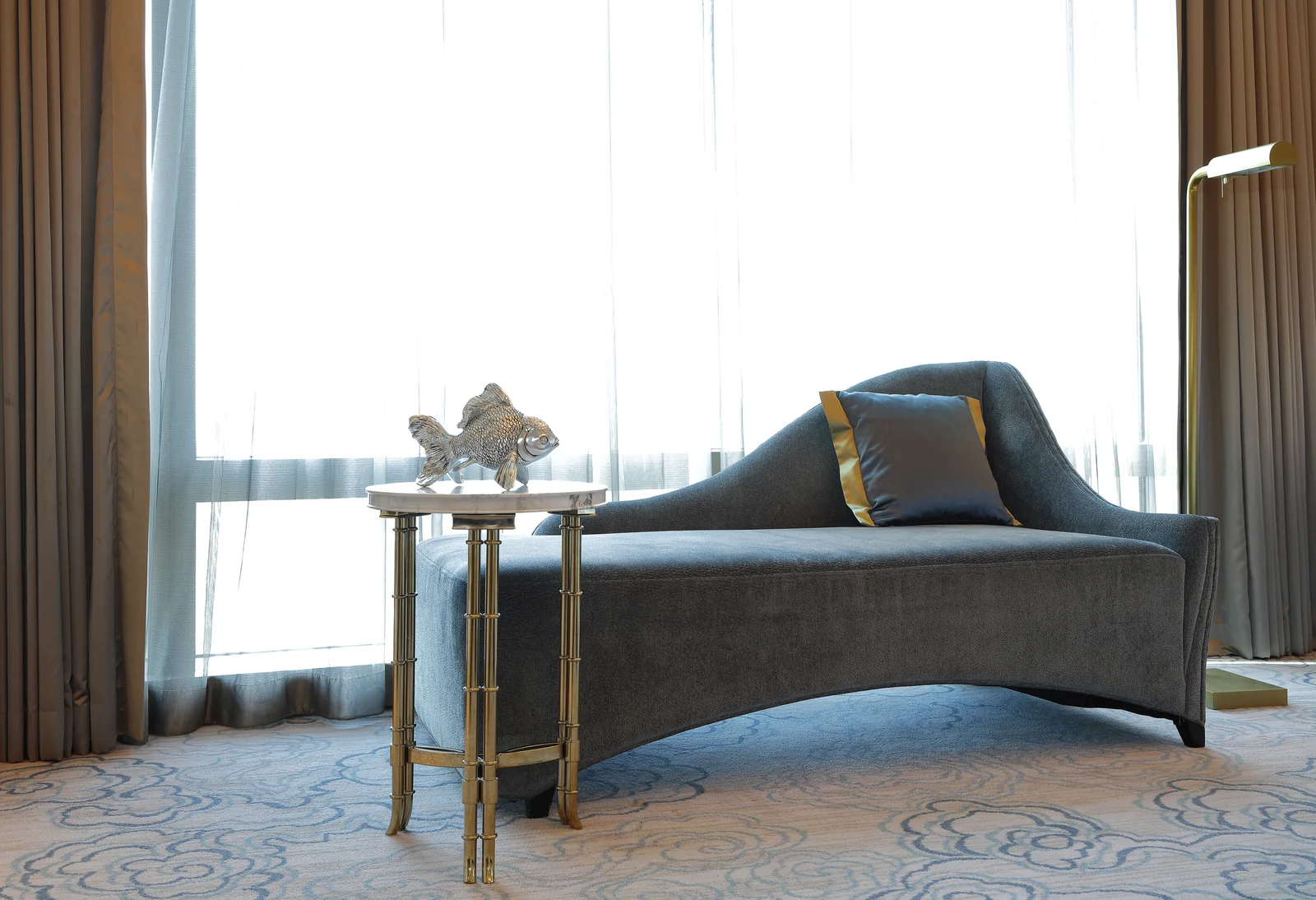
For a lounge chair, sofa, bench or upholstered headboard, link the cover material to the use zone, seam map, pattern direction, backing, cushion or foam specification, attachment method, cleaning products, replaceable parts and required market evidence. Review high-contact curves and the boundary between hard and soft components. If the cover, seam, foam, cleaner or construction changes, reopen the affected evidence rather than carrying the old approval forward.
Treat casegoods, edges and hardware as interacting systems
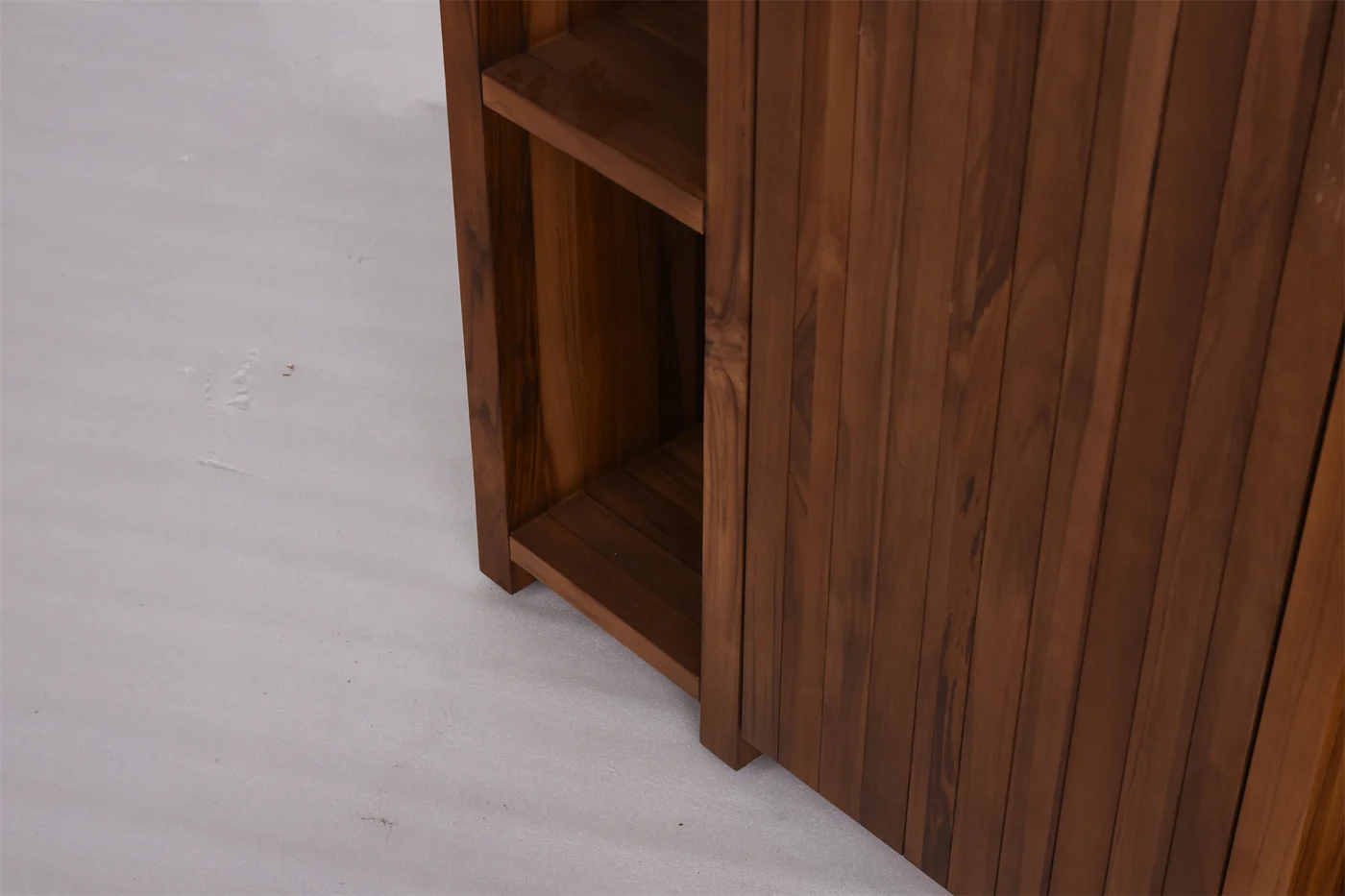
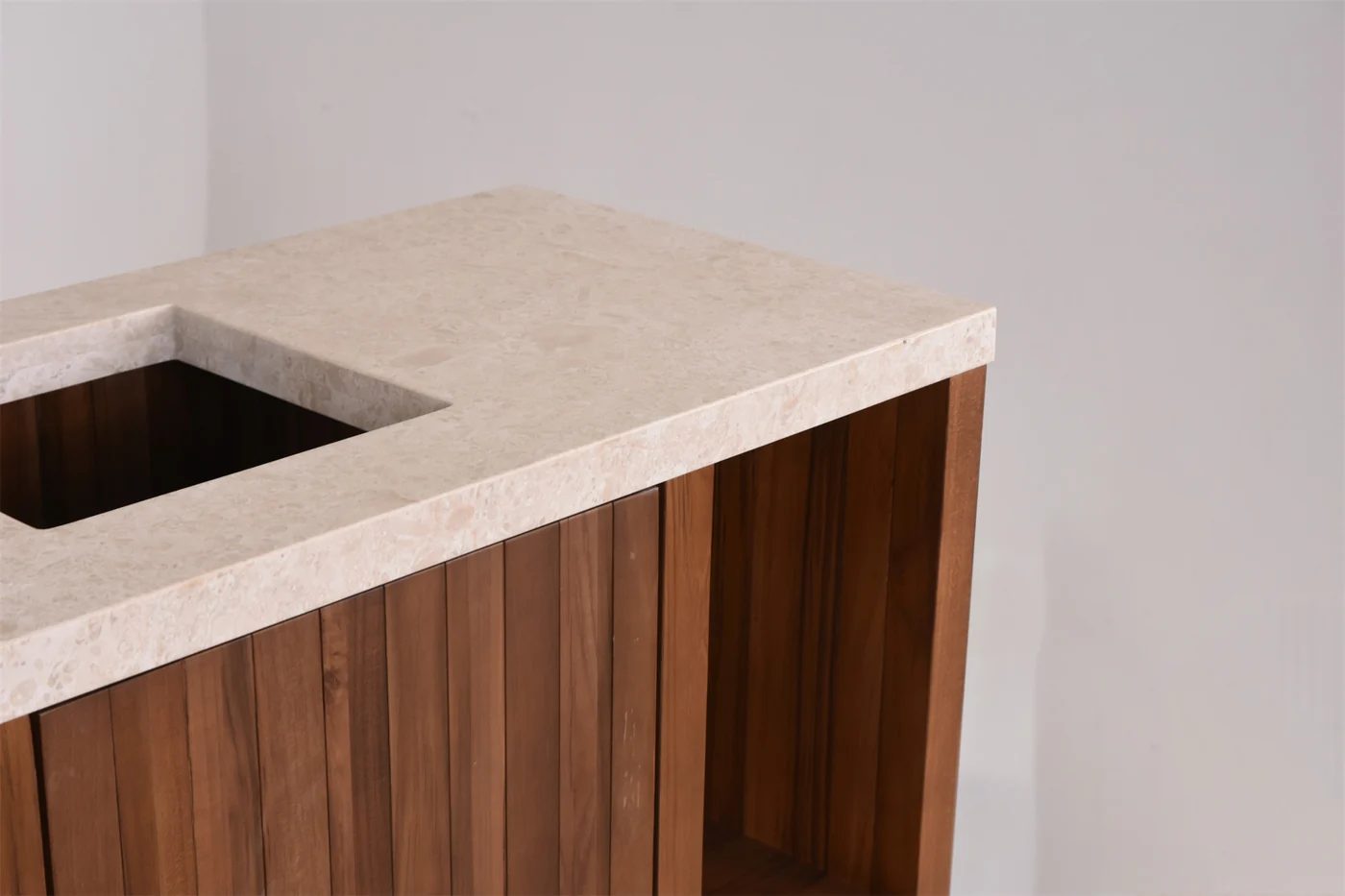
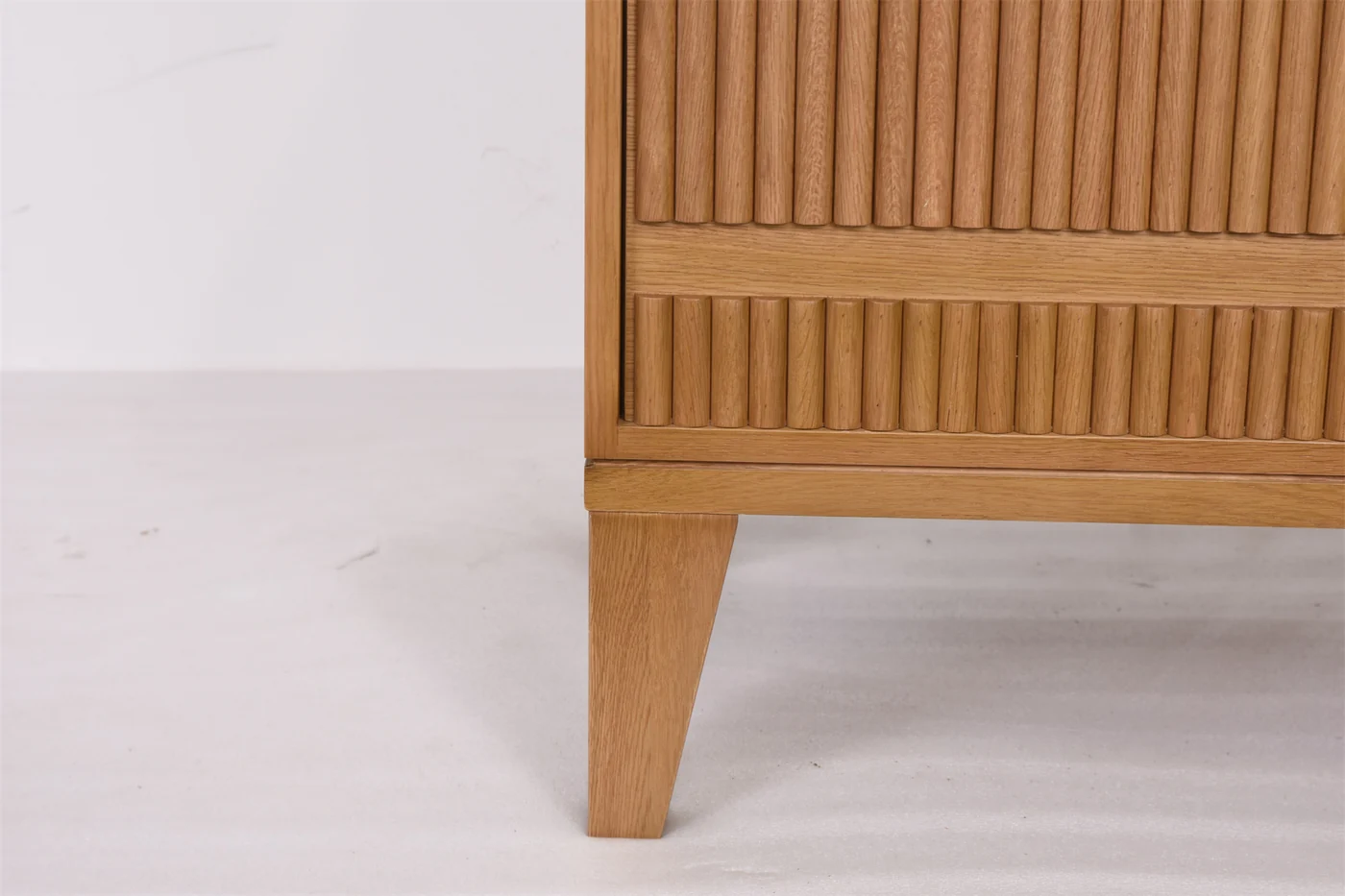
Wardrobes, nightstands, minibars and consoles combine storage function, surfaces, edges, hardware, services and floor contact. Gainwell’s Casegoods & Storage framework coordinates internal layout, hardware, mixed surfaces and inspections of dimensions, alignment, finish and function. Use those categories to structure the failure-mode register rather than reducing the item to “wood casegood.”
At the base, review stable contact, glides, cleaning access, lower-edge exposure and the relationship between legs, rails and panels. At the top, separate the face, perimeter edge, corner, cutout, support and any integrated equipment. For moving parts, identify the hardware source, fixing detail, operating clearance, service access and functional acceptance check. The surface sample remains incomplete until the adjacent details are controlled.
Carry prototype decisions into repeatable production
A prototype can establish the control standard only when its decisions are recorded. Gainwell’s hotel furniture prototype review covers stability, joinery, hardware movement, material transitions, seams and repeated operation, then calls for a controlled approval record. For durability control, add one further question to every accepted comment: How will production and inspection verify that this condition remains the same?
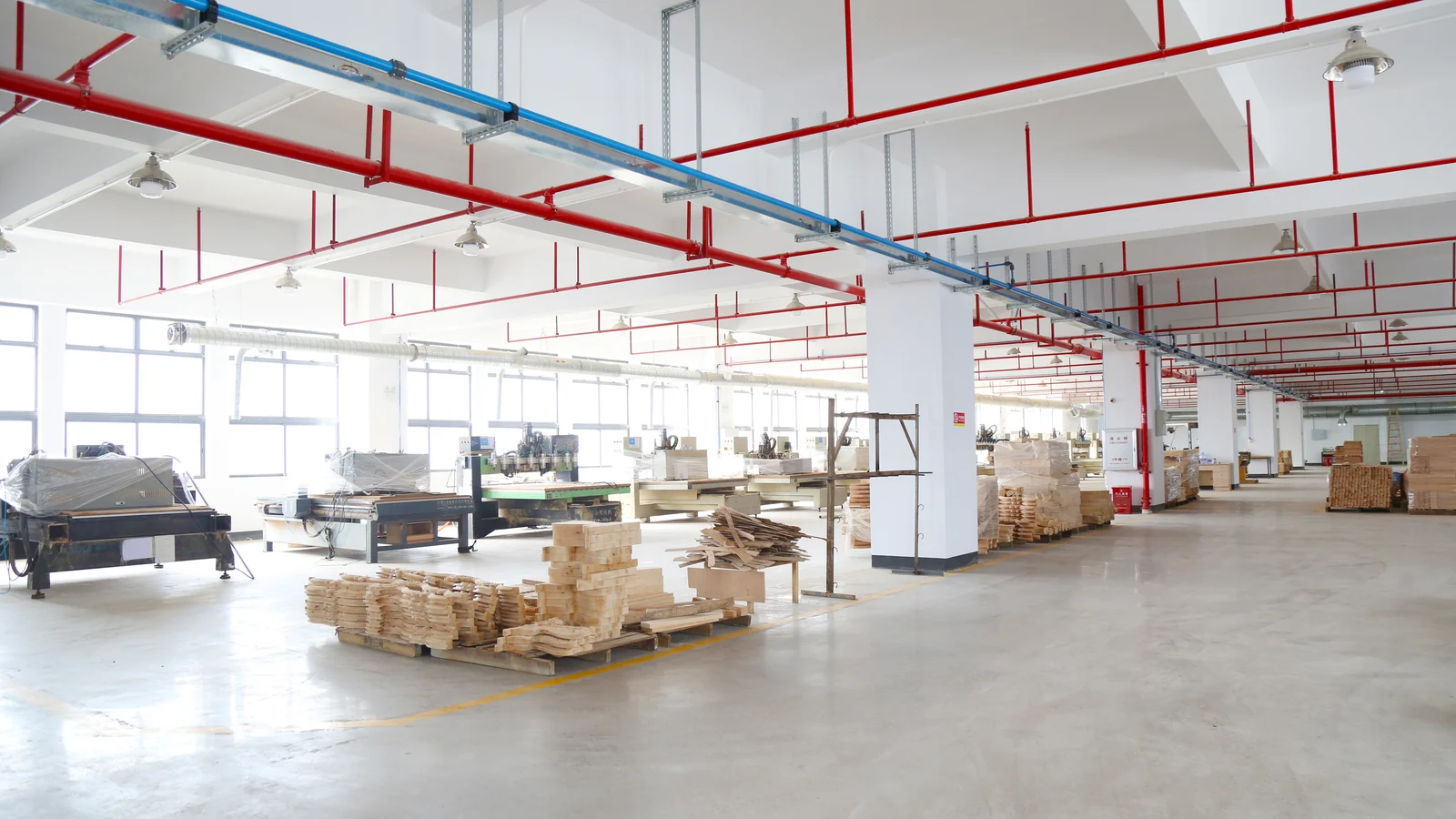
Photograph the agreed detail, link it to the drawing and furniture code, identify the accepted sample or prototype revision, and define a measurable or observable inspection point. Then place that point at the relevant handover. Gainwell’s capabilities workflow separates incoming-material, in-process, final and pre-shipment controls. Assign the evidence where it can reveal a deviation early enough for correction.
For example, an approved seam path belongs in the upholstery work instruction and in-process check, not only in the final photograph. An edge build-up belongs in the drawing, material release and production checkpoint. A hardware function belongs in the prototype record and final functional inspection. Release evidence must travel with the revision.
Issue a durability evidence passport for each furniture code
Bring the scattered records into one compact passport. It can be a controlled schedule row or linked document; the point is that design, procurement, production and operations can find the same approval basis.
| Passport field | What to record |
|---|---|
| Identity and use | Furniture code, room type or zone, quantity, revision, use condition and responsible parties |
| Failure-mode register | Component, plausible failure, design response, evidence owner and current status |
| Controlled definition | Drawings, material and hardware schedules, seam or edge details, cleaner input and prototype reference |
| Evidence status | Required project tests, sample results, inspection point, report location and unresolved limitation |
| Service route | Access, adjustment, repair, replaceable component, spare reference and maintenance instruction |
| Decision | RELEASE, CONDITIONAL or HOLD, approver, date, scope and exact closing condition |
The passport is not a new warranty or certificate. It is a traceability tool. Its value comes from showing which evidence applies to which item and which uncertainty remains open.
Define change triggers and release only the supported revision
Set change triggers before production. A new material source, substrate, finish build-up, adhesive, seam, foam, hardware, edge, cleaner, production method, factory or required test status can invalidate part of the earlier evidence. Reopen only the affected rows, but do not assume that the old approval automatically covers the change.
- RELEASE: the item and revision have a defined use condition, closed critical failure modes and applicable evidence.
- CONDITIONAL: a named activity may proceed within stated limits while a specific evidence item remains due.
- HOLD: the missing or conflicting evidence could change the design response or acceptance decision, so the affected item cannot move forward.
Exact fire, structural, accessibility, environmental, electrical, chemical and material requirements vary by product, venue and jurisdiction. Confirm the live project’s standards, test methods, acceptance criteria, certificates, samples, drawings and commercial terms. Website guidance and photographs cannot replace those records.
Return operational findings to the same record
Durability control should not end at delivery. During installation, snagging and early operation, record the item code, location, symptom, component and corrective action. A repeated issue across rooms is more useful when it can be traced to the same edge detail, hardware source, seam or cleaning routine. Feed that finding into the passport before a replenishment or later phase repeats the condition.
When the use-condition map, failure-mode register and open evidence are ready, share the room types, furniture schedule, drawings, cleaning inputs, destination market and required tests through the Gainwell project enquiry. That gives the technical review a defined starting point without turning “durable” into an unsupported promise.
Frequently Asked Questions
What makes hotel furniture durable?
Durability comes from the complete item matching its use condition: frame and joinery, surfaces and edges, hardware, upholstery, site interfaces, cleaning routine and service route. The project must define likely failure modes and carry approved evidence from drawings and samples into production checks. No material label proves the assembled result by itself.
What durability evidence should a hotel furniture specification include?
Include the furniture code and zone, use conditions, controlled drawings, material and hardware schedules, edge and seam details, cleaning inputs, prototype revision, required tests, inspection points, service access and release status. Each open issue needs an owner, evidence location and closing condition. Requirements should match the exact product and destination market.
How should buyers evaluate durable upholstery fabrics for high-traffic hotel furniture?
Evaluate the upholstery system, not only the cover. Connect the proposed fabric or leather to the seat form, seams, backing, foam or cushion, attachment, high-contact zones, cleaning products, replaceable parts and project-required performance evidence. Confirm that test documents apply to the exact material and that the full-form sample remains the production reference.
Is a “contract-grade” label enough to prove durability?
No. It can signal intended commercial use, but the project still needs item-specific construction, material, hardware, prototype, test and inspection evidence. Ask what the label means for the exact revision, which requirement it addresses and which record supports it. If those links are missing, treat the claim as unverified.
How should prototype durability evidence be carried into production?
Convert each accepted prototype detail into a controlled drawing, sample reference or work instruction, then assign an incoming, in-process or final checkpoint. Record findings against the furniture code and revision. If a source, seam, edge, hardware item, cleaner or method changes, reopen the affected approval before release.
Can hotel furniture lifespan be predicted from the material alone?
No reliable project lifespan can be inferred from a material name alone. Use intensity, construction, interfaces, cleaning, maintenance, environment, repairability, production consistency and installation all matter. Instead of publishing a universal number, define the required project evidence, monitor actual operating findings and keep warranty or service-life terms in the current commercial agreement.