
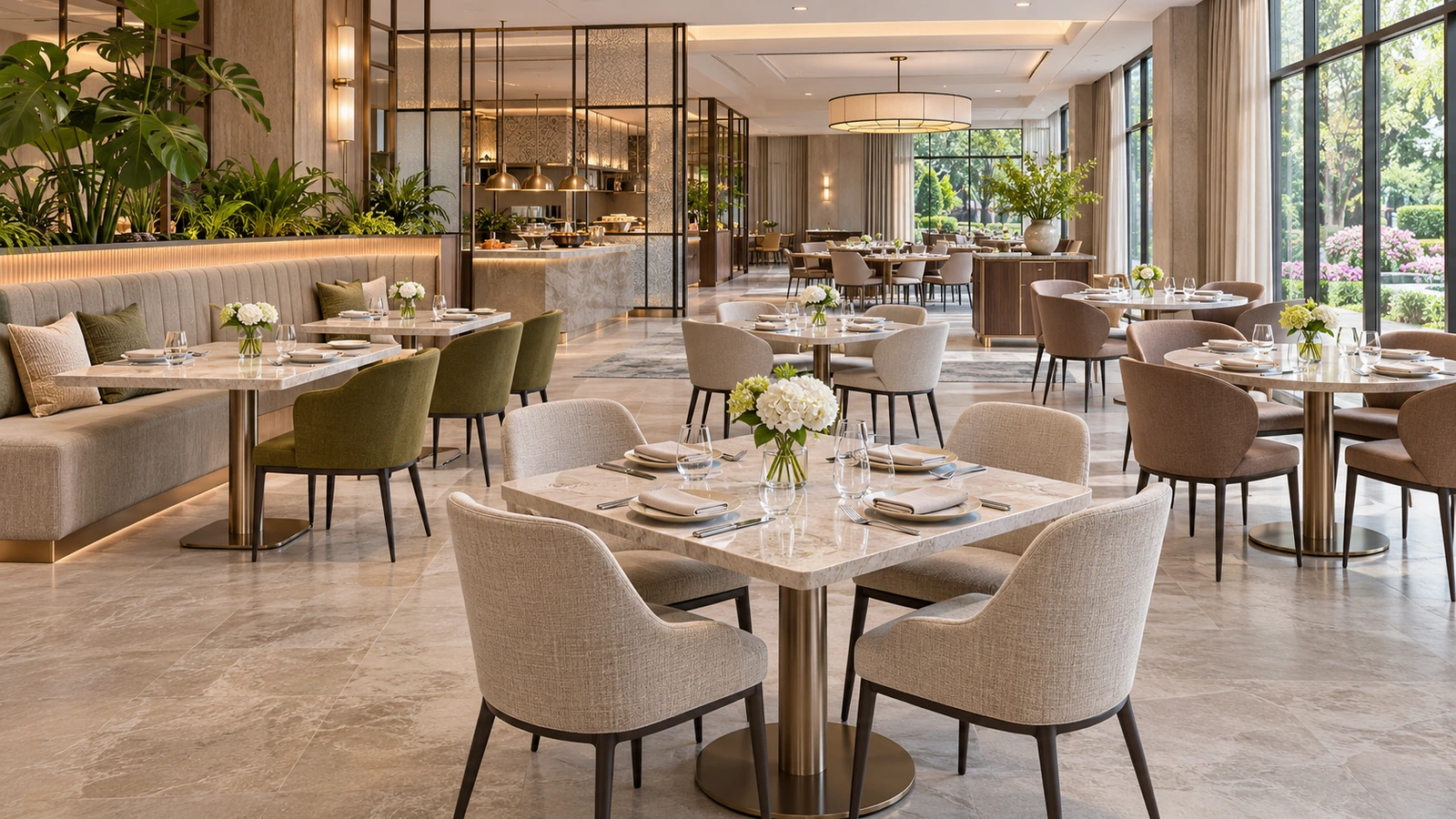
Choose restaurant table tops by defining the dining and cleaning conditions, then comparing the surface, underlying construction, edge and support as one assembly. The material visible to the guest is important, but it does not describe everything that determines how the table performs.
A timber-looking top can use different cores and edge details. A stone top can have different support requirements depending on its product and form. Two options with similar appearances may therefore create different installation, handling and maintenance needs.
The useful selection process moves from actual restaurant use to a complete tabletop specification. This makes appearance, daily service and replacement considerations part of the same decision rather than separate issues discovered after ordering.
Define the Dining and Cleaning Conditions
Begin with the service the table will support. Breakfast, casual dining, formal service and functions can place different items on the surface and involve different reset patterns. Identify the plates, trays, drinks, accessories and any equipment that will actually be used. Where protective mats or other accessories form part of the operating plan, include them in the review.
Record the cleaning method the operator intends to use. The proposed cleaner, contact time and wiping or drying procedure should be checked for the selected finish. A surface described as easy to clean still needs a compatible method, and the most convenient method for staff may not suit every material in the restaurant.
Consider handling separately. A table that remains in place has different practical demands from one moved daily or joined for functions. Staff need an appropriate method for lifting or repositioning the complete table; the tabletop should not be treated as an assumed lifting point.
For restaurants with several service zones, assign conditions by location. A covered terrace is not automatically equivalent to an indoor dining room. Weather exposure, cleaning and storage may change the material and construction requirements even when the hotel wants a continuous design language.
Separate the Surface, Core, Edge and Support
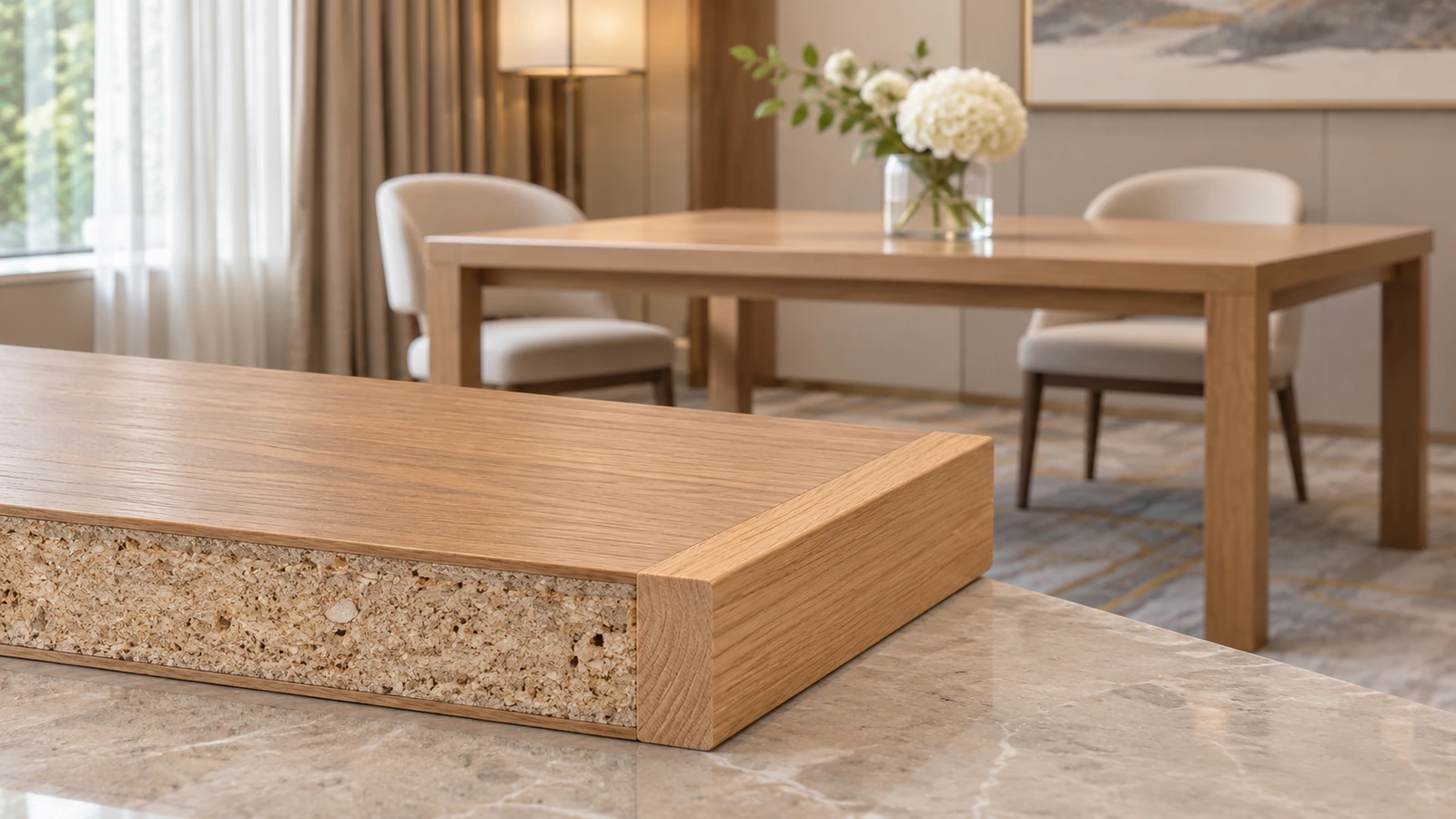
Describe the top in layers and interfaces. The visible surface may be solid timber, veneer, laminate, stone or another specified product. Beneath it may be a supporting panel, reinforcement or frame. The perimeter may use the same material or a separate edge construction, and the connection to the base must suit the complete assembly.
This distinction makes comparisons more accurate. A thick-looking edge does not establish a solid section through the whole top, and a natural wood face does not identify the core. Ask for a section that shows what is actually proposed, including joints and mounting details.
The tables and workspaces collection includes dining and other table applications that can share a visual direction while using different constructions. For restaurant selection, keep the requirements attached to the dining top rather than transferring an approval from an occasional table with a similar finish.
The specification should also identify the selected product where a proprietary surface is proposed. Product grades, finishes and fabrication instructions may differ within the same broad material family. A generic name is a starting point for research, not a complete production description.
Compare Tabletop Materials on the Same Basis
Appearance is one comparison criterion, but it should sit beside the operating conditions already established. A natural timber surface may suit a design that values grain and variation; a selected laminate may offer a different visual and maintenance route. Stone and engineered surfaces introduce their own weight, support and edge questions. None should be judged independently of its proposed construction.
Compare the actual alternatives through common questions: what contact is permitted, how spills are handled, which cleaning method is approved, how edges are protected and what repair or replacement route exists. Use product-specific information where performance is important. Broad claims such as heatproof, stainproof or maintenance-free do not provide a reliable basis for acceptance.
Natural materials also require an appearance boundary. Establish the range of grain, colour, veining or other variation acceptable within the table family. A single small sample may not represent the appearance across a large restaurant. Review representative pieces or an agreed range so variation is intentional rather than treated as an unexpected defect.
A useful comparison might consider two tops for the same dining layout with the same dimensions and edge profile. If one requires a different support frame, handling method or care product, make that consequence visible. The decision then reflects the complete operating arrangement rather than a surface-only price.
Choose Edges and Joints for the Contact They Receive
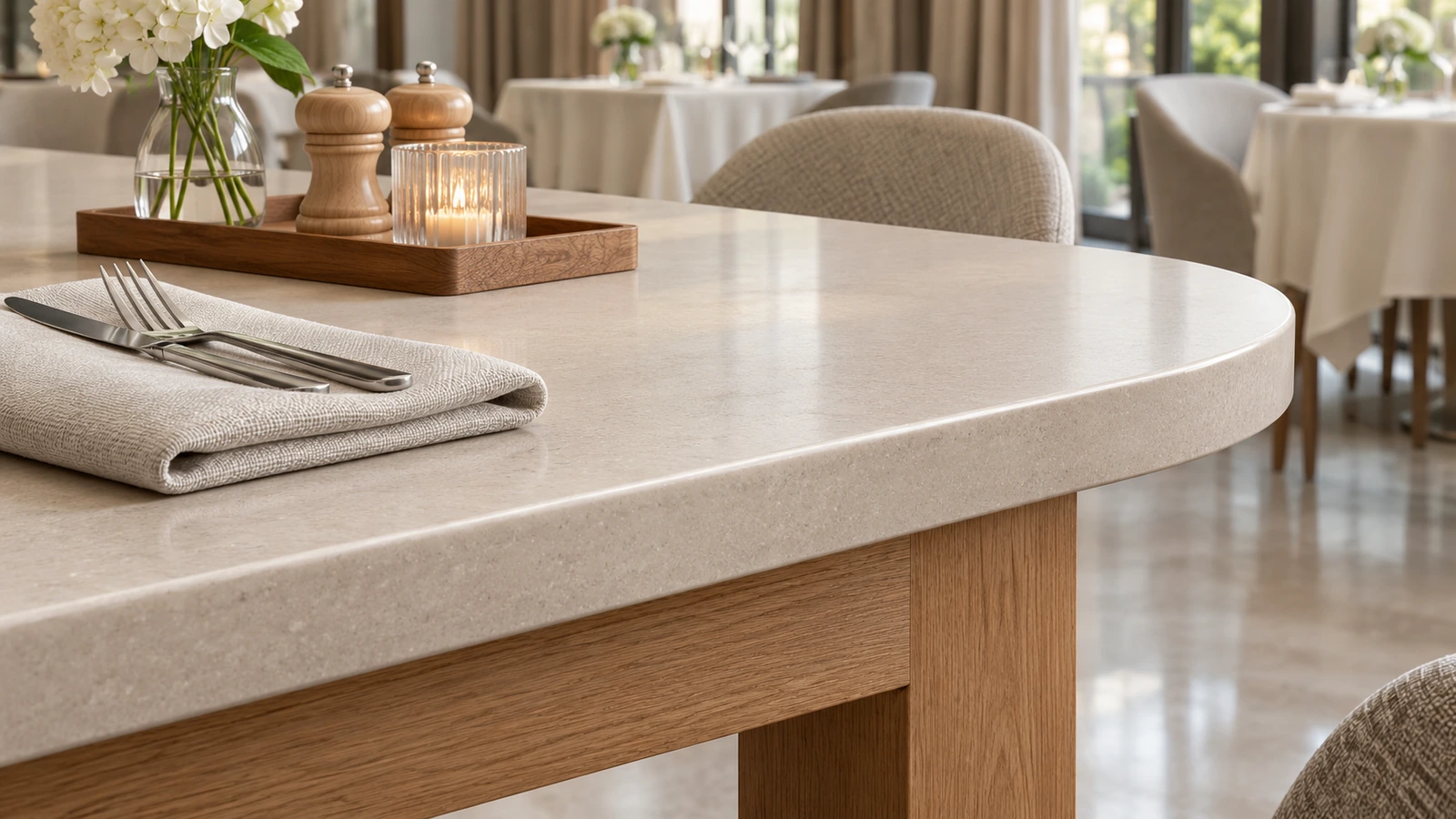
The perimeter is where guests, chairs, trays and cleaning equipment may repeatedly contact the table. Choose the edge profile and construction with those interactions in mind. A shaped timber edge, a bonded edge band and a fabricated stone edge have different details to review; their suitability depends on the proposed product and use.
Inspect corners and transitions in a representative sample. The joint between an edge and face should support the intended appearance and cleaning method. An intricate profile may fit the interior concept but introduce recesses that need additional attention. A simpler detail can be easier to maintain where that suits the design brief.
Joints within the top need a clear reason and location. They may arise from material sizes, fabrication or an extendable arrangement. Review how a joint affects the dining surface, liquid exposure, support and future disassembly. An uninterrupted rendering should not conceal a joint that will be visible in the delivered product.
Where tables are joined for larger groups, compare the actual edges together. Differences in profile, level or base position can make the combined arrangement uncomfortable or difficult to dress. Check the approved joining method where one is provided, rather than relying on temporary alignment during setup.
Match the Finished Top to Its Base
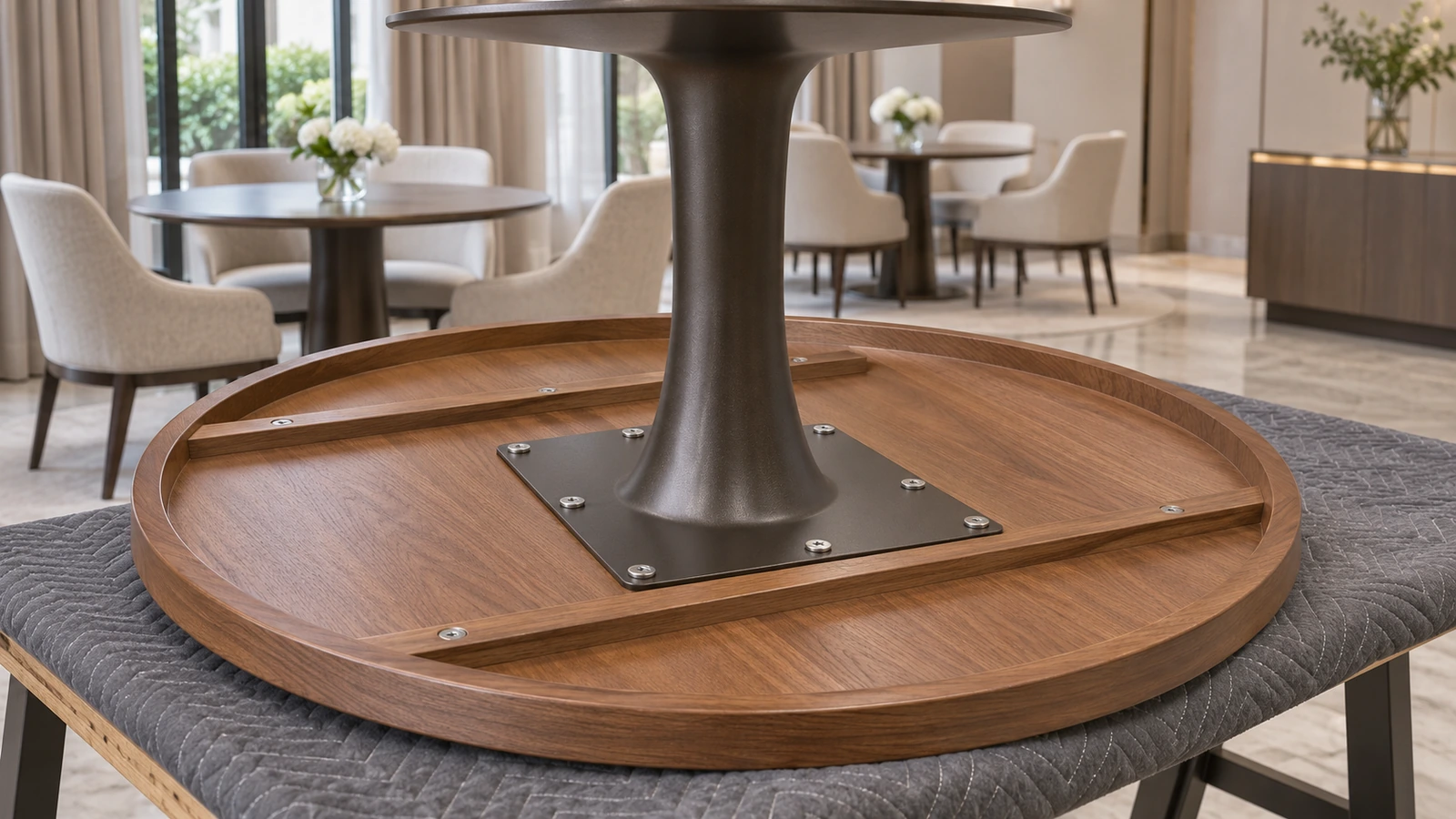
Top selection and base selection are linked decisions. The dimensions, shape, mass and mounting arrangement of the top affect the complete table. A base suitable for one top cannot be assumed suitable for another because the mounting plate appears to fit.
Use the proposed configuration in the review. Confirm the manufacturer’s intended limits and applicable evidence for the top, base and connection. Check the support position beneath the top, the specified fixings and the floor contact. Structural performance and stability require appropriate evidence, not a visual judgement about weight.
The base also affects usable seating. A supporting rail, pedestal or leg may restrict foot space even where the top provides enough dining area. Changing the top shape or size can shift those relationships. The guidance on restaurant table bases examines that complete configuration in more detail.
Handling should be confirmed at the same time. A new top can make a previously manageable table too heavy or awkward for the hotel’s normal reset method. The operator needs a realistic procedure for the delivered assembly, including any equipment or staffing specified for moving it.
Plan Cleaning, Local Damage Response and Replacement
Select a care route that staff can carry out consistently. For intact finished surfaces, remove loose debris with a compatible method, apply only the approved cleaning process and complete any required residue removal or drying. Keep moisture from accumulating at vulnerable joints and openings where the product instructions require it.
Inspect the surface after it is dry. A persistent mark, changed sheen or raised edge may need a different assessment from removable dirt. Stop the trial if the method causes colour transfer, tackiness or another unexpected effect. A compatible cleaner for one finish may not suit another table that looks similar.
Damage should be classified before repair is chosen. A coating scratch, chipped edge and cracked top are different problems. Loose connections or instability also require attention beyond the surface. Identify the affected table and route the issue to the responsible party; avoid covering it with a cloth and returning it to service without an appropriate decision.
Retain material, finish, edge and fixing references for replacement. A new top must fit the base and meet the relevant requirements as well as resemble its neighbours. The strongest selection is one the restaurant can use, clean and maintain within its actual operation, with the construction and limitations clearly understood.
Develop Restaurant Tables Around Your Service Needs
Gainwell develops custom dining tables with coordinated material combinations, dimensions and finish samples. Tabletop options can be reviewed together with their bases so the proposed construction supports the intended restaurant arrangement.
To discuss custom restaurant tables, share the dining layout, top sizes, preferred materials, service pattern, cleaning method and moving requirements. Include any existing bases being considered for reuse so compatibility remains a visible part of the review.
FAQs About Restaurant Table Tops
Can New Tops Be Installed on Existing Bases?
They may be suitable where the existing base and connection can support the proposed configuration. Inspect condition, identify the base and compare the new top’s dimensions, mass and mounting requirements with the manufacturer’s information. Review the complete assembly before ordering repeated replacements; matching the hole pattern alone is insufficient.
Can Indoor Table Tops Be Used on a Covered Terrace?
A roof does not remove all outdoor exposure. Confirm the actual wetting, humidity, sunlight and temperature conditions, then check the proposed product and construction for that use. Identify the edge, adhesive, support and fixing requirements as well as the visible surface. Keep any location restrictions with the table specification.
Can Different Top Sizes Share One Base Specification?
Only where the particular base and connection are suitable for every proposed configuration. Record each top size and shape against the base reference and review seating, support and stability for those combinations. An approval for a smaller round top should not automatically carry over to a larger or differently shaped one.