

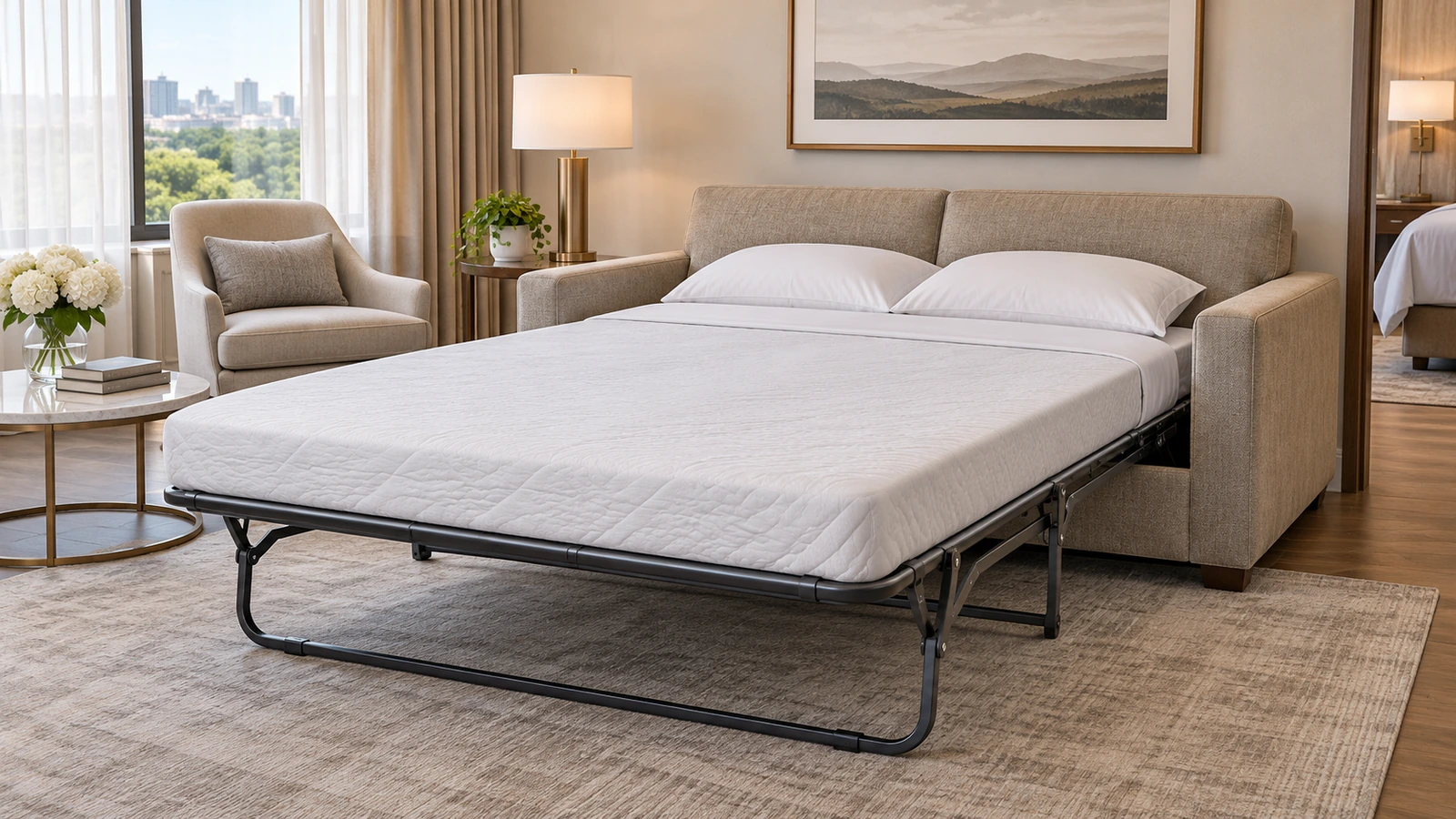
Specify a hotel sofa bed by reviewing its sitting and sleeping functions separately, then testing the conversion, bedding and circulation within the guestroom. Its closed dimensions describe only one state of a product that changes shape and purpose.
A sofa that fits neatly into a living area may block storage when opened. Another may provide an acceptable sleeping surface but require staff to move several furniture items before making the bed. These relationships need to be understood before the design is repeated across rooms.
The useful question is how the complete arrangement works through a stay: sitting during the day, converting for sleep, using the room overnight and restoring the seating afterwards.
Define How Often the Sofa Will Become a Bed
Establish the intended sleeping role with the operator. Occasional use for additional occupancy differs from a room where the sofa converts every night. Frequency influences the importance of conversion effort, bedding storage, access and maintenance, but it does not by itself establish which mechanism or mattress is suitable.
Identify who performs the conversion. A staff-prepared bed can follow a controlled setup procedure, while a guest-operated arrangement needs appropriate instructions and a design intended for that use. Obtain the product information for the proposed mechanism rather than assuming that any folding sofa can serve either operating model.
The room’s occupancy and bed provision must also be confirmed through the responsible project team. A sofa bed does not automatically authorise an additional occupant or replace the need to review room, operational and applicable regulatory requirements.
Keep these decisions together in the furniture brief: intended use, expected conversion pattern, responsible user and required sleeping arrangement. They provide a basis for comparing complete products rather than choosing a sofa first and adding a mechanism later.
Review Sitting Comfort and Sleeping Support Separately
The sofa’s daytime role should be assessed in its closed condition. Review usable seat depth, cushion behaviour, back support and the relationship to nearby tables. Mechanism packaging can influence the seat construction, so a similar-looking ordinary sofa may not represent the proposed sleeper.
The sleeping role requires its own review. Identify the usable sleeping surface, mattress specification and supporting system supplied with the model. Compare the complete product with the hotel’s intended guest experience. Upholstery appearance cannot establish mattress comfort or the performance of the opened support.
Different hospitality seating configurations can suit different room functions, but a sofa bed adds a conversion and sleeping task beyond ordinary lounge seating. Keep both functions visible when reviewing proportions and materials.
Use a representative product to understand the interaction. Seat cushions may need to be removed, relocated or incorporated into the conversion. Establish where any loose pieces go and whether that storage remains practical with the room occupied. A successful seated arrangement should not depend on components being stacked in a circulation route at night.

Check the Full Opening Movement in the Room
Draw the sofa closed, part-way through conversion and fully open using the actual product information. The moving outline can extend beyond the final sleeping footprint. Check it against tables, curtains, doors and surrounding furniture throughout the action.
Furniture that must move needs a defined destination. A coffee table shifted to clear the bed may obstruct a wardrobe or bathroom route. Review where it stands for the entire night, not merely where someone can push it during a demonstration.
Check access around the opened bed. Guests need the room’s intended routes to remain usable, and staff need the space required for the agreed bed-making task. These conditions should be assessed against the actual room and applicable project requirements rather than a generic clearance figure.
Room variants can change the outcome. A mirrored layout, connecting door or different desk position may affect conversion even when the sofa itself is unchanged. The discussion of studio hotel room planning provides the wider context for sharing sleeping and living functions; the sofa-bed review should focus on the exact transformation within each relevant configuration.
Plan Bedding, Bed-Making and Morning Reset
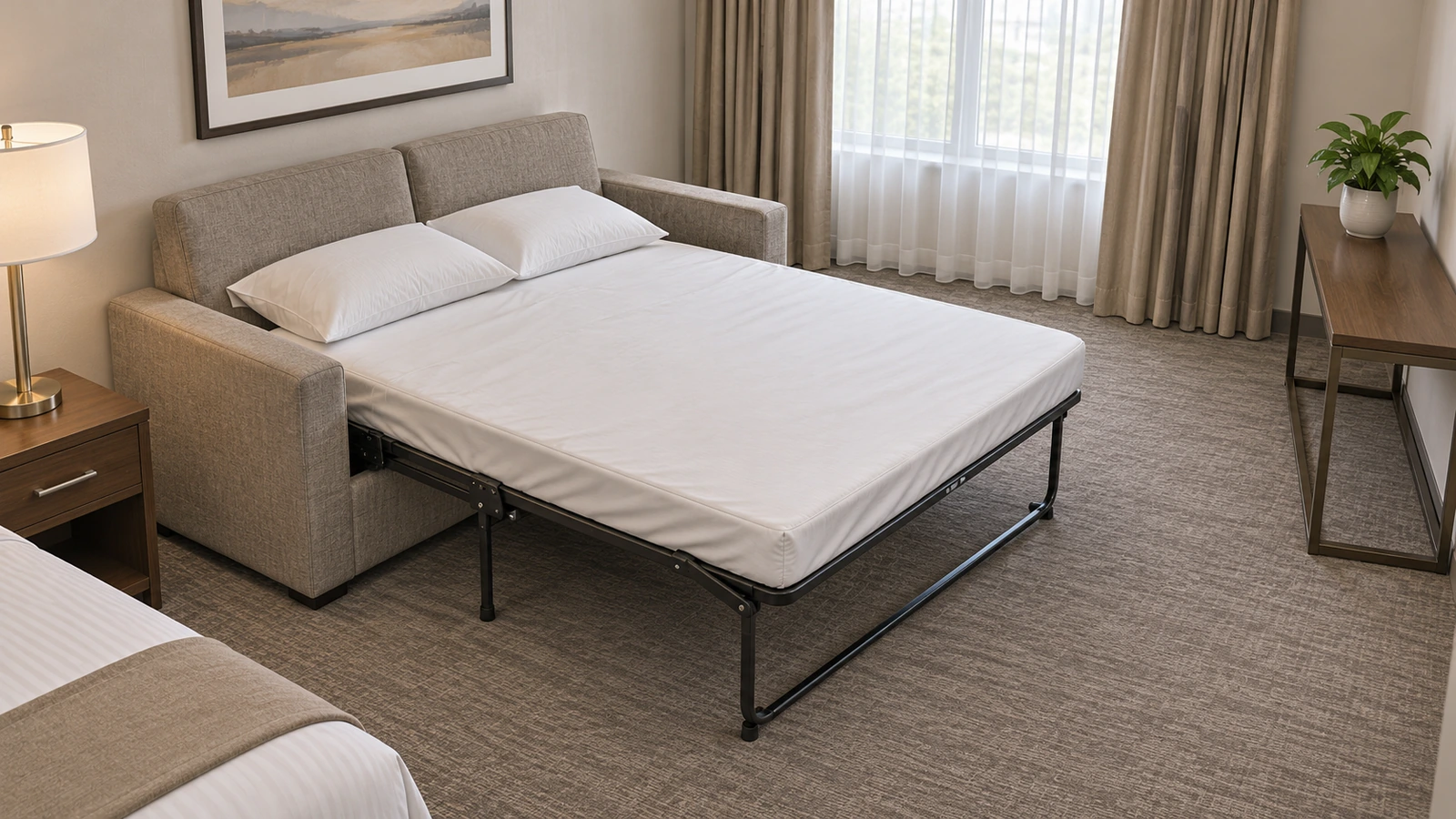
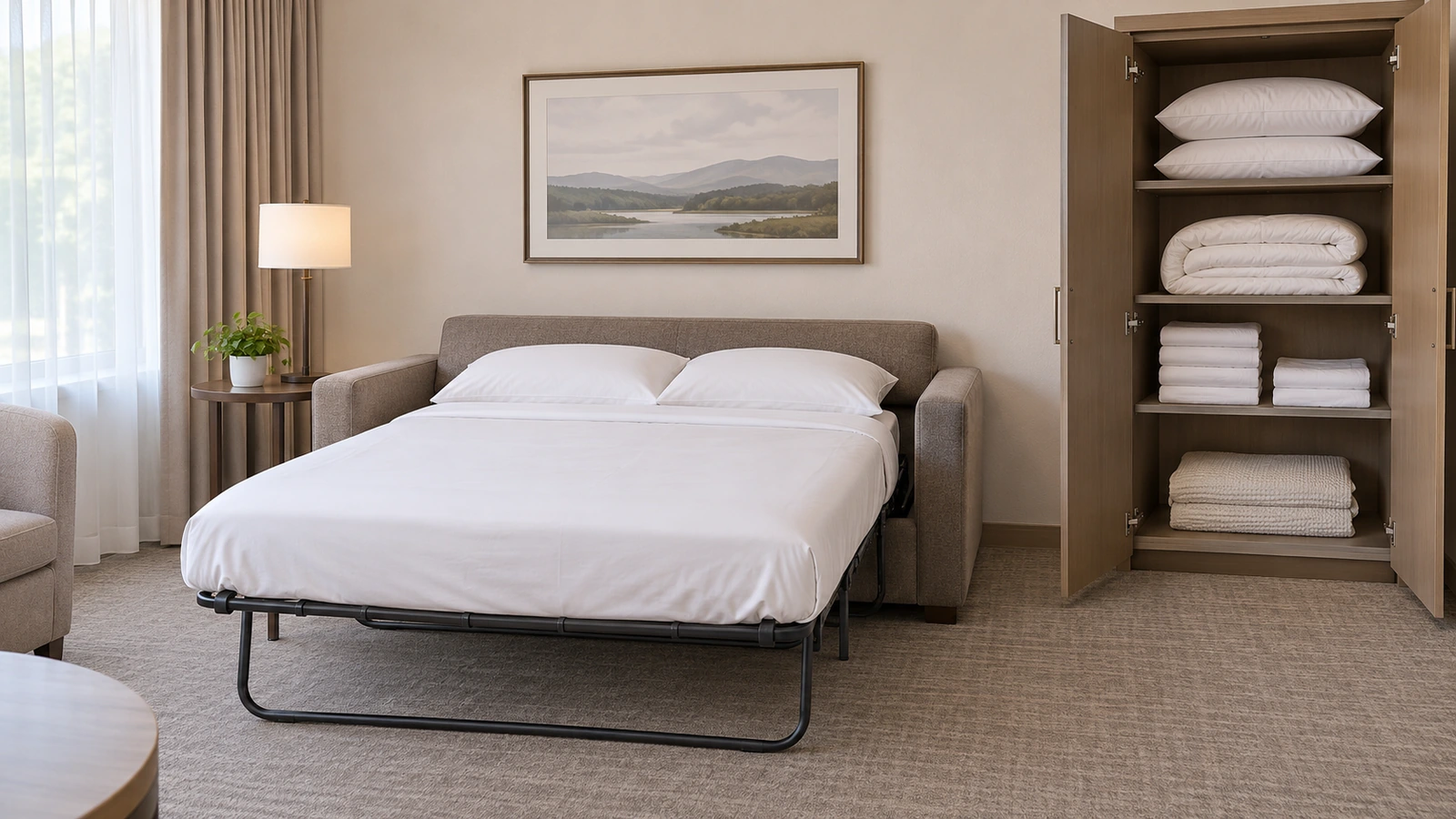
The bedding arrangement should follow the mechanism’s instructions and the operator’s service plan. Establish which items remain with the bed and which are brought in or removed. Mattress protectors, sheets, pillows and blankets all need an identified location when the sofa returns to seating.
Follow a complete preparation sequence. Open the product using the intended method, place the specified bedding and check whether staff can reach the relevant edges without awkwardly shifting the frame. A full-size bed may be accessible in plan but difficult to make if its side is tightly bounded by other furniture.
The morning sequence is equally important. Determine where used linen is placed, how the sleeping surface is inspected and what must be removed before closing. Bedding left within a mechanism may affect operation where the product is not designed to accommodate it. The approved instructions should remain available to the team performing the reset.
Consider the second guest during this activity. In an occupied suite, preparing or closing the sofa bed may temporarily affect seating, work or access. The operator should understand the disruption and decide how service will be organised. The furniture review can expose that consequence before it becomes a daily operating problem.
Coordinate Upholstery with Mechanism Access
The upholstery should accommodate the product’s movement. Identify where fabric, cushions or decorative skirts pass near the mechanism and how covers are secured. A finish change or revised cushion thickness should be checked for its effect on closing and opening, not assessed only as a visual substitution.
Service access needs a practical route. Establish which components can be adjusted, removed or replaced and whether the mechanism or mattress can leave the furniture without damaging adjacent finishes. Keep the manufacturer’s instructions and part references with the installed item.
Routine cleaning should distinguish the upholstered cover, removable components and mechanism. Use the approved method for each surface, control moisture as instructed and inspect after drying before the sofa is closed or returned to service. Unexpected staining, persistent dampness, loose parts or irregular operation requires assessment rather than repeated cleaning or forcing the mechanism.
The hotel should also know how defects are reported. Identify the model and location, describe the operating state in which the problem occurs and hold the affected product from the relevant use where the responsible procedure requires it. Generic reports that a sofa is uncomfortable provide less information than a clear distinction between seat, mattress and mechanism issues.
Evaluate the Complete Conversion Before Selection
Review the representative item as a continuous use cycle. Start with seating and everyday belongings in place, clear the space using the intended method, open the bed, make it, check room access and restore the sofa. The exercise should involve the people who will perform the work where practical.
Record observations against the relevant detail. A coffee-table conflict belongs to the room arrangement; a cushion storage problem belongs to the reset plan; a difficult movement may need review with the mechanism supplier. Keeping those causes separate helps avoid changing the whole sofa when one interface is responsible.
Functional observations do not replace product evidence. Confirm the manufacturer’s stated application and the applicable performance requirements for the complete model. The project should distinguish what the room trial demonstrates from what needs technical documentation or formal testing.
Select a sofa bed when its seating, sleeping and reset functions can coexist within the hotel’s operating plan. The furniture should remain understandable in every intended state, with the necessary space, instructions and replacement information available after handover.
Plan Convertible Seating for Your Guestroom Layout
Gainwell develops custom hospitality seating and coordinated guestroom furniture. Where a brief includes a sofa bed, the proposed specialist mechanism and mattress requirements need to be confirmed alongside the surrounding furniture arrangement.
To discuss guestroom seating development, share the closed and sleeping layouts, intended occupancy, conversion responsibilities and preferred seating form. Include any proposed mechanism or mattress references so the feasible scope and interfaces can be reviewed.
FAQs About Hotel Sofa Beds
Can a Sofa Bed Replace a Permanent Guest Bed?
That decision requires review of the room’s intended sleeping provision, guest experience and applicable project requirements. Compare the complete sofa-bed product with the required sleeping function and confirm the operating arrangement with the responsible team. A larger advertised sleeping surface alone does not establish that the substitution is suitable.
Who Supplies the Mattress and Replacement Mechanism?
The agreed scope should identify the supplier of the complete model and the parties supporting its mattress, mechanism and upholstery. Retain compatible part references and replacement instructions. Components that look similar may have different connections or operating requirements, so substitutions should be reviewed against the actual furniture rather than ordered by appearance.
What Changes if the Sofa Bed Is Used Every Night?
Daily conversion makes handling, bed-making, storage and maintenance central to the selection. Rehearse the full shift routine and confirm the manufacturer’s intended application for the proposed model. The operator should identify staffing and replacement support before choosing a product whose daytime appearance fits but whose nightly operation is difficult to sustain.