
To remove rust from outdoor furniture, first identify the metal and existing finish, then use a compatible method to treat the affected area, remove residues and restore its protective coating. Localised rust on structurally sound steel or iron furniture may be suitable for a small repair. Perforation, substantial metal loss, damaged welds or unstable connections require assessment before the furniture returns to use.
The aim is to remove corrosion without unnecessarily stripping sound surrounding paint. That starts with understanding what the orange mark represents: rust developing beneath a damaged coating, corrosion around a fastener or a deposit transferred from another metal object. Treating every mark with aggressive sanding can enlarge a repair that originally needed only careful cleaning.
Assess the Rust Before Starting a Repair
Begin with the furniture’s material and care information. Painted steel, cast iron, stainless steel and aluminium need different treatment decisions, and a coating can conceal the underlying metal. Aluminium does not form iron rust, although orange deposits may come from steel fasteners or external iron contamination. On stainless steel, surface staining also needs to be distinguished from more significant corrosion. When the material is uncertain, confirm it with the manufacturer before selecting an abrasive or chemical treatment.
Next, clean enough of the area to see where the problem begins and ends. Inspect the underside, feet, joints and nearby edges as well as the visible mark. Paint that remains firmly attached presents a different repair condition from bubbling or lifting paint, where corrosion may extend beyond what is immediately visible. Hollow members deserve particular attention if rust-coloured water emerges from a joint or opening, because an exterior touch-up may leave the source unresolved.
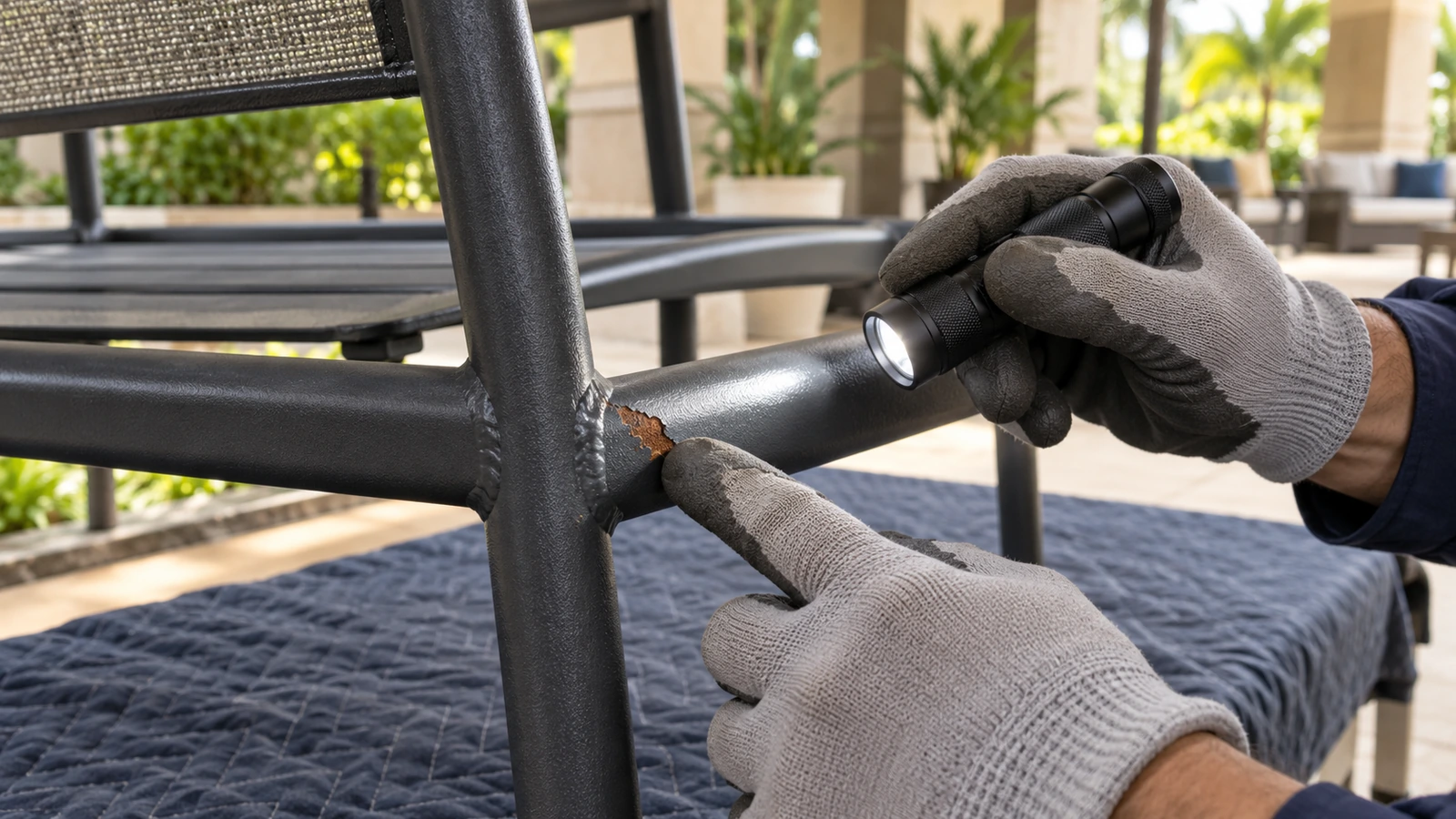
Structural concerns take priority over appearance. Sanding and painting can improve a surface, but they do not restore metal lost from a chair leg or repair a weakened connection. For furniture with an old or unidentified coating, establish what can safely be disturbed before dry sanding or stripping; some older coatings require specialist precautions. Product identity, damage condition and the proposed repair method should be clear before work begins.
Choose a Compatible Rust-Removal Method
Mechanical Rust Removal
Mechanical removal uses suitable abrasives or tools to take away loose rust and failed coating. It can offer good control on an accessible, localised area, provided the tool suits the metal and intended finish. A small hand abrasive may allow more precise work around a paint chip than a powered wire wheel, but neither is automatically suitable for every surface. The objective is a sound, properly prepared repair area, including a stable transition to the remaining coating. The required surface preparation comes from the selected repair system.
Chemical Rust Removers
Chemical rust removers offer another route, particularly where the product is approved for the substrate and the affected area is difficult to reach mechanically. Check whether the treatment can contact adjacent paint, plating, plastics, stone or upholstery, and whether it requires rinsing or another residue-removal process. Products differ in their formulation and permitted uses, so contact time, application conditions and cleanup should come from the product instructions rather than a general furniture-cleaning recipe.
Rust Removers vs Rust Converters
Rust removers and rust converters perform different jobs. A remover is intended to eliminate rust, while a converter reacts with a suitable rusted surface to form a layer intended for subsequent coating. They are alternative treatment routes in some repair systems, rather than steps that should automatically be combined. Confirm the product’s permitted substrates, required preparation and compatible finishes before applying it over rust, bare metal or existing paint.
Prepare the Work Area
Before starting, arrange the materials for the whole repair, including cleanup, drying and protective coating. Remove nearby cushions where practical, protect adjacent surfaces and contain debris or runoff. Use the ventilation and protective equipment specified for the tools and chemicals involved, and keep the work away from guest circulation. A defined method also makes it easier to assess the result; trying several cleaners or treatments in succession can introduce compatibility and residue problems.
How to Remove Rust and Repair the Coating
The following sequence applies to a local repair on furniture whose structure remains sound. The abrasive, chemical treatment and coating instructions still need to match the actual item.
Clean and Inspect the Area
Remove loose dirt and deposits using a cleaner approved for the surface, then follow its cleanup and drying instructions. This exposes the true condition and prevents grease or debris from interfering with the next treatment. Inspect beyond the visible rust spot, including nearby seams and the underside of the component. If cleaning reveals widespread blistering, deep pitting or movement at a connection, pause the local repair and reassess the item.
Protect the Surrounding Finish
Protect the surrounding finish and adjacent materials before treating the rust. The repair boundary should follow the damage and coating condition rather than an arbitrary circle around the orange mark. Firm, compatible coating may be retained where the repair system allows it, while loose or undermined paint needs appropriate preparation. This distinction helps preserve sound paint without leaving failed coating at the edge of the repair.
Test the Method
Carry out a small, controlled test before treating the full area. Check for changes such as paint softening, colour transfer, loss of gloss, scratching or damage to adjacent materials. A discreet location can help establish surface compatibility, while a limited test at the damaged area helps confirm whether the method removes corrosion as intended. Assess the result after the specified cleanup and drying stage, because a surface that appears acceptable while wet may reveal dulling or other changes when dry.
Use a Controlled Mechanical Method
For an approved mechanical method, work progressively and inspect frequently so that removal stays within the necessary area. Excessive force can gouge the metal, damage decorative detail or strip sound paint. Around edges, curves and welds, access and visibility matter as much as speed. A tool that works on a flat tabletop may be unsuitable inside a narrow connection, so adjust the method to the component rather than forcing the same tool into every location.
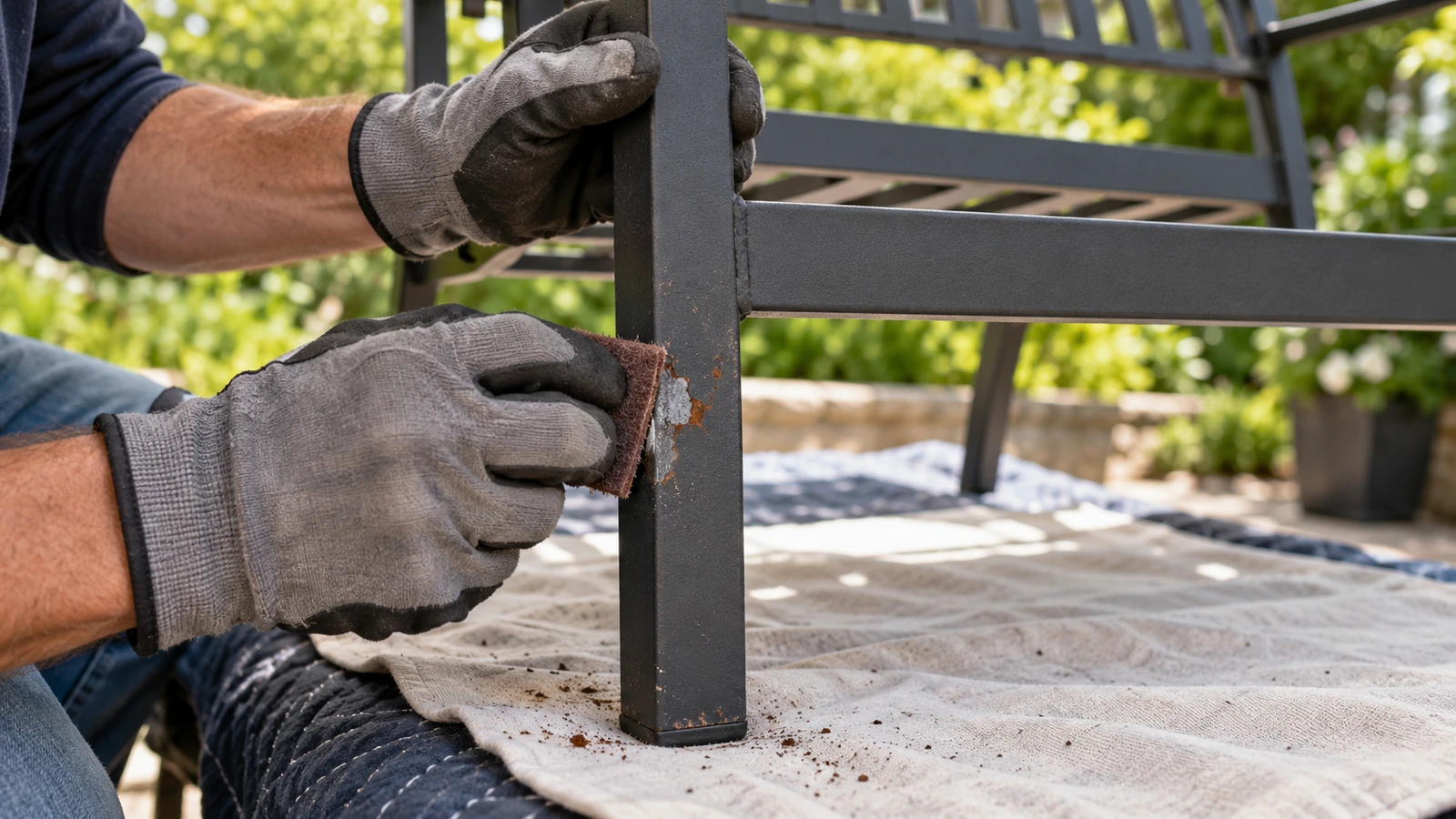
Follow the Chemical Product Instructions
For an approved chemical method, follow the application and contact-time instructions, including any requirement to keep the treated area wet or repeat the application. Prevent unintended contact with surrounding finishes and monitor the treatment as directed. If rust or coating failure continues beyond the expected boundary, stop and reconsider the extent of the repair instead of repeatedly enlarging it without assessing the cause.
Remove Residues and Allow Full Drying
Residue treatment is part of the repair. Some products require rinsing, while others specify a different process; the correct method depends on the treatment and the coating that follows. Improvised neutralisation, solvent wiping or additional chemical applications can leave a surface unsuitable for painting. Follow the chosen system’s instructions for cleanup and for handling used chemicals and collected debris.
Pay attention to joints, underside surfaces and openings where liquid may remain. Follow the required drying conditions and protect the prepared area from fresh contamination. Surface dryness alone may not establish that a joint or hollow section is ready for coating, particularly if cleaning liquid has entered a poorly drained area.
Restore the Protective Coating
Check whether the prepared area meets the requirements of the selected repair system. Loose material, contamination, retained moisture and unstable coating edges can compromise the result. Colour alone is not a reliable completion test: chemical treatments may change appearance, and a surface can look clean while still being unsuitable for the next coat. Inspect the metal again where rust has been removed; newly exposed holes, serious pitting or damaged connections change the decision from a cosmetic repair to a broader assessment.
Prepared steel or iron needs the protection specified by the repair system. Confirm which primer and topcoat are suitable for the substrate, retained finish and any chemical treatment already used. A colour match is only part of the decision; adhesion, coating compatibility and application conditions matter too. A local liquid-paint repair to a powder-coated item may differ in appearance and performance from the original factory finish, so manufacturer guidance is particularly useful.
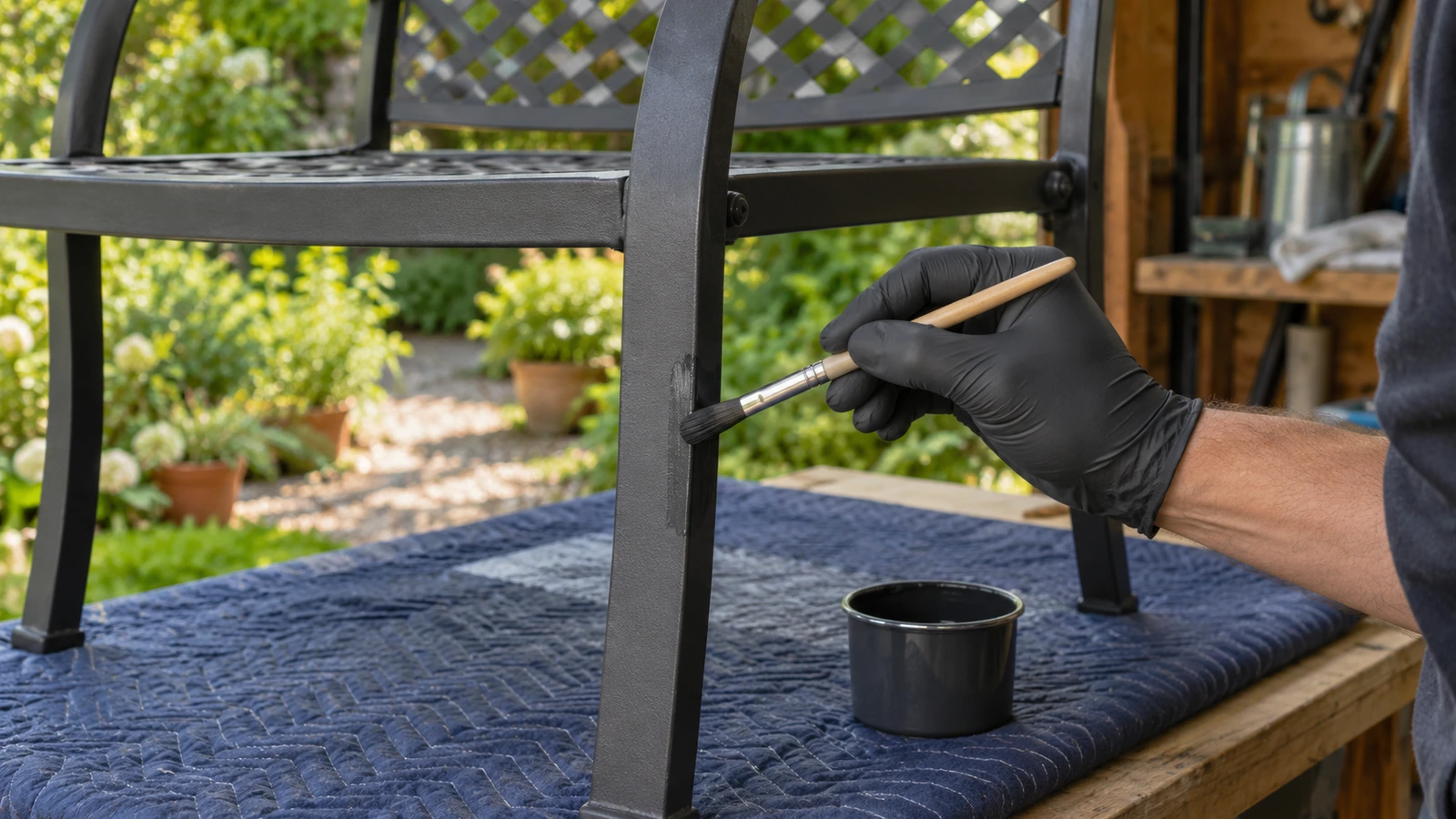
Apply each product under its specified conditions and distinguish between touch-dry, recoating and return-to-service requirements. A surface that feels dry may not be ready for handling, stacking, cleaning or sustained outdoor exposure. Protect the repair during this period and check that associated materials, such as cushions or plastic feet, can be refitted without damaging the new finish. When damage extends across large areas or repeated local repairs keep failing, review the broader scope using the guide to outdoor furniture coating and repainting decisions.
How to Reduce Repeat Rust
Reducing repeat rust also means examining why the original damage occurred. A worn foot may expose metal against the ground, stacking may repeatedly abrade the same edge, or a joint may collect water and debris. Cleaning and repainting the visible spot without addressing that condition can leave the cause in place. Inspect related contact points and drainage features, and confirm any changes with the manufacturer rather than drilling, sealing or modifying the structure without guidance.
For a hotel furniture group, begin with one representative item before extending the method to others with the same construction, finish and damage condition. Record the treatment and coating used, then inspect the repaired item after it has returned to normal operation. Furniture that looks similar may have a different material or finish, so its repair method needs separate confirmation. This approach helps the maintenance team judge both the appearance of the repair and whether the original problem is recurring.
Where replacement becomes necessary, review outdoor seating, tables and loungers with the maintenance problem in mind. Accessible connections, suitable surface protection, drainage and replaceable wear components can become part of the next selection brief. Replacement is not the default response to a rust spot, but recurring problems can reveal useful requirements for future furniture.
A successful local repair leaves more than an improved appearance. The structure remains fit for use, the prepared surface receives compatible protection, and the conditions that encouraged corrosion have been addressed where practical. Those checks provide a stronger basis for returning furniture to service than the disappearance of rust colour alone.
When to Repair, Scale Up or Replace
Recurring corrosion can make it difficult to balance appearance, maintenance work and replacement cost. For a new or replacement furniture package, Gainwell can help review materials, protective finishes and construction details together, so the selection reflects how the outdoor area will be used and cared for. The outdoor furniture at Six Senses Southern Dunes provides an application reference for coordinating exterior furniture within a wider resort project.
If maintenance problems are shaping your next purchase, review your outdoor furniture options to explore product directions that address those concerns. A description of the setting and a few photographs of the recurring issue can provide a useful starting point for discussing what the next furniture selection needs to do differently.
Plan Future Outdoor Furniture with Gainwell
Vinegar is not a universal treatment for painted furniture. Its acidity may affect the metal, adjacent finish or subsequent coating preparation, depending on the item and application. Before using it, confirm that the manufacturer permits the method and establishes suitable contact and cleanup conditions. A purpose-made product with clear substrate and coating instructions can provide a more defined process.
Surface corrosion may be treatable, but cleaning does not establish that a fastener remains suitable for its connection. Check for metal loss, damaged threads, seizure and the condition of the surrounding joint. Where replacement is needed, use the specified size, material, grade and associated washers or locking components. Load-bearing connections should be assessed before loosening or replacing parts.
FAQs About Outdoor Furniture Rust Removal
Can Vinegar Remove Rust from Painted Outdoor Furniture?
Photograph the damage and contact the supplier before sanding, stripping or changing the coating. Keep the model, purchase information and relevant care records available so the supplier can identify the item and its coverage. Ask for the approved inspection and repair route, including whether local treatment is permitted and who should carry it out.