
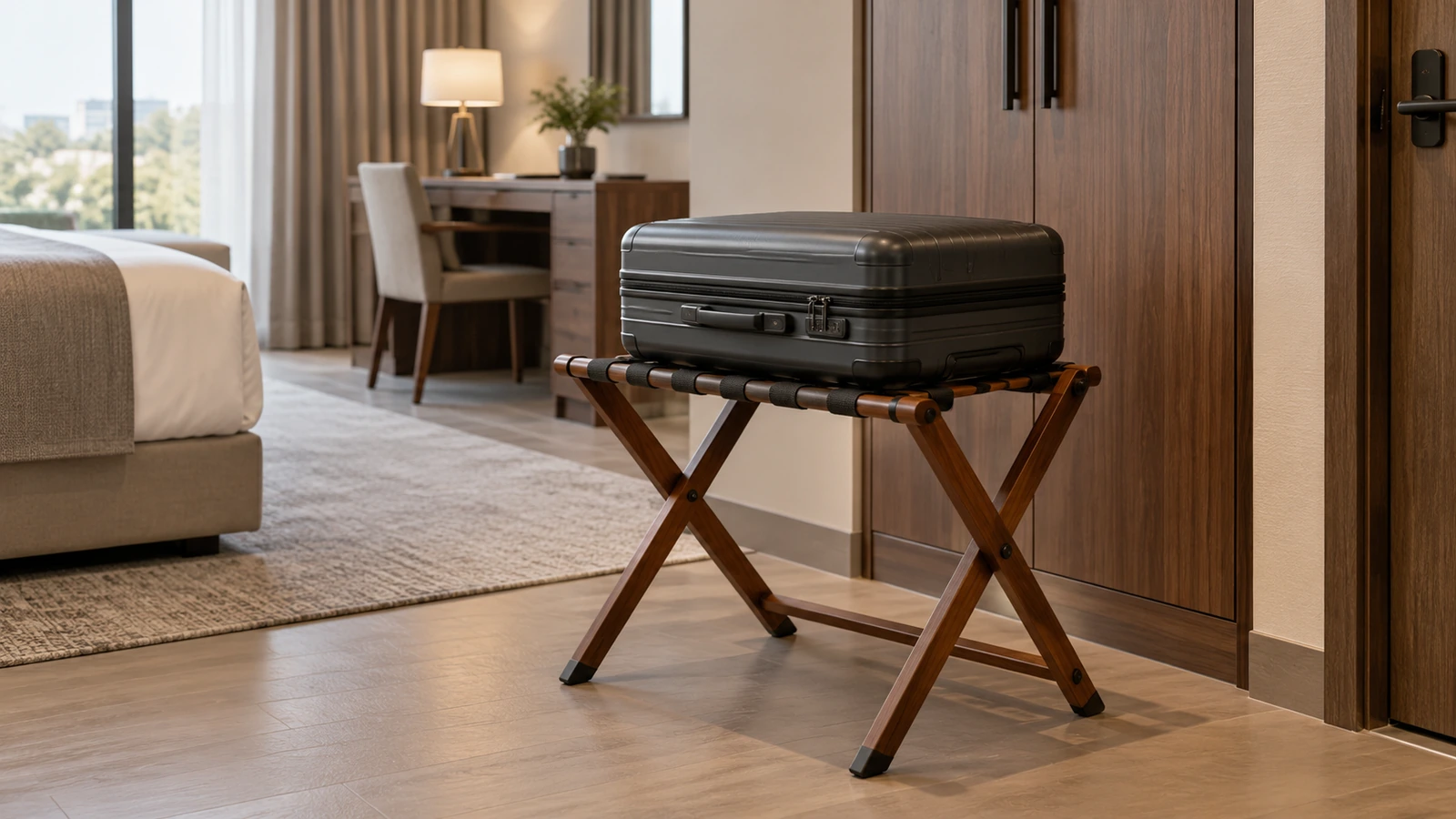
Choose a hotel luggage rack around three things: the suitcase it needs to support, the space guests need to open and use that suitcase, and the place where the rack will be stored. A product can fit neatly beside a bed yet become inconvenient once a bag is open. It can also fold compactly without fitting the wardrobe compartment intended for it. Reviewing those conditions together gives the selection a practical starting point.
The choice is not always a folding stand. A hotel luggage bench may work better where the room has a permanent luggage area, particularly when it forms part of a storage arrangement. What matters is whether guests can use their belongings comfortably while the room’s circulation, seating and work surfaces remain available.
Define How Guests Will Use the Luggage Area
A luggage rack provides a raised place for a suitcase, but its usefulness depends on what happens after the bag is put down. Some guests unpack and put the empty case away; others keep it open and use it as their main storage throughout the stay. A room intended for short business visits may therefore need a different arrangement from a suite accommodating two people with larger bags. Before comparing products, establish whether the luggage position is primarily for unpacking, ongoing access or both, and whether another bag is likely to need a place at the same time.
Account for Different Suitcase Opening Styles
Bag construction changes the space requirement. A suitcase with a top lid may need room behind the rack, whereas one that opens into two similar halves can occupy a much wider area. The rack’s support surface is only part of that footprint. If the guest has to balance one side of the case, lean its lid against a wall or move the bag every time a drawer opens, the arrangement has not been resolved.
Start with Representative Luggage
Start with representative luggage rather than product dimensions alone.
That approach also helps protect the functions of other furniture. A desk occupied by an open suitcase is no longer a usable work surface, and a lounge chair used for bags removes seating from the room. The luggage position should be obvious enough to find and convenient enough to use without rearranging furniture. A folding rack hidden behind other equipment may technically be provided but still leave guests putting their cases on the bed or floor.
Folding Luggage Rack or Fixed Luggage Bench?
A folding luggage rack offers a temporary support; a luggage bench gives the bag a permanent location. Both can work, but they make different demands on the layout and operating routine.
Folding Luggage Racks
A folding rack is useful where floor space needs to remain flexible. Guests can bring it out while unpacking and put it away when it is no longer needed, provided its storage position is accessible and the opening process is straightforward. This makes the folded dimensions and handling just as important as the appearance of the open frame. A rack may fold flat but remain too wide for a cupboard, too tall for a shelf compartment or awkward to retrieve beneath hanging clothes. Check the complete movement into and out of storage, including any doors or neighbouring items.
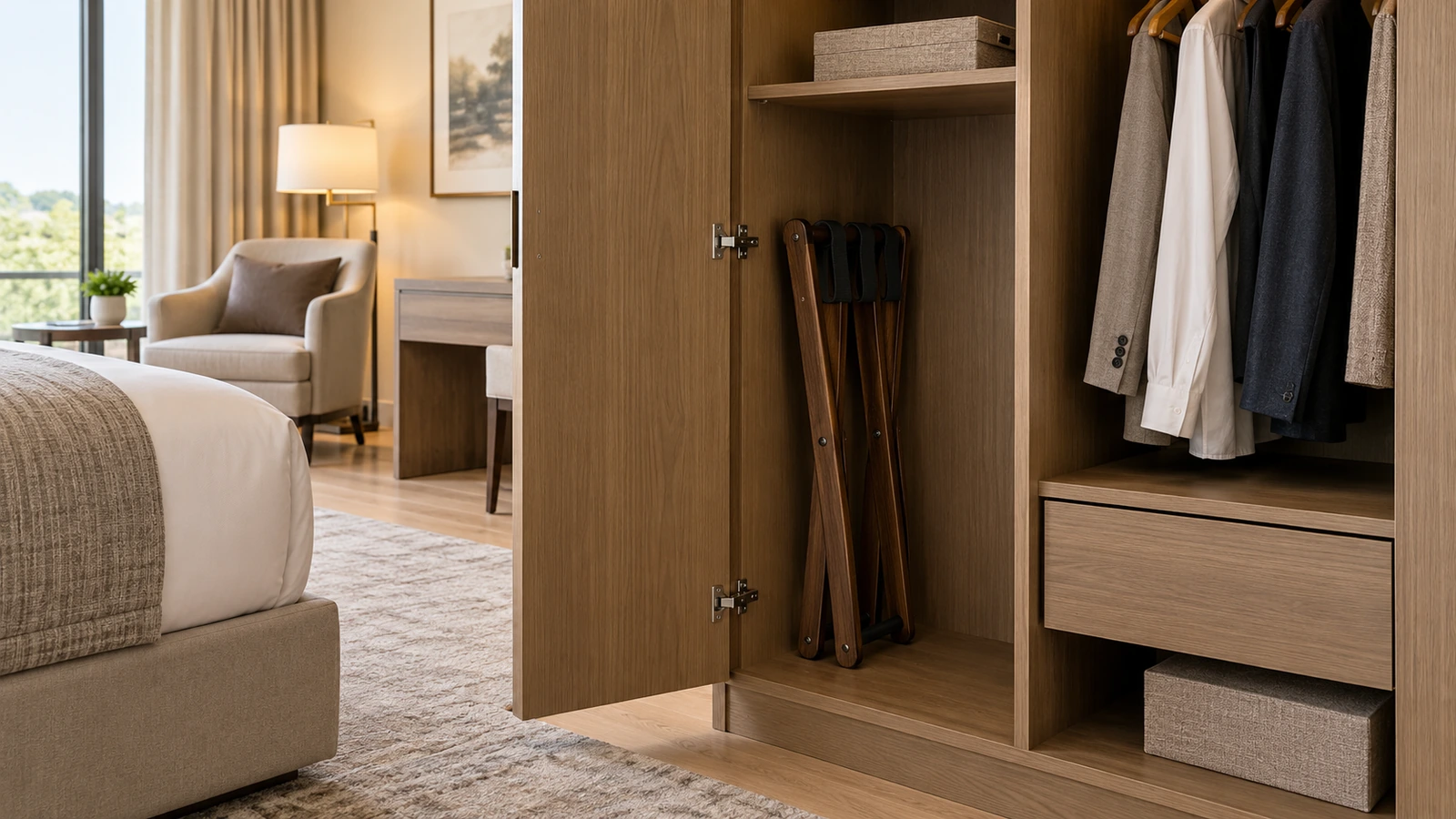
The same test should work for housekeeping. Staff need to move the rack during cleaning, inspect it and return it to a consistent position without catching the frame or straps on nearby furniture. If opening it requires shifting a chair, and putting it away requires removing other wardrobe contents, much of the practical benefit has been lost.
Fixed Luggage Benches
A luggage bench suits a room with a clearly allocated luggage zone. It gives guests an immediately visible place for a suitcase and can connect visually with the wardrobe, desk or other casegoods. It may also incorporate shelving or drawers, although those functions need to remain usable when a bag is on top. A bench beside a wardrobe, for example, should not prevent its door from opening or encourage an open suitcase to block access to hanging clothes.
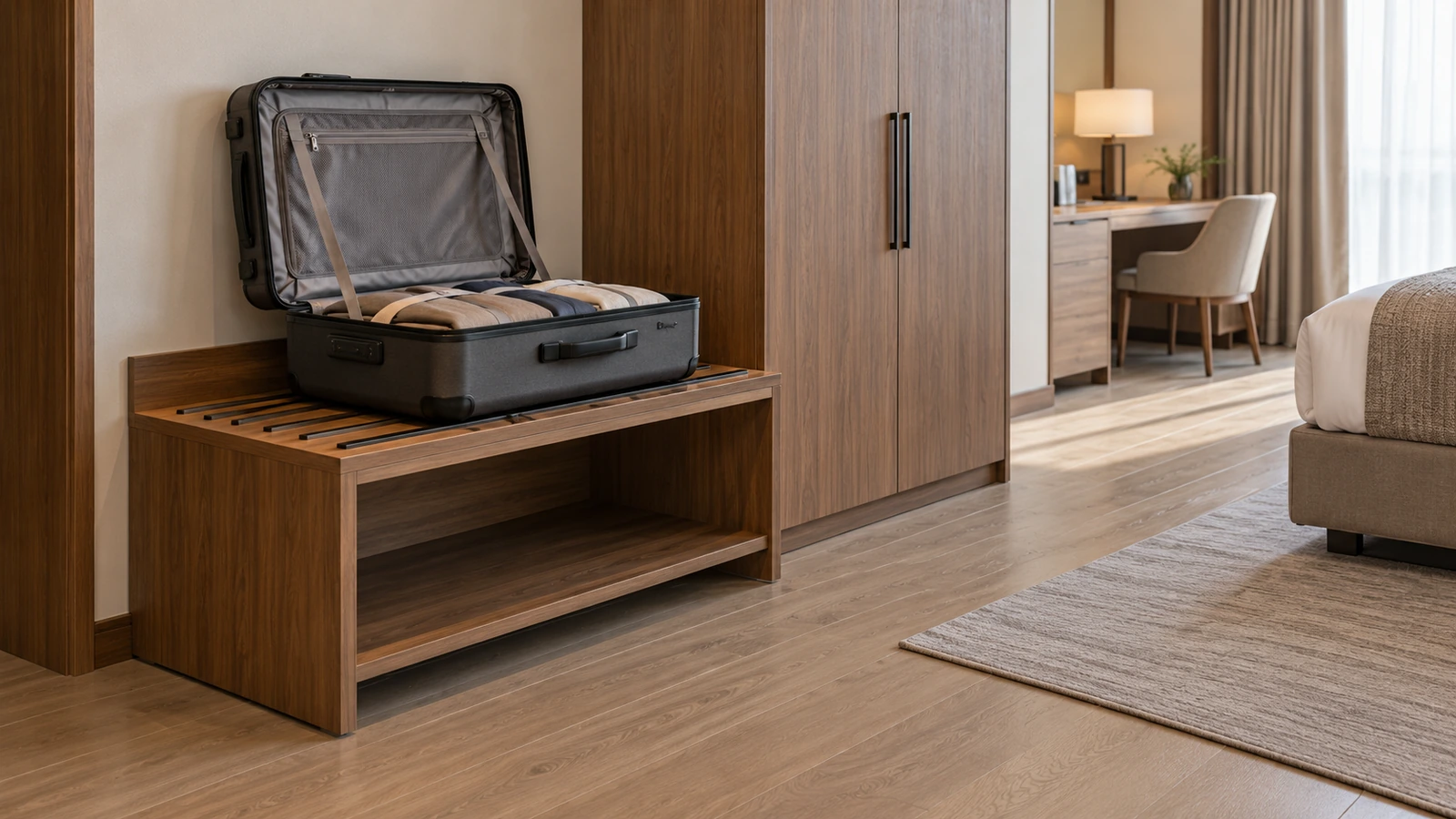
Unlike a folding rack, the bench continues to occupy space when no luggage is present. Its top and edges also receive repeated contact from wheels, feet and suitcase hardware, so the surface should be selected for that use. Upholstery can contribute to the design, but it brings different cleaning and wear considerations from a hard top.
A bench-like shape does not establish that the product is suitable for sitting. Where the room needs both a seat and a luggage support, confirm that the proposed construction is intended for both uses.
For an integrated arrangement, review guestroom casegoods and storage as a connected group. A luggage surface, adjacent cabinet and wardrobe can share a design language while keeping their individual access and maintenance requirements clear.
Test the Rack with an Open Suitcase
Place the proposed rack in its intended position and use a representative suitcase on it. Look at how the base rests on the straps or support surface, then open the case and check whether it remains properly supported. The guest should be able to reach belongings without holding the bag in an awkward position or repeatedly moving it. Significant overhang, poor contact with the supports or an unstable arrangement calls for a different product or location.
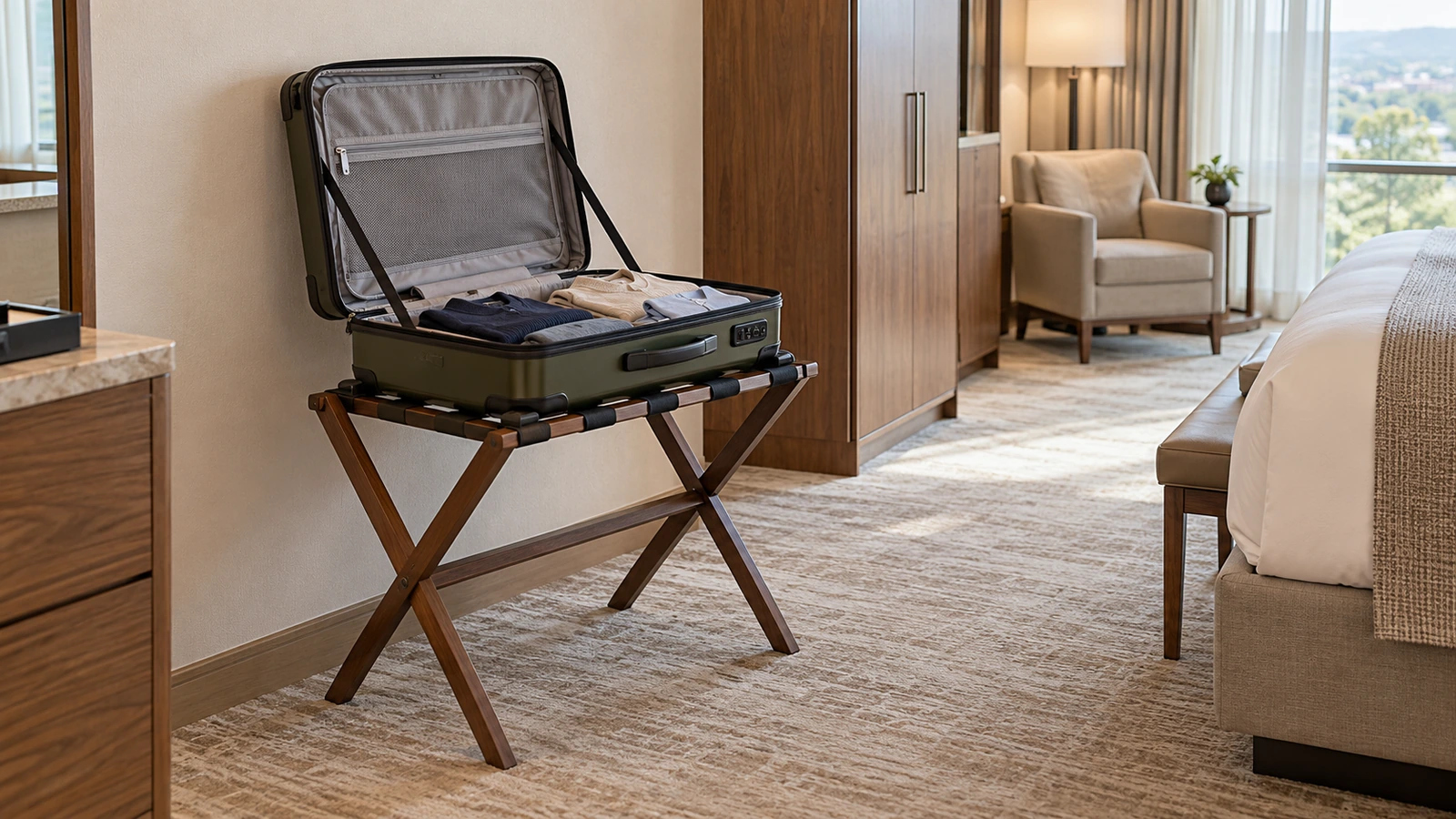
Use the Rest of the Room with the Suitcase Open
Then use the rest of the room while the suitcase stays open.
Walk between the entrance, bed and bathroom; open the wardrobe and nearby drawers; pull out the desk chair. These actions reveal conflicts that a closed-furniture plan can conceal. Check wall contact too: the suitcase lid, handle or hardware may reach beyond the frame, and a back bar does not guarantee protection for every bag. In accessible guestrooms, the complete arrangement also needs to meet the project’s applicable access and circulation requirements. A generic rack dimension cannot establish that outcome.
Balance the Open and Stored Dimensions
There is no single size that resolves all three states in every room. A compact rack may suit the storage compartment but not the expected suitcase; a larger one may support the bag while creating a circulation problem. The selection needs to balance those conditions rather than optimise only one.
Where the rack will be stored in a wardrobe, review the hotel wardrobe layout and storage alongside it. Allocate a real position for the folded frame and check that guests can retrieve it without disturbing clothing or equipment.
Review Construction, Materials and Maintenance
The frame, connections and support surface work together. On a folding luggage rack, check the hinges, opening limits and any stabilising features described by the manufacturer. Its permitted load and loading conditions should correspond to the actual model; a heavy-looking frame or thick timber section is not evidence of capacity. Straps need equal attention because their spacing and attachment determine where the suitcase is supported. A bag’s wheels or feet can concentrate contact on particular areas, so review the assembled product with the intended luggage rather than assessing each component in isolation.
Choose Materials for Repeated Suitcase Contact
Material choice follows from that construction and use. Timber can coordinate with guestroom casegoods, while metal offers other profiles and finish directions, but either requires suitable joints, surface protection and floor contact. On a luggage bench, examine edges and corners where bags are likely to knock against the furniture. A textured or upholstered top may retain dirt differently from a smooth surface, and a decorative finish may show abrasion more readily. The care instructions should address the actual frame, straps, top and other materials—not simply describe the item as easy to clean.
Test Routine Handling
Try the routine actions before approving the product. Lift it at the intended handling points, unfold it, close it and put it away. Notice where hands need to go, whether the movement is controlled and whether the frame contacts nearby finishes. This is also an opportunity to confirm the cleaning access and inspect the underside, feet and connections.
Plan Replacement and Maintenance
Maintenance should be manageable throughout the product’s use. If straps, glides or other wear components are replaceable, confirm the approved parts and method. Staff should be able to recognise a damaged strap, loose connection or faulty opening mechanism and remove the rack from service for assessment. Colour and visual similarity alone are not enough to identify a suitable replacement component.
Run a Representative Guestroom Trial
A representative room trial brings the product and layout decisions together. Take the rack from storage, open it, place the suitcase on it, access the contents and move around the room. Then reverse the sequence. For a luggage bench, check the same occupied condition and how its permanent footprint affects daily use. Include housekeeping in the review: staff can identify awkward cleaning access, floor marking, storage conflicts and handling problems that are easy to miss when looking only at the guest-facing arrangement.
Different room types may need different solutions. A standard room might suit a folding rack, while a suite with a dressing area could accommodate a permanent bench. Connecting doors or altered wardrobe positions may change the available space again. Retain a consistent design language where useful, but let each configuration follow the room’s actual function.
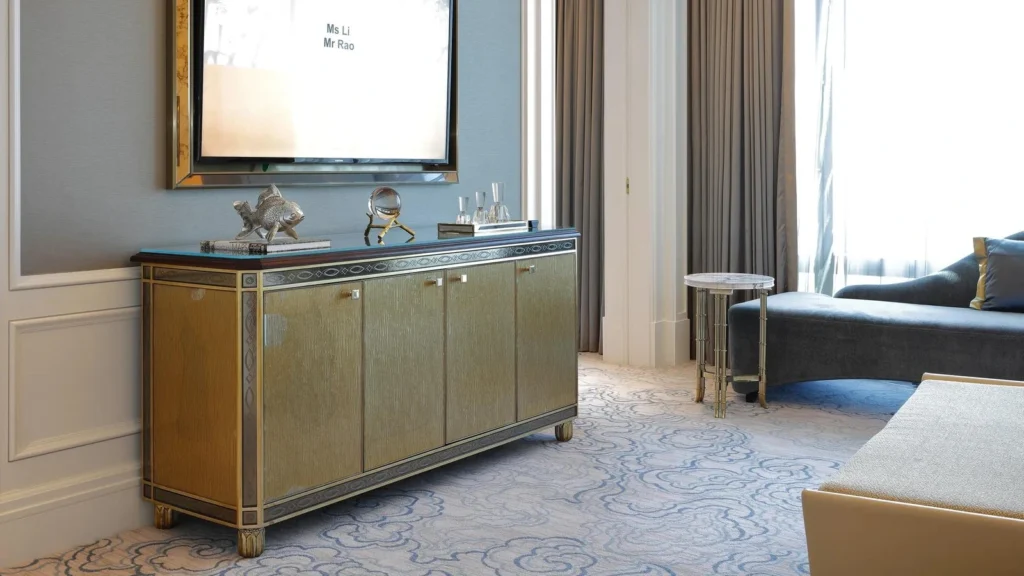
The coordinated guestroom furniture at Ritz-Carlton Beijing provides a broader reference for considering storage, tables and seating within one room composition. Its relevance here is the relationship between furniture categories, rather than evidence for a particular luggage rack.
Once the arrangement works, retain the model, finish, permitted use and replacement-component information. These details help the hotel order matching additions and maintain the approved construction. They also distinguish products that look alike but have different dimensions or fittings.
A suitable luggage rack earns its space in both states: open with a guest’s bag, and folded between uses. A luggage bench earns its permanent position by supporting luggage without obstructing other functions. The better option is the one that works through those everyday changes with the least unnecessary rearrangement.
Plan Hotel Luggage Furniture with Gainwell
A useful luggage area should feel like part of the room, with proportions and materials that belong alongside the surrounding furniture. Gainwell can help develop luggage benches and related guestroom storage together, exploring how an independent piece or integrated arrangement could support the proposed layout.
For a hotel luggage bench, a room plan or a few reference images can start a discussion about configuration, surface choices and the relationship with adjacent furniture. The aim is a luggage position that gives guests convenient access while preserving the room’s other uses.
FAQs About Hotel Luggage Racks
Can a Hotel Luggage Rack Also Be Used as a Seat?
Only if the manufacturer identifies it as suitable for seating. A luggage-support rating does not establish that the product is designed for a person sitting down or shifting position. Where both functions are needed, choose a product intended for that combined use.
Can Luggage Rack Straps Be Replaced?
Some designs allow strap replacement. Confirm the correct part, attachment method and procedure with the supplier rather than choosing a strap by appearance alone. A rack with damaged straps or connections should remain out of service until it has been assessed and appropriately repaired.
How Many Spare Luggage Racks Should a Hotel Keep?
Spare racks can accommodate additional requests and cover repair periods, but the quantity should follow the property’s demand and available storage. Review guest requests, occupancy patterns and maintenance turnaround, then keep the spare items identified and inspected so they are ready for use.