

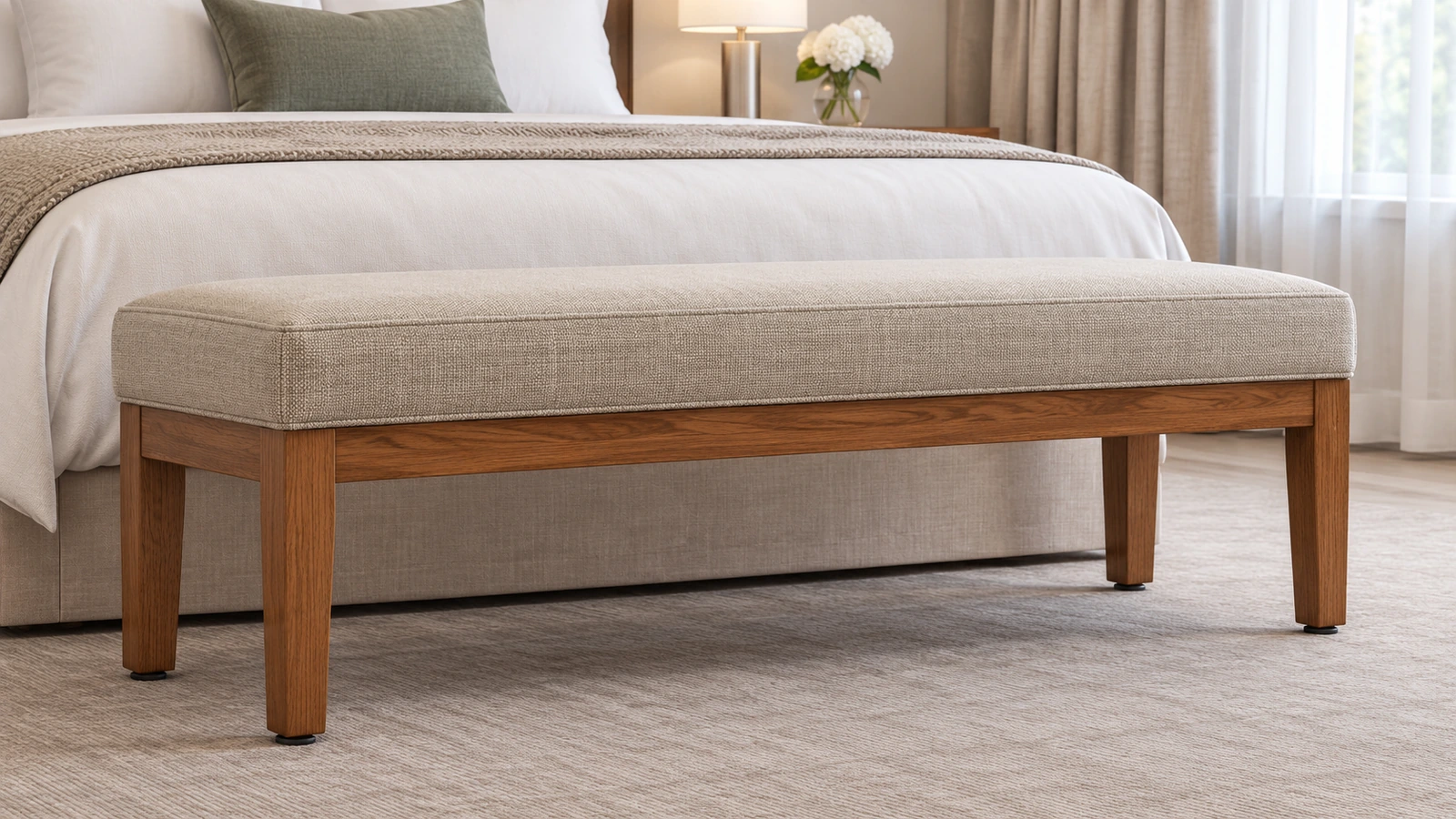
Choose a hotel bedroom bench by defining whether it primarily supports sitting, belongings or storage, then checking its relationship to the bed and occupied room. Its dimensions, upholstery and base should follow that purpose rather than simply fill the space shown at the foot of the bed.
A bench can add a useful landing surface and a place to sit while dressing. It can also restrict the route past the bed or become an improvised luggage platform that the construction was not intended to support. A clear function helps the team decide whether a bench is the right item and what it needs to do.
Decide Whether the Bench Is Primarily for Sitting or Belongings
Start with the guest activity. A seat for dressing needs a considered sitting surface and supporting construction. A place for bags needs a suitable support area and contact detail. A decorative upholstered bench may be used for both in practice, but the project should establish which uses the product is intended to accommodate.
Discuss those expectations with the operator. If guests are likely to place luggage on the bench, review that use explicitly rather than relying on the appearance of a broad seat. Conversely, a piece intended only for belongings should not be described or positioned as a seat without the appropriate product review.
Storage introduces another function. A lift-up seat, drawer or open shelf can hold useful items, but it changes how guests and staff operate the bench. Establish the contents and responsibility for accessing them before selecting a storage form.
A brief purpose statement is useful here: the bench provides guest seating, a temporary landing surface, a defined storage function or an agreed combination. This makes later decisions about padding, dimensions and hardware easier to assess.
Fit the Bench to the Bed and the Occupied Room
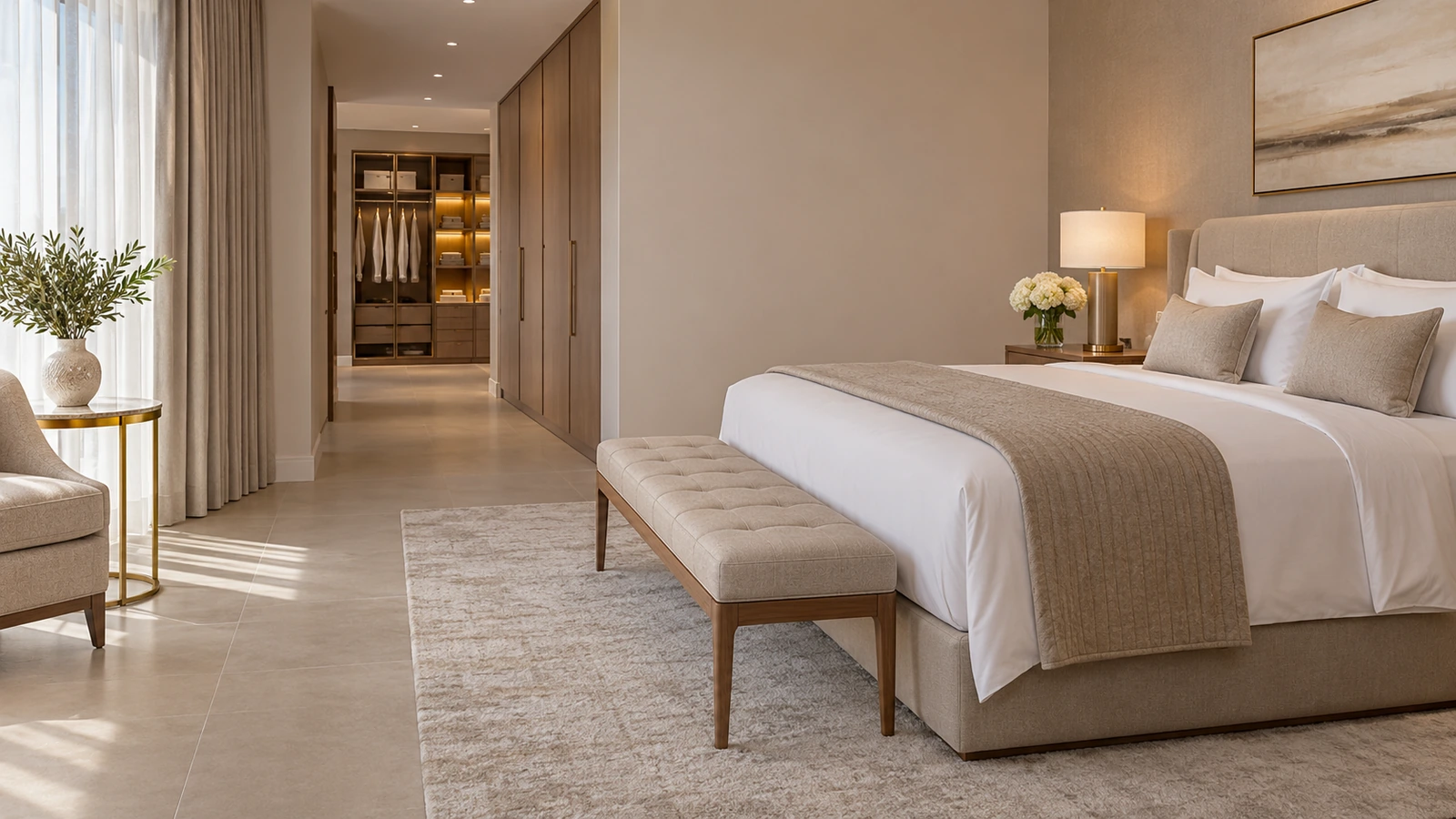
Use the finished bed arrangement as the reference, including its frame and bedding. The bench’s relationship to the bed should be considered in both appearance and use. A visually aligned top may not provide the intended sitting experience, and a projecting bed frame may reduce the space that appears available on plan.
Check the route around the bed with the bench occupied and with typical belongings present. The surrounding room may include a media cabinet, desk, wardrobe or luggage area. The bench should not make those items difficult to use when a guest sits down or leaves a bag beside it.
Length and depth serve different purposes. A longer bench may relate to the bed composition while adding little functional benefit if only one guest uses it. Increasing depth may improve a particular seating or storage task but reduce circulation. Review those choices against the agreed role rather than selecting dimensions from the elevation alone.
Room variants deserve separate attention where they alter the relationship. Twin beds, a larger bed base, connecting doors or a different television unit can change the available route. An item that fits one standard room may need another size or may be omitted in a tighter configuration.
Choose the Seat, Frame and Base as One Item
The seat’s comfort and appearance depend on the supporting construction below it. Review the finished height, usable depth, cushion behaviour and edge together with the frame and base. A soft surface can conceal a rigid edge that affects sitting, while a thick cushion can change the seat level under use.
The product should suit its intended seating role through the manufacturer’s information and relevant evidence. A solid-looking leg or heavy top does not establish capacity or stability. Where a design is customised, confirm the proposed connections and support rather than inheriting an assumption from a similar reference image.
The seating and upholstery options available for hospitality interiors show how different frames and upholstered forms can serve different activities. For a bedroom bench, assess the specific item against dressing, temporary sitting and any agreed belongings use.
Feet and glides also affect the room. Check their relationship to the floor, the intended moving method and how the item remains supported. A base with a continuous plinth creates different cleaning access from open legs. Neither is automatically preferable; the choice should follow use, construction and housekeeping requirements.
Add Storage Only When Access Remains Practical
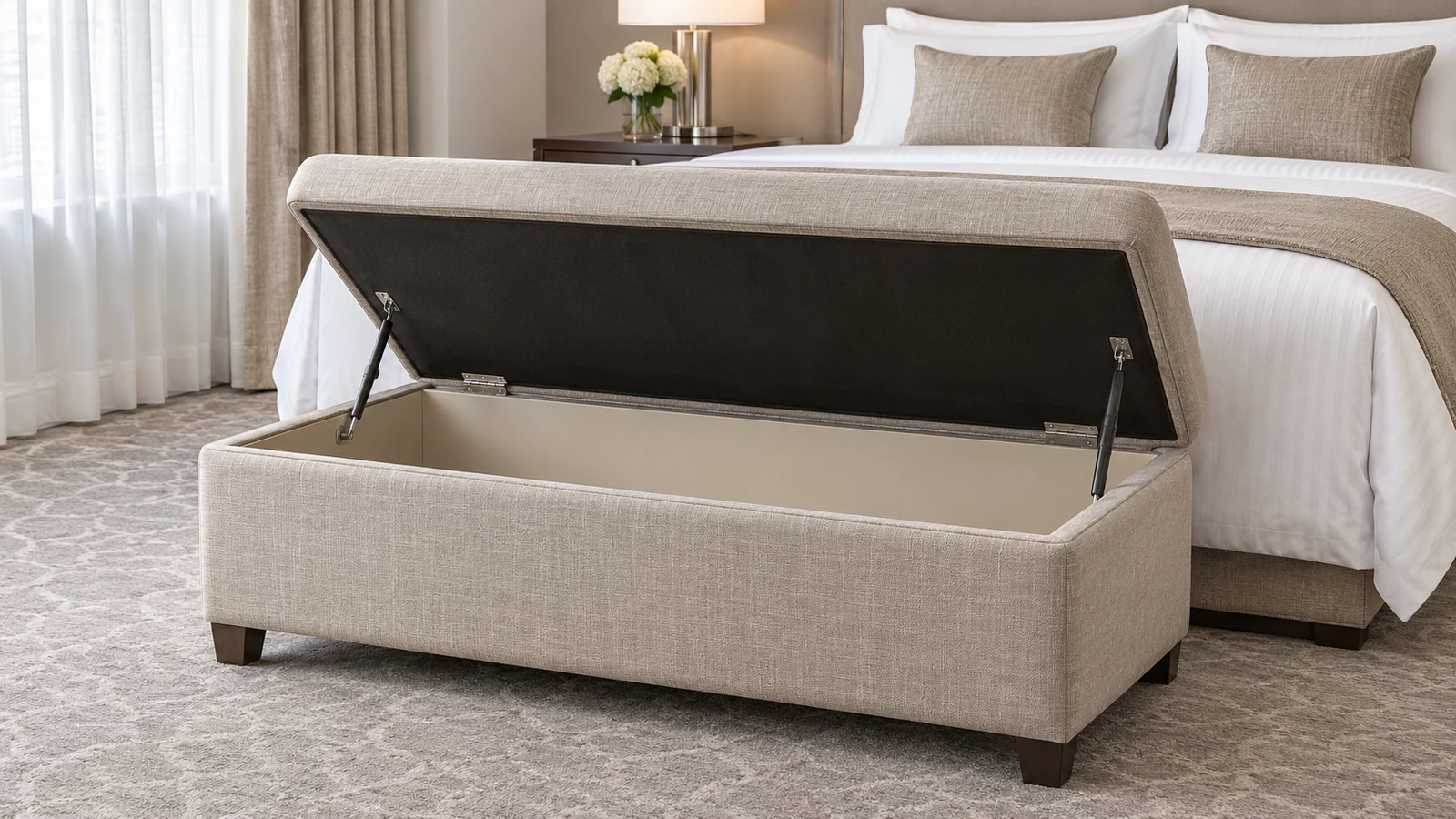
Storage is valuable when it holds identified contents and can be reached in the installed position. A lift-up seat needs an opening path and an appropriate operating arrangement. Drawers need space in front or at the ends. Open shelves need enough visibility and access for the items they contain.
Review the opening with the bench beside the bed and any bedding in place. A lid may conflict with an overhanging cover, while an end drawer may be obstructed by a wall or another furniture item. The closed external dimensions do not reveal these movements.
If an opening mechanism is proposed, obtain its instructions and suitability information for the application. The operator should understand how the seat is opened, supported and closed and which contents are appropriate. The project’s responsible parties should review any relevant user risks rather than treating a hinge selection as the entire solution.
Consider whether the storage remains useful during room service. If staff must remove all guest belongings before accessing hotel supplies, another storage location may be more practical. The bench should not accumulate functions simply because space is available beneath the cushion.
Plan Upholstery, Floor Access and Daily Cleaning
Choose the cover and finish around expected contact and the operator’s approved care method. Clothing, bags and housekeeping equipment interact with different parts of the bench. A fabric selected for colour still needs a defined application and cleaning route for the finished upholstered item.
Seams and junctions influence that route. Deep channels, decorative trims and a gap between the seat and frame can collect debris or restrict access. Review those details in a representative sample and ask staff to demonstrate how they would clean the item in its room position.
For intact upholstery, follow its approved instructions for loose debris and local cleaning. Test a permitted product discreetly before wider use, control moisture and allow the assembly to dry fully as required. Check the dried surface for residue, colour change or altered texture. Persistent dampness, damaged seams or loose components needs assessment rather than another cleaning pass.
Floor access should be realistic. If the bench must move for routine cleaning, establish a suitable handling method and where it will stand temporarily. A piece that is difficult to grip or reposition may add daily work that was invisible in the design review.
Check the Bench Through a Guest Stay and Room Reset
Follow a representative stay rather than inspecting the item only in an empty room. Place the expected belongings, sit at the bench, reach the intended storage and move past the bed. Then remove the items and perform the housekeeping reset.
This sequence may reveal that another furniture type is better suited to the primary need. If the main task is opening and supporting a suitcase, the comparison with hotel luggage racks is useful. The bench article should retain its own focus on seating and the bed-end arrangement rather than duplicating a luggage-support guide.
Record any change against the function it improves. A shorter bench may resolve circulation while preserving the seat; an altered base may improve cleaning; removing unnecessary storage may simplify use. Review the resulting appearance with the room so functional changes remain coordinated with the design.
A successful bedroom bench has a clear role and a workable relationship to the bed. Its seat, supporting structure and optional storage should make that role easy to understand, with the surrounding room still practical when guests bring their belongings into it.
Develop Bedroom Benches Around Your Guestroom Layout
Gainwell develops custom upholstered seating and coordinated guestroom furniture. A bedroom bench can be reviewed alongside the bed, finishes and storage arrangement so its proportions and construction support the intended room use.
To discuss custom hotel bedroom benches, share the bed and room plans, intended seating or belongings use, upholstery preferences and any storage requirement. Include the housekeeping access priorities that should influence the base and removable components.
FAQs About Hotel Bedroom Benches
Can a Storage Bench Be Specified for Guest Seating?
It can be considered where the complete product is designed and supported for that use. Confirm the seat, frame, lid or drawer construction and relevant product evidence, then review the opening operation separately. A storage box with an upholstered top should not automatically be treated as seating because its appearance suggests a bench.
Can One Bench Design Serve Twin and King Rooms?
A common design language can serve both, but each layout needs a fit review. Compare the bed arrangement, circulation, nearby furniture and intended number of users. The same construction may be offered in approved sizes, while another room may require a different configuration or no bench at all.
What Information Is Needed for Replacement Upholstered Tops?
Keep the item code, seat dimensions, attachment details, cushion construction and cover references, including pattern direction where relevant. Confirm removal access on the installed item before ordering. Compare the replacement with the aged furniture and approved sample because matching the original material reference alone may not reproduce the current visible appearance.