


Hotel furniture hardware should be selected around the door or drawer it supports, the cabinet construction and the way the furniture will be used. Hinges and drawer slides need appropriate dimensions, mounting conditions and operating clearances. Their adjustment and replacement methods also matter, particularly where furniture is fitted into a room or repeated across many guestrooms.
Descriptions such as soft-close, heavy-duty or concealed identify features, not a complete specification. A hinge can provide the intended closing action yet conflict with an internal drawer, while a slide with a suitable stated load rating may be inappropriate for the proposed drawer width or mounting orientation. The useful assessment is the hardware installed in the actual cabinet.
Define Hardware Requirements by Cabinet Function
Start with what the door or drawer needs to do. A bedside drawer holds different contents from a deep storage drawer, and a wardrobe door has a different operating pattern from a small cabinet front. Record the intended contents, opening movement and access requirements before choosing mechanisms. Where the furniture contains a safe, minibar or other equipment, its installation and servicing conditions should also inform the arrangement.
The cabinet itself is part of the hardware system. Panel thickness, material, reinforcement and fixing positions affect how fittings can be attached. A well-specified hinge cannot compensate for an unsuitable fixing into a weak or damaged substrate, and a drawer slide needs a cabinet that maintains the required alignment. Assess the hardware and supporting construction together.
Closing features should follow the intended use. Soft-close, self-close, push-to-open and hold-open mechanisms serve different purposes and may require particular clearances or installation details. Consider how guests will understand the furniture, how staff will clean it and whether the mechanism remains practical when the drawer contains its expected load. A feature that feels appropriate on an empty showroom sample may behave differently in the completed item.
When reviewing casegoods and storage furniture, identify the hardware requirements for each product family rather than applying one generic note to every cabinet. Some components may be shared across the package, but the selection should remain suitable for each door, drawer and construction.
Select Hinges for the Door and Opening Geometry
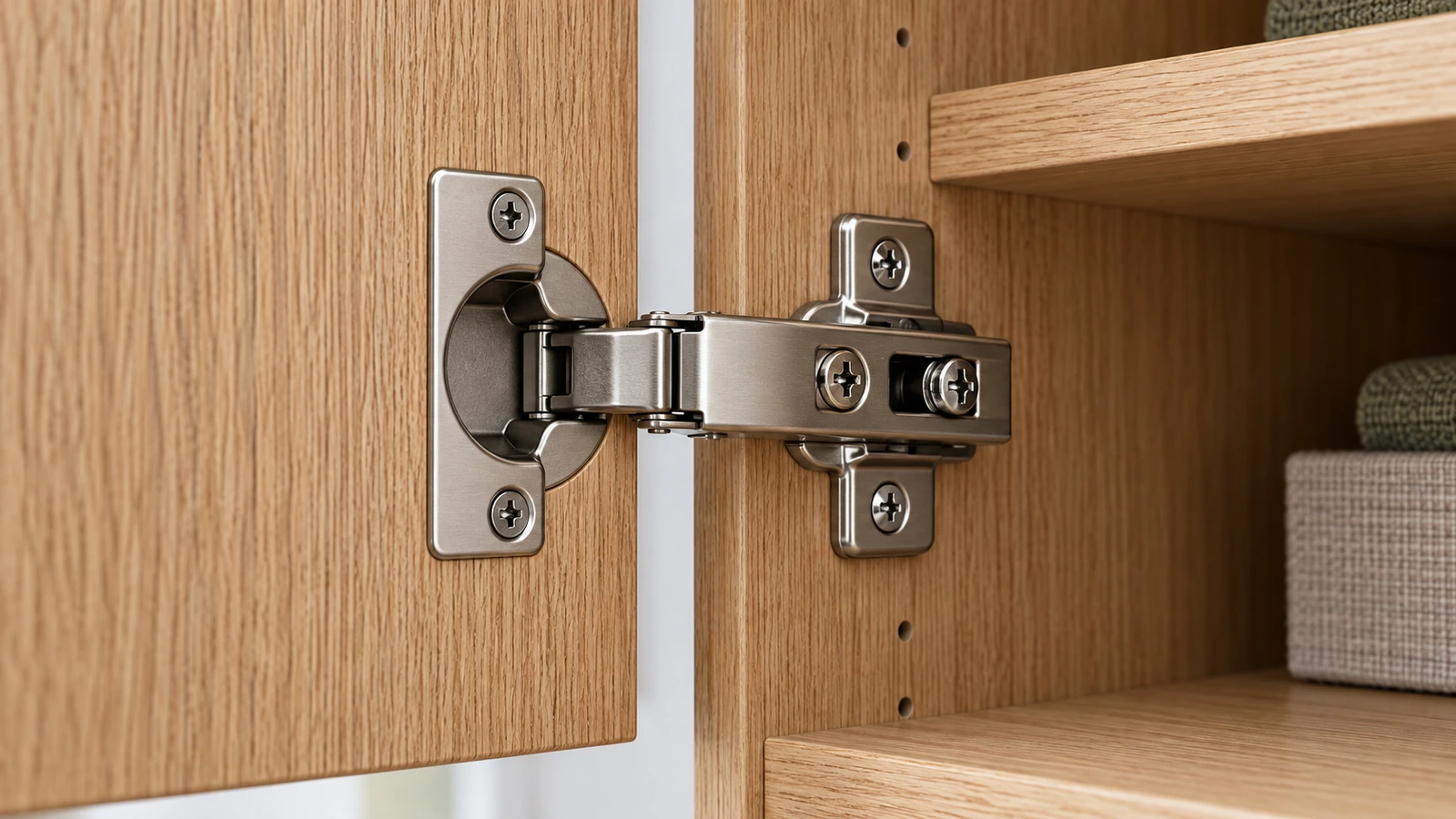
Door dimensions and weight provide the starting information for hinge selection. Include the finished panel, handles, mirrors and other attached components where relevant. The hinge manufacturer’s planning information should then be used to confirm the appropriate arrangement, including hinge type, quantity and positions. A tall or unusually wide door may fall outside the assumptions used for a more typical cabinet front, even if its weight appears similar.
Door construction changes the fixing requirements too. Solid timber, engineered panels, thin fronts and glass applications can require different hinge systems or attachment methods. Confirm the permitted thicknesses, drilling details and mounting components for the proposed model rather than transferring a familiar detail from another cabinet.
Opening geometry deserves a separate check. Overlay, inset and shared-panel arrangements place the door differently in relation to the cabinet body. Those relationships affect gaps, hinge selection and the mounting plate. The nominal opening angle is only one part of the result: the door must also clear adjacent panels, handles and internal fittings throughout its movement.
A wardrobe with internal drawers is a useful example. The outer door may open far enough for access to hanging clothes while still obstructing a drawer front. Similarly, a cabinet beside a wall may need to limit door travel to avoid contact. Resolve the actual movement in the proposed layout, including any approved restriction or protection detail.
Adjustment should refine a correctly built assembly. Confirm which directions the hinge system permits and whether the adjustment remains accessible after installation. It should not become a way to conceal incorrect drilling, distorted panels or a cabinet that has been installed out of alignment.
Match Drawer Slides to Load, Travel and Mounting
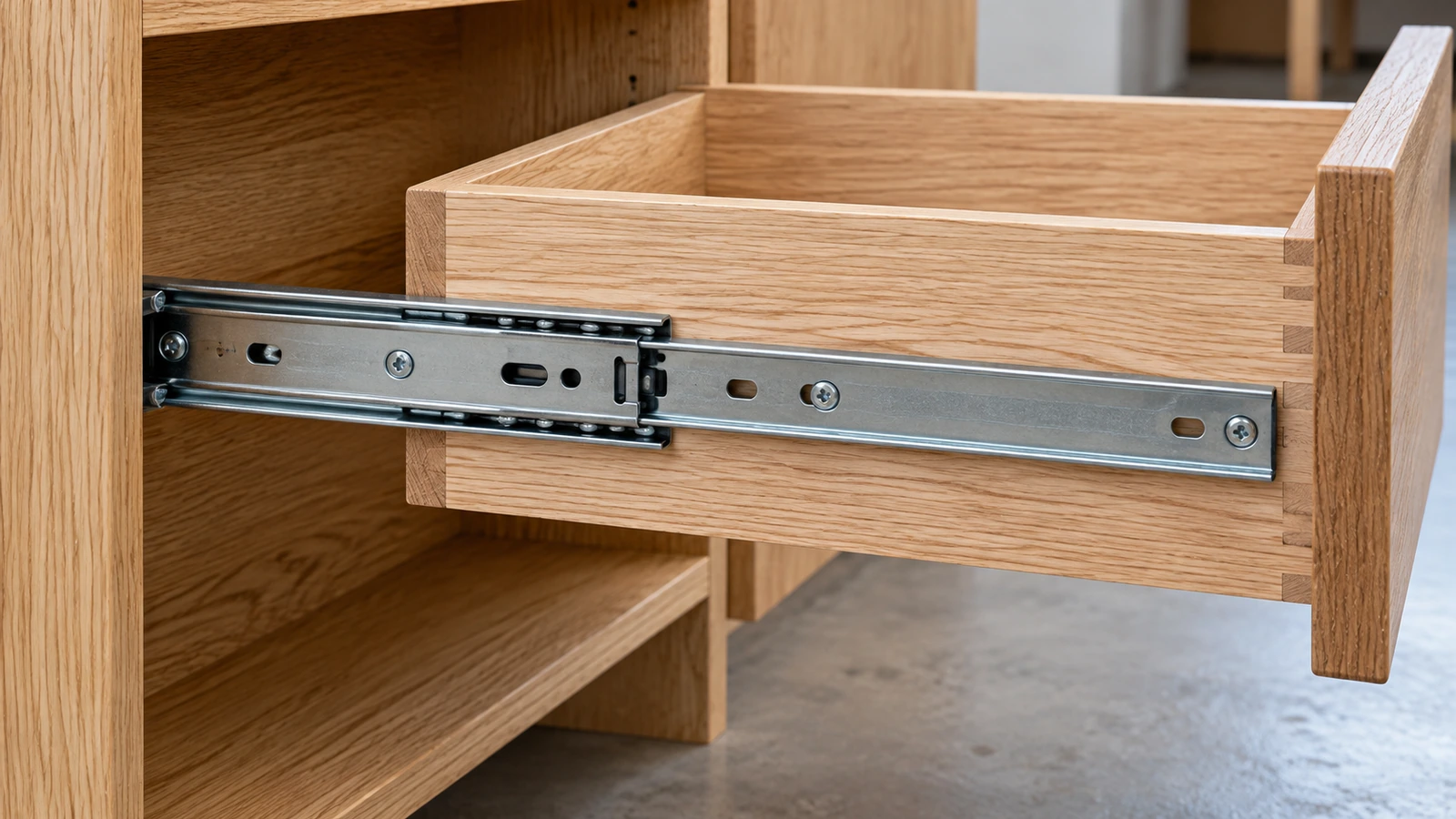
A slide’s stated load rating needs to be read with its conditions. The supported load can include the drawer itself as well as its contents, and the applicable rating may depend on slide length, drawer dimensions, mounting orientation and the manufacturer’s test arrangement. A number printed beside a product name is therefore not enough to establish suitability.
Define the drawer before choosing the slide. Its width, depth, construction and expected contents influence the selection, while the surrounding cabinet determines the available mounting space. A wide drawer can place different demands on a slide arrangement from a narrow one carrying a similar total weight. Where the proposed application falls outside the published conditions, obtain confirmation for that configuration.
Travel determines how much of the drawer becomes accessible. Partial extension may suit some shallow storage, while full extension can make rear contents easier to reach. The choice should follow the task rather than a preference for the longest movement. Check how far the drawer projects into the room and whether guests or staff can use it without conflicting with adjacent furniture.
Mounting instructions are particularly important. Side-mounted and undermounted systems use different relationships between the drawer and cabinet. Turning a slide to a different orientation can alter its capacity or fall outside its permitted use. Use the data for the selected model instead of applying a general derating factor or a standard gap to all slides.
Finally, review the action in a representative loaded drawer. Check opening effort, closing behaviour, alignment and access to the rear. This practical review complements the relevant product evidence; it does not replace it.
Coordinate Fixings, Clearances and Cabinet Drawings
Hardware dimensions need to agree with the cabinet drawings and manufacturing details. Hinge drilling, mounting-plate positions, runner locations and drawer clearances should all refer to the selected components. Small differences can affect movement, alignment or engagement, particularly when a fitting is concealed after assembly.
Fixings should be specified for the hardware and substrate. Confirm the required screws or other attachment components, their positions and the supporting material. Substituting a convenient screw can change engagement or interfere with the mechanism, while damaged holes can prevent an otherwise suitable fitting from being secured correctly.
Clearance is more than the visible gap around a door or drawer front. Check the space behind hinges, below drawers, around release devices and along the travel path. Decorative panels, internal shelves and neighbouring fronts may intrude into those areas. Where the cabinet is installed close to a wall or another item, review the completed furniture arrangement rather than the cabinet on its own.
The All Suites Hotel Hoi An / Da Nang project includes casegoods and coordinated storage across suite bedrooms and living areas. That type of connected furniture package illustrates why internal operation and surrounding furniture relationships need to be considered together. The public project information does not identify particular hinge or slide models, so hardware selection still requires product-specific review.
Check adjustment after the cabinet has been positioned and secured as intended. Transport, assembly and installation may reveal alignment issues that were not present during factory inspection. Record the approved adjustment method and any limits, and distinguish a correctable setting from a construction or installation defect.
Where these relationships remain unclear,hotel furniture shop drawings provide the place to coordinate the selected fittings, dimensions and access details before manufacture.
Plan Adjustment, Removal and Maintenance Access
A fitting is not readily replaceable merely because it can be purchased separately. The furniture must allow staff or a technician to reach its fixings, operate its release and remove the affected component without unnecessary damage. Review this before approving a construction that will conceal the hardware behind permanent panels or adjacent work.
For a hinged door, check the space needed to support and detach it, including access to the mounting plate and any release mechanism. A clip-on system may simplify removal in an appropriate application, but the actual cabinet still needs enough room for the procedure. Heavy or fragile fronts may require additional handling arrangements.
Drawers need a similarly clear removal route. Some slides incorporate disconnect features; others use different methods or are not intended to separate in the same way. Confirm how the drawer is released, whether it must reach a particular extension and how it is refitted. A front panel or nearby door can obstruct access to a release that was easy to reach on the hardware sample.
Fixed furniture adds another layer. A cabinet may need to remain installed while its door, drawer or slide is serviced. If replacement requires moving the entire unit, disconnecting equipment or disturbing neighbouring finishes, that consequence should be understood at design stage. Removable access panels can help where they are suitable, but their attachment and removal space must also be resolved.
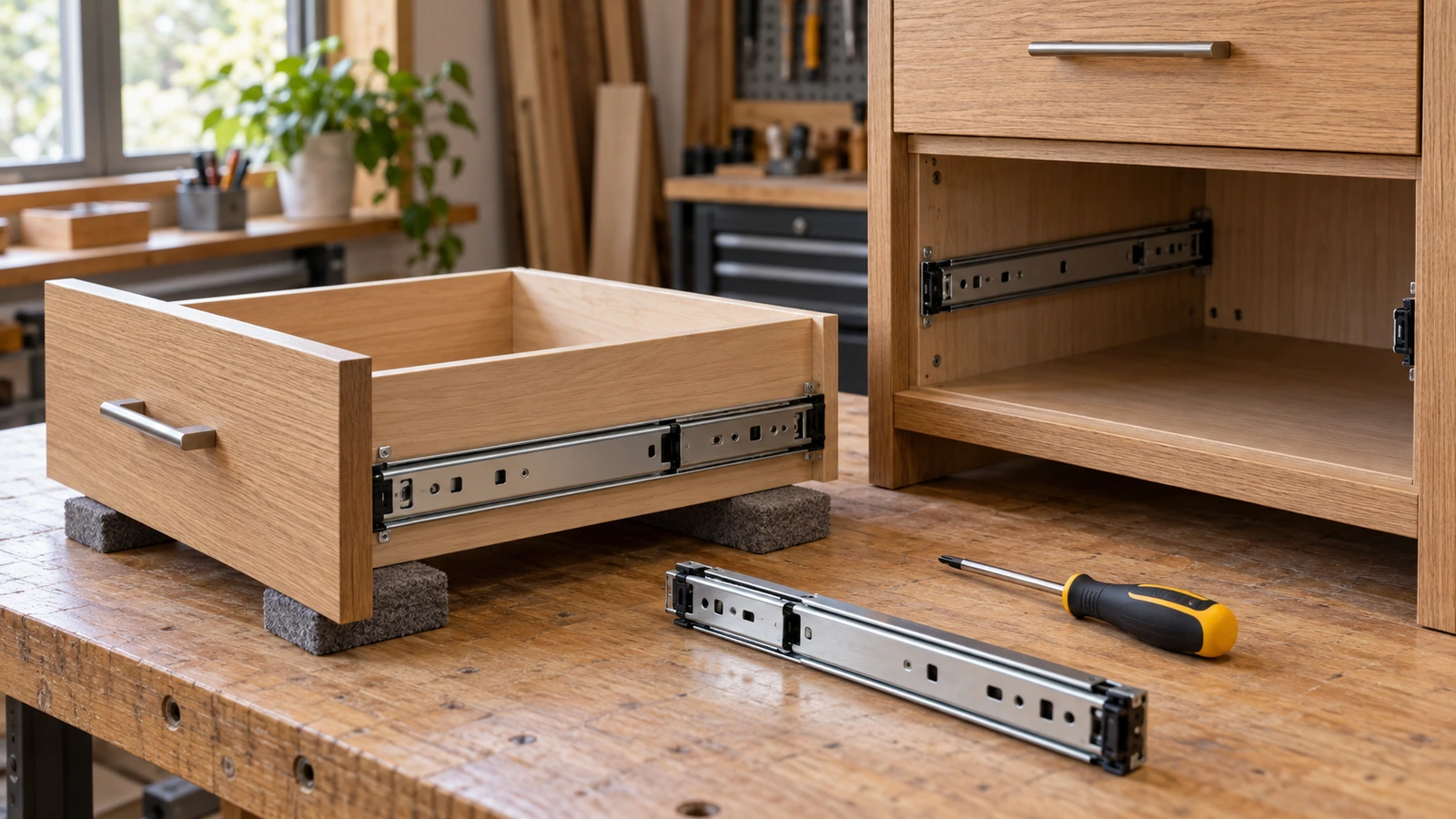
Maintenance instructions should cover the approved cleaning, adjustment and servicing of the selected hardware. Lubrication requirements vary, so a general instruction to oil every moving component is inappropriate. Keep mechanisms protected from unsuitable cleaners and investigate recurring noise, drag or misalignment rather than repeatedly adjusting around an unresolved cause.
Record Hardware References and Control Substitutions
Record complete hardware references in a schedule linked to the furniture item. Include the manufacturer, model and relevant configuration, together with mounting plates, brackets, locking devices and other required components. For slides, length and mounting arrangement may distinguish variants that otherwise look alike. For hinges, the arm, plate and attachment details need to form the intended combination.
These records support both production and later repair. A photograph can help identify a fitting, but it may not reveal the exact version or compatible mounting components. Retain the relevant technical and installation information with the furniture records so the operator can order against a defined reference.
Substitutions should be assessed by function and fit, not brand name or appearance alone. A proposed alternative may change drilling positions, opening geometry, load conditions, adjustment or removal method. It may also require different evidence for the intended use. Identify those differences and confirm their effect on the cabinet before accepting the change.
A representative assembly can reveal whether the alternative works in practice. Check the door or drawer through its full movement, with the expected contents or loading arrangement where appropriate. If it affects appearance, access or construction, update the drawings and records to match the accepted version.
The finished furniture, approved information and replacement references should describe the same system. That consistency makes hardware easier to maintain and reduces the risk of an apparently minor replacement creating a new operating problem.
Develop Hotel Furniture Hardware with Gainwell
Furniture hardware should support a smooth guest experience while remaining accessible when adjustment or repair is needed.Gainwell can help develop cabinet construction, door and drawer movement, and maintenance access together, so hardware decisions follow the complete furniture design.
If you are developing new casegoods or reviewing recurring maintenance problems, discuss your hotel furniture hardware requirements as part of the furniture package. A cabinet drawing, reference image or description of the operating issue can provide a starting point for exploring suitable construction and component arrangements.
Frequently Asked Questions
Can a visually similar hinge replace the original?
Only after compatibility has been confirmed. Check the hinge type, mounting plate, drilling, opening geometry and suitability for the door. A visually similar fitting may place the front differently or require another connection. Follow the approved replacement route rather than selecting by appearance alone.
Can soft-close mechanisms be added to existing furniture?
Sometimes, depending on the original hardware and cabinet construction. An approved accessory or replacement system may be available, but added components can affect clearance, operation and fixing requirements. Review the complete door or drawer before repeating the change across several rooms.
How should hotels plan spare hardware stock?
Base the stock on installed quantities, component variety, observed maintenance needs and replacement availability. Record matching accessories as well as the main fitting, and keep spares identified by their exact references. Review the stock when a model changes or a component is discontinued.