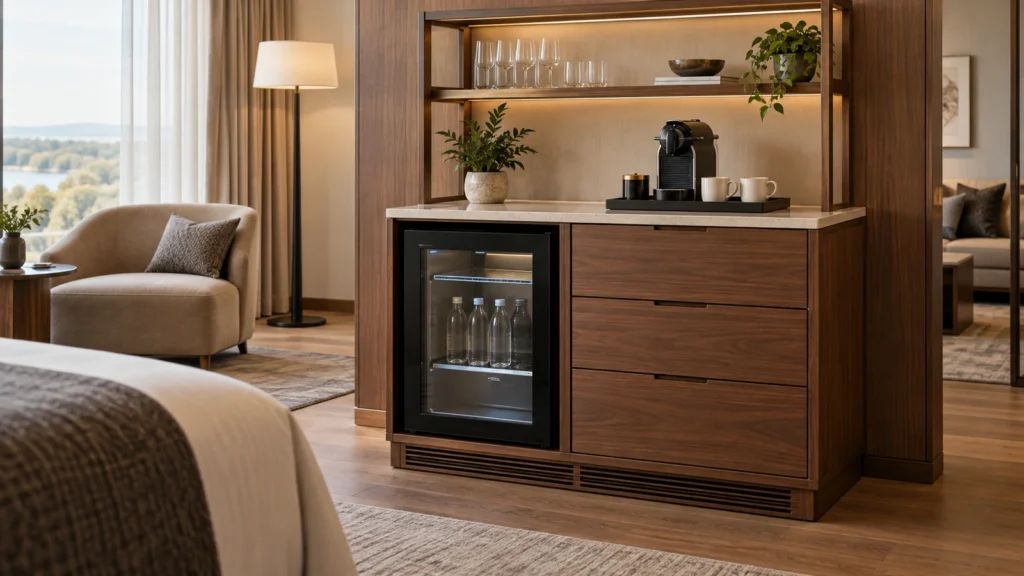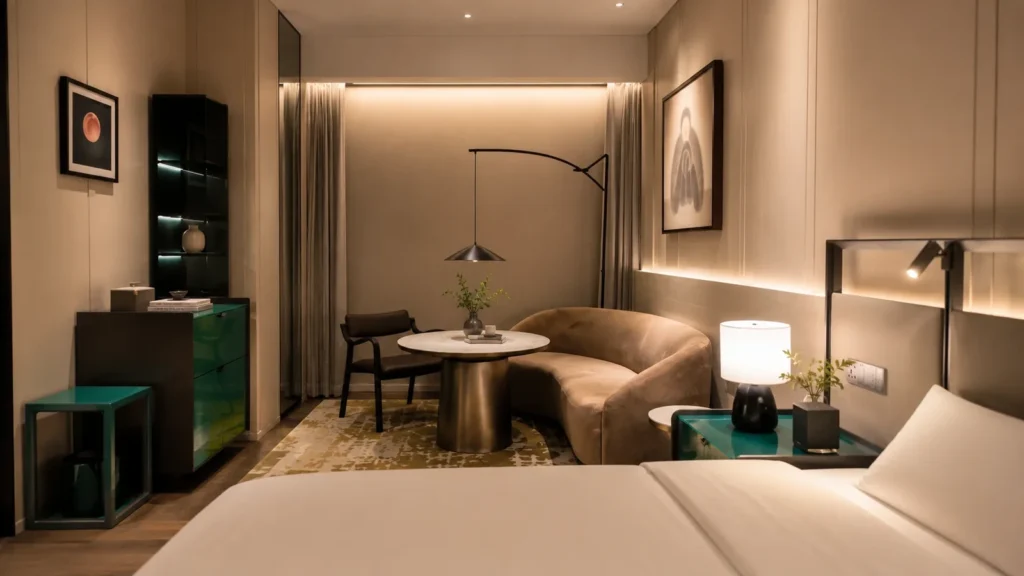

Quotations from Chinese hotel furniture manufacturers for what appears to be the same guestroom routinely differ by a factor of two. That range is not primarily a margin difference. It is a specification difference that the quotation format usually conceals.
This guide sets out indicative price bands by quality tier, defines the package those bands describe, and identifies the construction decisions that move a quotation between them. It is a companion to our guide on building a hotel furniture cost baseline, which covers the method for constructing a project-specific budget. The bands here are orientation for early feasibility work. They are not a project baseline, and they should not be carried into one — a portable benchmark without the same scope, region, specification, quantity, price date, currency and delivery boundary does not describe your project.
Define the package before you compare a single number
There is no standard guestroom furniture package, which means two quotations can describe different quantities of furniture while appearing to answer the same question.
Write your own list and require every bidder to quote against it. For the purposes of the bands below, the package is:
- Bed base and headboard
- Two nightstands
- Desk with return
- Wardrobe or open hanging unit
- Luggage bench
- Lounge chair
- Occasional table
Loose seating beyond one chair, public-area furniture, millwork, mirrors, lighting and soft goods sit outside this package. Where a supplier includes them, the comparison breaks unless you separate them out.
Whoever defines the package controls the comparison. If you accept a supplier's package definition, you have accepted their frame.
Locate the difference between two quotations line by line
When a USD 3,000 quotation sits beside a USD 5,000 quotation for the same package, the difference is almost always distributed across seven items.
| Element | Lower quotation | Higher quotation | Where it shows |
|---|---|---|---|
| Substrate | Low-density particleboard, 12–15 mm, moisture content unstated | Higher-density MDF or plywood, 18 mm and above, kiln-dried to a stated range | Swelling and joint failure at vanities, luggage benches and any wet-adjacent piece, typically year two |
| Veneer | 0.2 mm | 0.6 mm and above | First impact from a housekeeping cart; the thin veneer cannot be sanded back and cannot be refinished at renewal |
| Hardware | Unbranded slides and hinges | Specified manufacturer and model | Drawers opened several times daily across a seven-year cycle; the most common undisclosed substitution |
| Foam | Quoted by thickness | Quoted by density in kg/m³ | Seat collapse and visible deformation within the first replacement cycle |
| Fabric | "Contract grade", unquantified | Stated abrasion rating and test method | Wear-through on arms and seat fronts |
| Finish system | Two coats | Multi-coat UV or PU system | Heat rings, alcohol marking, cleaning-chemistry damage |
| Edge treatment | Thin edge tape | Solid timber edging or thick PVC | Edge lifting on desks and case pieces — the most visible early failure in any guestroom |
Both quotations can be honest. They are describing different products.
Price the replacement cycle, not the purchase
The number that determines cost is not the price per key. It is the price per key divided by the years of service before the property has to buy it again.
A package at USD 3,000 that requires replacement at year four costs more than a package at USD 4,500 that reaches year eight, before accounting for the operational disruption of an unplanned renewal.
This is also where budget can legitimately be saved. Items guests touch every day — desk chairs, drawer runners, luggage benches, wardrobe fittings — justify specification. Headboard panels, decorative case pieces and items in low-traffic positions carry far less wear and are a reasonable place to reduce cost without shortening the cycle.
Understand where the cost advantage actually originates
The saving relative to North American or Western European contract production does not come from lower quality. At the upper tiers it comes from supply-chain density and manufacturing scale — hardware, stone, metal, glass, veneer and finishing capacity concentrated within a short radius, which removes freight, coordination and subcontracting cost from every component.
What the buyer takes on in exchange is quality assurance. Established Western contract suppliers carry more of the documentation, consistency and local warranty burden in their price. Sourcing from China moves part of that burden to the buyer, and it has to be budgeted rather than assumed.
Budget explicitly for: factory verification, a physical mock-up room, pre-production sample approval, during-production inspection and pre-shipment inspection. A programme that omits these is not cheaper; it is unmanaged.
Issue one specification package to every bidder
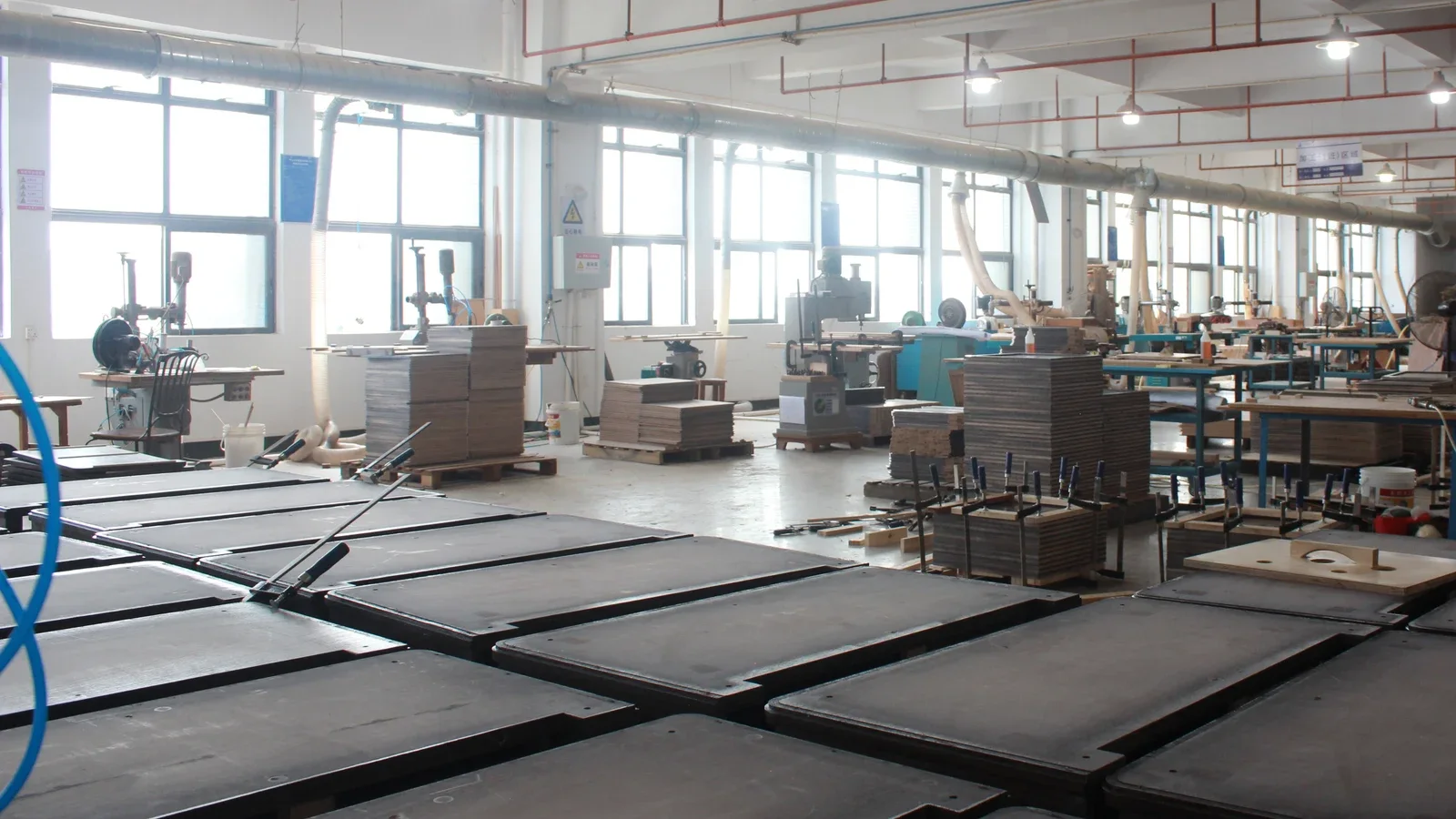
Comparison only works if every bidder is answering the same question.
Issue to each: room elevations and drawings, bill of quantities, room counts, material schedule, veneer or laminate specification, hardware manufacturer and model, upholstery and fire-performance requirements, foam density, finish system, packaging requirements, destination port and required delivery date.
What belongs in that package, and the readiness tests it should pass before it is issued, are set out in our guide to FF&E specifications before RFQ and production. Then require quotations without substitution. Where a bidder proposes an alternative, require it as a separately identified line rather than folded into the price.
Ask the twelve questions that make a quotation comparable
- Substrate type, thickness, density and target moisture content
- Veneer species and thickness in millimetres, or laminate grade
- Hardware manufacturer and model number for slides, hinges and catches
- Foam density in kg/m³
- Fabric abrasion rating and test method
- Finish system and number of coats
- Edge banding material and thickness
- Which operations are performed in-house and which are subcontracted
- Mock-up room — included or excluded, and who bears the cost
- Procedure for finish variation across a several-hundred-room run
- Packaging specification and which party carries transit damage
- Warranty term, what it covers, and what voids it
A supplier who answers all twelve in writing is quoting a product. A supplier who answers in adjectives is quoting a price.
Know where the tiers sit relative to real manufacturing capacity
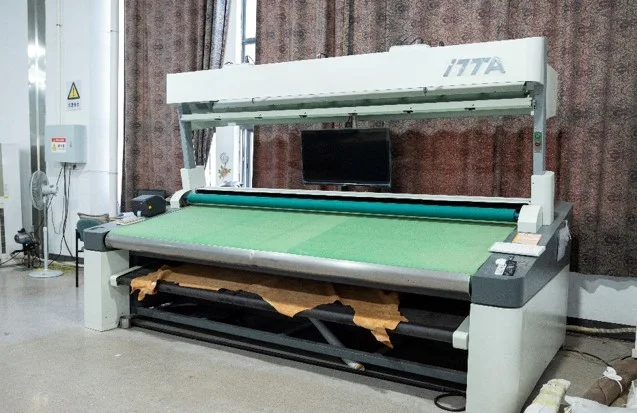
Price tier and factory capability are related but not identical. A factory can quote an upscale specification and lack the technical development capacity to deliver it consistently across a large room count.
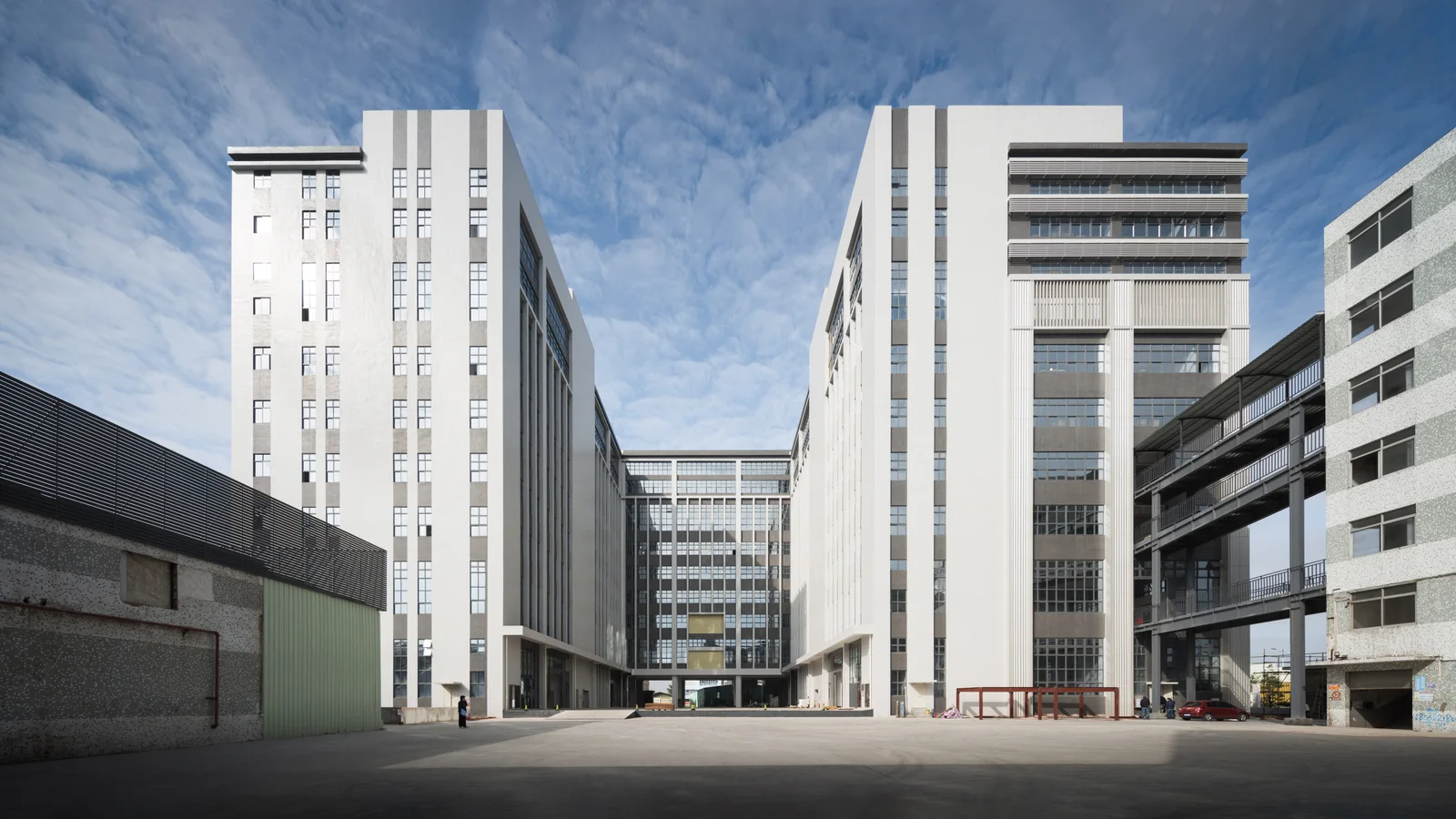
Ask what the annual capacity is in keys rather than in square metres, how many technical staff turn design drawings into production drawings, and which parts of the process — machining, metalwork, upholstery, finishing, mock-up — are performed on site.
For reference, our Zhongshan facility runs approximately 70,000 m² with 450 production personnel and 94 technical and development staff, at an annual capacity of around 8,000 keys, and our Vietnam facility at Bình Dương Province adds 30,000 m² with 600 workers and monthly output of around 300 containers. Those figures describe the upscale and luxury tiers of the table above. They are given as an example of the metrics worth asking any supplier to state, not as a benchmark to apply to others.
Build a mock-up room from the two finalists
For any programme of consequence, take the final two bidders to a full physical guestroom before award.
Our guide to reviewing a hotel furniture prototype before production sets out the inspection sequence. Inspect what guests actually damage: drawer runners under load, door alignment, luggage bench structure, chair joints, upholstery seams, edge banding, veneer matching across adjacent pieces, and tabletop finish under heat and liquid.
This exercise generally explains a USD 500 to 1,500 per-key difference more clearly than any quotation analysis, and it does so before the money is committed.
Recognise when China is not the answer
Below roughly 30 to 40 rooms of matched casegoods, direct import generally does not repay the effort — minimum order quantities, lead times and the buyer's inspection burden absorb the unit-cost saving.
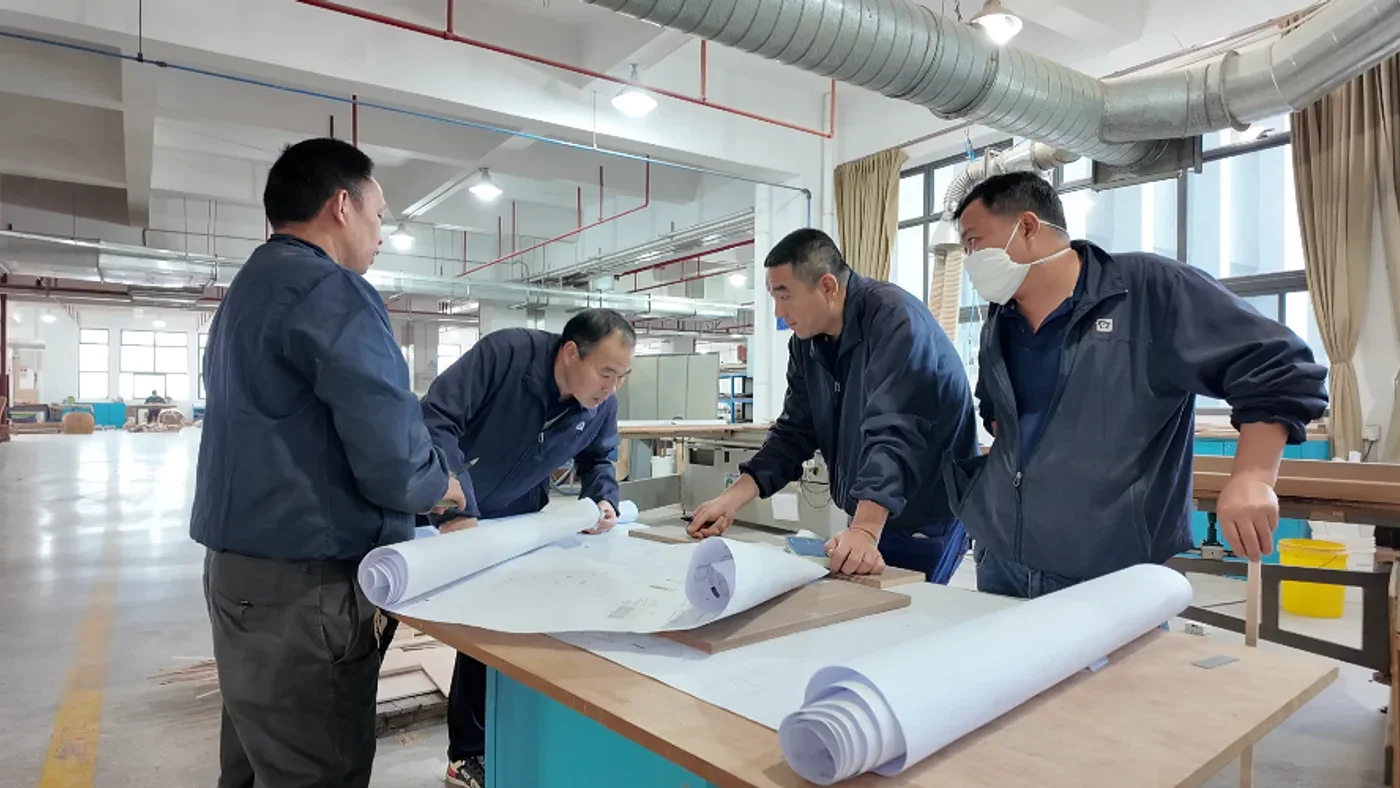
The same applies where the programme has less than about four months from drawing freeze to site delivery, where local warranty attendance is a requirement, or where drawings and a specification do not yet exist. A factory will build precisely what was specified, including the parts that were not.
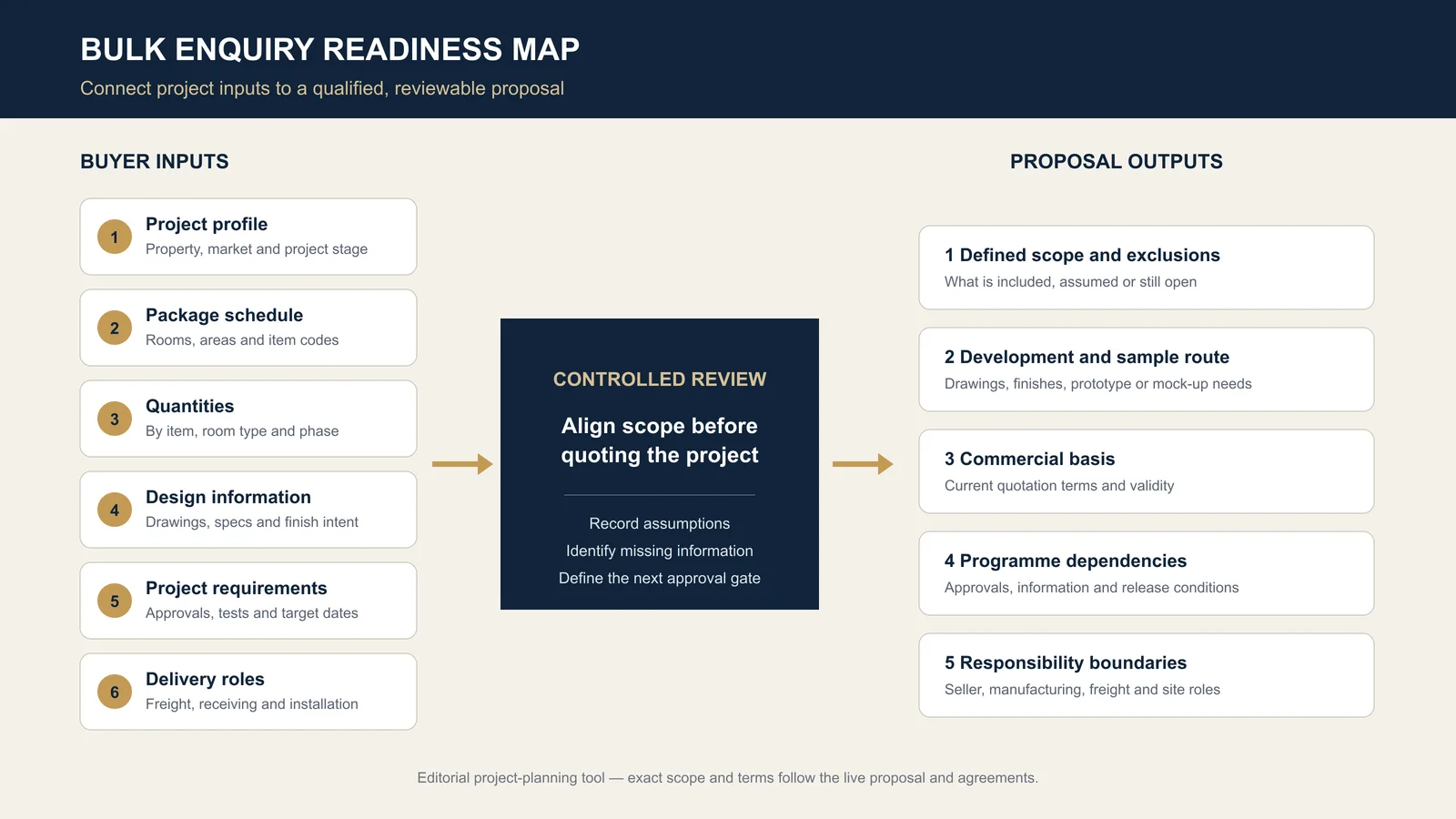
Prepare a pricing pack for project review
- Written package definition, item by item
- Tier position and the reason for it
- Specification schedule covering all seven cost drivers
- Identical RFQ issued to three to five verified manufacturers
- Quotation comparison on one incoterm, with substitutions itemised separately
- QA budget: verification, mock-up, sample approval, DUPRO and pre-shipment inspection
- Replacement-cycle assumption stated alongside the purchase price
Frequently Asked Questions
Why do Chinese hotel furniture quotations vary so much?
Quotations often describe different products even when the item names look the same. Substrate, veneer, solid-wood content, hardware, upholstery, finish process, construction, packaging, quality control, incoterm and excluded services can all change the result. Normalize the specification and commercial basis before treating the price gap as a margin difference.
What does hotel furniture cost per key include?
It should state whether the figure covers furniture only, a complete guestroom package, allocated public-area items or the full delivered and installed project. Define quantities, room mix, specification tier, freight, duty, storage, installation, samples, quality control and contingency. Without that scope, two per-key figures are not comparable.
How should hotel furniture buyers compare factory quotations?
Issue one coded schedule and specification to every bidder, require substitutions and exclusions to be listed, and compare on one incoterm. Review line-item materials, hardware, finishes, quantities, packaging, tests, samples, installation and warranty boundaries. Resolve gaps in writing before creating a bid comparison.
Can value engineering reduce hotel furniture cost without lowering quality?
It can reduce cost when the change removes unnecessary complexity while preserving the approved performance and visual intent. Record the original and proposed construction, cost effect, programme effect, maintenance consequence and approval owner. A silent material downgrade is not value engineering; it is an unapproved substitution.
Why build a mock-up room before awarding a large furniture order?
A mock-up tests the assumptions hidden in the quotation: dimensions, interfaces, hardware, comfort, finish, upholstery, assembly and maintenance access. Review both shortlisted suppliers against the same criteria and record deviations. The exercise gives the project team evidence before the full production commitment is made.