
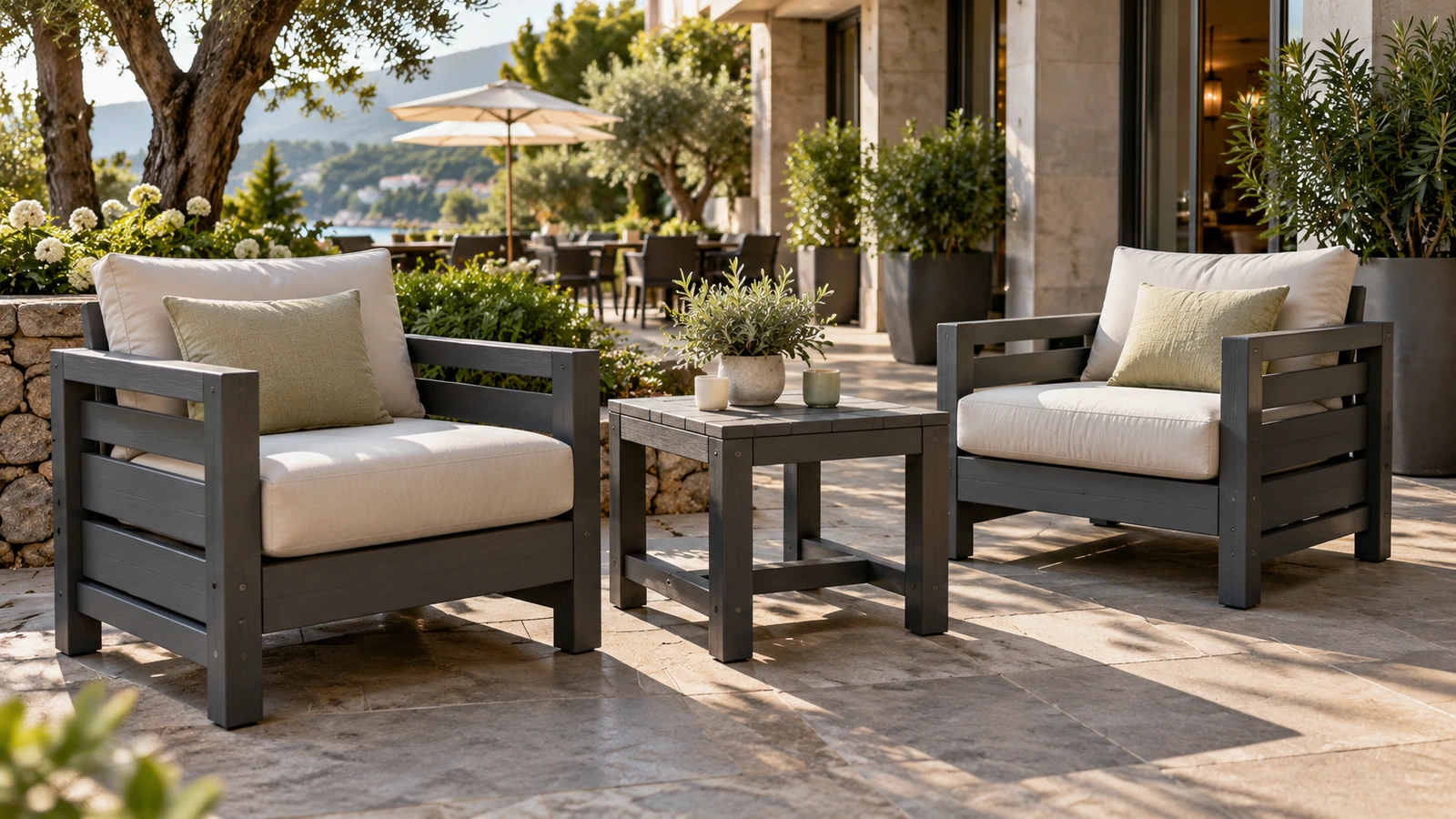
HDPE outdoor furniture is furniture that uses high-density polyethylene in components such as seats, backs, tabletops or supporting members. It commonly takes the form of plastic lumber assembled into chairs, tables, benches and loungers, although HDPE can also be used in other component forms.
Its appeal includes moisture resistance and the possibility of avoiding the sanding, staining or oiling associated with some timber furniture. These advantages do not make every HDPE product maintenance-free or suitable for every outdoor setting.
For hotels and resorts, the distinction between the material and the finished furniture matters. The plastic formulation, component dimensions, supports, connections and accessories all contribute to how an item performs in use.
How Is HDPE Used in Outdoor Furniture?
HDPE can be formed into boards, sheets and profiles that are cut, shaped and connected to create furniture. This gives many products familiar timber-style proportions and visible joints without making them wooden furniture.
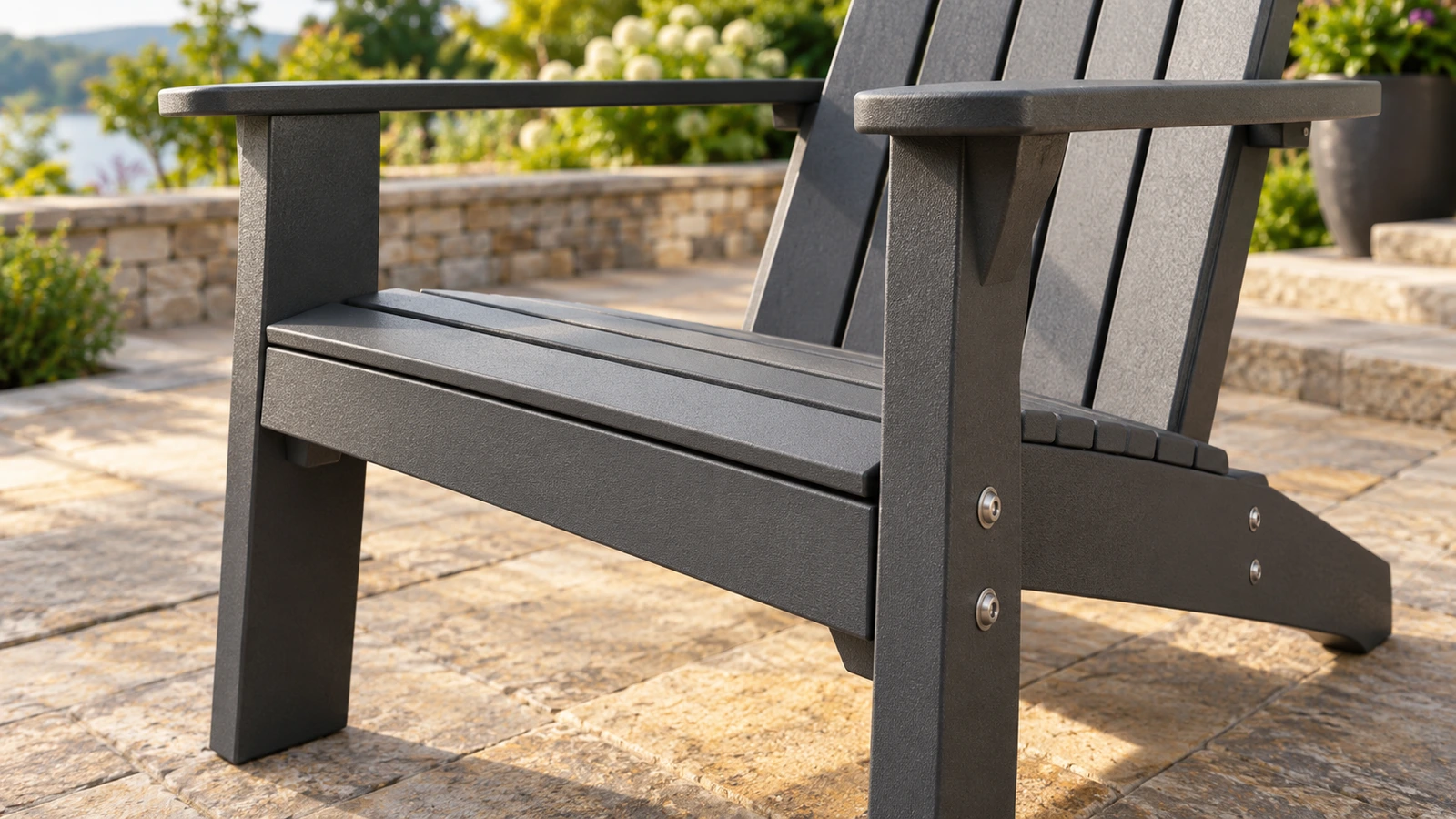
An Adirondack chair may use separate seat slats, back boards, arms and legs. A dining table may combine an HDPE top with supporting members beneath it. A bench may use HDPE slats attached to a metal frame.
The extent of HDPE use therefore varies. A chair built mainly from plastic lumber and a metal-framed chair with HDPE seating do not have the same construction.
Depending on the design, the complete item may include:
- HDPE boards, panels or profiles.
- Metal frames or reinforcement.
- Screws, bolts, brackets and other connectors.
- Feet, glides and adjustable supports.
- Cushions, upholstery and cushion attachments.
Each component has a separate role. The visible plastic may provide the seating surface while another material carries part of the load. Connections hold the assembly together and influence inspection access, movement and replacement.
Material terminology needs the same clarity. HDPE identifies the polymer. Poly lumber describes a board-like plastic material form. Recycled plastic describes the origin of some or all of the raw material.
These terms can apply to the same product, but they are not interchangeable. Poly lumber does not always establish the exact polymer, and recycled plastic furniture is not necessarily made from HDPE.
A useful product description identifies the material, where it is used and how it is supported. Where recycled content matters, it should also state the claimed proportion and the components covered.
How Does HDPE Compare with Other Outdoor Furniture Materials?
HDPE is itself a plastic, so “HDPE versus plastic furniture” is not a precise comparison. Compare identified materials in finished products intended for the same application.
| Material or product type | Main distinction | Practical comparison point |
|---|---|---|
| HDPE plastic-lumber furniture | Uses HDPE boards or profiles, often assembled with mechanical connections | Component support, joints, handling and care |
| Other plastic furniture | May use different polymers and moulded or assembled forms | Polymer identity, construction and intended application |
| Wood-plastic composite furniture | Combines wood-derived material with a polymer | The complete formulation and its care requirements |
| Natural wood furniture | Uses timber with species-specific characteristics and a supplied finish | Appearance, weathering and surface maintenance |
Appearance alone cannot identify the material. A textured surface may imitate wood, while similar-looking plastic chairs may use different polymers or manufacturing processes.
Weight is also an incomplete guide. A heavier chair may be harder to relocate without necessarily being more suitable for its intended use.
Compare comfort, exposure, handling, cleaning and replacement on the same basis. A wood-look HDPE surface should not automatically receive timber sanding, staining or oiling treatments.
What Are the Benefits and Limitations of HDPE Outdoor Furniture?
HDPE can simplify some aspects of outdoor furniture care, but each benefit has a practical boundary.
Benefits
- Moisture-resistant plastic components. HDPE generally has low water absorption and does not undergo timber decay. This can be useful in humid or rainy conditions, provided the complete furniture manages water appropriately.
- Potentially less surface refinishing. Products with colour incorporated into the material may avoid timber-style sanding, staining or oiling. This can remove some recurring finish work from the maintenance routine.
- A timber-style format with different care requirements. Plastic lumber can form familiar chairs, benches and tables without requiring a natural timber finish. It may suit projects seeking that furniture format with a different maintenance approach.
- Recycled-content options. Some products incorporate recycled feedstock. Product-specific evidence can help establish whether an offer meets the project’s sourcing requirements.
Limitations
- Outdoor performance depends on formulation. The HDPE label alone does not establish colour retention or prolonged weathering performance. Pigments, stabilising additives and the actual product specification matter.
- Temperature affects movement and comfort. HDPE plastic lumber expands with temperature changes, making support and connection design important. Separately, exposed surfaces can become uncomfortable to touch in strong sun. Plastic-lumber technical guidance
- Structural details remain essential. Seats and tabletops need appropriate support for their span and intended loading. Thick-looking components do not establish the performance of the complete item.
- Weight can complicate handling. Some designs are substantial, creating more work where staff regularly rearrange or store furniture. Weight is not proof of wind safety.
- Surfaces still need care. Dirt, deposits, scratches and stains can affect appearance. Colour-through construction does not guarantee invisible damage or an unchanged surface.
- Recycling requires a practical route. Recycled content does not establish that local facilities will accept the finished furniture. Disassembly and material separation may be necessary.
These characteristics help explain where HDPE is useful. They do not establish that it is universally better than timber, metal or other furniture systems.
Where Can HDPE Furniture Work in Hotels and Resorts?
HDPE furniture can be considered for gardens, outdoor dining areas, terraces and poolside settings. The location should determine which product details receive the most attention.
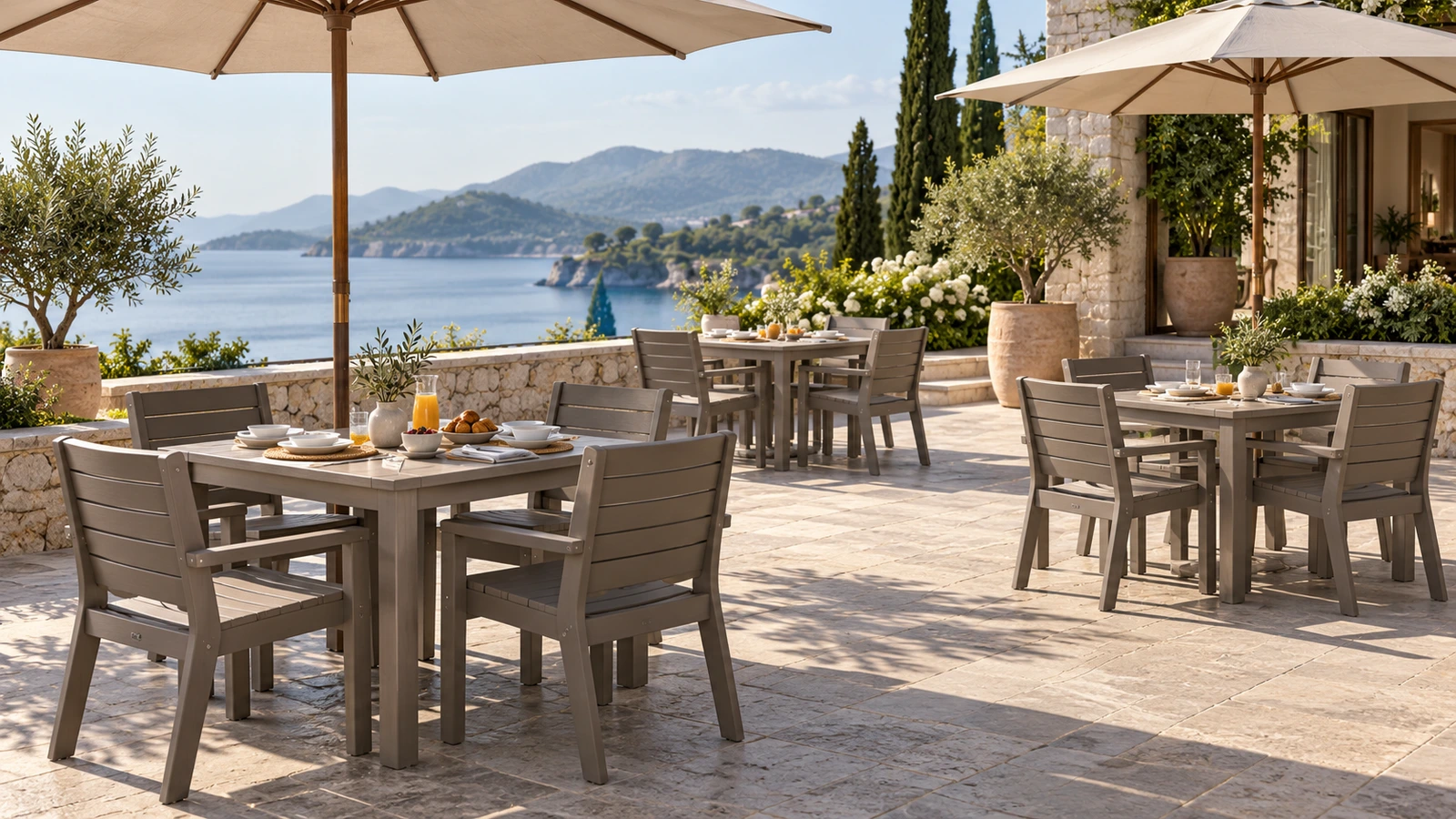
A garden bench that remains in place may prioritise comfortable surfaces, cleaning access and replaceable components. A restaurant chair moved between services also needs manageable handling and a workable storage arrangement.
When planning a coordinated package, review the required outdoor seating, loungers and tables by function before deciding which material suits each item. A product category helps define the furniture scope; it does not confirm that every listed model uses HDPE.
| Setting | Main operating requirement | What to review |
|---|---|---|
| Outdoor dining | Frequent use, cleaning and relocation | Comfort, handling, cleaning access and permitted stacking |
| Garden seating | Longer periods in one position | Drainage, inspection access and replacement parts |
| Poolside | Wet use and direct exposure | Surface comfort, water management, hardware and cushions |
| Exposed terrace | Changing weather conditions | Product suitability and a location-specific operating plan |
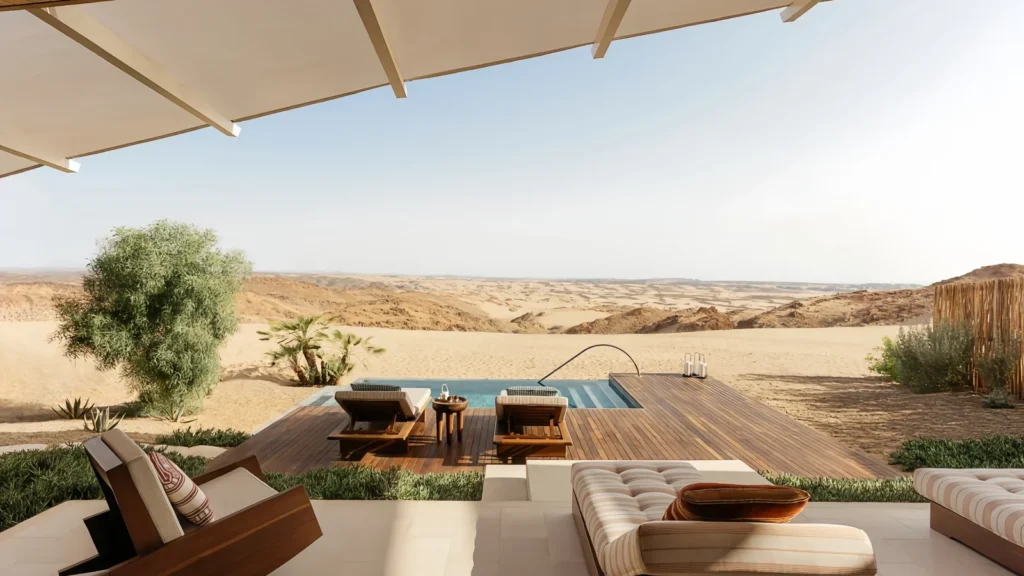
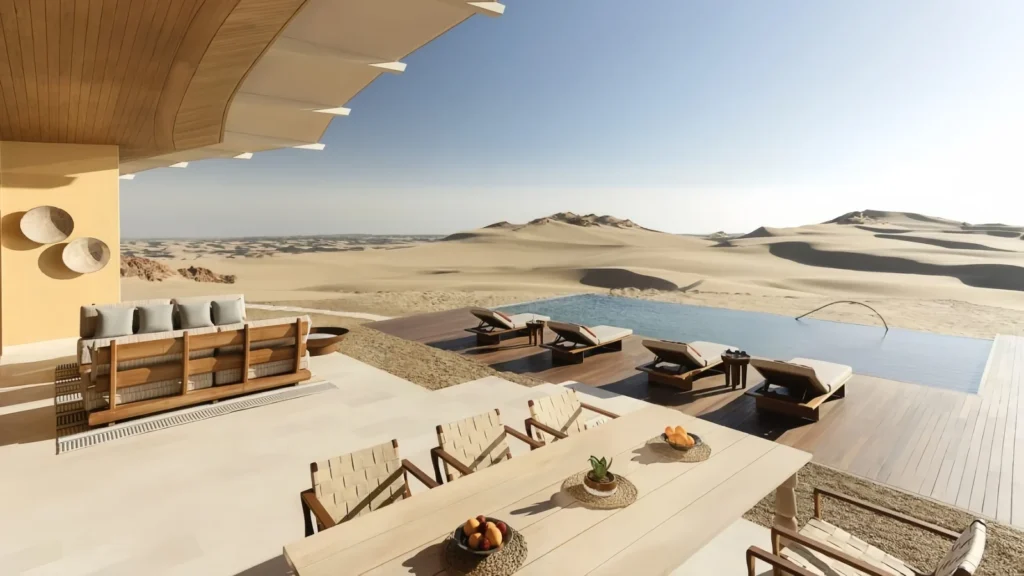
Project references can also help teams understand how furniture functions across different zones. The Six Senses Southern Dunes project includes indoor and exterior hospitality furniture, providing context for reviewing a coordinated resort package. It is a spatial and scope reference, not evidence that the furniture uses HDPE.
Comfort remains a finished-product question. Seat depth, back angle, arm position, edges and cushions determine the guest experience. A material description cannot establish those qualities.
A representative sample should therefore be assessed for sitting comfort and staff handling, including movement during cleaning, interaction with tables and storage needs.
How Should HDPE Outdoor Furniture Be Cleaned and Maintained?
A simpler surface-care routine still needs clear methods and condition checks. Begin with instructions for the complete furniture, including its hardware, frame and cushions.
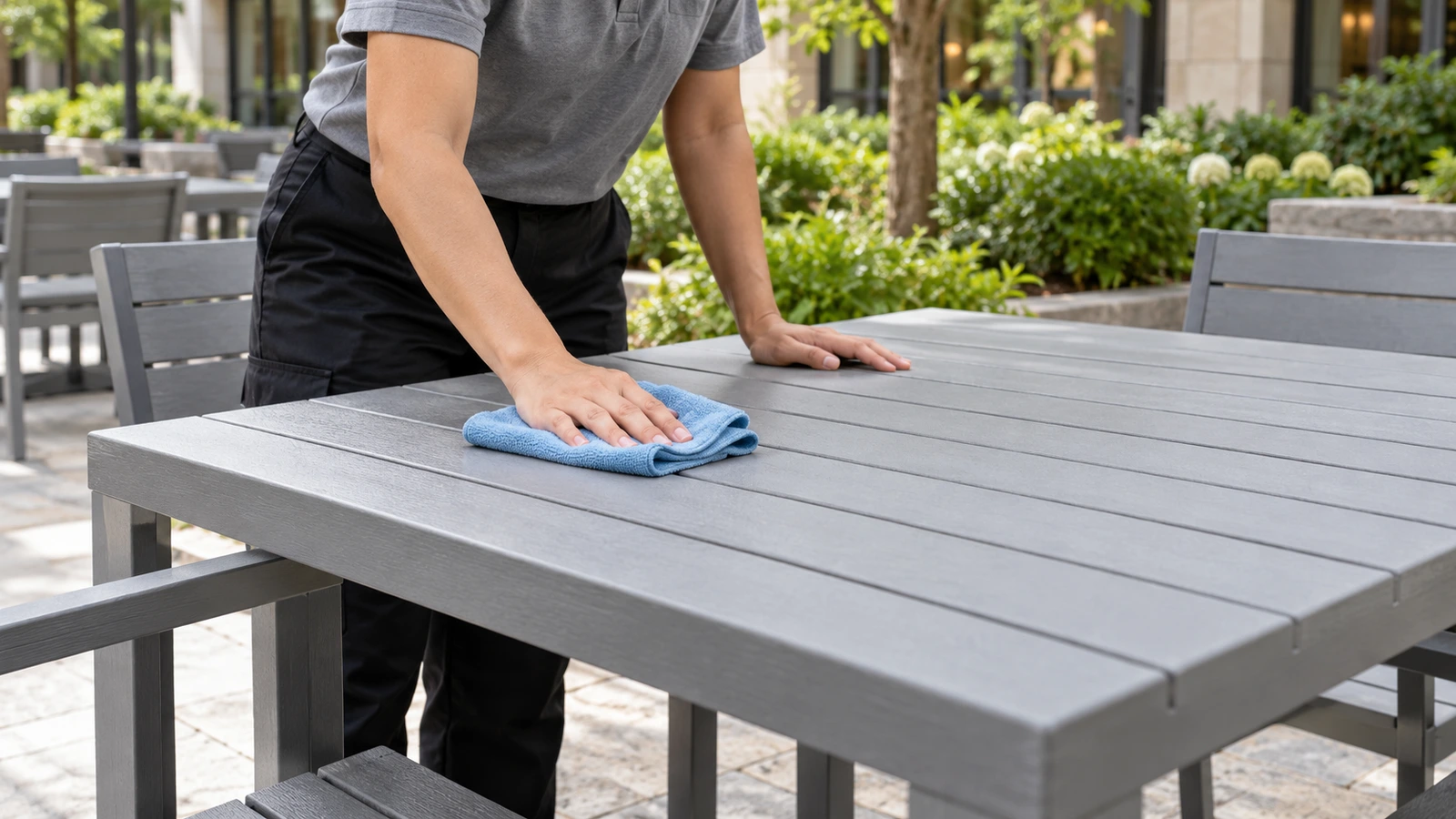
For routine cleaning:
- Remove loose debris using tools permitted for the surface.
- Prepare the recommended cleaner at the specified dilution.
- Test a small, inconspicuous area before introducing a new method.
- Clean accessible surfaces and joints, then remove residue as instructed.
- Allow the furniture to dry and inspect the result before returning it to service.
Check the trial area after drying for residue, unwanted colour changes or altered texture. Pay attention to dirt around slats, fixings and feet rather than cleaning only the most visible surfaces.
A clean surface may be ready for use without further treatment. Persistent staining or unfamiliar residue needs a compatible, condition-specific response rather than progressively stronger cleaning.
Sharp objects can damage plastic surfaces, so tools and handling practices matter alongside the cleaning product. HDPE care guidance
Inspection should cover stability, connections, feet and glides. Recurring looseness or visible damage requires assessment rather than repeated adjustment without investigating the cause.
Check cushions separately. A dry plastic frame does not establish that cushion interiors or adjacent materials are dry.
Furniture with unstable connections, sharp damage or other guest-contact concerns should remain out of use until assessed. Pressure washing, solvents and abrasive methods should be used only where permitted for the specific product and procedure.
What Should Hotels Check Before Selecting an HDPE Product?
The final review should connect the material description with the proposed model and its use.
Confirm:
- Which components are HDPE and which use other materials.
- How seats, backs and tabletops are supported.
- What hardware and connections are supplied.
- Which outdoor and commercial applications are identified.
- How the item is cleaned, moved and stored.
- Which parts can be replaced and how they are ordered.
- What the warranty covers, including applicable use and exclusions.
Performance information should correspond to the offered model and configuration. A general material statement cannot replace evidence about the finished furniture.
Environmental claims also need a defined scope. Recycled content concerns feedstock, while recyclability requires an achievable route for the item or its separated components.
Warranty coverage should be reviewed by component rather than reduced to one headline period. Frames, plastic components, finishes, hardware and cushions may have different terms.
For a closer explanation of those differences, see commercial outdoor furniture warranty checks.
The result should be a clear selection basis: an identified material, an understood construction and a defined use location. HDPE then becomes one part of the decision alongside comfort, exposure, care and replacement.
Discuss HDPE Furniture Options with Gainwell
Choosing HDPE involves translating the intended use into component, support and maintenance requirements—not simply requesting a plastic alternative to wood.
Gainwell supports custom furniture development for hospitality interiors and outdoor areas. Material and construction review, shop drawings and prototypes provide opportunities to examine the proposed furniture details before the specification is finalised.
For an outdoor furniture project, share where the furniture will be used, how often it will be moved, the preferred appearance and any recycled-content requirements, together with furniture types and quantities. The availability and suitability of a particular HDPE construction should be confirmed through the project review.
FAQs About HDPE Outdoor Furniture
Can HDPE Outdoor Furniture Be Painted?
Ordinary paint and stain may not adhere well to HDPE. Identify the furniture model and check whether its manufacturer offers an approved recolouring method before preparing the surface. Where painting is unsupported, replacement components in the required colour may be more practical. One manufacturer expressly advises against painting or staining its HDPE lumber furniture. Manufacturer modification guidance
Can a Damaged HDPE Slat Be Replaced Separately?
Yes, where the design allows removal and a compatible replacement is available. Provide the manufacturer, model, colour, slat dimensions and photographs of the fixing arrangement. Confirm the required hardware and installation method before ordering. If damage extends into the frame or connection, replacing the slat alone may not resolve the problem. Keep affected seating out of service until assessed.
Can HDPE Furniture Be Left Outside During Winter?
Only where the complete product is approved for those conditions. Check seasonal-use instructions, including separate requirements for frames, hardware and cushions. Where outdoor winter storage is permitted, follow the specified covering and ventilation arrangements. If sheltered storage is required, confirm whether stacking is allowed and how contact points should be protected. The material name alone does not establish winter suitability.
How Can Hotels Check a Recycled-Content Claim?
Request a written statement identifying the percentage, calculation method and components covered. Clarify whether the figure applies to the HDPE boards or the whole item, including its frame, hardware and cushions. Ask for supporting documentation tied to the supplied product. Record the claim with the relevant specification so that later material substitutions can be checked against the same requirement.