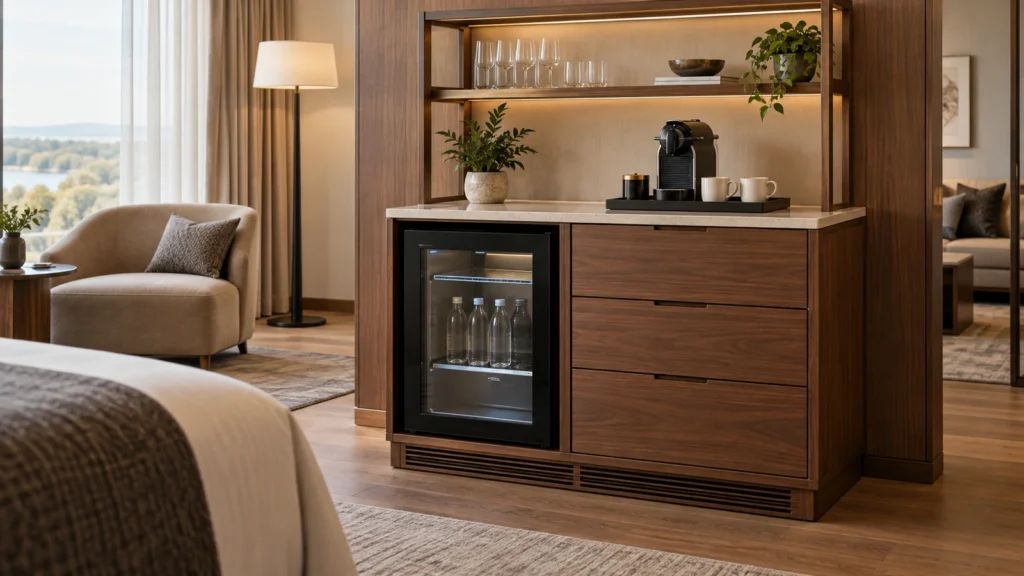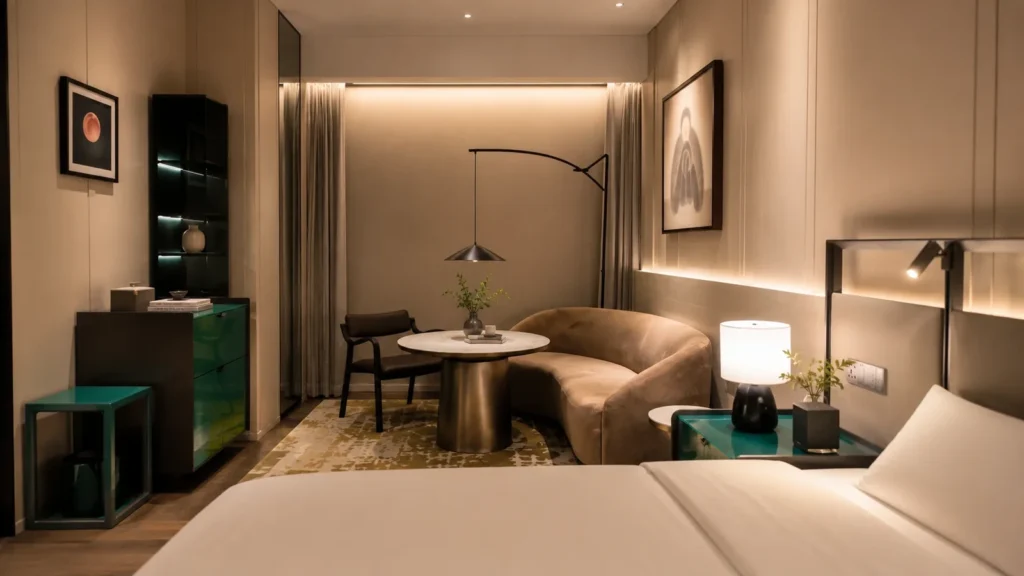

FF&E means furniture, fixtures and equipment. In a hotel project, it is the group of assets that helps turn designed rooms and public areas into usable, guest-ready spaces. Beds, nightstands, desks, loose seating, tables, decorative lamps, mirrors and selected equipment are familiar examples.
The short definition is only a starting point. FF&E is not a universal list, and the word fixture does not automatically mean every item attached to a wall or floor. A headboard can be loose furniture, a fixed furniture assembly or part of an architectural millwork package. The project’s drawings, specifications, schedules and responsibility matrix must decide the actual boundary.
What does FF&E stand for?
The three parts of the acronym provide a useful working framework:
- Furniture includes items that support sitting, sleeping, working, dining, storage or display. Hotel examples include beds, sofas, lounge chairs, dining chairs, desks, tables, benches and cabinets.
- Fixtures may include furnishings associated with a room or interior scheme, including some items that are fixed in position. Because construction teams also use the word for building-connected elements, this category needs careful interface coordination.
- Equipment covers selected functional assets. The package varies widely: a television, minibar, safe or coffee machine may sit in FF&E, OS&E or a specialist contract depending on who specifies, purchases, installs, connects and maintains it.
This article uses FF&E as a hospitality project term. It does not provide an accounting, depreciation, tax or legal definition; those classifications require advice based on the relevant contract and jurisdiction.
Hotel FF&E examples by space
A room-by-room view is more dependable than a generic master list. It exposes quantities, finishes and interfaces at the place where the item will be used.
| Hotel area | Typical FF&E examples | Boundary to confirm |
|---|---|---|
| Guestroom | Bed, headboard, nightstand, desk, chair, luggage bench, loose wardrobe and decorative lighting | Wall fixing, power, data, integrated controls and any built-in cabinetry |
| Suite | Sofa, lounge chairs, dining table, console, side tables and feature pieces | Floor boxes, stone or glass by others, and attachment of large assemblies |
| Lobby and lounge | Reception furniture, sofas, armchairs, communal tables, screens and decorative objects | Fixed bases, concealed services, specialist finishes and public-area installation sequence |
| Restaurant and bar | Dining chairs, bar stools, tables, host stand, banquettes and service stations | Banquette bases, kitchen interfaces, floor fixing and service access |
| Outdoor areas | Chairs, loungers, tables, daybeds, planters and umbrellas | Wind strategy, drainage, anchoring, storage and local weather exposure |
Gainwell’s current luxury-hotel furniture scope covers guestrooms, suites and public areas, including loose and fixed furniture systems. That company-level range illustrates the variety of a hotel package, but the live proposal still needs to identify every included item and service.
FF&E vs OS&E vs fixed construction
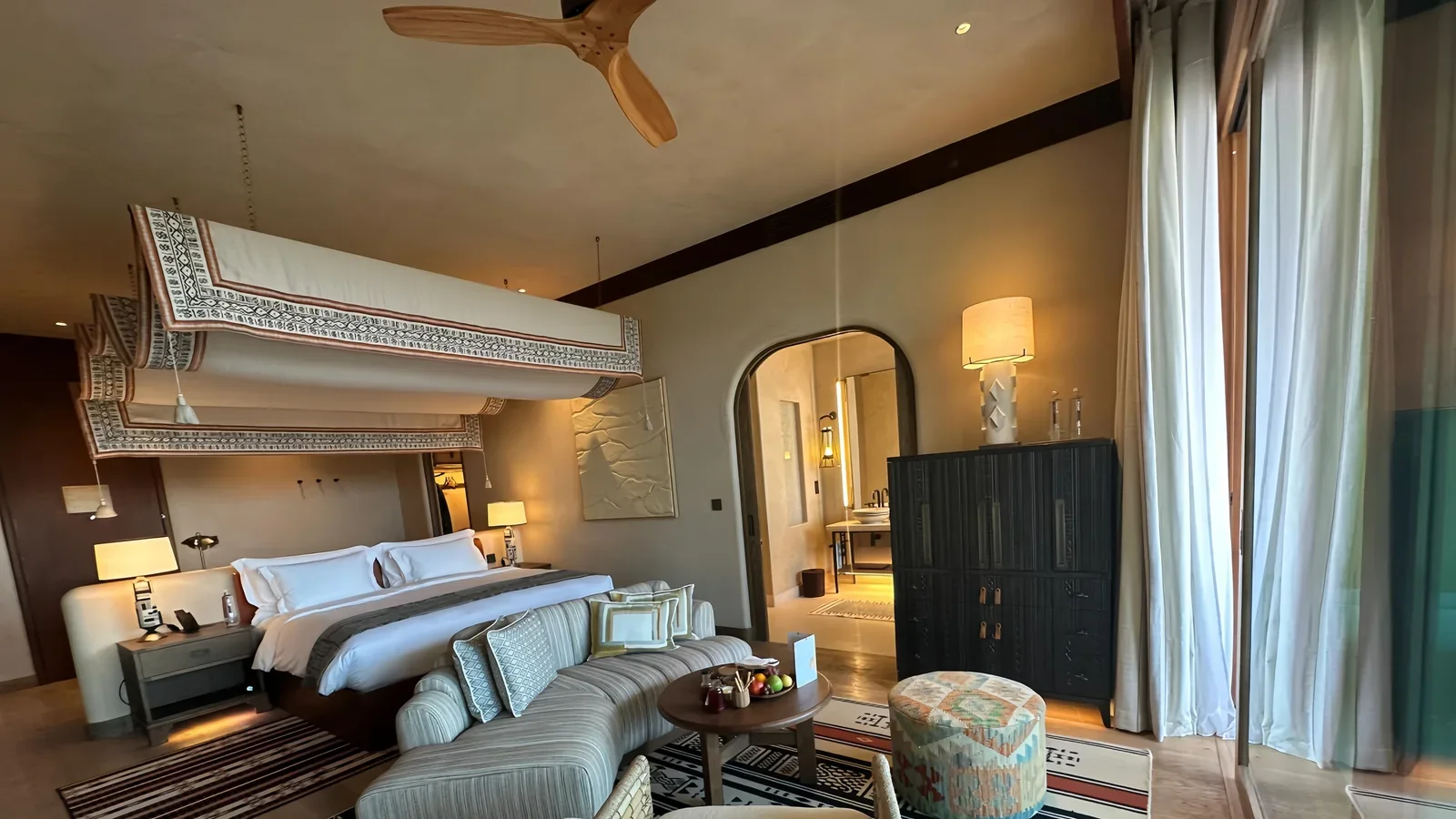
Teams often lose time when they treat these labels as self-explanatory. Use them as coordination groups, then name the real owner of each action.
| Category | Working project meaning | Control question |
|---|---|---|
| FF&E | Furniture and selected fixtures or equipment developed and purchased as project assets | Which item code, drawing, sample and purchase package control it? |
| OS&E | Operating supplies and equipment needed to run the property | Is it managed through operating inventory, replenishment or a specialist operating package? |
| Fixed construction | Building fabric and coordinated architectural or services work | Which trade owns the substrate, connection, tolerance, inspection and completion? |
The categories can meet in one assembly. A minibar appliance may be operating equipment, the cabinet may be FF&E or millwork, and the power and ventilation may belong to building services. Classification is useful only when these handovers are visible.
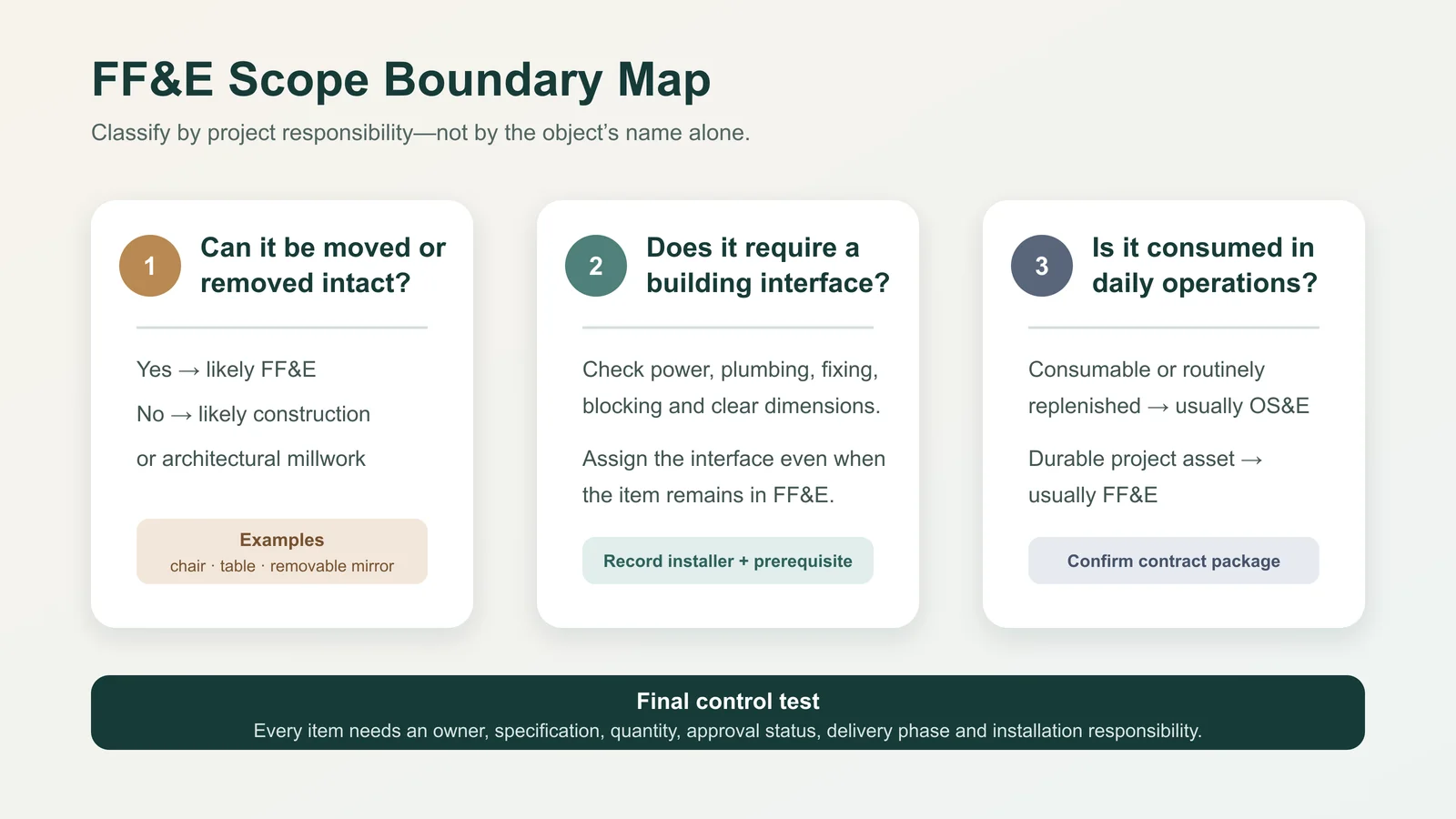
Use five tests to decide whether an item belongs in FF&E
- Movement test: Can the complete item be removed without material work to the building? Movability supports an FF&E classification, but it is not decisive.
- Interface test: Does it require wall or floor fixing, power, data, plumbing, ventilation, fire stopping, blocking or a precisely prepared recess?
- Procurement test: Which schedule, specification, tender package and purchase order will control it?
- Lifecycle test: Who will inspect, maintain, replace and record the asset after handover?
- Responsibility test: Who designs, details, supplies, delivers, installs, connects, protects and accepts the complete assembly?
An answer such as “by others” does not pass the responsibility test. Replace it with the named organization, the required output and the date when the interface must be resolved.
A worked example: the guestroom headboard wall
Consider a headboard that appears to be one furniture item. The visible upholstered panels may be manufactured with the casegoods, while the wall substrate is prepared by the main contractor. Decorative lights may come from a lighting supplier. Switches, sockets and wiring belong to electrical work. Metal trims or stone ledges may come from additional specialists.
Calling the whole arrangement “FF&E” does not coordinate it. The project needs a composite elevation, agreed setting-out points and a responsibility line for each material, fixing, service and approval. The furniture supplier should know the actual substrate and connection zones before production release; the site team should know the furniture tolerances before closing the wall.
The same method applies to banquettes, vanity units, wardrobes, reception desks and minibar cabinets: review the complete assembly first, then assign its parts without losing the interface between them.
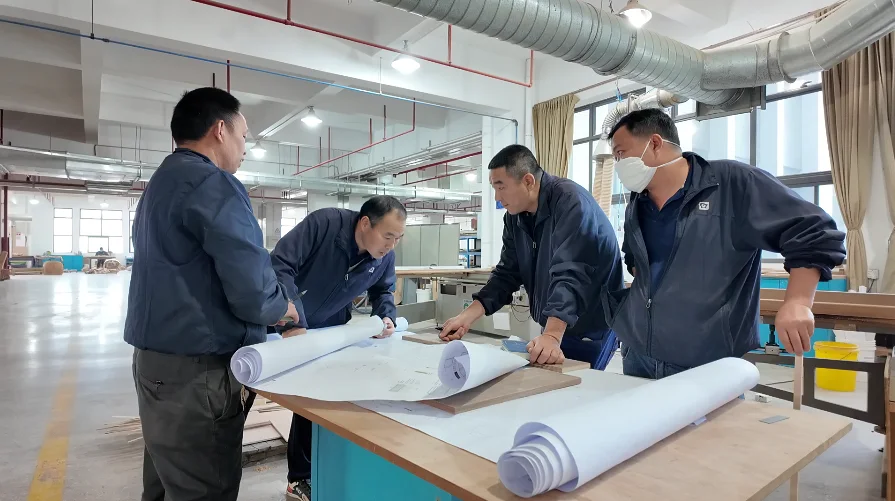
Build a minimum FF&E scope register
Give every item a stable code and record enough information for another team member to trace the current decision. A useful minimum register includes:
- item code, room type or zone, description and quantity basis;
- design owner, technical drawing and specification reference;
- materials, finishes and approved sample or prototype reference;
- supplier, purchaser, delivery party, installer and connection owner;
- required substrate, service and tolerance information;
- approval status, current revision and decision owner;
- delivery phase, receiving location and handover record;
- explicit inclusions, exclusions and open boundary decisions.
Use three clear states for scope: included; excluded with a named owner; or open with an owner and decision date. This is more actionable than adding another note to an uncontrolled spreadsheet.
How FF&E moves from design to handover
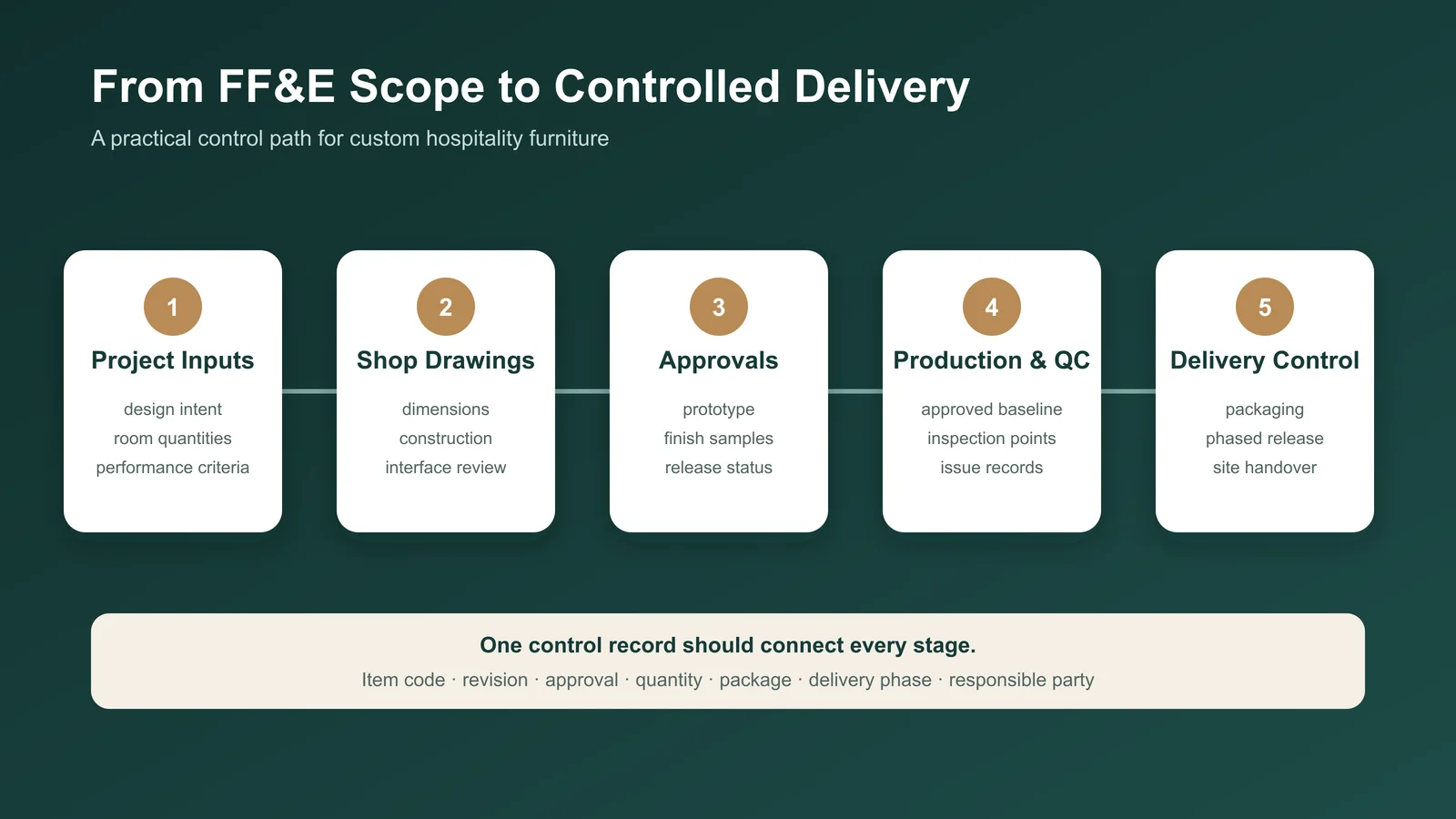
A controlled FF&E path generally connects the room or area schedule to design development, technical documentation, quotation, sample or prototype approval, production release, inspection, packaging, delivery, installation and handover. The stages may overlap, but each release should point to the same item code and approved revision.
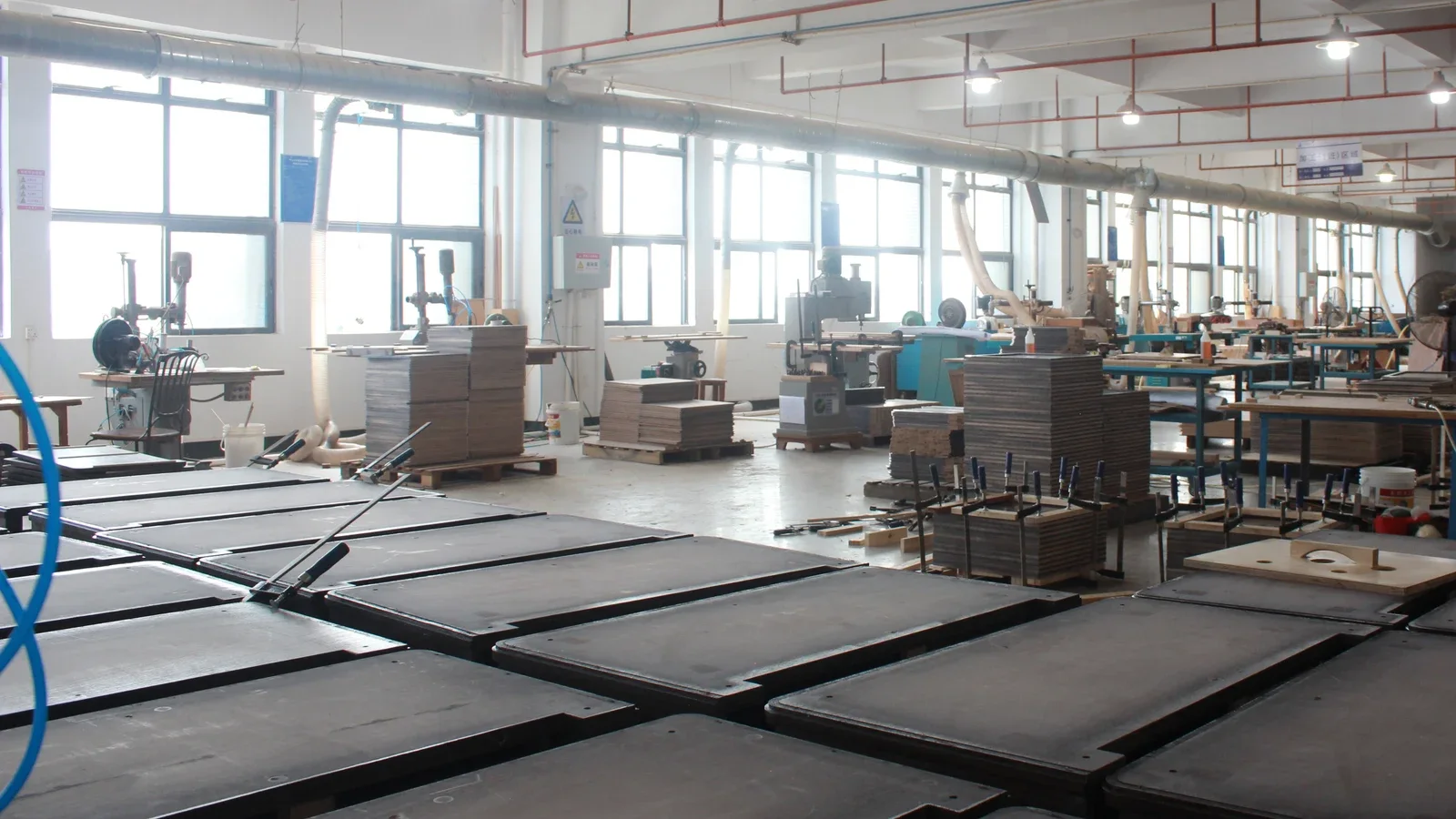
The Gainwell capabilities workflow describes support across shop drawings, prototyping, manufacturing, quality control, packaging, delivery and installation. This is relevant when a project needs one furniture partner across several stages; it is not a promise that every service is included in every appointment.
At each handover, transfer a decision record rather than only a physical item. For example, production release should identify the approved drawing and finish; shipment release should identify the inspected batch and package code; site acceptance should connect the installed piece to the room and exception record.
Common FF&E scope mistakes
- Copying a generic furniture list without reconciling it to current room and area counts.
- Classifying an item from its name instead of checking its complete assembly and building interfaces.
- Approving a finish sample without linking it to the production drawing, item code and supplier.
- Assuming the furniture seller also owns freight, site receiving, installation or final connection.
- Leaving exclusions and unresolved responsibilities outside the procurement schedule.
- Changing one drawing without updating the item register, quantity basis and approval record.
FF&E scope checklist before an RFQ
- Confirm the room types, public-area zones and current quantity basis.
- Assign one stable code to every furniture or equipment item.
- Link each code to its latest drawing, specification and finish reference.
- Run the five boundary tests on fixed, powered or multi-trade assemblies.
- Name who supplies, installs, connects, protects and accepts each item.
- Record inclusions, exclusions and open decisions in the same register.
- Issue the RFQ from one controlled information set and state its revision date.
Frequently asked questions
Is built-in furniture always excluded from FF&E?
No. Some hotel projects include fixed furniture or millwork in the FF&E programme; others place it in a construction or specialist joinery package. The drawings, schedules and responsibility matrix should classify the actual assembly.
Is all equipment part of FF&E?
No. Equipment can sit in FF&E, OS&E, kitchen, AV, security, spa or another specialist package. Its purpose, connections, procurement route and lifecycle owner all influence the decision.
Who usually buys hotel FF&E?
The owner may buy directly, appoint an FF&E procurement firm or contract through another project party. The commercial route should state who tenders, purchases, expedites, pays, receives and accepts each package.
What should a manufacturer receive before pricing?
Provide current drawings, item codes, quantities, material and finish direction, required samples or prototypes, destination, delivery phases, responsibility boundaries and the target approval programme. Mark unresolved information rather than allowing bidders to make different assumptions.
If your hotel scope includes custom loose or fixed furniture, review Gainwell’s current product systems. Then share a coded FF&E brief with Gainwell so the team can confirm the relevant product and service scope for the project.