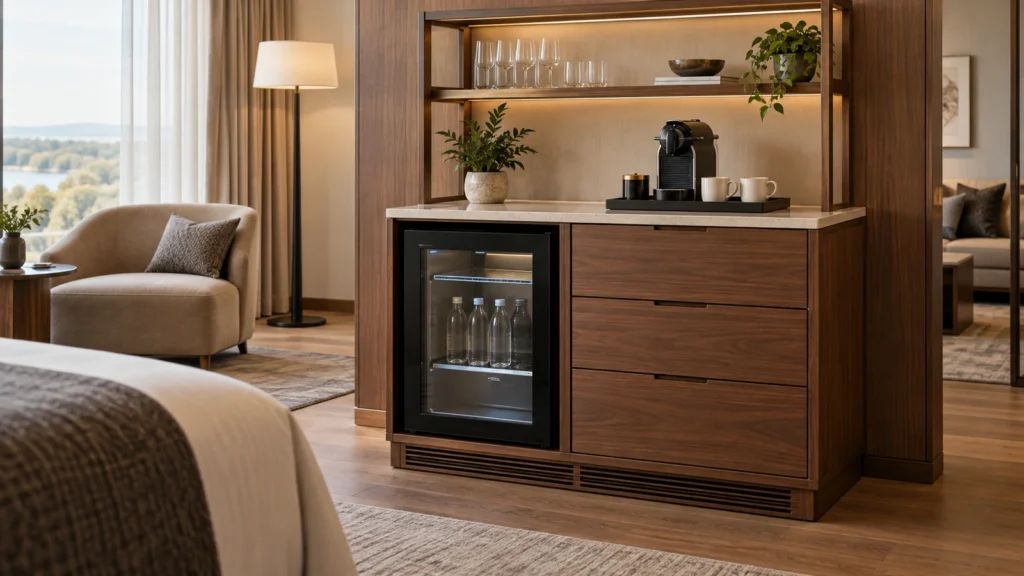

“Wood or metal?” sounds like a material decision, but it leaves most of the restaurant furniture unspecified. A dining chair also has a finish, joints, upholstery, seams, glides and a cleaning routine. A table has a face, edge, substrate or support, base connection and floor interface. The weakest of those layers can become the first operational problem even when the headline material appears suitable.
There is no single best restaurant furniture material. Choose a complete material stack for a defined use zone, then verify its interfaces, cleaning compatibility, sample evidence and replacement route. That approach produces a decision the project team can release—not just a palette that looks coherent on screen.
Name the use zone before naming the material
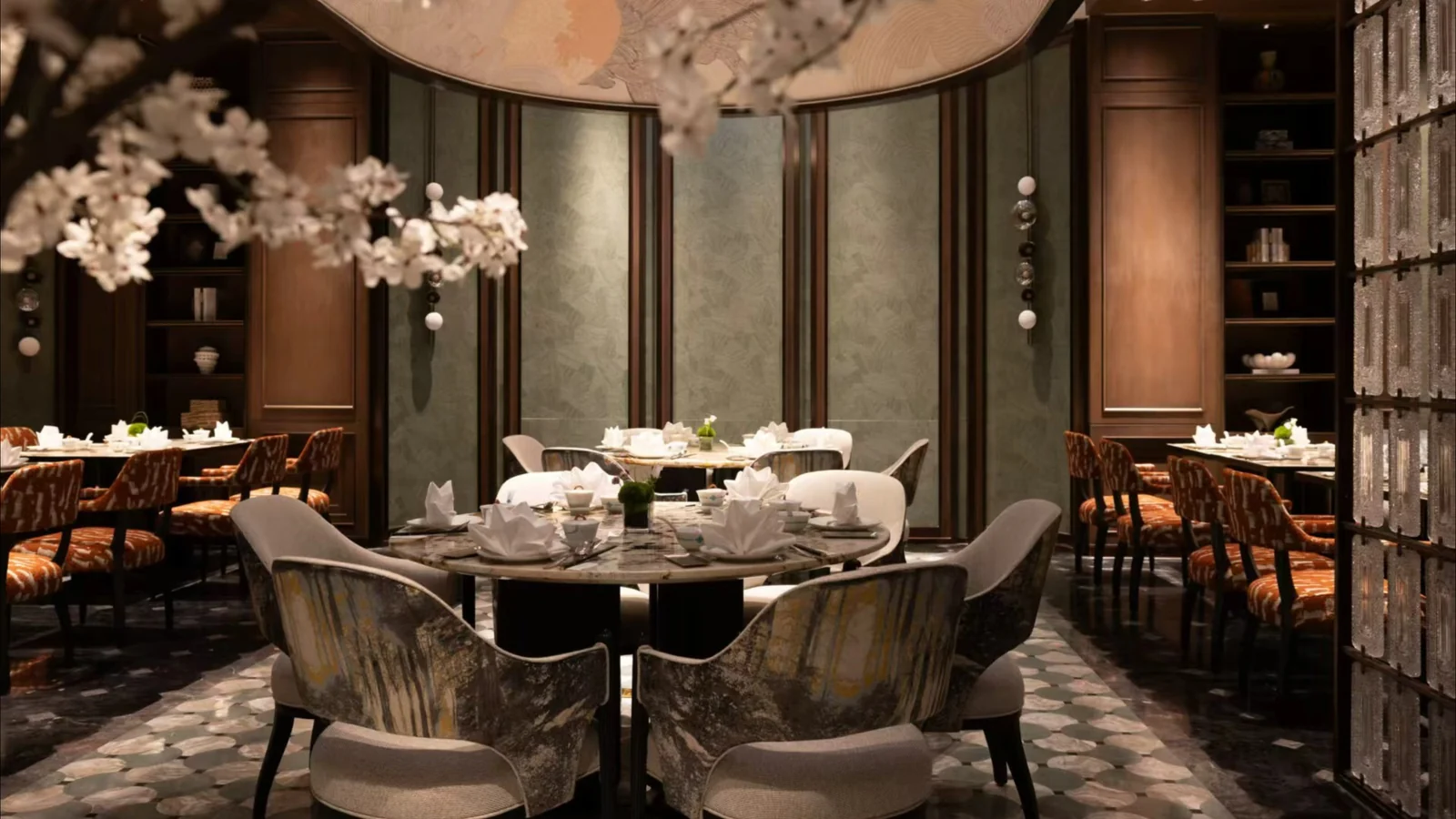
Start with the way each area operates. Main dining, bar, private dining, lounge and service-adjacent positions can share a visual language while placing different demands on furniture. Gainwell’s Restaurants & Clubs solution treats service flow, dwell-time comfort, cleaning and venue identity as linked application priorities. Turn those broad priorities into a short use-zone brief for every furniture family.
Record the guest contact, staff contact, spill or food exposure, reset handling, likely chair movement, cleaning method, storage or stacking requirement, replacement access and destination-market requirements. Do not score these as vague “low, medium, high” labels without an owner. Write the actual condition: for example, “chair back handled repeatedly during table reset” or “table edge wiped after every service period with the operator’s nominated cleaner.”
A material direction stays provisional until the operating team confirms the routine and the project team identifies required tests or authority inputs. The same visual finish can remain consistent across zones while the substrate, coating, seam detail or edge construction changes to match the application.
Build a five-layer material stack for each item
Break every chair, table, banquette or service cabinet into five layers. This prevents one approved swatch from standing in for an entire product:
- Visible touch surface: the finish, textile or top face guests and staff see and contact.
- Substrate or frame: the supporting material and structure beneath that surface.
- Edge, joint and fastener: the transitions where moisture, movement, impact or cleaning access may differ from the broad surface.
- Coating or upholstery system: primers, topcoats, cushions, seams, backing and attachment details that complete the visible assembly.
- Care and replacement route: the approved cleaner, repair method, replaceable part, spare strategy and person responsible for maintenance.
The layer names are a review method, not a universal specification. Project drawings, samples and technical requirements still control the actual construction. For seating, Gainwell’s current category scope includes timber, engineered wood, metal and mixed structures as well as project-specific upholstery options. That breadth is useful only when each selected layer is connected to the same item code and approval record.
Compare material families by the component they serve
A material family is not a verdict. Compare it only after defining the component and condition. The table below is a project-question guide; it does not assign universal lifespans, test results or winners.
| Material family | Component role to evaluate | Questions to close before selection | Hold the decision when |
|---|---|---|---|
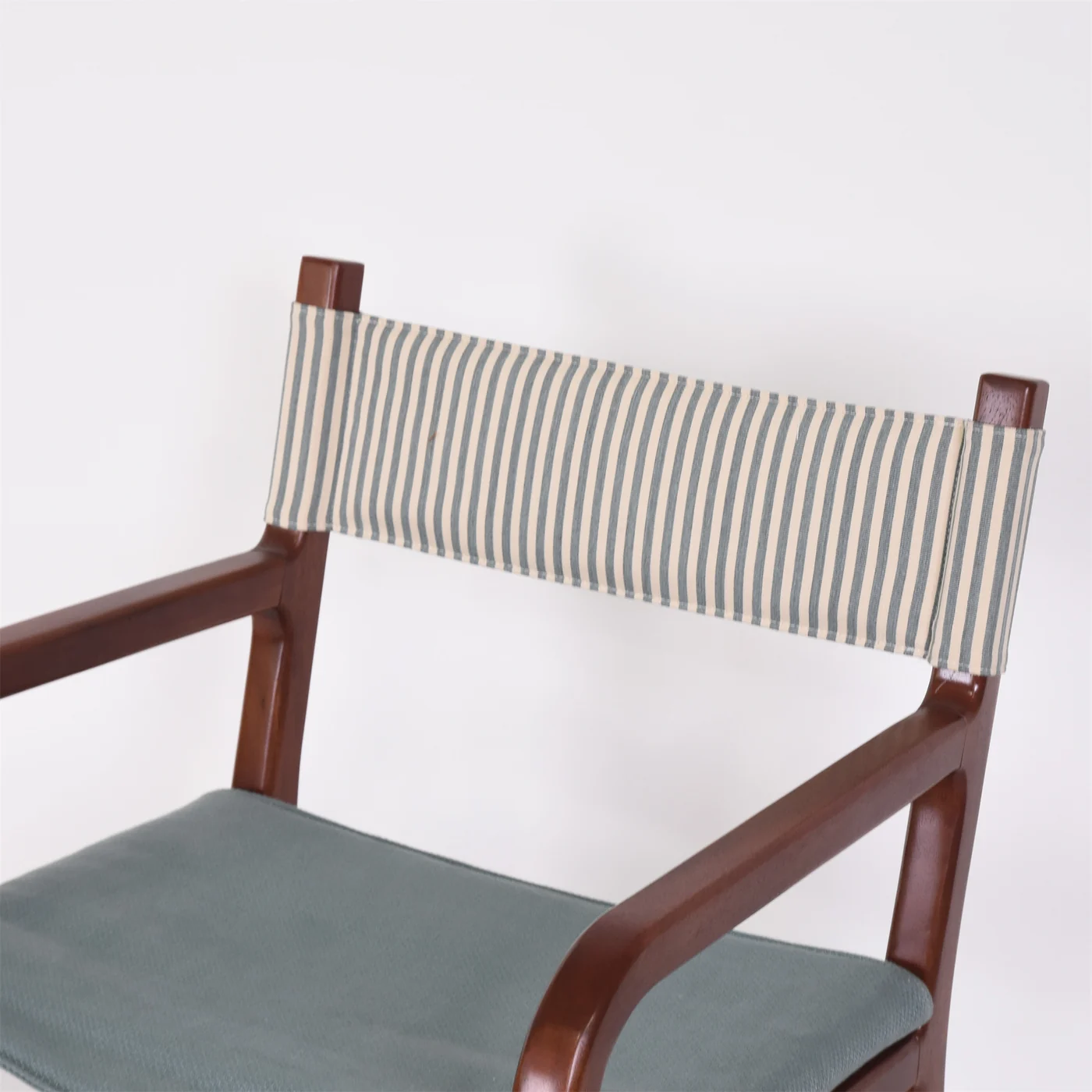
| Timber, veneer or wood-toned system | Chair frames, table details, panels, edges and visible grain direction | Which layer is structural? How are finish, grain, joints, exposed edges and repair matched? | Species, substrate, coating, edge detail or approved variation range remains assumed |
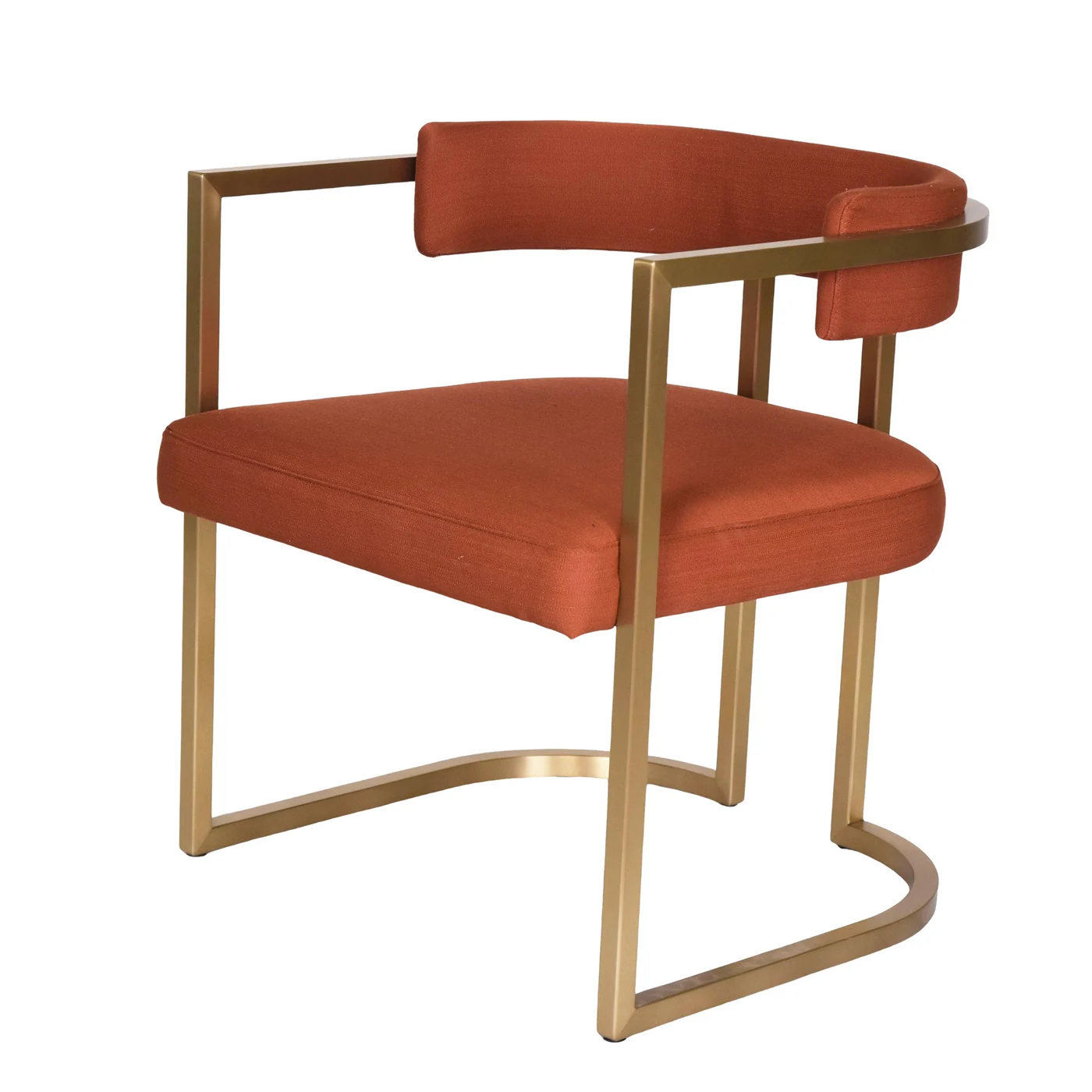
| Metal or metal-finish system | Chair frames, table bases, trims, hardware and exposed touchpoints | What is the base metal, finish system, joint detail, floor interface and environmental condition? | The team has approved color only, without the underlying system or interface detail |
| Upholstery system | Seats, backs, banquettes, cushions and wrapped panels | Which cover, foam, seam, backing, attachment and cleaning method work together? What is replaceable? | Appearance is approved but required tests, seam detail, cleaner or replacement method is open |
| Laminate or other manufactured surface | Table faces, service surfaces, panels and repeatable patterned areas | How are the face, edge, substrate, joint and local heat or spill conditions coordinated? | The face sample is selected but edge, substrate or repair route is not |
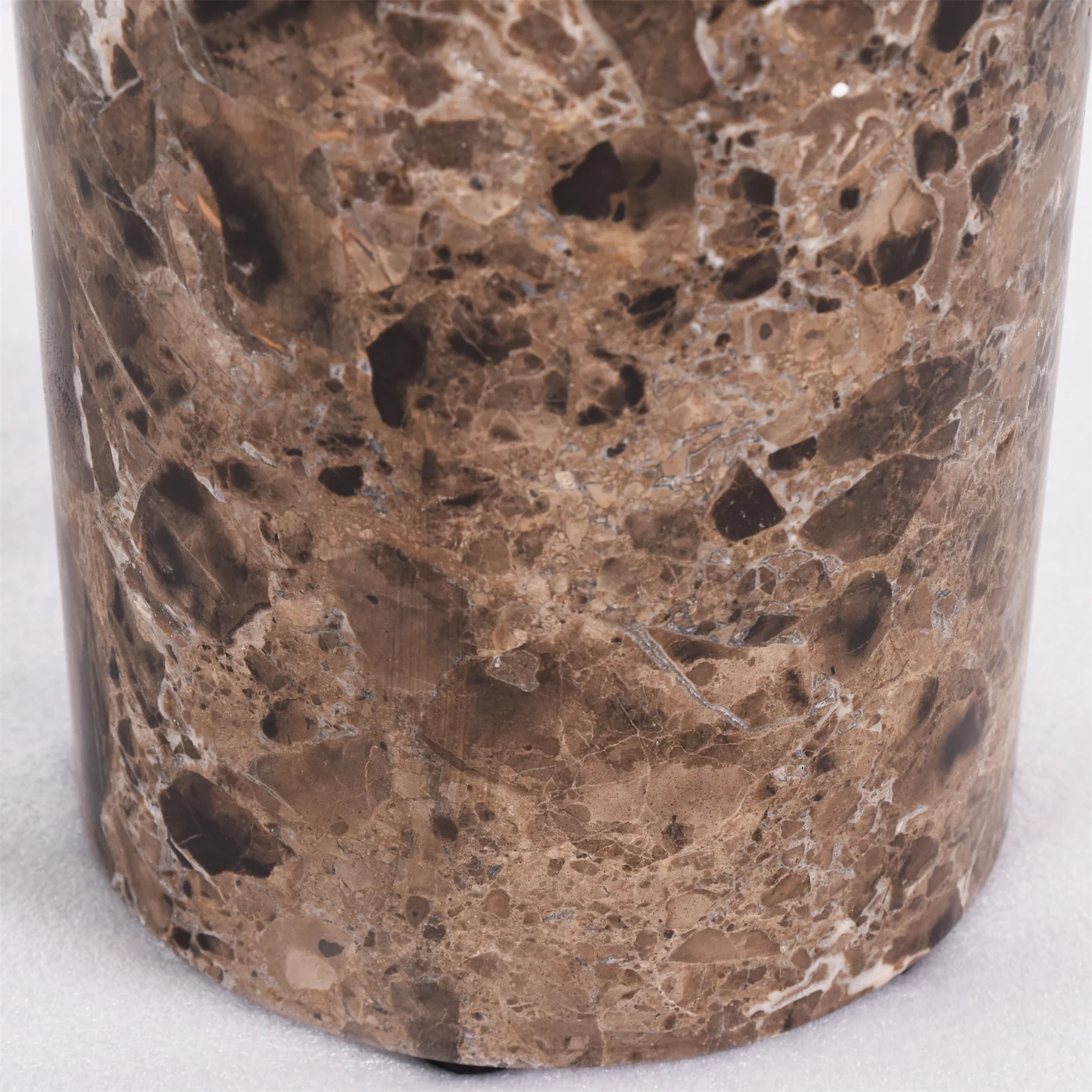
| Stone, glass or mineral-look surface | Tabletops, feature surfaces and bases where variation or visual mass matters | What controls variation, edge profile, support, handling, cleaning and replacement? | A small visual sample is being treated as proof of the complete supported assembly |
| Polymer, plastic or resin-based component | Molded parts, glides, protective interfaces, edge elements or selected furniture shells | What exact formulation and application is proposed? Which chemical, fire, environmental or market requirements apply? | “Plastic” is the only description or one formulation is being generalized to another |
This component-first comparison also keeps commercial scope clear. A dining-chair frame question belongs with the seating assembly; a tabletop face and edge question belongs with the table assembly. Link the decision to the relevant Seating & Upholstery or Tables & Workspaces product record instead of creating one untraceable “restaurant materials” note.
Audit every mixed-material interface
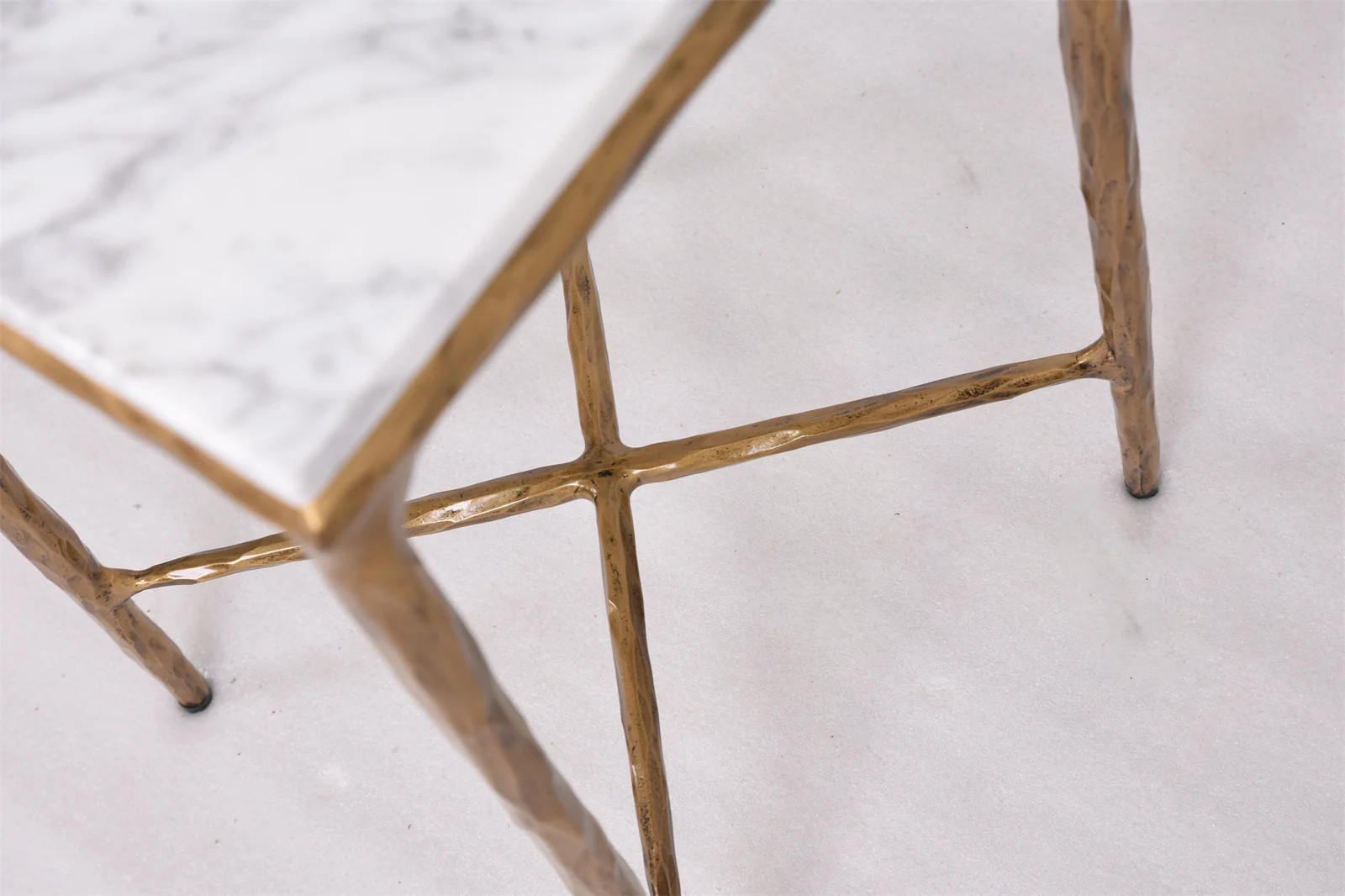
Mixed material restaurant furniture often concentrates risk at the transition rather than in the middle of either surface. Draw an interface map over the shop drawing or sample photograph. Number every place where materials meet: upholstery to frame, tabletop to edge, edge to substrate, top to base, metal to timber, glide to floor, removable cushion to fixed body and hardware to finished surface.
For each number, ask five questions:
- Can the interface be reached and cleaned without damaging an adjacent layer?
- Does normal movement place stress on the finish, seam, joint or fastener?
- Could moisture or residue become trapped where the broad surface appears easy to wipe?
- Can one damaged component be repaired or replaced without discarding the full item?
- Which drawing, sample, test or inspection record proves the agreed condition?
The answers may change the detail, not the design concept. A shadow gap may need a cleanable termination. A metal trim may need its attachment and touch surface reviewed separately. A replaceable upholstered panel may need access that is invisible in the finished view. Record the change on the controlled drawing instead of relying on a meeting comment.
Test the cleaning-compatibility chain
“Easy to clean” is incomplete unless the project names what is cleaned, with which product, by which routine and what happens after damage. Build a cleaning-compatibility chain for each guest or staff touchpoint:
surface → edge, seam or joint → nominated cleaner → actual routine → inspection signal → repair or replacement route.
Give the operator the proposed sample and the current care information before final approval. Ask the team to demonstrate the routine on the complete interface, not only the middle of a swatch. Observe whether residue remains at seams, whether adjacent finishes are exposed to the same cleaner and whether the action can be repeated when the dining room is being reset. Where project requirements call for formal chemical, fire, durability or other testing, state the exact method and acceptance criteria in the project documents; do not infer compliance from appearance.
A useful close-out record names the surface code, cleaner or process reviewed, sample revision, reviewer, observation and resulting decision. If the cleaner changes, if the edge detail changes or if the upholstery construction changes, the chain should reopen at the affected layer.

Separate the tabletop face, edge, support and base
Restaurant tabletops are frequently discussed as one material, even though four different decisions may be visible in a single section. Record the top face, perimeter edge, substrate or support, and base connection separately. Add the floor interface and any joining hardware when tables will be moved or combined.
The face answers the visual and guest-contact brief. The edge meets impact, hands, spills and cleaning from another direction. The support connects the decorative surface to the structural assembly. The base affects stability, handling, floor contact and service access. A change to one can alter the others, so the table code should point to a complete approved section detail.
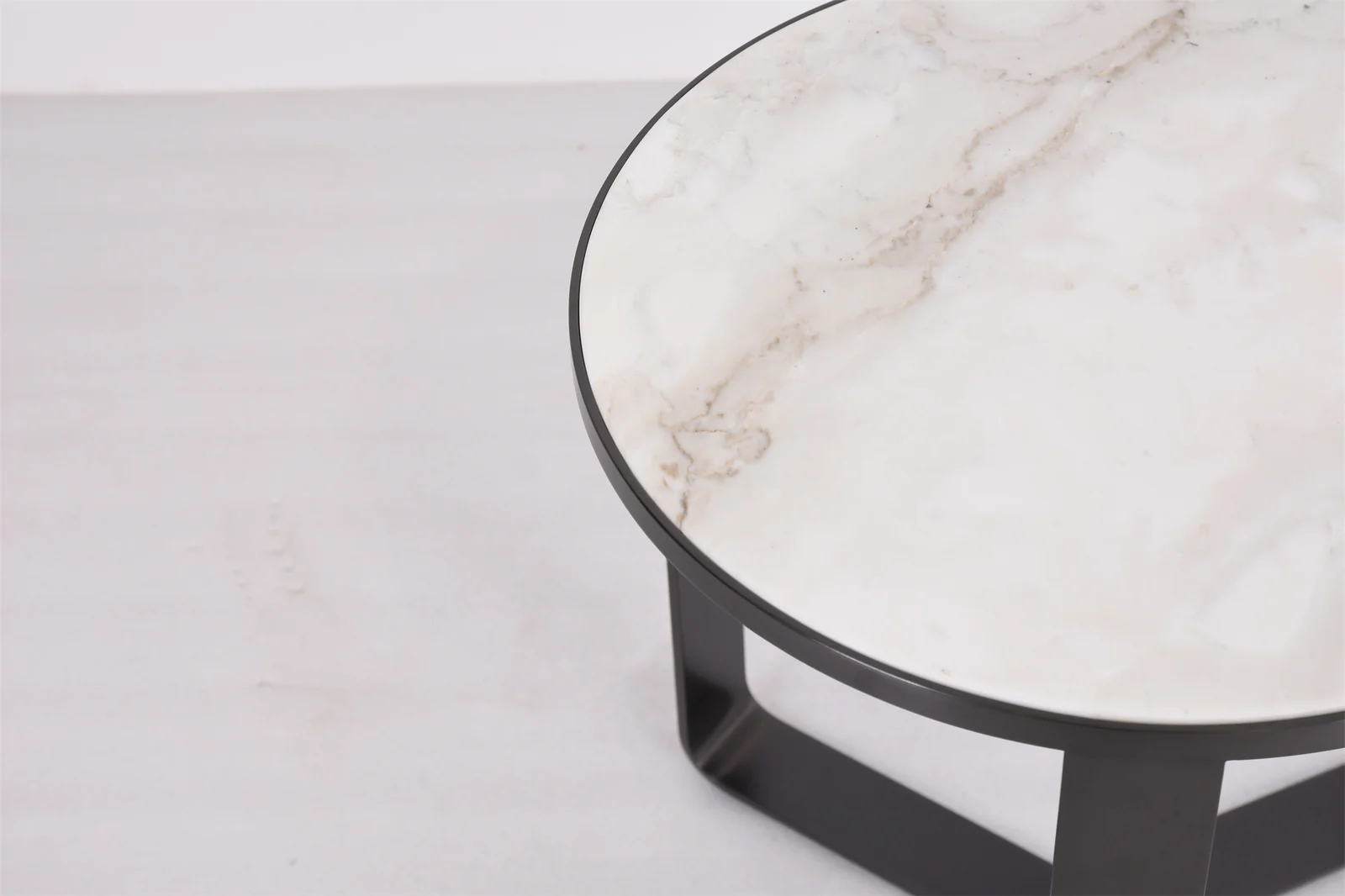
Gainwell’s tables category lists wood, veneer, stone, glass, laminate and protective coatings among project-specific surface options, while also treating base engineering, edge detailing and dimensions as coordinated requirements. Use that as a reminder to approve an assembly—not as evidence that every option fits every restaurant condition.
Approve one controlled sample set—and state what reopens it
Online images and screen colors are useful for direction, not final control. Gainwell’s Materials & Finishes library states that its veneer and metal references support early coordination and that physical samples confirm final color, sheen, grain matching and project requirements.
Create one controlled sample set that connects the material schedule to the furniture item:
- material and finish codes with supplier or source status;
- approved face, edge, seam and joint details;
- acceptable natural or manufactured variation where relevant;
- the approved drawing and prototype revision;
- required tests and their current status;
- cleaning record and maintenance limitation;
- approval date, reviewer and storage location for the control reference.
Then define change triggers. A change of source, substrate, coating build-up, color, sheen, pattern range, seam, adhesive, edge, hardware, cleaner, factory, production method or required test status should reopen the affected approval. The team does not need to repeat unrelated work, but it must be able to identify which layer changed and which evidence no longer applies.
Issue a material decision schedule
Finish the review with a schedule that can travel from design to procurement, sampling, production and operations. Use one row per furniture family and zone. At minimum, include:
- venue, furniture code, component and five-layer stack;
- operating condition and cleaning-compatibility reference;
- mixed-material interface numbers linked to the drawing;
- sample, prototype and drawing revision;
- required test or authority input and current status;
- repair, replaceable-part or spare decision;
- decision owner, due date and evidence location;
- RELEASED, CONDITIONAL or HELD status with the exact closing condition.
A released row has a complete material stack and controlled evidence for the defined scope. A conditional row names the missing evidence and limits what may proceed. A held row stops the affected component or item from production release. Do not turn “pending” into a permanent material description.
Release only what the evidence supports
Before the final decision, ask one diagnostic question: Can the team name the layer that would fail, the evidence that controls it and the action that follows? If the answer is no, the material description is still too broad. Reopen the use-zone brief, interface map or cleaning chain rather than ranking the palette again.
Exact fire, structural, accessibility, environmental, material and market requirements vary by product, venue and destination. Confirm the applicable standards, test methods, samples, drawings and commercial records for the live project. Website guidance and photographs cannot replace them.
When the schedule is ready, share the restaurant plan, furniture list, material direction, operating conditions, cleaning inputs, destination market and required tests through the Gainwell project enquiry. That gives the project team a controlled starting point for material, sample and furniture-development review without assuming that one material name resolves the full assembly.
Frequently Asked Questions
Which materials are best for durable restaurant furniture?
No material is the universal durability winner. Select the complete stack for the actual use zone: visible surface, frame or substrate, edges and joints, coating or upholstery, and care or replacement route. Then verify cleaning compatibility, mixed-material interfaces and project-specific evidence. A strong frame does not compensate for an unsuitable edge, seam, finish or maintenance process.
Is wood or metal better for restaurant chairs?
Neither is automatically better. Review the complete chair assembly, including the exact frame system, finish, joints, upholstery, glides, handling pattern and cleaning routine. Wood-toned and metal systems can both support restaurant applications when their component details and required project evidence match the use zone. Approving color or headline material alone is not enough.
How should a project team choose restaurant furniture materials?
First define the restaurant zone and operating conditions. Next, split each furniture family into the five material layers, map every mixed-material interface and test the cleaning-compatibility chain. Shortlist physical samples only after those inputs are recorded. Finally, issue a decision schedule that names the drawing, sample, test status, owner, change triggers and release or hold condition.
What material information should a restaurant seating specification include?
Include the application, room or zone, quantity, dimensions or drawings, target frame material and finish, upholstery construction, cleaning inputs, destination market, required tests and approval route. Connect every open item to an owner and due date rather than filling gaps with assumptions. The final specification should point to controlled drawings, samples and prototype revisions for the complete seating assembly.
How should a production sample be approved?
Approve it against one controlled record that identifies the item, revision and intended zone. Review dimensions, structure, material interfaces, appearance, finish, upholstery, care information and any required test status. Use physical samples where color, sheen, grain, texture or variation matters. If the source, substrate, finish build-up, seam, edge, hardware or cleaner changes, reopen the affected approval before release.
Are website resources a final project specification?
No. Website pages and online material references support education and early coordination, but they do not replace the live project’s approved drawings, physical samples, test requirements, inspection criteria or commercial documents. Screen colors are also indicative. The project team should confirm the exact material system, acceptable variation, application and evidence route before production or procurement release.