

Large-scale hotel renovations fail more often at the logistics stage than the design stage. When a property needs to replace furniture across thousands of guest rooms while maintaining full occupancy, the margin for error is close to zero. A single delayed shipment or a damaged batch can pull dozens of rooms out of inventory, and for a mega-resort, each offline room represents revenue that can never be recovered.
This guide breaks down the operational framework behind delivering FF&E (Furniture, Fixtures, and Equipment) at the scale of 3,000 rooms or more, covering production planning, phased logistics, packaging, compliance, and on-site installation. The methods draw on practices established through decades of supplying guestroom furniture for integrated resort properties across Macau, Singapore, the Middle East, and the United States.
Why Do Most Large-Scale FF&E Projects Fall Behind Schedule?
The root cause is rarely a shortage of labor. In hotel guestroom renovation, over 70% of project delays trace back to material-related issues: late procurement, failed quality inspections, and rework triggered by specification mismatches.1 A separate industry analysis found that 72% of hotel owners underestimate renovation timelines by an average of 35%.2
Three patterns drive this gap. First, design specifications change during production. A revised finish or an updated hardware standard from the brand can absorb a two-week delay per change order. Second, suppliers without vertically integrated supply chains depend on third-party material vendors whose lead times fluctuate with market conditions. Third, packaging is treated as an afterthought, and transit damage forces re-manufacturing cycles that compound downstream delays.
The scale of the problem is significant. The U.S. hotel industry alone refurbishes roughly 750,000 rooms per year.3 At that volume, even a 5% material failure rate creates enormous disruption across the project pipeline.
What Does a Phased FF&E Delivery Plan Look Like at This Scale?
FF&E procurement for a large hotel project typically begins 12 to 18 months before the target completion date.4 The process spans six phases: scope definition, supplier selection, design development and mock-up approval, manufacturing and quality control, logistics coordination, and installation with final inspection.
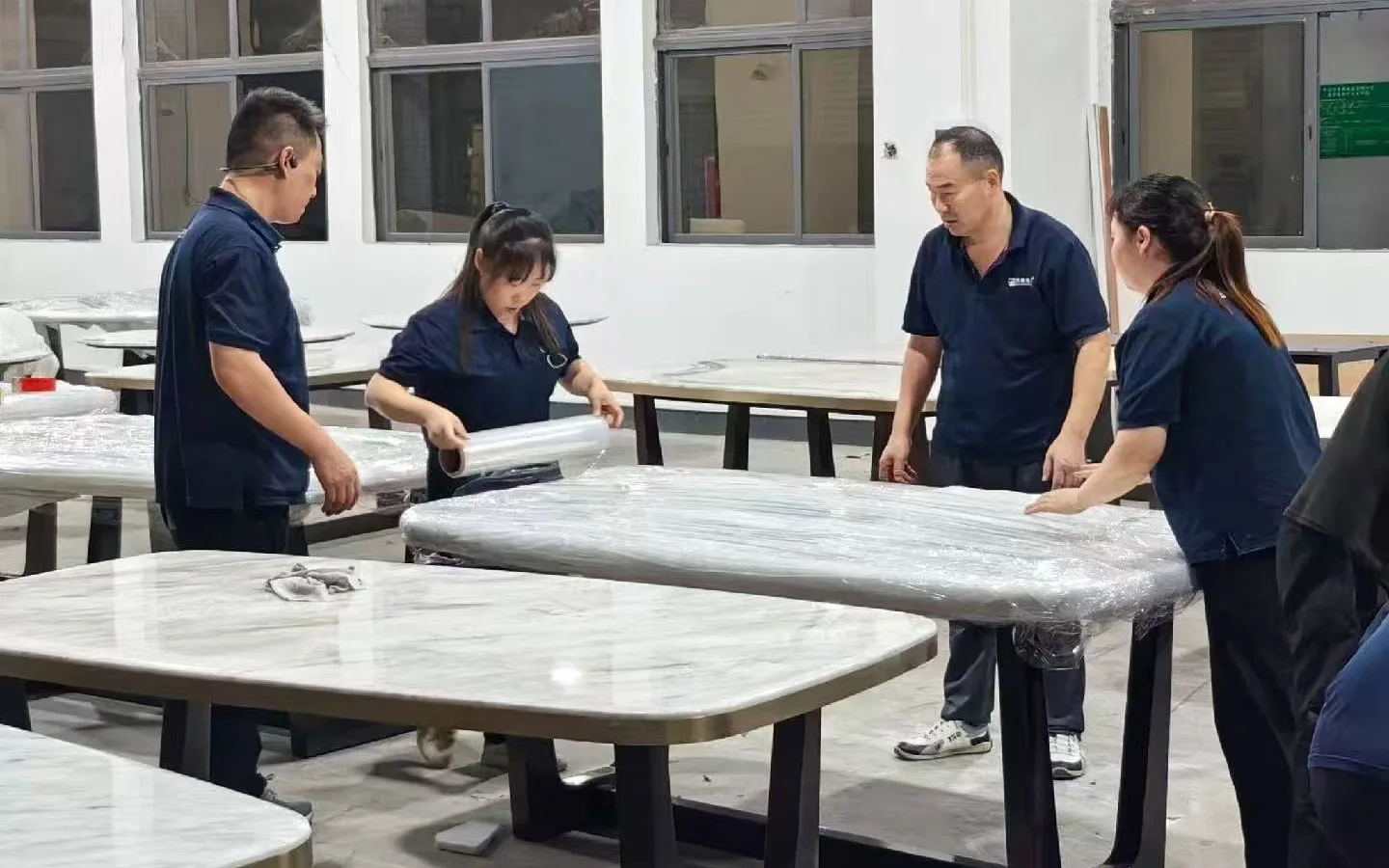
For occupied-hotel renovations, the standard delivery approach is floor-by-floor, working from the top of the building downward. This keeps the majority of rooms generating revenue while construction proceeds in contained sections. Contractors typically complete two floors at a time, with a buffer floor separating active installation zones from occupied guest floors to control noise and dust.5
For a 3,000-suite property, the delivery schedule spans 8 to 14 months. Each phase covers a block of 100 to 200 rooms, with pre-staged containers timed to match construction completion on each floor. Installation crews work during overnight windows, typically 10 PM to 6 AM, to minimize guest-facing disruption.
Coordination between four parties keeps the process on track: the hotel operations team manages room inventory, the general contractor completes hard renovations, the FF&E supplier delivers and stages furniture, and the brand's design team conducts quality walks. Weekly cross-functional meetings and real-time communication protocols are non-negotiable at this scale.
How Much Production Capacity Does a 3,000-Room Project Require?
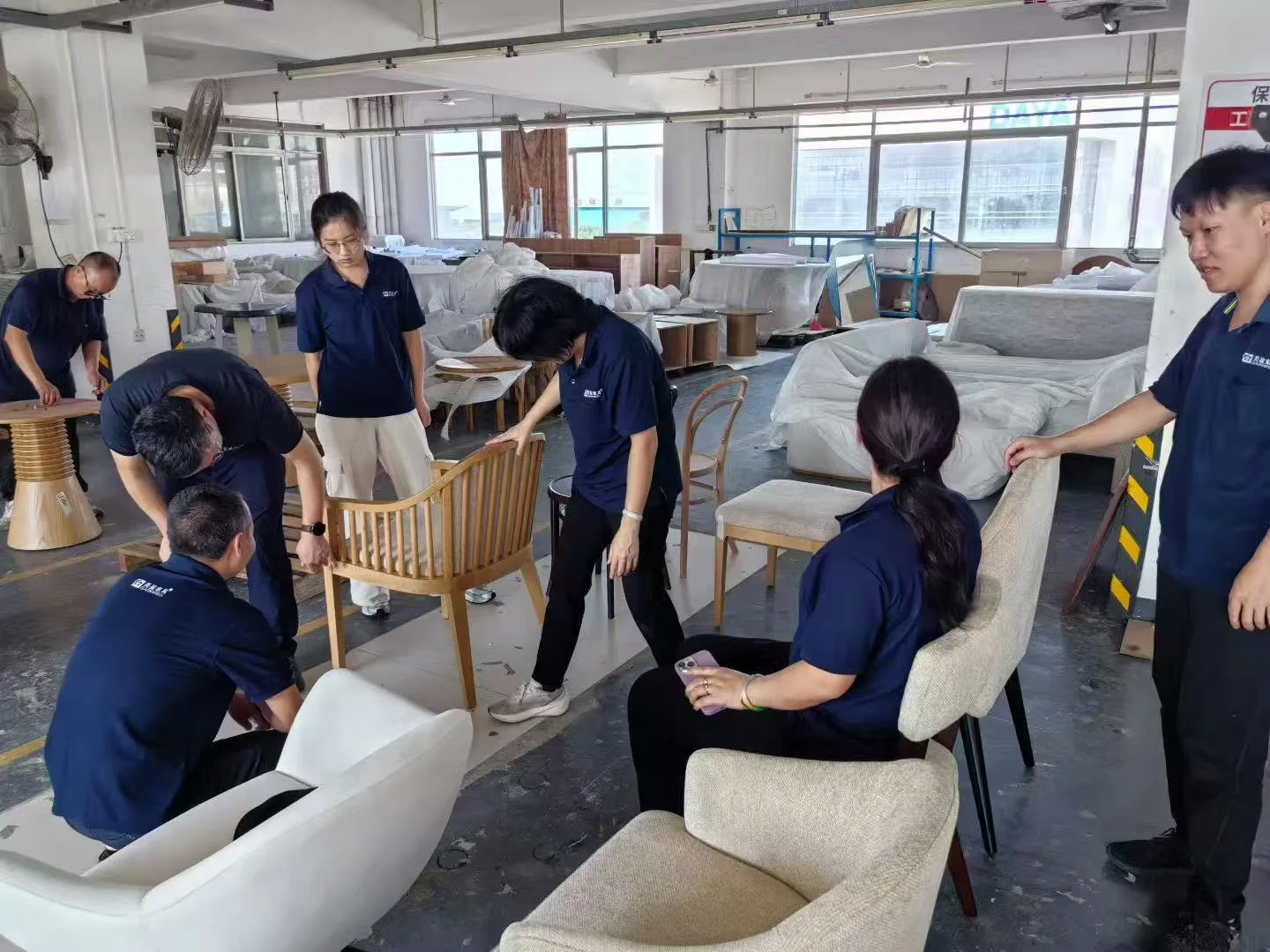
A standard five-star guest room contains 15 to 25 individual furniture pieces: bed frame, headboard, nightstands, desk, chair, dresser, media console, minibar cabinet, luggage rack, and wardrobe, among others. At 3,000 rooms, that totals 45,000 to 75,000 individual items, excluding public area furniture for lobbies, restaurants, and meeting spaces.
Luxury hotels typically allocate $25,000 to $50,000 per room for FF&E, while mid-scale properties budget $8,000 to $15,000 per room.4 At the upper end, a 3,000-room luxury project represents a $75 million to $150 million FF&E investment. Delivering that volume within a 10-to-14-month window requires either a single large-scale factory or a coordinated multi-site manufacturing model.
A dual-base approach, where design and prototyping happen at one facility and volume production runs at another, reduces bottleneck risk. Gainwell Furniture operates this structure through a 70,000 m² facility in Guangdong, China (housing 450 workers and 94 R&D professionals) and a 30,000 m² factory in Vietnam (with 600 workers and a monthly output capacity of 300 containers). Parallel production of different SKUs across two facilities compresses the overall timeline significantly compared to single-site manufacturing.
Proximity to international shipping ports also matters. Factories near major seaports eliminate 5 to 10 days of inland transit time per shipment, a variable that compounds across hundreds of container loads.
Why Is Packaging the Most Underestimated Variable in FF&E Logistics?
Transit damage is one of the largest hidden costs in hotel furniture procurement. A cracked marble top or a scratched veneer panel renders a piece unusable on arrival and triggers a re-order cycle that can extend the project by weeks.

The solution is item-specific packaging engineered to each product's geometry and structural vulnerabilities. Corners, edges, glass surfaces, and stone elements each require distinct cushioning materials and crating configurations. For international shipments crossing multiple oceans, containers also need internal bracing to handle cargo shifts during rough seas.
Standardized packaging does not work for custom hotel furniture. Each project involves unique designs, and the packaging must be developed alongside the furniture during the prototyping phase. This is a step that procurement teams frequently overlook during supplier evaluation, yet it directly affects the percentage of items that arrive installation-ready versus items that require rework or replacement.
What Certifications Does an FF&E Supplier Need for International Hotel Projects?
Certification gaps can halt a shipment at customs or cause a brand inspection failure. The baseline requirements for a supplier serving global hotel clients include:
Quality and environmental management: ISO 9001 (quality systems) and ISO 14001 (environmental management) are expected by virtually all international hotel operators.
Sustainable sourcing: FSC (Forest Stewardship Council) certification verifies responsible wood procurement, a requirement that an increasing number of hospitality brands now mandate in their supplier agreements.

Emissions compliance: CARB (California Air Resources Board) Phase II compliance governs formaldehyde emissions from composite wood products and is required for any furniture entering the U.S. market.
Fire safety: BS 5852 testing is the standard for upholstered items destined for UK and European properties. Regional fire codes vary, meaning the same sofa model shipped to Qatar and to Orlando may need to meet different test protocols while maintaining an identical design.
Hotels implementing comprehensive quality control programs across their FF&E supply chain report 30% to 40% fewer warranty claims and measurably longer furniture lifespans. Solid wood furniture with proper joinery typically delivers a 12-to-15-year service life, while engineered material alternatives may require replacement within 7 to 10 years.4
How Does On-Site Installation Work at Scale?
Furniture delivery does not end at the loading dock. For large-scale hotel projects, the FF&E supplier provides either an on-site installation supervisor or a full installation team. The supervisor coordinates with the general contractor on floor access scheduling, verifies that each room's hard finishes are ready to receive furniture, and conducts piece-by-piece quality checks during placement.
The installation sequence within each room follows a fixed order: wall panels and fixed millwork first, then casegoods (desks, dressers, nightstands), followed by seating, and finally accessories and soft goods. Deviating from this sequence increases the risk of damage from subsequent trades working around already-placed furniture.
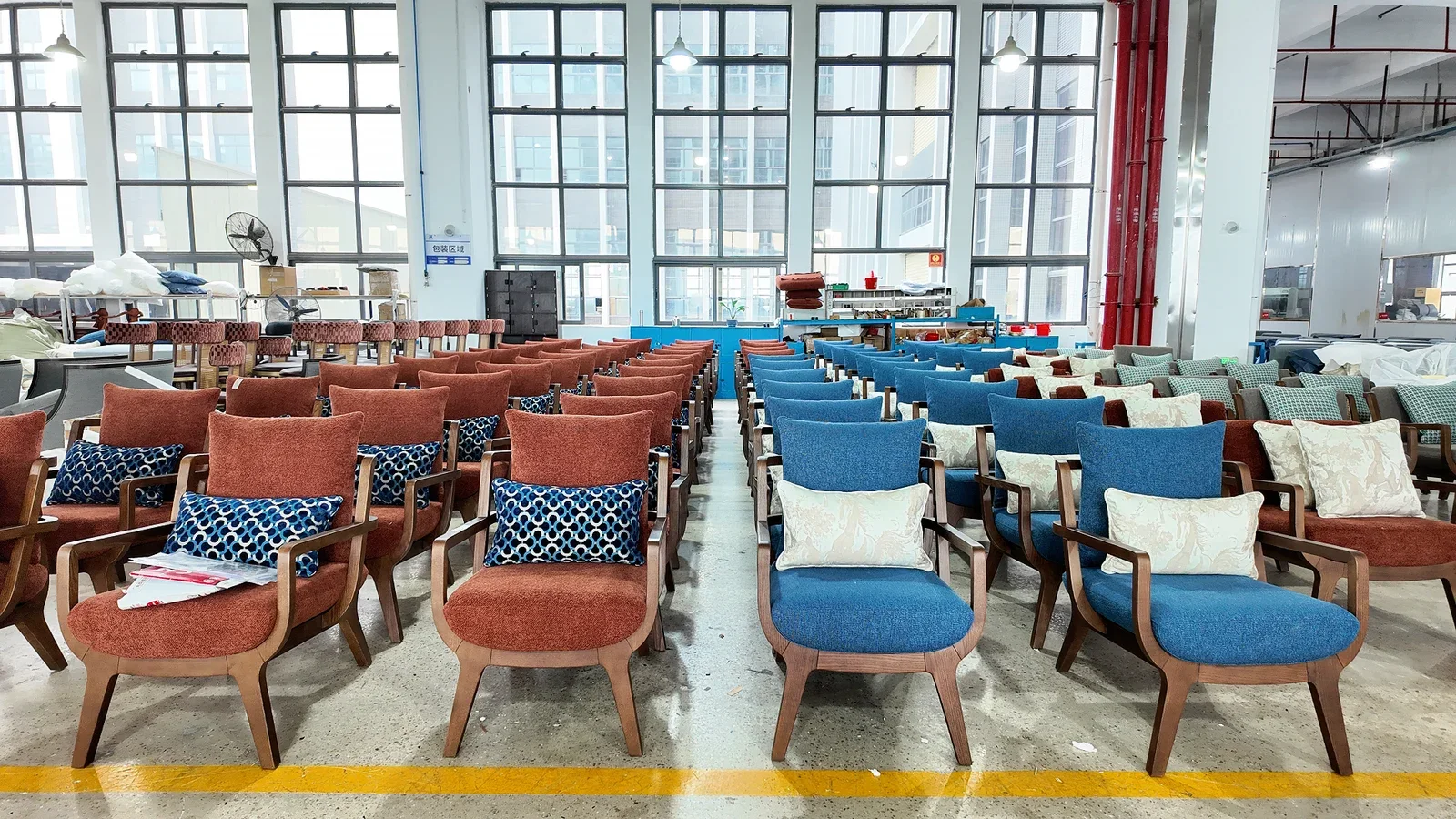
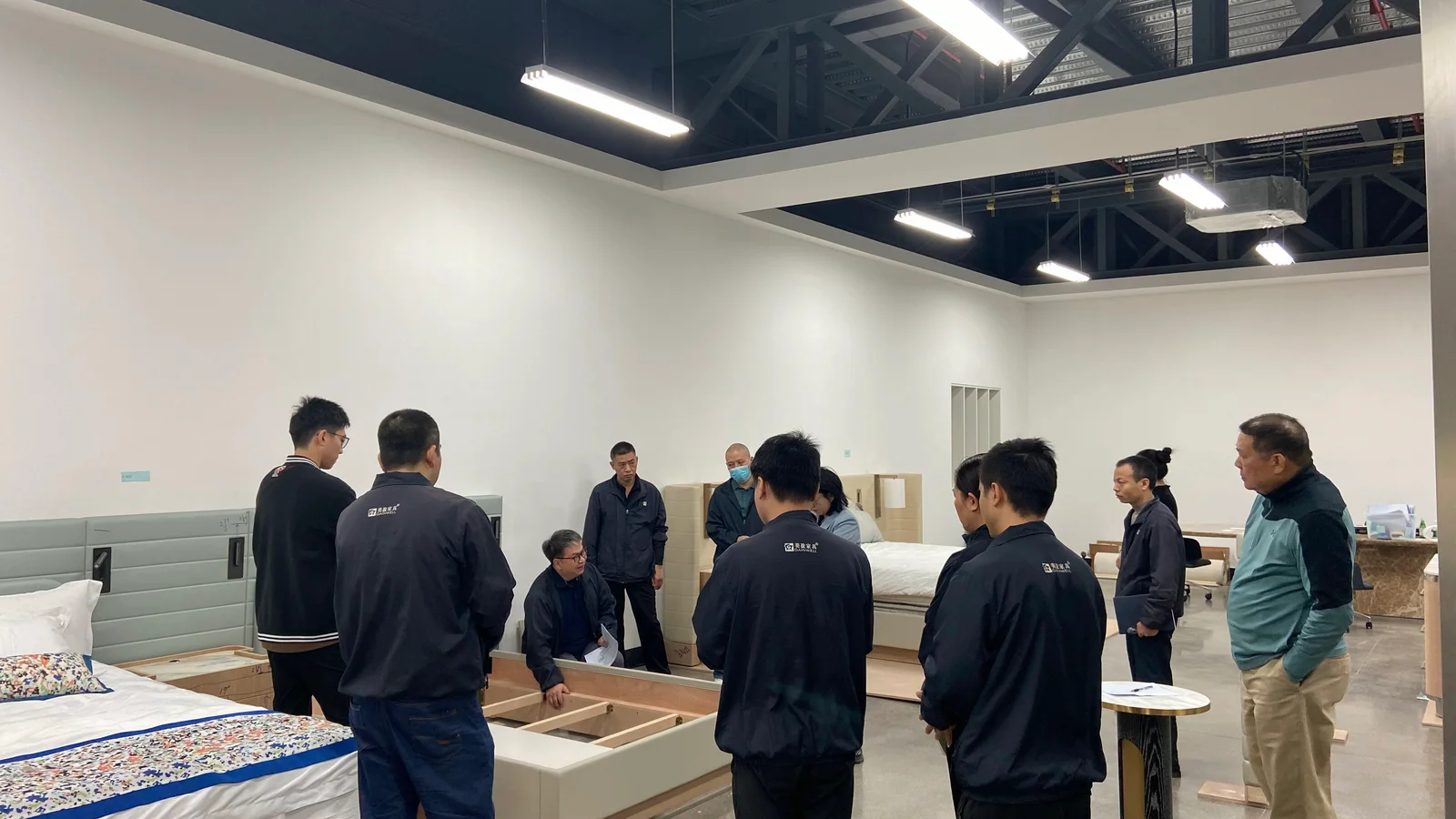
After installation, a joint walk-through between the supplier, the hotel's project manager, and the brand's QA representative produces a punch list. Resolution within 48 to 72 hours is standard practice to return rooms to saleable inventory as quickly as possible.
What Is the Financial Cost of Getting FF&E Delivery Wrong?
The math is straightforward. Hotel & Leisure Advisors documented a case where a renovated property increased its net operating income by 33% in the 12 months following project completion.6 The upside of a well-executed renovation is substantial.
The downside is equally concrete. For a 3,000-room property operating at an average daily rate of $250 and 85% occupancy, each day of delay across just 100 rooms costs approximately $21,250 in lost revenue. Over a two-week delay, that figure reaches nearly $300,000 for a single phase.
Choosing an FF&E supplier with the production scale, logistics infrastructure, certification portfolio, and on-site installation capability to deliver on schedule is not simply a procurement decision. It is a revenue protection strategy.
References
- "How to Shorten Hotel Guestroom Renovation Time by 30%." AesthedgeWallPanel, 24 Dec. 2025, aesthedgewallpanel.com/how-to-shorten-hotel-guestroom-renovation-time-by-30/.
- "Hotel Renovation Cost Per Room: The Hidden Economics Every Owner Must Know." JiffyJunk, 22 Sept. 2025, www.jiffyjunk.com/blog/hotel-renovation-cost-per-room-the-hidden-economics-every-owner-must-know/.
- "Hotel Renovation Timelines in the USA: What Hotel Owners Should Know." LW Renovate, 8 Oct. 2025, lwrenovate.com/post/7.
- "FF&E and OS&E in Hotel Procurement: The Complete Guide for Industry Professionals." Hongye Furniture Group, 15 Jun. 2025, hysdfurniture.com/news/ffe-and-ose-in-hotel-procurement-the-complete-guide-for-industry-professionals/.
- "How to Renovate While Maintaining a High-Quality Guest Experience." Shawmut Design and Construction, www.shawmut.com/news/how-to-renovate-while-maintaining-a-high-quality-guest-experience.
- "The Financial Impact of Hotel Renovations." Hospitality Net, 7 Dec. 2022, www.hospitalitynet.org/news/4080804.html.
Frequently Asked Questions
Can a hotel remain open while furniture is replaced across thousands of rooms?
Yes, when the programme is divided into controlled room or floor releases and each phase has a defined access route, staging area, installation sequence and acceptance point. The hotel, contractor and furniture supplier must agree which rooms are released, protected, installed, inspected and returned to operations before the next phase begins.
How should furniture delivery zones be defined for an occupied hotel?
Define zones by what the site can isolate and complete, not only by truck capacity. Each zone should have named rooms, access times, unloading and storage limits, protection rules, item codes, installation ownership and a closeout test. Avoid releasing a volume that exceeds the site's safe staging or inspection capacity.
What evidence shows that a supplier can support a 3,000-room programme?
Ask for a capacity plan tied to the actual furniture schedule, production cells, material lead items, approved prototypes, inspection resources, packing output and delivery waves. Factory area or annual revenue alone does not prove programme fit. The evidence should show how the supplier protects this project's capacity after drawings and finishes are released.
What information should appear on hotel furniture packaging labels?
Labels should connect each package to the controlled schedule: project, item code, room or zone, quantity, package number, handling direction and any assembly or protection note. The receiving team should be able to route and reconcile an item without opening every carton, while exceptions remain traceable to the production and inspection records.
Who should close furniture punch-list items during a phased renovation?
The responsibility matrix should name who records, classifies, corrects and accepts each exception. Site teams should separate transit damage, manufacturing nonconformance, missing quantity and installation damage because they follow different evidence paths. A room should return to operations only after the agreed acceptance owner closes the relevant items.