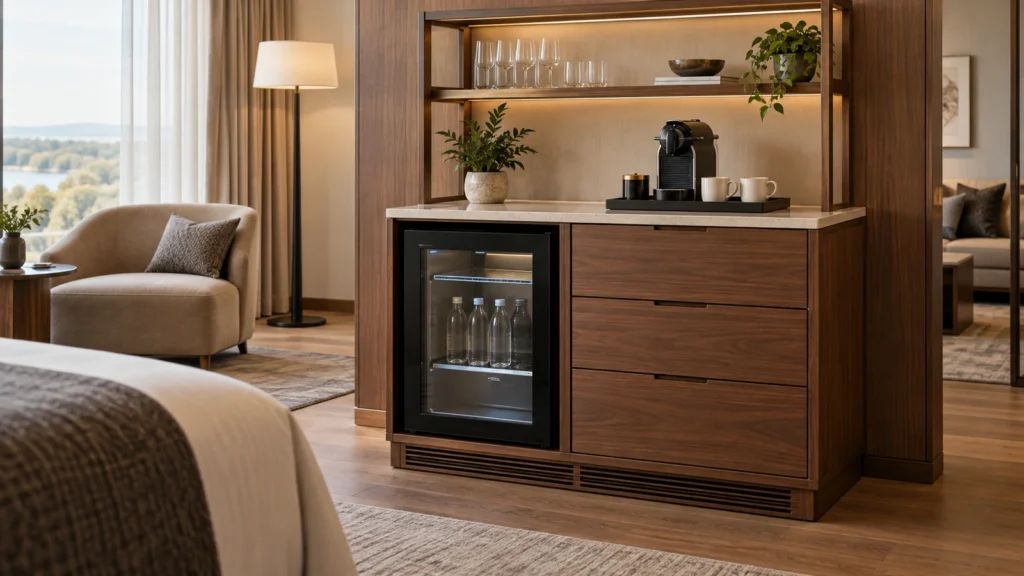

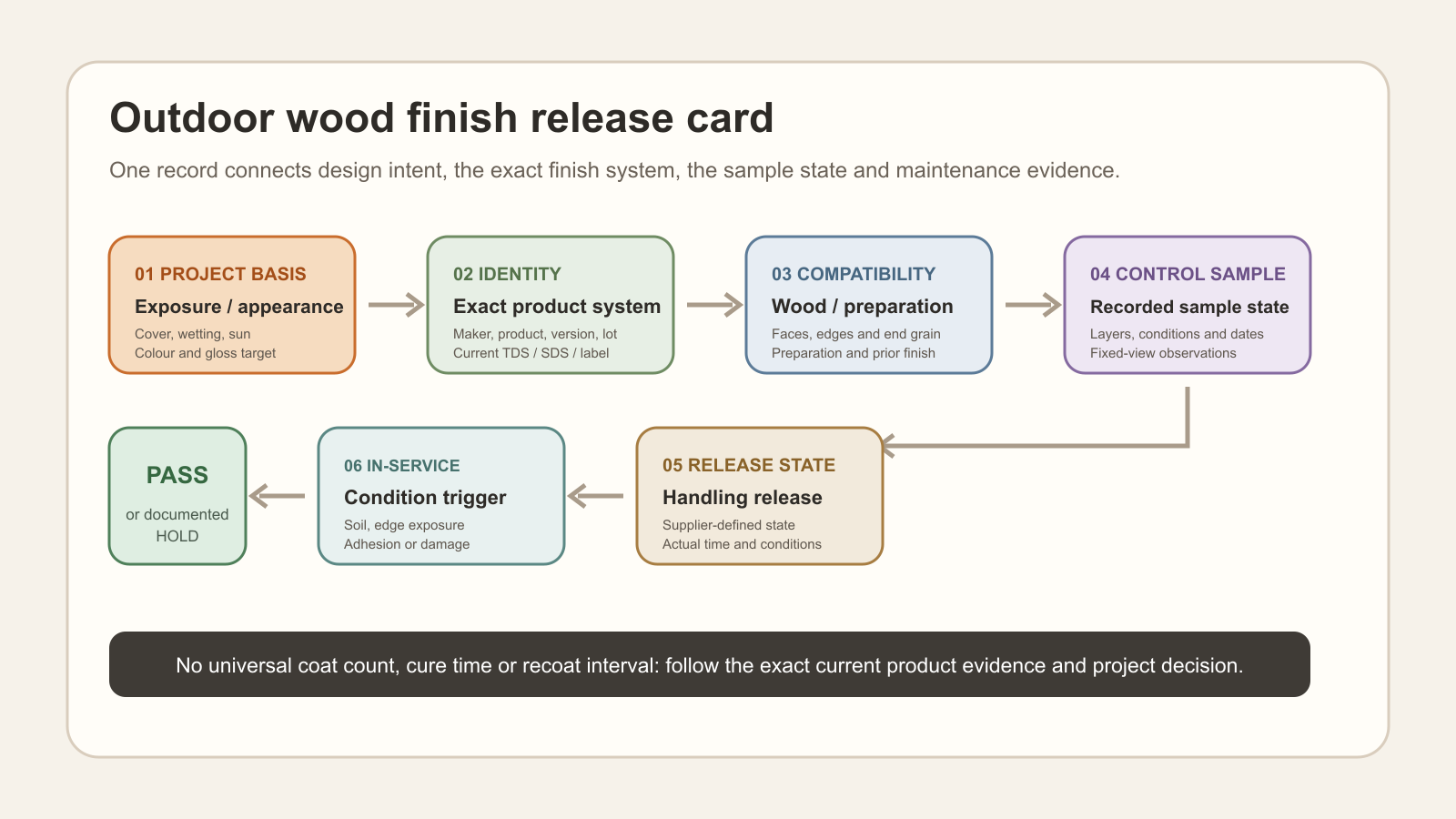
Tung oil can be suitable for some outdoor furniture, but “tung oil” is not a complete specification. The label may describe a pure oil, a resin-modified oil, an oil/varnish blend or another finish system, each with its own substrate, exposure, preparation, cure and maintenance instructions. For a hotel project, approve the exact current product and system, verify it on the proposed wood and representative furniture detail, and release it only against recorded evidence.
This is a finish-approval workflow, not a universal application recipe. Coat counts, sanding steps, thinning, recoat windows, cure times, ventilation, personal protective equipment and waste handling must come from the selected product’s current technical data sheet (TDS), safety data sheet (SDS), label, project requirements and applicable local rules. If any of those sources conflict or are missing, the affected finish remains on HOLD.

Start with appearance and exposure—not the product name
Before comparing oils or sealers, state what the design team expects to see and what the furniture will experience. Is the target a low-sheen natural surface, a film-forming appearance, a pigmented colour or an intentionally weathered look? Must colour remain close to an approved control sample, or is gradual change acceptable? Record the approved sample, viewing light, gloss or colour reference, permitted variation and decision owner.
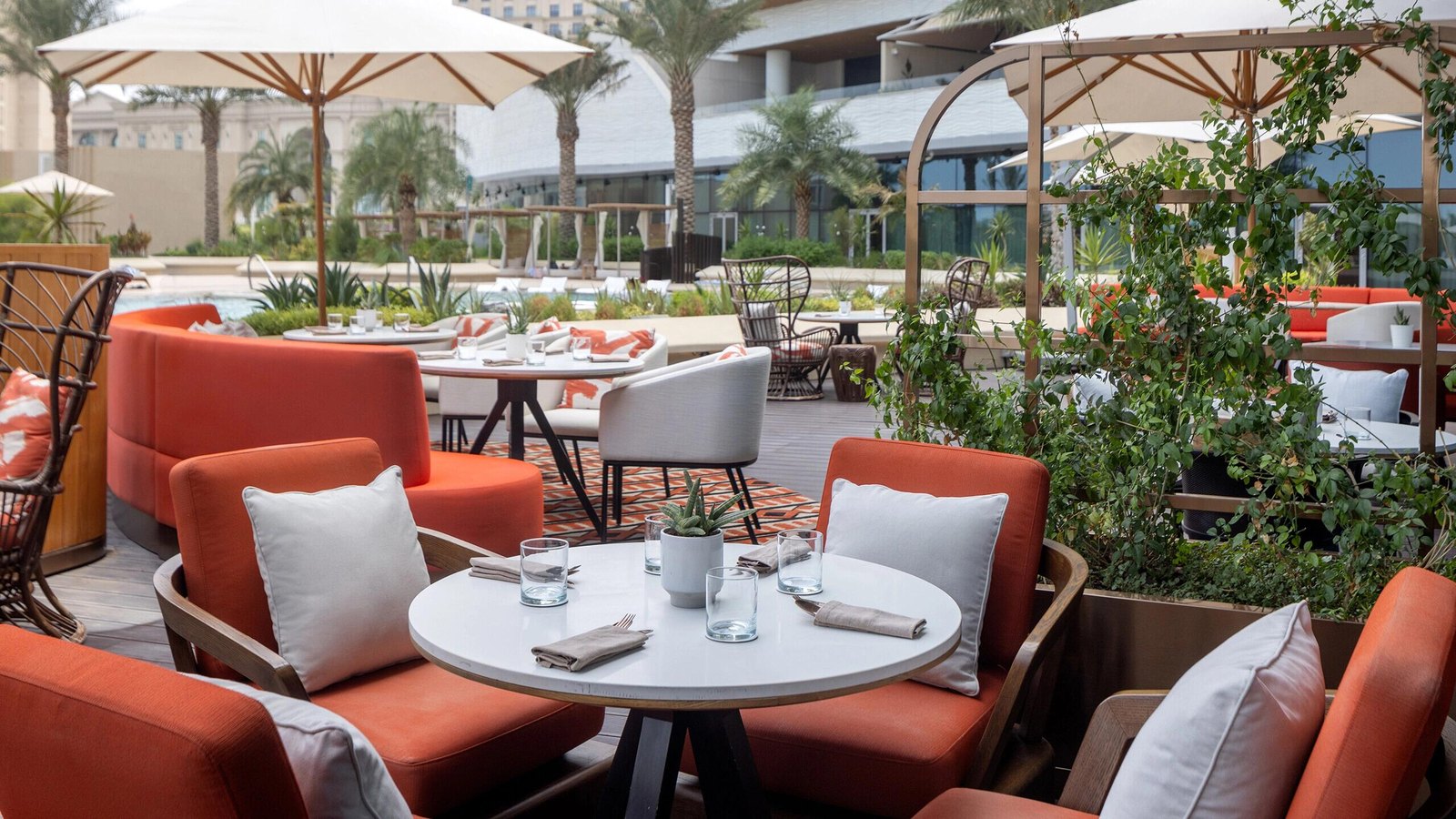
Map each furniture family to the exposure supplied by the project: fully uncovered, covered but wind-driven wet, pool splash, food and beverage, coastal aerosol, periodic washdown, seasonal storage or another defined condition. Add orientation, drainage, contact with paving, maintenance access and closure constraints where relevant. Do not infer climate or exposure from a project photograph. These are design and operating inputs that the responsible team must confirm.
This boundary prevents a common error: choosing a finish because a generic webpage calls it “outdoor,” then discovering that the project’s horizontal tabletop, direct sun, oily wood, existing coating or maintenance capacity falls outside that product’s instructions.
Build an exact finish identity card
The Waterlox product family illustrates why the words “tung oil” are insufficient. Its current range separately describes an Original resin-modified tung-oil formula, a Marine spar varnish made from tung oil and a 100% Pure Tung Oil product, with different exterior and sun-use notes. That comparison does not select any of them for a Gainwell project; it shows that a shared ingredient phrase can sit on materially different systems.
Create one identity card for every proposed finish. It should contain:
- manufacturer, product family, exact product name, colour or tint, sheen and batch or lot reference;
- current TDS, SDS, label and application guide titles, dates or revision codes;
- system layers in order, including any stain, sealer, primer, topcoat or maintenance product;
- approved substrate and exposure limitations copied with their source, not paraphrased as a broader claim;
- manufacturer-defined preparation, application, recoat, cure, handling, storage and maintenance conditions;
- the project requirement, reviewer, decision date and unresolved exceptions.
If a supplier changes a formula, document version, tint, substrate or layer, open a new card. “Same colour” or “same oil type” is not enough to inherit an approval.
Map wood, faces, edges and interfaces before sampling
A representative finish sample begins with the exact wood and construction state. Record species or approved material ID, supplier and batch where controlled, moisture-condition requirement supplied by the project, veneer or solid construction, adhesive or filler interfaces, and any preservative or previous coating. Keep claims inside the available evidence; a timber-toned photograph cannot identify species or readiness for finishing.
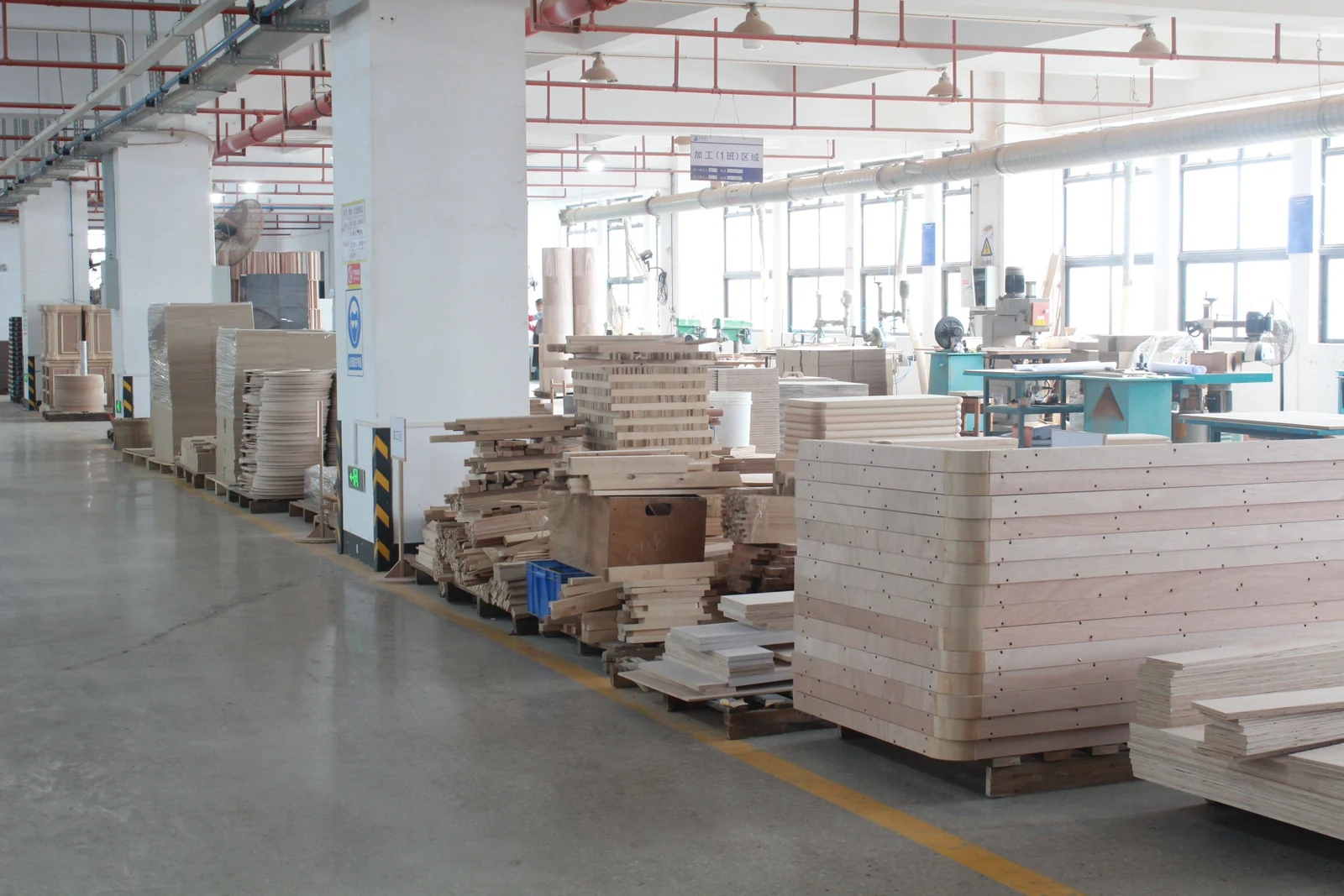
Mark exposed faces, shaded faces, undersides, edges, end grain, joints, drainage paths, hardware penetrations, glides and wood-to-metal or wood-to-upholstery interfaces on the current drawing. Ask where the system is continuous, where it terminates and where water or cleaning residue may remain. End grain, routed edges and assembled joints may not behave like a flat face, so they belong in the sample and inspection plan when they exist on the production item.
Compatibility is product-specific. One current General Finishes exterior oil page warns that its product may not adhere to extremely oily exotic woods and requires testing for adherence and aesthetics when mixed with another manufacturer’s system. Waterlox’s current Pure Tung Oil page says that product is for bare wood only. These are examples of why a hotel team must check the exact instruction—not permission to apply either product to every timber or old finish.
Make the control sample reproducible
Do not approve a finish from a loose colour chip. Build a representative sample with the proposed wood batch or controlled equivalent, the actual face and edge details, fillers and repairs, the documented surface preparation, all system layers, the intended application method and the supplier-defined environmental and time conditions. Use the current item revision. If the furniture will be assembled before a coating stage, reproduce the relevant joint or masking condition.
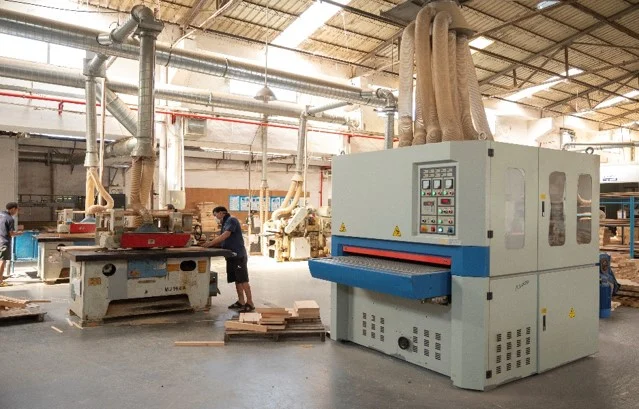
The build record should name operator, date and time, substrate ID, preparation equipment or process, consumables, layer sequence, product lots, actual conditions and each supplier-defined checkpoint. Photograph the sample from fixed viewpoints. If an exact current guide provides numbers, attach that guide rather than copying its numbers into a generic shop note. A different finish product can carry different instructions even when both are sold as an outdoor oil.
When appearance is the decision, observe it under named lighting and at project-defined distances and angles. Record colour, gloss, grain contrast, surface feel and visible defects as observations against the approved benchmark. Do not convert “looks good” into evidence of exterior suitability.
Separate dry, cure, handling and use release
“Dry” can describe several different states: ready for another layer, safe to touch, ready to sand, ready to pack, ready to install or ready for full service and water exposure. Treat each as a separate checkpoint when the selected manufacturer does. Record the exact source, required conditions, start time, actual elapsed time and the person who released the item.
Do not borrow a timing from another product or from ideal conditions. Current manufacturer pages for Pure Tung Oil and Outdoor Oil publish different product-specific intervals and condition notes. Temperature, humidity, film build, substrate and prior finish may affect the instructions or actual result. If transport or opening day arrives before the documented release state, HOLD the item; a calendar pressure does not change the finish state.
Safety release is separate again. The finish pack must include the current SDS and label, authorized work area, ventilation and PPE controls, ignition controls, spill response and locally compliant waste route. OSHA has stated that applicable linseed-oil products should communicate autoignition or spontaneous-combustion hazards, and NFPA warns that oils in some oil-based paints and stains can release heat while drying and that oily rags can ignite. Follow the exact product warnings and local fire and waste rules. This article deliberately does not provide a disposal shortcut.
Maintain by observed condition, not an invented calendar
A maintenance plan needs inspection triggers even when the supplier also gives a routine interval. Connect each observed state to one action and owner:
| Observed state | Controlled response | Decision boundary |
|---|---|---|
| Loose soil, food or cleaning residue with no visible finish damage | Use the approved material-specific cleaning method and record the result. | Route to the current outdoor furniture cleaning guide and product care instructions; do not improvise solvents or abrasives. |
| Local scratch, worn edge or exposed end grain | Photograph, tag the item and compare with the approved repair method and control sample. | Trial the exact repair system on an approved sample or area before fleet work. |
| Widespread colour or sheen change without peeling | Compare fixed-viewpoint records and confirm whether the change is within the design decision. | Do not call weathering a failure or accept it as intentional without the owner’s criterion. |
| Peeling, blistering, soft film, adhesion loss or trapped moisture | Remove the item from the normal touch-up route and investigate substrate, preparation, compatibility and exposure records. | HOLD recoat until the cause and approved repair system are documented. |
| Unknown existing finish or unidentified maintenance product | Stop, identify the layers and obtain current compatibility guidance. | Never apply a new oil or sealer because the surface merely looks dry. |
Use a repair and recoat stop gate
Before any local repair or wider recoat, confirm the furniture ID and revision, existing finish card, observed condition, cleaning history, substrate condition, product shelf life and current manufacturer instructions. Reproduce the proposed preparation and repair on the control sample or another project-approved trial area. Record colour and gloss after the product-defined release state, not only while the finish is wet.
Keep the work on HOLD when the existing finish is unknown, the surface is wet or contaminated, adhesion compatibility is unsupported, the finish changes the approved appearance, the product evidence has expired, safety controls are missing or the proposed work would conceal an unresolved defect. The stop gate protects the whole furniture batch from a plausible-looking but incompatible touch-up.
Close the finish handover pack
A complete handover pack links the furniture schedule and drawings to the finish identity card, TDS/SDS/labels, substrate and preparation record, approved control sample, production lot trace, inspection records, handling and packing release, care method, maintenance trigger matrix, repair system, spare materials, storage limits, decision owners and all open HOLD items. Keep document versions and dates visible so operations can tell what is current.
Gainwell’s Materials and Outdoor pages provide material and product context, while its capabilities cover technical development, sampling, production control, inspection and delivery support. For a project finish review, send the furniture schedule and drawings, destination and exposure brief, appearance benchmark, proposed wood and exact finish data, sample plan, required evidence, maintenance expectations, quantities and decision matrix through the Gainwell project contact. Final suitability, methods, criteria, dates and responsibilities remain project-specific.
Frequently Asked Questions
Is tung oil good for outdoor furniture?
It can be suitable when the exact product or finish system is intended for the proposed exterior exposure and is compatible with the wood, preparation and appearance target. “Tung oil” alone is not enough: current products bearing that phrase can have different compositions, sun limitations, layer requirements and maintenance instructions. Review the current TDS, SDS and a representative sample.
What is the difference between pure tung oil and a tung oil finish?
Pure tung oil identifies the oil itself, while a product marketed as a tung-oil finish may be modified with resins or be part of a varnish or multi-layer system. Waterlox’s current range provides examples of these distinct categories. Always record the exact manufacturer and product rather than treating the ingredient phrase as the specification.
Does tung oil make outdoor furniture waterproof?
Do not turn a product-specific water-resistance or waterproof claim into a universal statement. The claim may apply only to an exact cured system, substrate and test or use condition. It does not prove joints, end grain, hardware interfaces, drainage, maintenance or the complete furniture item. Request scoped evidence and verify the representative construction.
How long does tung oil take to dry or cure?
There is no responsible universal answer. Products publish their own definitions, timing and conditions, and “dry,” “recoat,” “pack,” “install” and “full use” may be different states. Use the selected product’s current instructions, record actual conditions and release each required state separately.
Can tung oil be applied over an existing finish?
Only when the exact proposed product’s current instructions allow that substrate and existing system and the project verifies preparation, adhesion and appearance. One current pure tung-oil product requires bare wood, while another exterior maintenance oil describes routes over existing exterior finishes but also requires preparation and compatibility testing. Unknown layers remain a HOLD.
How often should hotel outdoor wood furniture be recoated?
Use the exact product’s current maintenance guidance together with the hotel’s recorded exposure and condition inspections. Do not invent a universal annual interval. Clean through the approved care route, compare observed wear or damage with the control sample, and recoat only after product identity, compatibility, preparation, safety and appearance decisions are confirmed.