
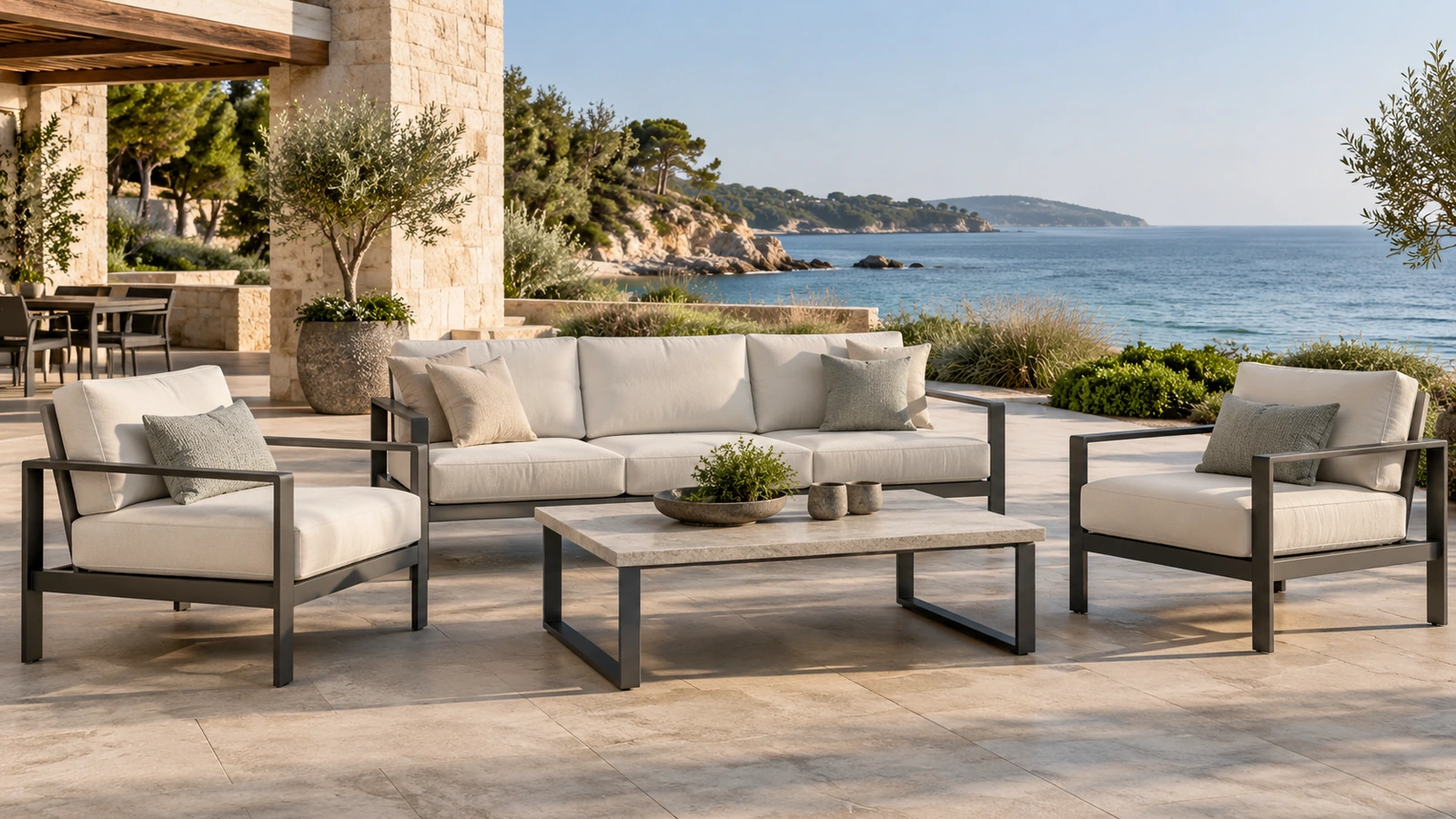
Outdoor furniture for coastal hotels should be specified around the actual exposure of each location, with requirements for the frame, hardware, protective finishes, drainage, cushions and maintenance considered together. Salt-resistant material in one component cannot establish the suitability of the complete chair, table or lounger.
Labels such as coastal, marine-grade and all-weather can help describe a product’s intended market, but they leave important questions unanswered. What material are the concealed fasteners? Can water drain from the frame? What care does the finish require? A useful specification turns those questions into clear requirements that suppliers can address for the proposed furniture.
Define the Exposure for Each Location
A coastal hotel rarely has one uniform outdoor environment. A covered terrace may receive salt deposits without direct rain washing them away, while furniture beside an open pool faces sunlight, wet swimwear and regular cleaning. Seating nearer the shoreline may experience wind-driven spray and sand. These differences can exist within the same property, so distance from the sea is only a starting point.
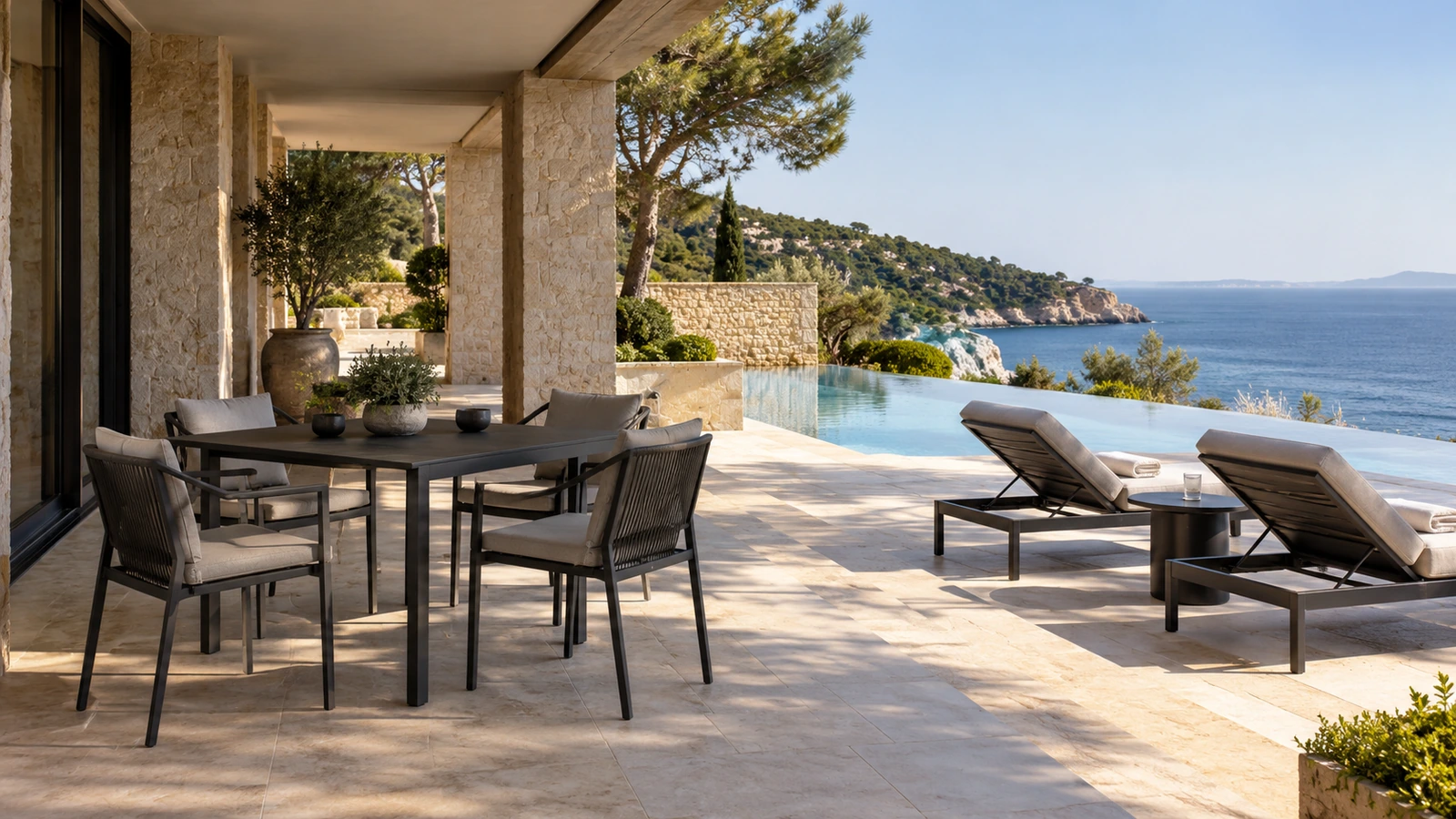
Describe where each furniture group will be used and what reaches it.
The brief should identify shelter, direct sunlight, rain, saltwater splash, pool-water contact and persistent dampness, together with how the area operates. Furniture left outside throughout the year has a different exposure pattern from items moved into protected storage during closures. Cleaning access matters as well: a maintenance recommendation is useful only if staff can reach the relevant surfaces, use the specified products and allow the furniture to dry.
Wind exposure belongs in this description, but a furniture material specification cannot resolve wind safety by itself. The project needs an agreed approach to positioning, movement, storage and any engineered restraint. Weight, shelter or grouping should not be treated as proof that an item can remain in place under every condition.
Once these conditions are clear, the supplier can respond to a defined setting rather than a broad request for “coastal furniture.”
Specify the Complete Furniture Construction
The most visible material is not always the component that determines maintenance or failure. A chair with an aluminium frame may contain different metals in its fasteners or mechanisms. A polymer seat may sit on a metal support, and a timber table may depend on concealed brackets beneath the top. The specification should identify the complete construction, particularly where moisture can remain or inspection is difficult.
Identify the materials used in the principal components, including supporting members beneath seats and tabletops. Terms such as aluminium, stainless steel, timber or HDPE are useful category descriptions, but the proposed product needs enough detail to connect its materials with its construction and intended exposure. Where a particular alloy, grade, formulation or treatment is required, it should be recorded against the relevant component and supported by appropriate supplier information.
No single material removes the need for this review.
An aluminium frame still depends on its joints, finish and connected components. Stainless steel selection involves more than the word stainless, while timber and polymer components have their own movement, support and surface-care considerations. The aim is to understand how the proposed assembly responds to its location, rather than select a familiar material name and leave the remaining construction undefined.
List Hardware and Connections Separately
List hardware separately from the frame. Screws, bolts, brackets, hinges and adjustment mechanisms may use different materials and protection, even when they are concealed beneath matching finishes. Their specification should address the intended environment, compatibility with adjacent components and access for inspection or replacement.
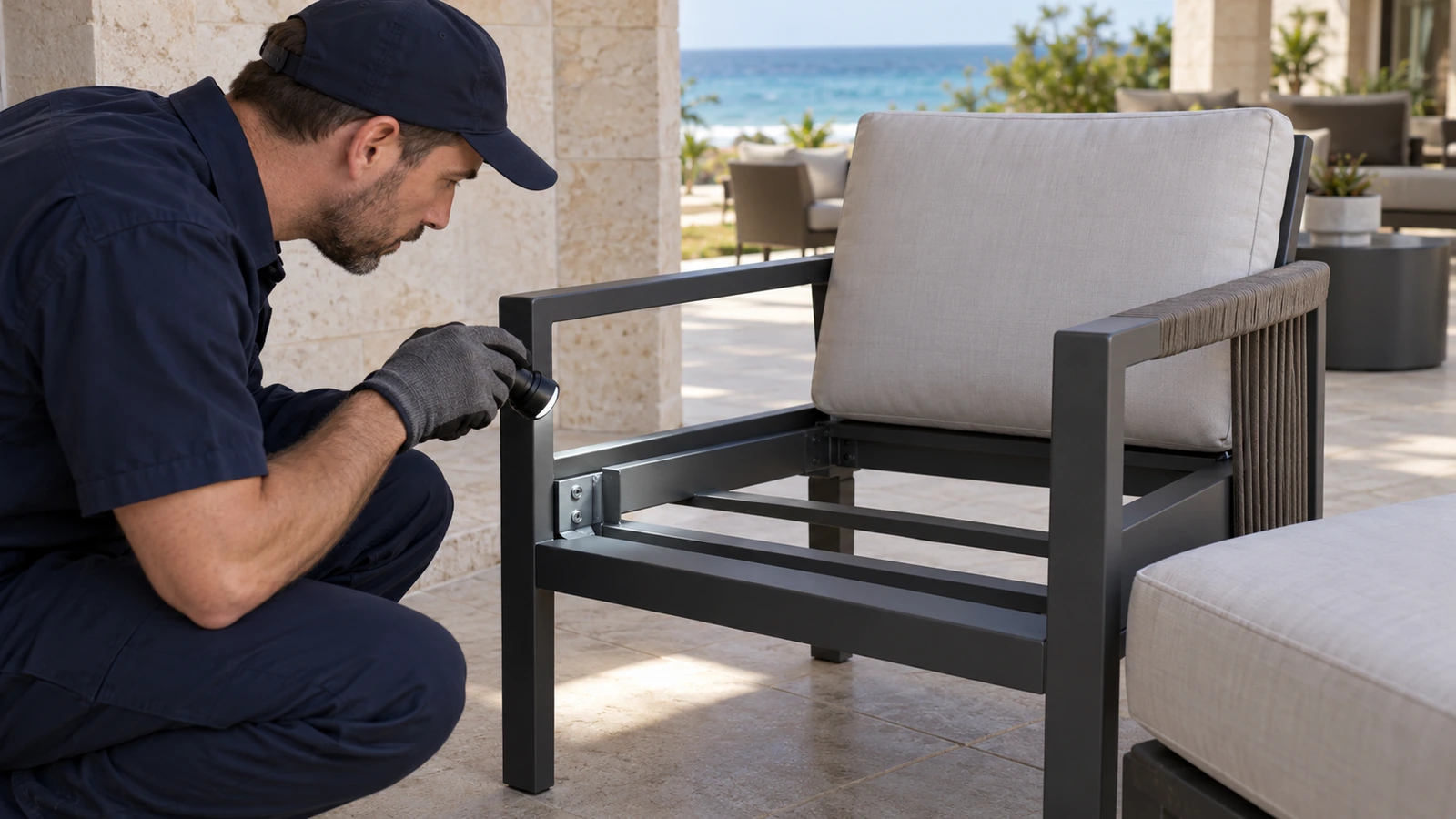
Different metals in contact may require measures to manage galvanic corrosion where moisture provides a conductive path. The appropriate detail depends on the materials and construction; possible measures need to be designed and confirmed rather than improvised during installation. Closely spaced joints, crevices and areas beneath fittings also deserve attention because retained moisture and deposits can create conditions that differ from an open, easily cleaned surface.
Ask how these locations will be maintained. A connection that cannot be inspected or replaced may create a different long-term commitment from one designed for access.
Treat the Protective Finish as a System
A protective finish is a system, not simply a colour selection. Its performance depends on the substrate, preparation, application and detailing around edges, welds, holes and connections. A flat colour sample can establish appearance, but it does not show how the same treatment will cover the complete furniture.
The specification should identify the proposed protective system and the information needed to assess it. This may include preparation requirements, relevant production controls, applicable test evidence and the manufacturer’s repair method. Any coating thickness, test duration or acceptance criterion should have a project-specific basis. A generic requirement for a long salt-spray test does not, on its own, establish suitability or predict years of service at the hotel.
Review these requirements against the actual outdoor seating, tables and loungers under consideration. Different products have different joints, contact points and moving parts, so the same finish description may need additional construction details for each furniture type.
Design for Drainage and Moisture Management
Moisture management begins with the shape and construction of the furniture. Inspect seat recesses, tabletop edges, underside surfaces, feet and joints for places where water and debris may remain. Hollow members need a deliberate approach to closures, drainage and ventilation. Adding holes or sealing openings on site can change the intended behaviour, so those details should be resolved by the responsible designer and manufacturer.
Shelter does not remove the need for inspection. A protected location may receive less rain yet still accumulate salt and retain moisture around joints or under cushions. The specification should make those areas accessible to the care method proposed for the product.
Plan Cushion Care, Moving and Storage
Cushions require a complete construction description too. Outdoor fabric is only the outer layer; filling, liners, seams, zips, attachments and the underside influence how the cushion handles water and dries. A water-repellent cover does not establish that the filling will remain dry, and a quick-drying component does not prove that the assembled cushion will dry quickly in a shaded, humid location. Confirm how the proposed system works, which parts can be removed and what staff must do after wet use.
The operating routine should be tested alongside the product.
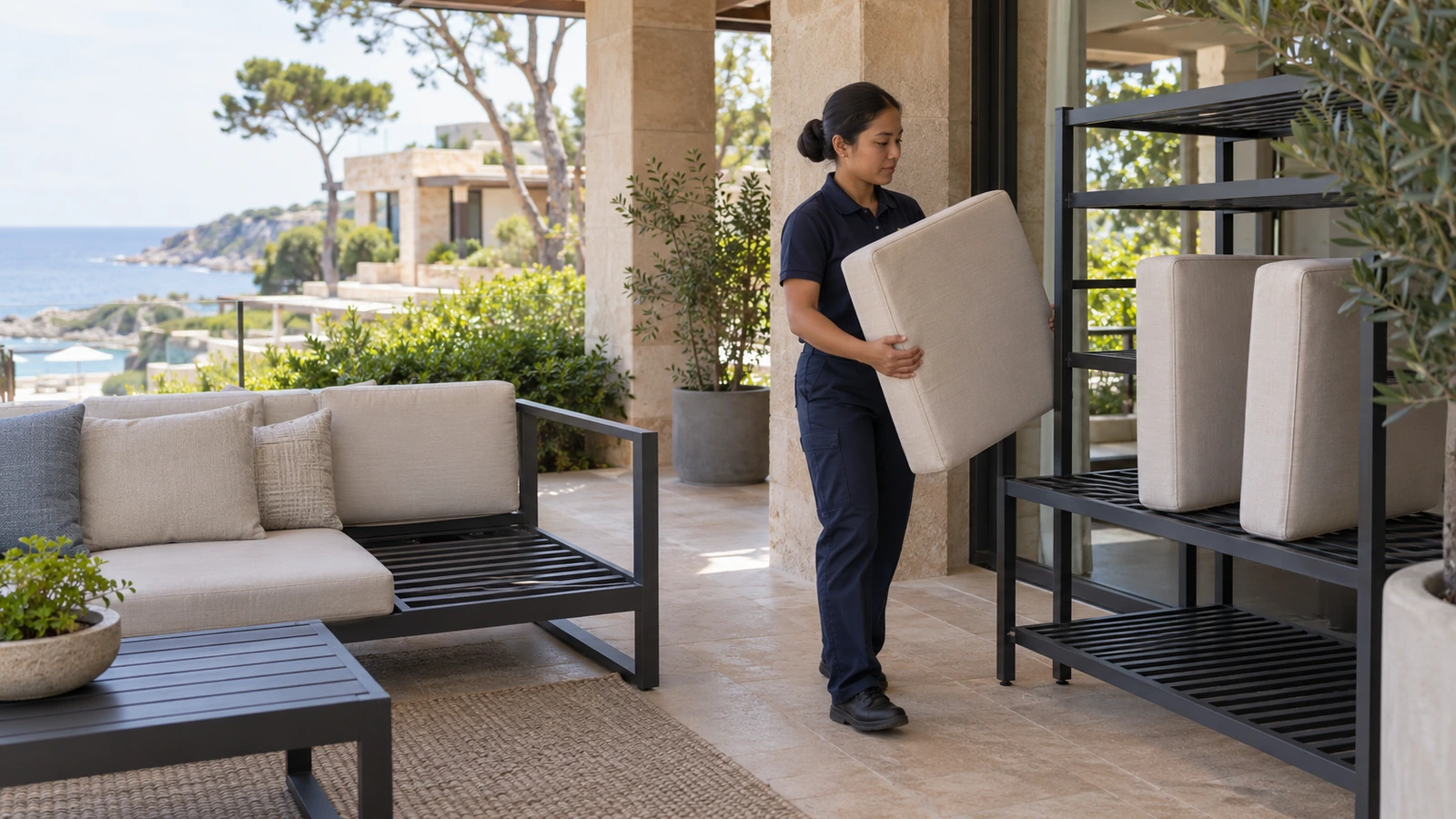
If cushions need to be moved indoors, the hotel needs a suitable place and a workable handling process. If furniture is stacked each evening, the approved stacking arrangement should protect finishes and avoid damaging fabric, woven surfaces or fittings. Covers also need to be compatible with the care instructions; enclosing damp furniture can interfere with drying rather than solve the exposure problem.
A practical review should establish:
- Where water drains and whether staff can clear the drainage route.
- Which surfaces and joints need cleaning access.
- How cushions are removed, dried and stored.
- Where items contact each other during moving or stacking.
- Which feet, glides, covers and other wear components can be replaced.
These details connect specification with daily use. They also help distinguish a product that suits the hotel’s maintenance resources from one whose requirements are unlikely to be met.
Match Supplier Evidence to the Product
Supplier evidence should correspond to the product being offered. A material report, a coated test panel and a complete furniture test answer different questions. Check what was tested, which materials and finishes were used, and whether the proposed model uses the same relevant construction. Where a report covers only one component, retain that boundary rather than extending the result to the entire item.
Test hours are not a service-life forecast.
Accelerated testing can provide useful comparative or qualification information within its scope, but actual coastal performance also depends on exposure, geometry, damage and care. The project should agree which evidence is relevant and what acceptable results mean for the proposed use. Appearance samples, structural evidence and weathering information should remain distinct rather than being treated as interchangeable approvals.
A representative product review can reveal issues that documents do not show clearly. Look beneath the seat, around joints, at the feet and inside accessible mechanisms. Check cushion removal, cleaning access and approved stacking. The purpose is to confirm that the supplied information and physical construction describe the same furniture.
Review Maintenance and Warranty Requirements
Maintenance requirements should be reviewed before selection, not handed over as an unexpected obligation after delivery. Manufacturer instructions may call for more frequent attention in salt-exposed locations, but the appropriate method and frequency belong to the specific product and conditions. Confirm whether the hotel can provide that care, including access to concealed areas, approved cleaning supplies and drying or storage space. If the required routine is unrealistic, reconsider the product or its placement.
Where those requirements reveal a mismatch, compare outdoor furniture materials by exposure before finalising the furniture family. A change of material may help, but it should be assessed as a change to the complete product rather than a shortcut around maintenance.
Warranty terms add another boundary. Confirm that the proposed commercial use is covered and examine how the warranty treats coastal exposure, corrosion, finish appearance, hardware, cushions and required care. Different components may have different terms. A long headline warranty is less informative than a clear explanation of what is covered, which conditions apply and how a claim is assessed.
Keep the Final Specification Traceable
The final specification should leave a traceable connection between the location, the construction and the supporting information. Record the agreed model and configuration, materials, protective finishes, relevant evidence, care instructions and replacement details. If a supplier later changes hardware, a coating or a cushion component, those affected requirements need to be reviewed again.
A useful coastal specification therefore describes more than a corrosion-resistant frame. It sets out how the complete furniture will function in its intended setting and how that condition can be maintained.
Discuss Coastal Hotel Furniture with Gainwell
The right outdoor furniture should support the hotel’s design without creating an unmanageable care routine. Gainwell can help review furniture types, materials, finishes and construction details together, allowing the discussion to reflect the exposure and use of each area rather than rely on a general coastal label.
The Sheraton Beihai Resort furniture project provides a reference for coordinating furniture within a coastal resort environment, with a published scope covering guestrooms, suites and public areas. For exterior spaces, the relevant product requirements still need to be established against the particular location.
If you are comparing options for coastal hotel outdoor furniture, a few site photographs, design references and a description of how the area operates can start the discussion. These give the review a practical basis for exploring product directions and the details that need further development.
Frequently Asked Questions
Can one furniture family be used in every outdoor area of a coastal hotel?
Possibly, but a shared appearance does not mean every configuration suits every location. Confirm whether the manufacturer offers different materials, hardware, cushions or protection for the proposed exposure. Record any location-specific configuration so that furniture is not later moved between areas on the assumption that all pieces are equivalent.
What should be checked when a supplier proposes a component substitution?
Identify which requirements the change affects, including adjacent material contact, corrosion protection, appearance, maintenance and the applicability of previous evidence. Review the proposed replacement against those requirements before acceptance. A similar colour or nominal material description does not establish that the substituted component performs the same role.
What records help with future maintenance and replacement?
Keep the furniture model, component references, material and finish versions, connection details and relevant drawings. Photographs can help identify a part but should supplement those records. For visible replacements, confirm dimensions and appearance against the existing furniture, allowing for possible differences between new and weathered surfaces.