


Smoke smell can often be reduced or removed from furniture, but the right method depends on where the residue has settled and what the furniture is made from. Start with ventilation and removal of loose or surface residue, then use only a cleaning method that is compatible with the exact upholstery, finish, leather or other material.
If the smell has moved beyond the visible surface and into foam, fabric backing, unfinished wood or other porous components, surface cleaning alone may not be enough. At that point, the useful question is no longer “What stronger cleaner should we use?” but whether the affected component needs deeper treatment, repair or replacement.
This guide focuses mainly on cigarette and tobacco smoke odor in hotel furniture. Furniture affected by fire, heavy soot or unknown combustion residue should be treated as a different condition and assessed through the appropriate restoration process rather than routine guestroom cleaning.
First Find Out Where the Smoke Smell Is Coming From
Before choosing a cleaning product, determine whether the odor is mainly in the room air, sitting on furniture surfaces or absorbed into the furniture itself.
Recent or limited exposure may leave most of the odor in the room and on exposed surfaces. Ventilation, room cleaning and compatible surface care may be enough to improve the condition.
Longer exposure is different. Tobacco smoke residue can settle on fabrics, finished casegoods, leather, hardware, seams, undersides and other surfaces. Upholstered pieces may also retain odor below the visible cover.
A practical way to assess the furniture is to separate the problem into three levels.
Recent exposure:
The room and furniture smell smoky, but there is little indication that the odor has penetrated internal materials.
Surface contamination:
Odor remains on exposed upholstery, finished wood, laminate, leather or other surfaces and may be accompanied by visible or transferable residue.
Absorbed odor:
The visible surface has been cleaned, but the smell returns after the item has completely dried. This can indicate that foam, batting, fabric backing, unfinished interior surfaces or another porous component is retaining the odor.
Do not make that decision while the furniture is still wet from cleaning or strongly scented by a cleaning product. Allow it to dry fully and reassess it in neutral air.
The room also needs to be checked as a whole. A chair may seem to be the source while curtains, carpet, wall finishes, bedding or another upholstered item are still contributing to the smell.

Work From the Least Invasive Method to the Deeper Treatment
Once the likely odor source has been identified, start with the lowest-risk treatment before moving to anything more intensive.
Begin with ventilation and room-source control. If the room itself still contains smoke residue, cleaning one piece of furniture in isolation may produce only a temporary improvement.
Next, remove loose particles and dust using a method appropriate for the item. Pay attention to seams, crevices, undersides and other areas where residue can collect.
Before applying any cleaning product:
- Confirm the material or finish where possible
- Check current care instructions
- Test an inconspicuous area
- Protect adjacent materials
- Avoid unnecessary saturation
- Keep excess liquid away from edges, seams and joints
Then clean the exposed residue using a compatible method and allow the furniture to dry completely before evaluating the result.
Drying is part of the assessment, not just the end of the cleaning process. An item that smells acceptable while damp may release odor again after it warms and dries. Upholstery or foam that remains wet can also create another maintenance problem.
If the smell remains after one controlled treatment, do not automatically repeat the process with more chemical, more moisture or more heat. Reassess where the odor is coming from first.
Match the Cleaning Method to the Furniture Material
The general cleaning sequence may be similar, but the actual method should change with the furniture material.
A guestroom can contain upholstery, foam, veneer, lacquer, laminate, leather, metal hardware and adhesives within only a few pieces of furniture. These materials do not necessarily tolerate the same cleaning products or levels of moisture.
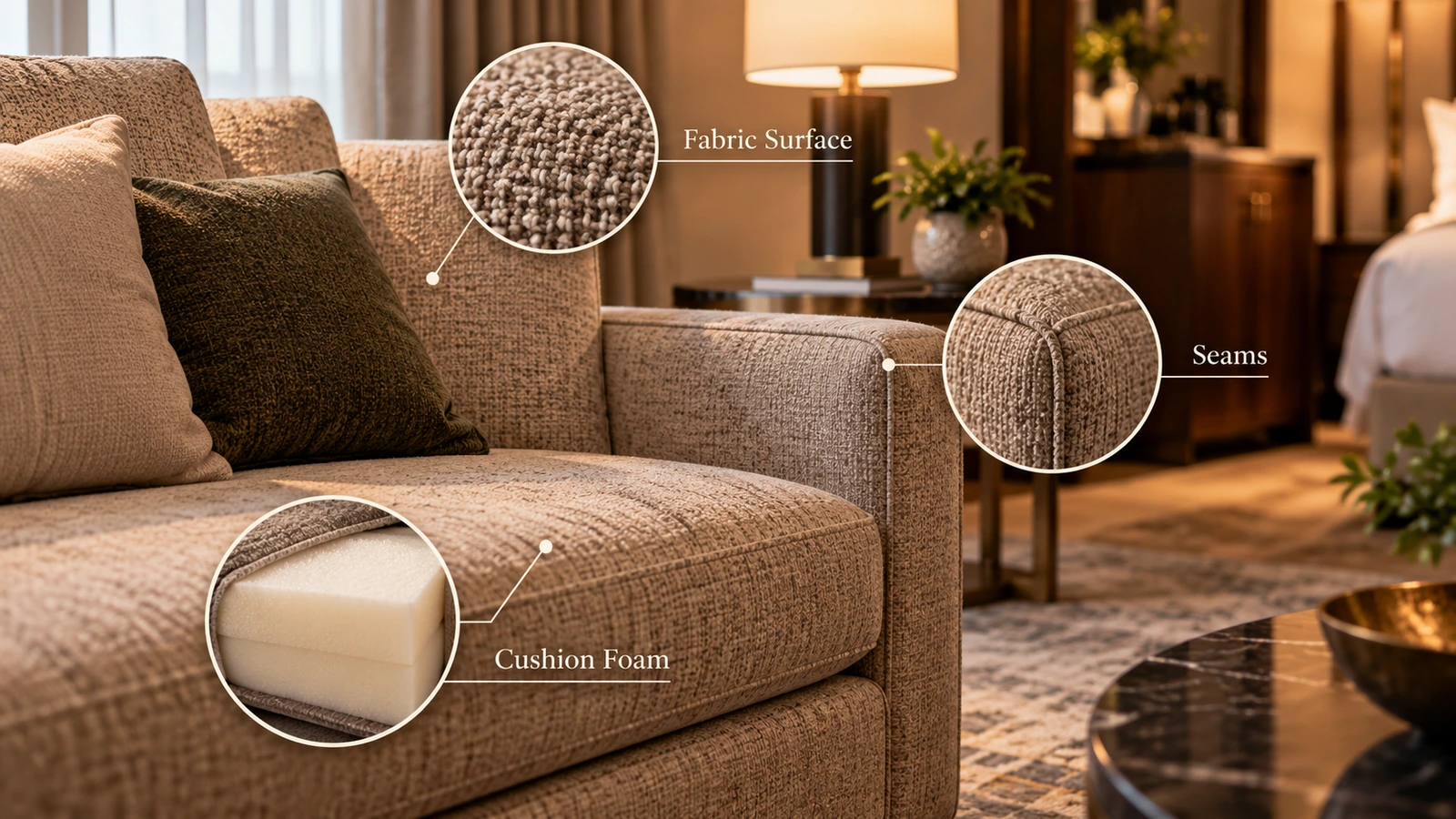
Upholstery and Cushion Foam
With upholstered seating, first identify the cover material and check any available care instructions. Chairs, sofas and benches can combine visible upholstery with foam, backing, seams and internal components that have different cleaning limits.
Vacuuming can remove loose dust and particles from the surface and seams, but it should not be treated as a complete smoke-removal method. If residue is attached to the textile, the cover may require a compatible cleaning process.
A removable cover does not automatically mean it is machine washable. A textile that tolerates surface cleaning does not mean the foam underneath can be saturated. Steam or extraction cleaning may also be unsuitable for some fabrics, backing systems, adhesives or cushion constructions.
Before treatment, check:
- Whether the cover is removable
- The specified cleaning method
- Seam and zipper construction
- Cushion filling or foam type
- Whether moisture can drain and dry completely
- Whether the insert can be inspected separately
If the cover smells clean after treatment but the odor returns after the cushion is reassembled, the foam or internal padding may be the actual source.
Odor-absorbing products such as baking soda may help reduce some odors in certain situations, but they should not be treated as proof that smoke residue has been removed from the textile or internal cushion.
Wood, Veneer and Finished Casegoods
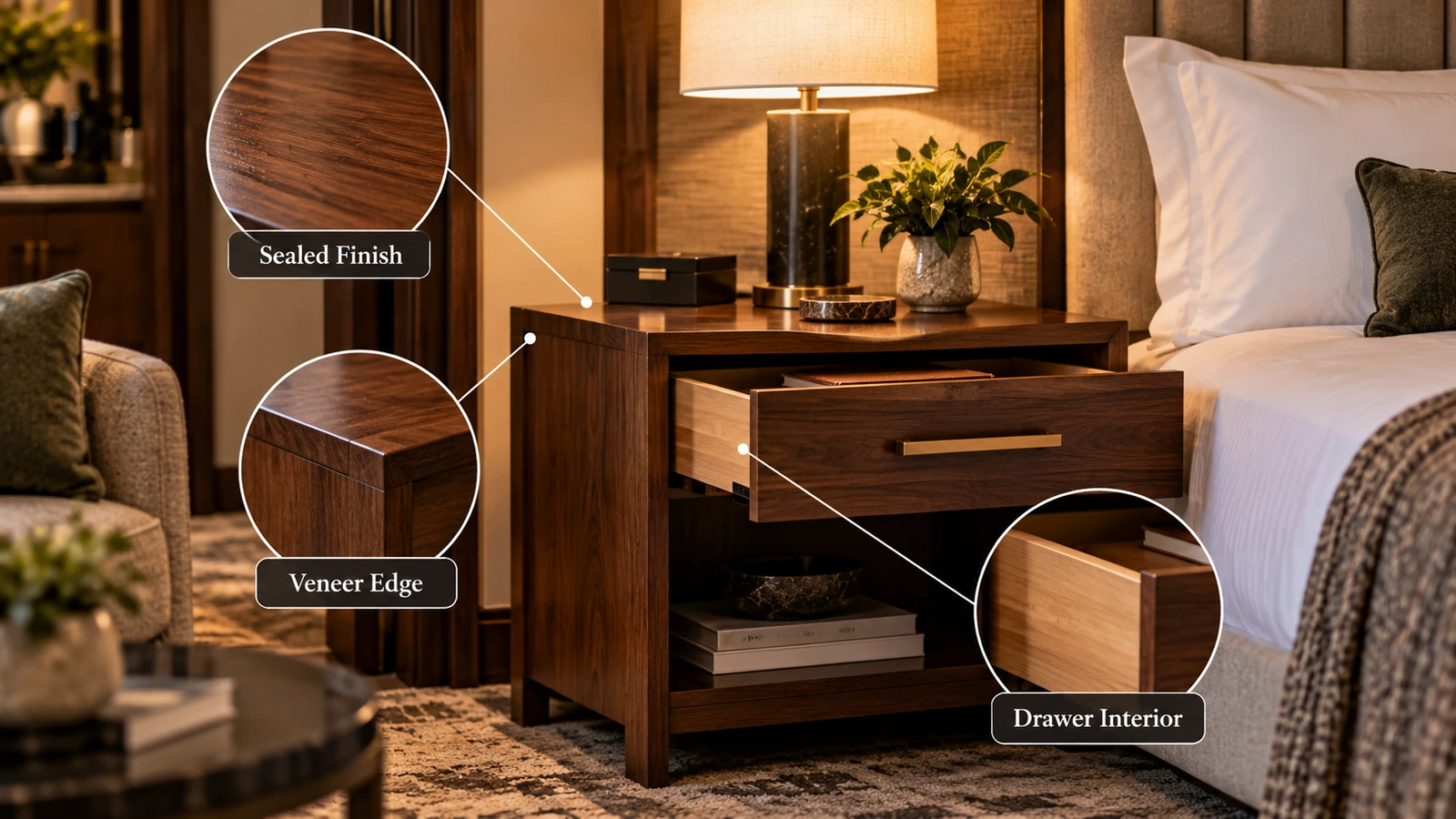
Hotel casegoods and storage such as nightstands, wardrobes, minibar cabinets and consoles may use veneer over a panel substrate, solid timber components, laminate, paint, lacquer or another finish.
The visible appearance alone does not tell you which cleaner the surface can tolerate.
Start by identifying the finish where possible. For sealed surfaces, remove surface residue using a method compatible with that finish and avoid leaving excess liquid around edges, joints, hardware openings or veneer interfaces.
Do not assume vinegar and water are safe simply because the furniture looks like wood. A cleaning mixture that works on one finish may dull, soften or otherwise affect another.
Unfinished or exposed wood presents a different problem because odor can move more easily into the material. Drawer interiors, cabinet backs, concealed timber components or damaged finish areas may continue to release odor even after the visible exterior has been cleaned.
At that point, increasing cleaner strength is usually less useful than determining whether the affected area requires controlled refinishing, sealing or replacement.
Leather and Coated Upholstery
Leather, coated fabric and leather-look materials should not be treated as interchangeable.
Before cleaning, confirm the exact material if project or supplier records are available. Different finishes and coatings can respond differently to water, detergents, conditioners and solvents.
Use products and methods suited to the identified surface rather than applying a textile upholstery method simply because both materials are soft.
The visible leather or coated surface may also not be the only odor source. Foam, backing or padding underneath can retain smoke odor even when the face material has been cleaned successfully.
If the surface changes during cleaning—for example, in gloss, color or hand feel—the item should move into a material or repair review rather than receiving another round of increasingly aggressive treatment.
Mixed-Material Furniture
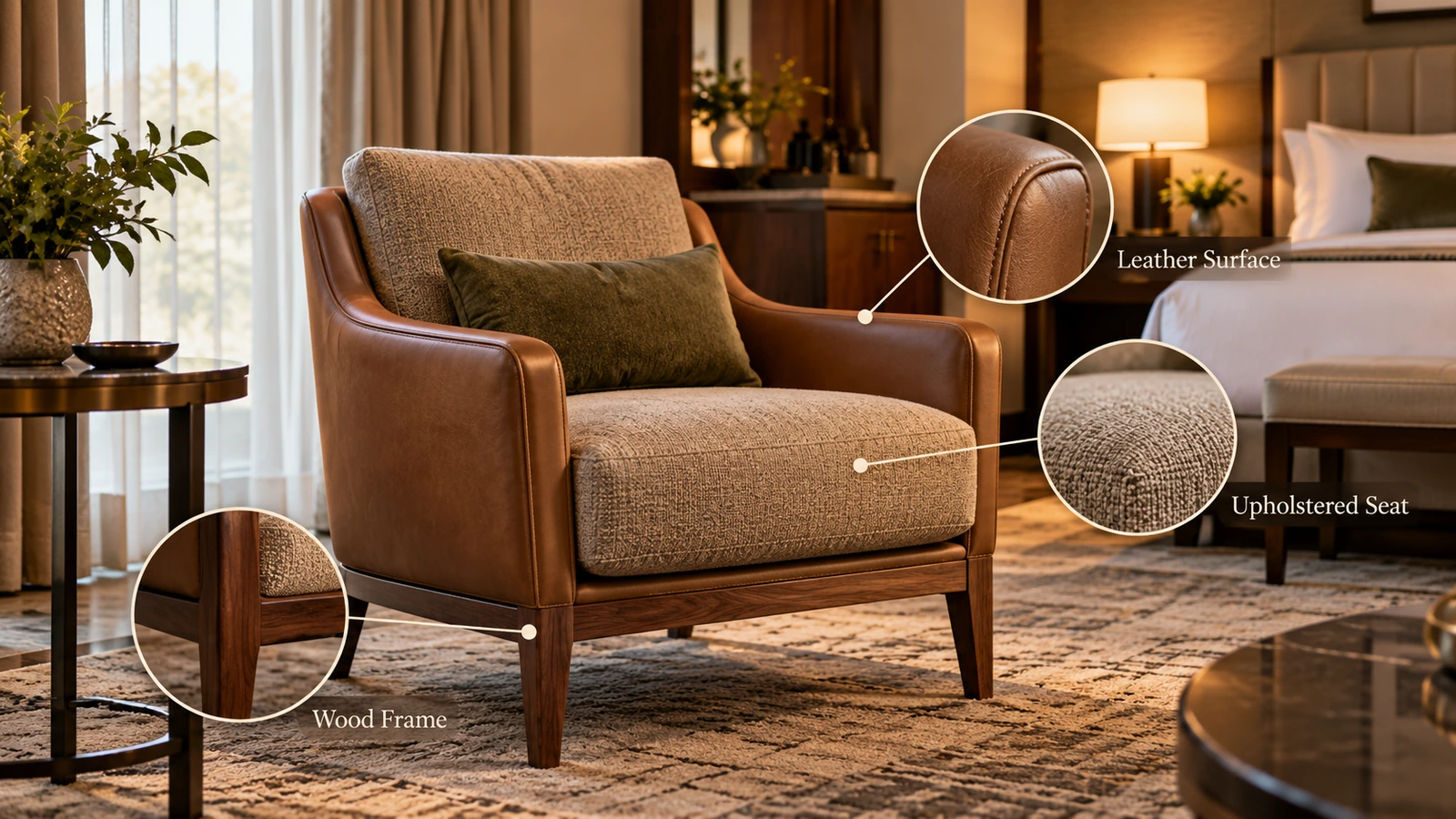
Many hotel furniture pieces, including loose furniture and architectural millwork and fixed furniture, combine several material systems in one assembly.
An upholstered lounge chair may include fabric or leather, foam, timber arms, metal hardware, glides, adhesives and decorative trims. A headboard may combine textile, padding, wood-based panels, metal details and integrated electrical components.
One cleaning method should not automatically be extended across the complete assembly.
Where components cannot be separated, the most restrictive material should limit the treatment method. If the upholstery can tolerate moisture but the timber edge, adhesive or concealed panel cannot, the whole chair should not be treated as though it were only a fabric surface.
This is why smoke-odor treatment should begin with the actual furniture construction rather than the room type or product name.
If the Smell Remains, Reassess Before Using a Stronger Method
Persistent odor does not necessarily mean the cleaner was too weak. It may mean the contamination is sitting in a component the cleaner never reached.
That distinction matters because a more aggressive treatment can damage the furniture without removing the source of the smell.
Vinegar is not a universal furniture cleaner.
It may be suitable for some surfaces under appropriate care instructions, but it should not automatically be applied to wood finishes, leather, coated materials, metals or mixed furniture assemblies.
Baking soda is not the same as residue removal.
It may reduce odor in some applications, but lower odor does not confirm that smoke residue has been removed from upholstery, backing or foam.
Air fresheners and fragrances do not remove the source.
They change what the room smells like for a period of time. They should not be used as the test for whether smoke-affected furniture has been restored.
Steam, bleach, strong oxidizers or ozone should not be default furniture treatments.
These methods can introduce material, operational and safety considerations that are different from routine surface cleaning. They should only be used within an appropriate professional process and where the affected materials and equipment instructions allow them.
When odor remains after the material-safe cleaning route has been completed, investigate the furniture construction before making the cleaning method more aggressive. The next question is whether the remaining odor is still a surface-cleaning problem or is coming from foam, backing, unfinished wood or another component that needs a different response.
When Is Surface Cleaning No Longer Enough?
The furniture condition after complete drying is usually more useful than the result immediately after cleaning.
Use what happens next to decide whether the current treatment has reached its limit.
| Condition | Next Decision |
| Odor is no longer noticeable after compatible cleaning and full drying | Complete the normal condition inspection |
| Odor returns after the item dries | Check foam, backing, unfinished surfaces or concealed components |
| Removable cushion still smells after the cover is cleaned | Assess the insert or foam separately |
| Surface finish has been damaged or weakened | Move to repair or refinishing review |
| Odor has been present for a long period and is strongly embedded | Consider professional restoration assessment |
| Fire soot or unknown combustion residue is present | Do not treat as routine smoke-odor cleaning |
| Repeated treatment produces little improvement | Compare further restoration with component or furniture replacement |
This prevents a hotel from repeatedly cleaning the same visible surface while the actual odor source remains underneath it.
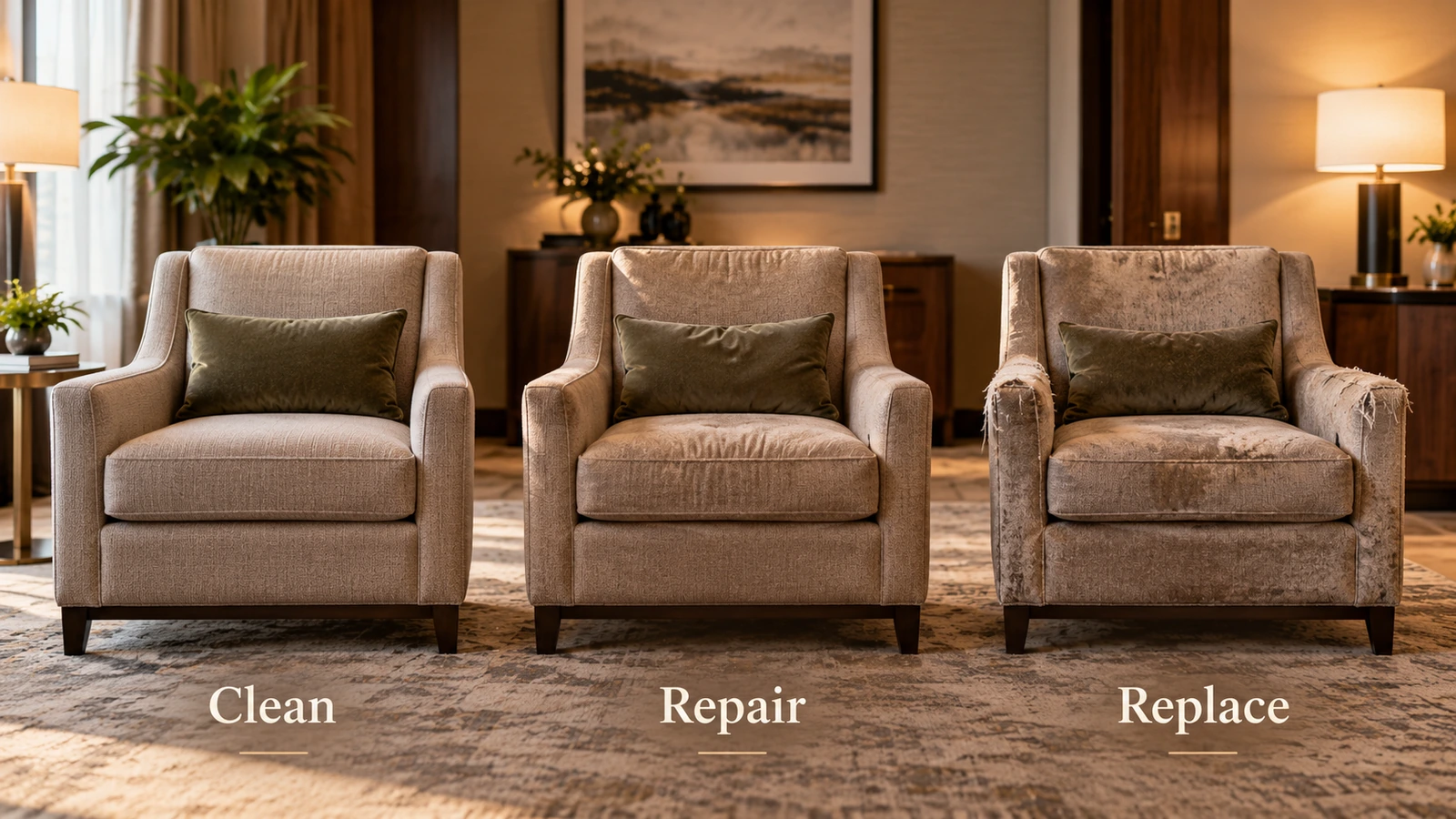
Clean, Repair or Replace? Make the Decision by Component
The whole piece of furniture does not always need the same outcome.
For an upholstered chair, the frame may remain serviceable while the cover or foam requires replacement. For a sofa, one cushion insert may retain most of the odor while the rest of the piece responds successfully to cleaning.
A casegood can present the opposite problem: the sealed exterior may clean well while unfinished drawer interiors or concealed panel surfaces continue to release odor.
The decision should therefore be based on:
component + material + contamination depth + treatment result
rather than on the furniture category alone.
For example, replacing the foam in an otherwise sound chair may be more practical than repeatedly treating the whole assembly. In another case, damaged finish combined with deeply absorbed odor in a casegood may make replacement more reasonable than refinishing.
Hotels should also consider consistency across repeated furniture.
If a room or property contains several visually identical chairs but one has been heavily refinished, the repair can create a noticeable difference in color, sheen or texture. The decision therefore needs to consider both the individual item and the wider furniture family.
Return the Furniture to Service and Reduce Future Odor Problems
A furniture item should not return to a guestroom simply because the strongest odor is no longer noticeable immediately after cleaning.
First confirm that the furniture is fully dry and that removable components have been reassembled correctly.
Then check:
- Whether the odor returns after drying
- Whether visible residue remains
- Whether cleaning affected color, finish or texture
- Whether seams, zippers, cushions and hardware remain functional
- Whether removable components have been refitted correctly
- Whether the furniture remains stable and suitable for normal use
The room itself also needs to be considered.
If carpet, curtains, bedding, wall finishes or other furniture still retain tobacco odor, returning one cleaned chair or nightstand may not produce a smoke-free guestroom. The room-level source should be addressed before the furniture result is judged.
Future odor problems can also be easier to manage when maintenance is considered during furniture specification.
Useful features include:
- Removable or replaceable upholstery covers where appropriate
- Replaceable cushion or foam inserts
- Clearly documented material and finish identities
- Supplier care instructions retained with the furniture records
- Finishes compatible with the hotel’s routine cleaning programme
- Access to seams, undersides and serviceable components
- Replaceable parts rather than assemblies that must be discarded as one unit
This does not make furniture immune to smoke exposure. It gives hotel operators more practical options when odor, stains or other maintenance issues appear during use.
If an odor appears after new furniture is installed rather than after tobacco exposure, the source may be different. The guide to new furniture smell covers odor associated with newly installed furniture and materials separately.
Custom Hotel Furniture With Maintainable Material Systems
Furniture intended for years of hotel use should be considered not only in terms of appearance and initial performance, but also routine cleaning, maintenance and component replacement. Upholstery, finishes, cushion construction, casegood surfaces and serviceable parts all affect the options available when odor, stains or wear appear later.
Gainwell develops custom hospitality furniture including seating, casegoods, beds, headboards and fixed furniture, with material and finish coordination based on the project requirements and intended use.
If you are developing a guestroom furniture package, you can send the furniture schedule and material requirements together with drawings, quantities, project location and maintenance expectations so the furniture scope can be reviewed against the actual operating conditions.
Frequently Asked Questions
Can cigarette smoke smell be completely removed from furniture?
Sometimes, but the result depends on the material and how deeply the odor has penetrated. Surface contamination is generally easier to address than odor held in foam, padding, unfinished wood or other porous components. Some heavily affected parts may require repair or replacement.
Should smoke-affected furniture be cleaned inside the guestroom?
Not necessarily. If treatment involves moisture, cleaning products or extended drying, moving the item to a suitable service area can make ventilation, inspection and drying easier while reducing the risk of affecting surrounding furnishings. Large or fixed furniture may need to be treated in place, with adjacent materials protected.
How can a hotel tell whether the smell is coming from the furniture or the room?
Check the furniture after it has been cleaned, fully dried and, where practical, separated from other odor sources. If the item smells acceptable outside the affected room but the odor returns after it is brought back, carpet, curtains, wall finishes or other furnishings may still be contributing to the problem.
What information should be recorded before furniture is sent for professional treatment?
Record the furniture item or room number, material or finish where known, the likely duration of smoke exposure, previous cleaning attempts, visible damage and whether the odor returns after drying. This gives the service provider a clearer starting point for deciding which components need closer inspection.