


Faux leather furniture is safest to clean with a soft cloth and a cleaner that is compatible with the specific surface, using only as much moisture and friction as necessary. The goal is not simply to remove visible dirt. It is to clean the furniture without dulling, softening, discoloring or otherwise damaging the coated finish.
That matters because “faux leather” is a broad description rather than one identical material. Hotel chairs, benches, sofas and upholstered panels may use PU, PVC or other coated upholstery systems with different finishes, backings and care instructions. A method that works on one product should not automatically be applied to another.
A practical cleaning process therefore starts by identifying the surface and its condition, then choosing a compatible cleaner, carrying out controlled cleaning and stopping when the remaining problem appears to be coating damage rather than removable soil.
Check the Surface Before You Start Cleaning
Before choosing a cleaner, inspect the furniture in good light and decide what type of problem you are dealing with.
Start with any available material schedule, supplier information or care instructions. If the exact upholstery article is known, follow its current cleaning guidance rather than relying only on the broad description “faux leather.”
This is especially important for seating and upholstery used in hotels, where visually similar chairs or benches may use different cover materials, backing systems or surface finishes.
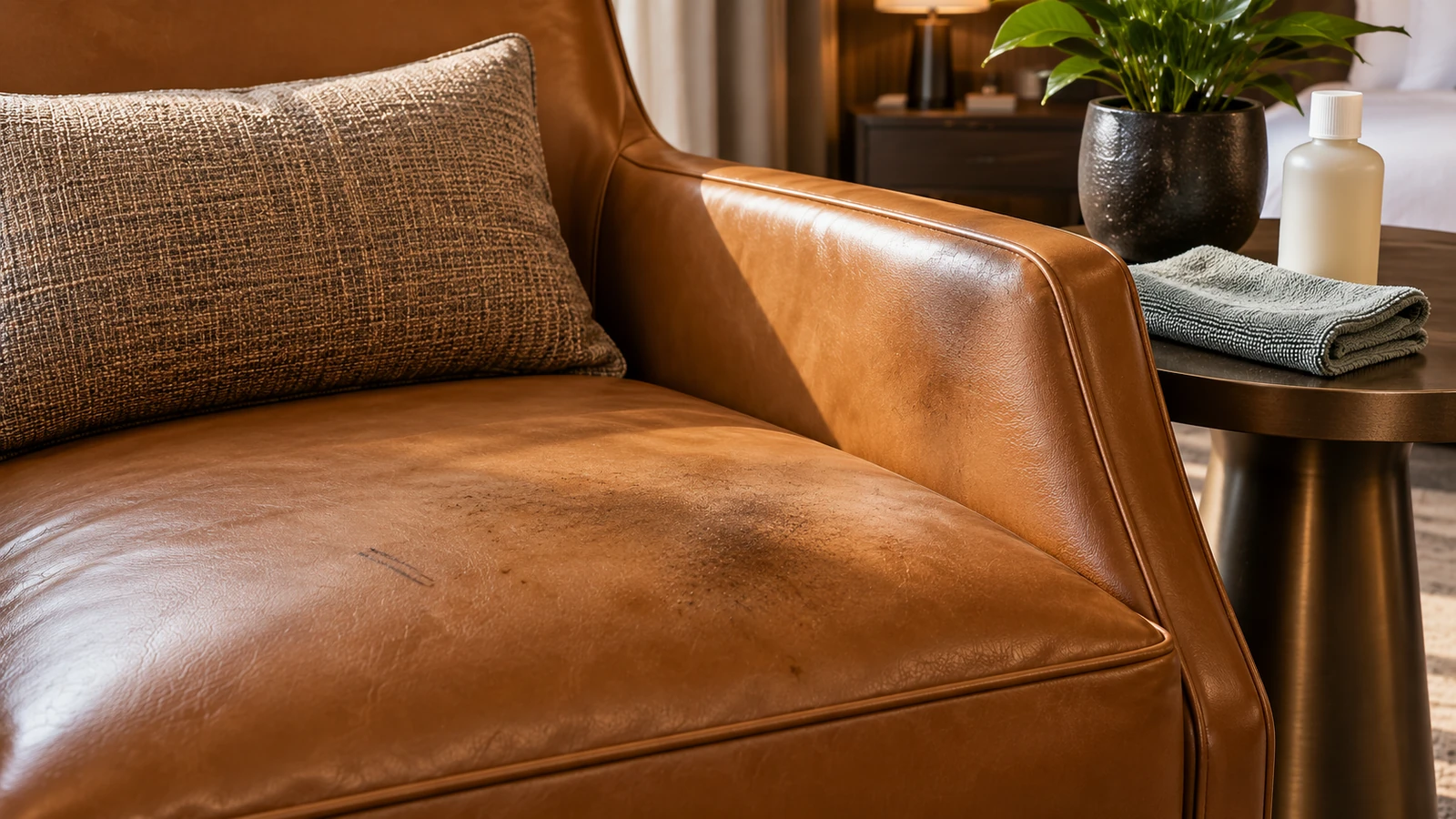
Next, inspect the visible coating.
Look for:
- Loose dust or ordinary grime
- Body oils in frequently touched areas
- Food or drink residue
- Dye or color transfer
- Cleaner streaks
- Sticky or tacky areas
- Uneven sheen
- Cracking around flex points
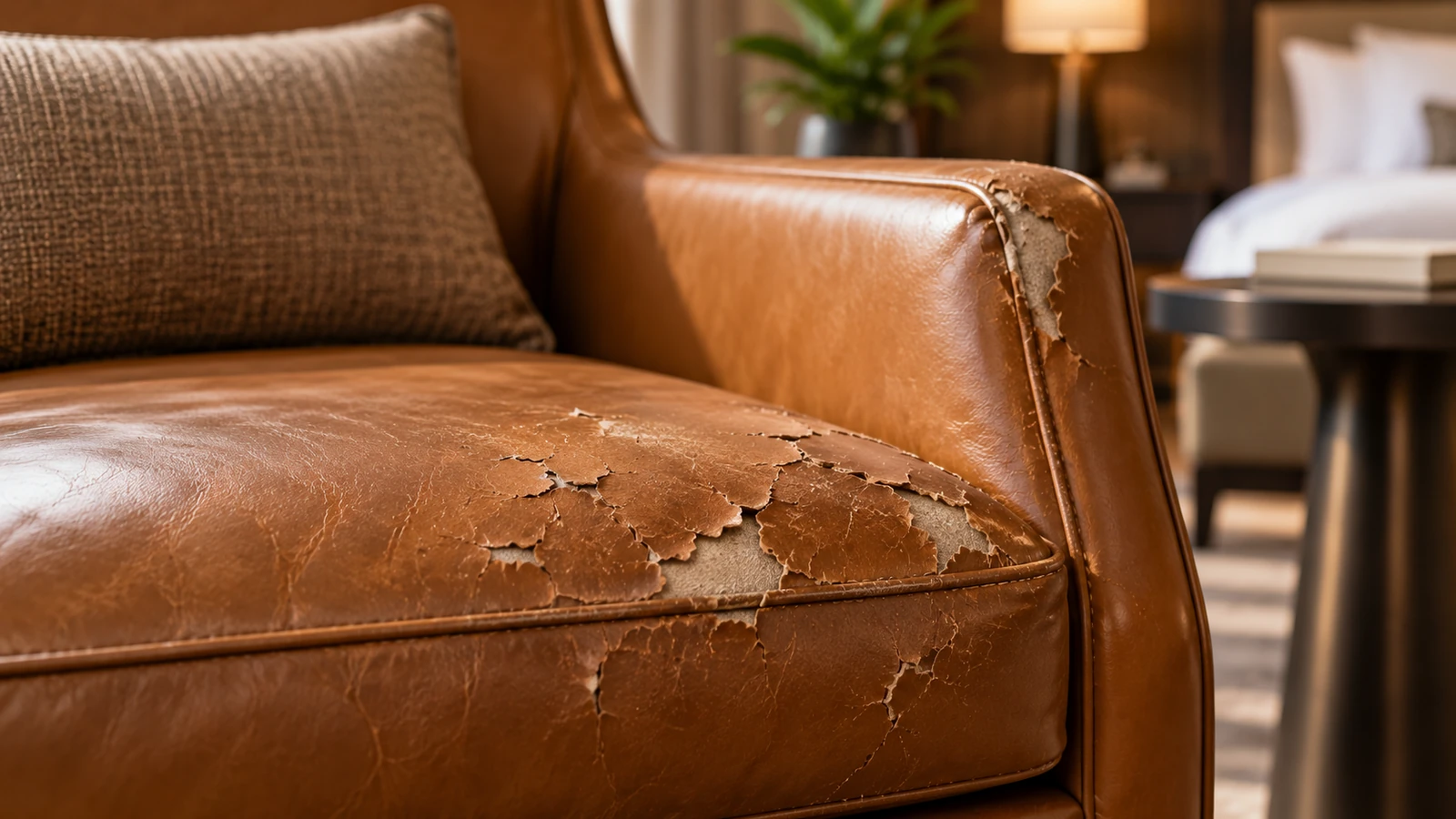
- Peeling or flaking
- Color transferring onto the cleaning cloth
This first check helps separate dirt that can be removed from surface change that cleaning cannot reverse.
A dark mark may be ordinary soil, but it can also be dye transfer or discoloration in the coating. A dull patch may come from cleaner residue, or it may indicate wear. A sticky surface may need residue removal, but it can also indicate that the coating itself is deteriorating.
If the cause is uncertain, test the proposed method on a small, inconspicuous area before treating the visible surface.
Choose a Cleaner for the Surface, Not Just the “Leather” Label
The phrase “leather cleaner” does not automatically mean a product is suitable for faux leather.
Natural leather, coated leather, PU upholstery, PVC upholstery and other leather-look materials can respond differently to cleaners, conditioners and solvents. The surface appearance alone is not enough to confirm compatibility.
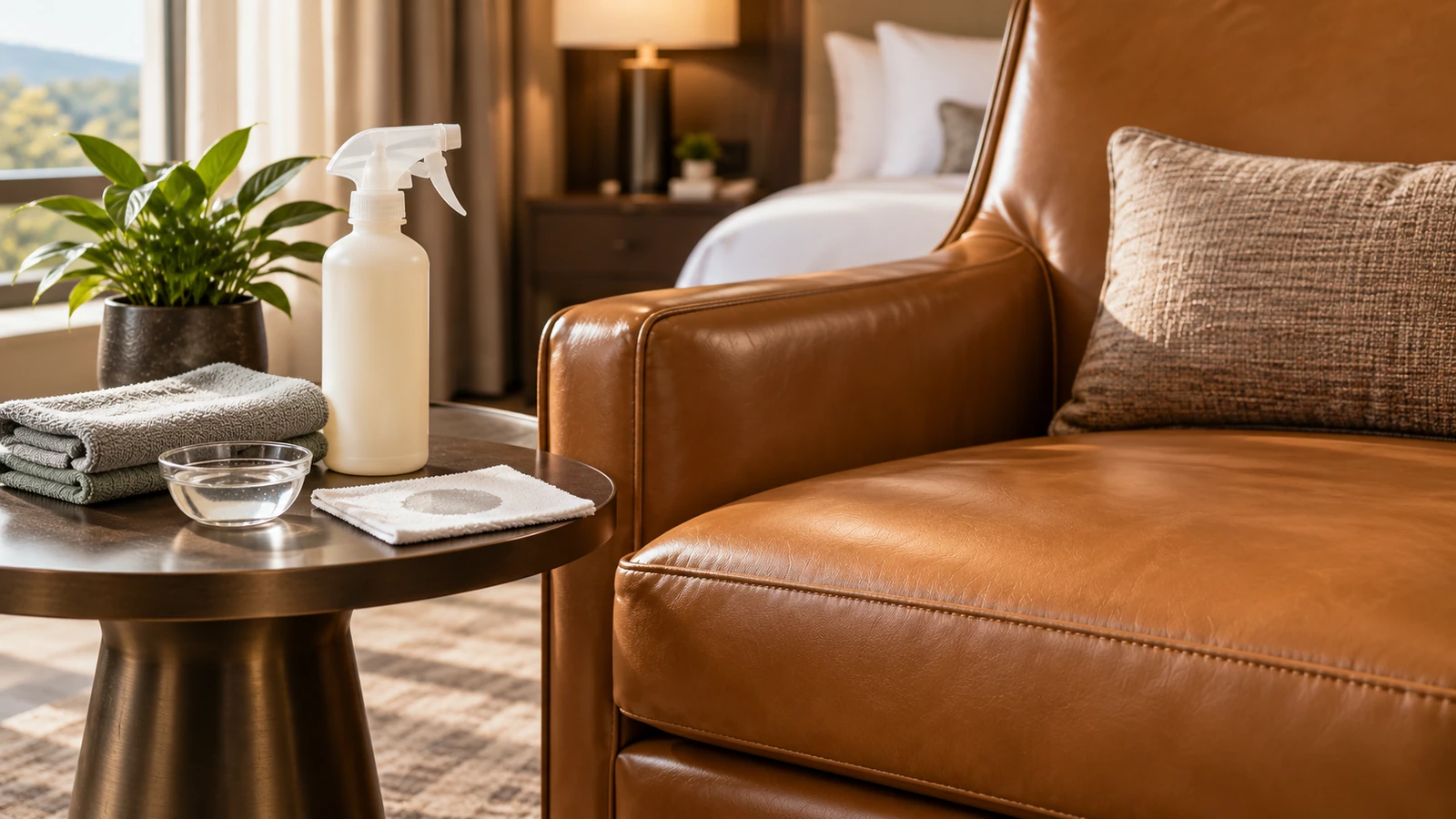
For routine cleaning, use the following order of preference.
Use the specified cleaner or method first.
If the upholstery manufacturer or supplier provides current care instructions, those should guide the cleaning process.
Use a permitted mild cleaner when appropriate.
If a mild solution is allowed, follow the specified dilution and application method instead of making it stronger for difficult soil.
Treat general-purpose leather products with caution.
A cleaner or conditioner designed for natural leather should not automatically be used on a synthetic coated surface.
This is particularly important with conditioners.
Natural leather may use products intended to maintain the hide, but faux leather is generally a coated surface. Oil, cream or conditioner should therefore not be added simply because the furniture looks like leather.
The same caution applies to household remedies. Vinegar, alcohol, oils and other commonly suggested products should not be treated as universal faux leather cleaners. A product that appears harmless on one coating may change the gloss, color, texture or flexibility of another.
A suitable cleaner should remove the intended soil while leaving the dry surface essentially unchanged.
Clean Faux Leather Without Stripping the Finish
Once the surface and cleaner have been identified, use a controlled cleaning process rather than immediately attacking the visible mark.
Begin by removing dry debris with a soft microfiber cloth or a suitable soft vacuum attachment. Pay attention to seams, creases and the junction between the seat and back, where particles can accumulate.
Removing dry soil first helps prevent particles from being rubbed across the coating once moisture is introduced.
Next, prepare the cleaner according to the applicable care instructions. Where practical, apply the solution to the cleaning cloth instead of heavily spraying the furniture.
The cloth should be damp rather than saturated.
Work in small sections with light pressure. Give more attention to high-contact areas such as armrests and seat fronts, but avoid repeatedly rubbing one spot simply because the mark has not disappeared immediately.
Keep excess moisture away from:
- Stitched seams
- Piping
- Buttoning
- Open edges
- Gaps between upholstery panels
- Junctions with wood or metal components
The visible coating may tolerate light damp cleaning while the backing, foam, adhesive or adjacent furniture component does not tolerate the same amount of moisture.
After cleaning, remove any remaining product residue as required by the care instructions.
This step matters. Cleaner left on the surface can cause streaking, attract fresh dirt or leave a tacky feel that may later be mistaken for material deterioration.
Allow the furniture to dry before judging the result.
Then check:
- Color
- Sheen
- Surface feel
- Stickiness
- Cleaner residue
- The original mark or stain
If the furniture is clean and the surface remains unchanged, stop there. More cleaning is not automatically better maintenance.
Treat Common Marks Without Scrubbing Harder
Not every mark should be treated in exactly the same way. Hotels also see different types of soil depending on where the furniture is used.
Body Oils and Everyday Grime
Armrests, seat fronts, head-contact areas and frequently handled chair backs can gradually look darker or slightly greasy.
Remove loose soil first, then use the approved routine cleaner in small sections. Wipe away product residue and inspect the surface after drying.
If light cleaning no longer produces improvement, stop rather than increasing pressure. Repeated scrubbing can create a visible difference in sheen or texture between the treated area and the rest of the furniture.
Food and Drink Spills
Fresh spills are usually easier to manage than residue that has dried onto the surface.
Blot or lift the spill instead of spreading it across the upholstery. Then clean the remaining mark with the approved method.
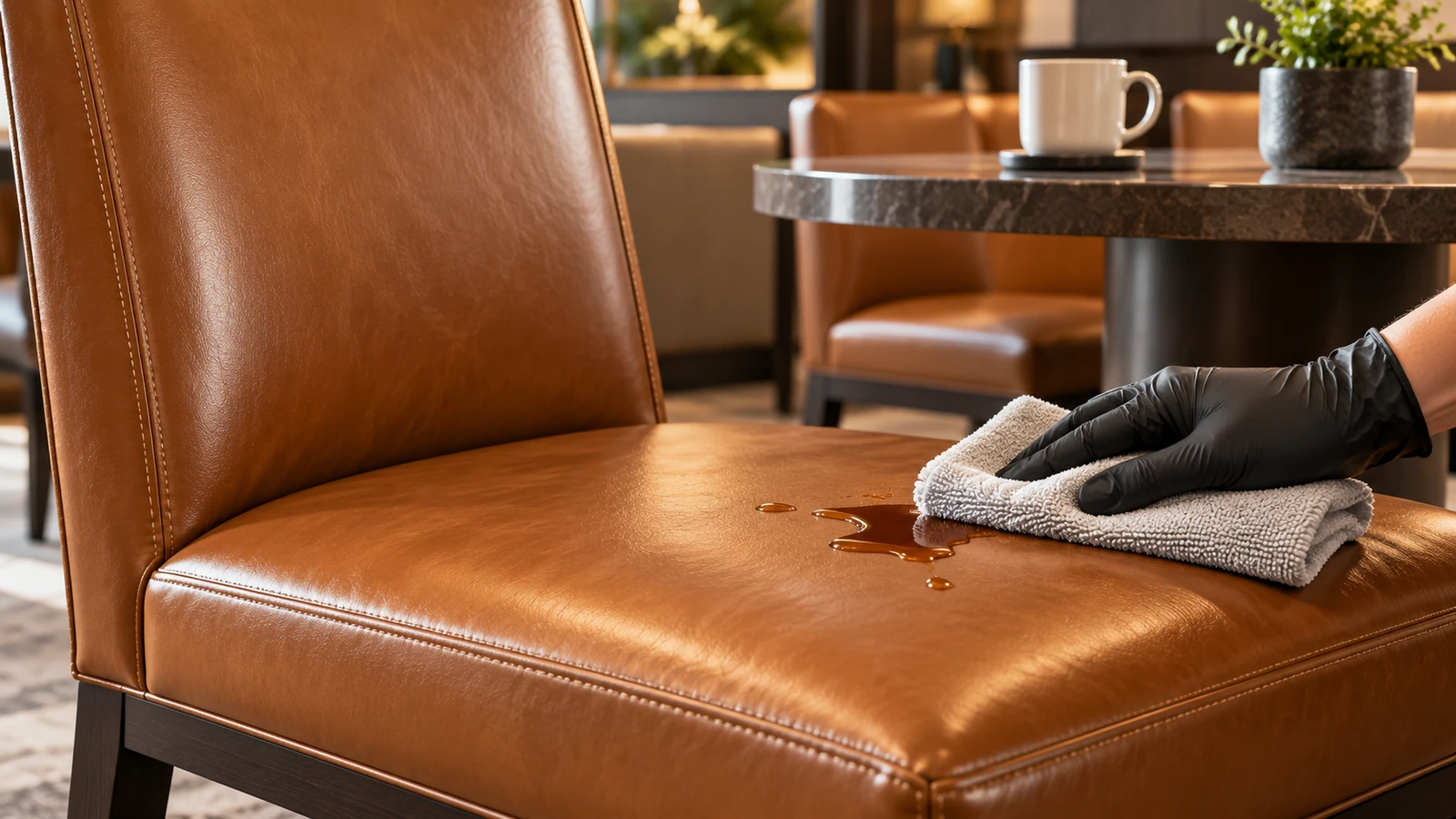
Pay particular attention to seams and panel junctions so liquid does not collect beneath the visible surface.
Once the area is dry, inspect both the stain and the finish.
If a faint ring remains, do not automatically move to a stronger chemical. First determine whether the remaining mark is still removable residue or whether the coating itself has changed.
Dye Transfer and Dark Marks
Color transfer from clothing, luggage or other materials can be more difficult than ordinary soil.
Begin with the normal compatible cleaning process. If the mark remains, avoid hard scrubbing or immediately switching to a stronger solvent.
Instead, watch the surface while cleaning.
If the surrounding area becomes lighter, shinier, duller or tacky while the mark itself remains, stop. The treatment may be changing the coating faster than it is removing the stain.
At that point, the question is no longer “How do we scrub harder?” but “Is this still dirt, or has the surface itself been affected?”
Know When Cleaning Will Not Fix the Surface
Cleaning can remove soil, residue and some stains. It cannot rebuild a coating that has already deteriorated.
This distinction is particularly important in hotels, where repeated housekeeping treatment can turn a small finish problem into a much more visible damaged area.
| What You See | What It May Mean | What to Do Next |
|---|---|---|
| Dust or removable surface film | Routine soil | Continue compatible cleaning |
| Cleaner streaks | Excess product or residue | Remove residue and allow to dry |
| Persistent color transfer | Stain or coating interaction | Stop repeated scrubbing and review |
| Sticky or tacky surface | Residue, incompatibility or coating deterioration | Stop adding cleaner and reassess |
| Peeling or flaking | Coating failure | Cleaning will not restore the finish |
| Cracks around flex points | Material or finish deterioration | Assess upholstery condition |
| Color lifts onto the cloth | Surface finish may be affected | Stop treatment |
Peeling faux leather should not be treated as an especially difficult cleaning job. Once the coating is separating from the layer beneath it, additional wiping, conditioning or stronger chemicals will not recreate the original finish.
Cracking should be viewed in the same way. The surrounding surface may still need routine cleaning, but cleaning is not the repair.
If the upholstery looks clean but the furniture still carries cigarette or smoke odor, the source may be below the visible coating or elsewhere in the room. For that separate problem, see the guide to removing smoke smell from furniture.
Adjust the Care Routine to How the Furniture Is Used
A single cleaning frequency does not make sense for every faux leather item in a hotel.
A guestroom chair, lobby sofa and restaurant banquette may use visually similar upholstery but face very different levels of contact and soil.
A guestroom chair may mainly require dust removal, occasional spot cleaning and inspection during room turnover. The wider guestroom furniture package can include seating alongside beds, casegoods and other surfaces that follow different care requirements.
Lobby seating may experience continuous contact, making armrests, seat fronts and other high-touch surfaces worth checking more frequently.
Restaurant or bar seating is more likely to encounter food, beverages and oily residue. Prompt spot treatment can matter more than a scheduled “deep clean.”
A decorative upholstered panel may receive very little direct contact and should not automatically follow the same maintenance frequency as a seat.
Cleaning frequency should therefore follow actual use, visible soil and the approved care method rather than one calendar rule applied across the whole property.
Disinfection also needs separate consideration.
If a property requires routine disinfection of faux leather surfaces, confirm that the disinfectant is compatible with the specific coating. A product approved for a hard countertop should not automatically be applied to coated upholstery.
Follow the disinfectant requirements for concentration, application and contact time while also respecting the upholstery care limits. If those requirements conflict, the method should be reviewed before being repeated across multiple chairs or rooms.
Make Future Cleaning Easier Through Material Selection
Maintenance becomes easier when cleaning requirements are considered before the furniture is installed.
When faux leather or another coated upholstery is being selected for a new project, the team should look beyond color and texture and confirm practical information such as:
- Approved routine cleaners
- Disinfectant compatibility where required
- Likely exposure to food, drinks or body oils
- Current care instructions
- Expected cleaning frequency
- Finish response to the property’s normal cleaning process
- Repair or reupholstery options
- How material substitutions will be documented
Two materials may look similar on a sample board while having different coatings, backings or permitted cleaning methods.
That makes maintenance information part of material selection rather than something to investigate only after the first difficult stain appears.
For broader furniture development, the hotel furniture range includes seating and other custom furniture categories that may need different surface and maintenance decisions within the same project.
Cleaning expectations can also be considered alongside technical development, sampling and production control so the selected upholstery, approved sample and production furniture are based on the same material information.
For hotel operators, the most useful upholstery is not simply the surface that looks good when new. It is one whose appearance, cleaning route and maintenance limits can all be understood before the furniture enters service.
Custom Hotel Furniture With Maintainable Upholstery
Hospitality seating should be developed with its operating environment in mind. Intended use, upholstery construction, cleaning exposure, finish requirements and the practical route for repair or replacement can all affect how well an item performs after installation.
Gainwell develops custom hotel seating and upholstered furniture around project-specific drawings, materials, finishes and operating requirements. Upholstery decisions can be coordinated with the intended hotel zone, cleaning expectations, samples and production information before the furniture package is released.
If you are developing a hotel seating package, you can share the furniture schedule, drawings, intended use zones, quantities and maintenance expectations through faux leather furniture to review the relevant upholstery requirements against the project conditions.
Frequently Asked Questions
Can peeling faux leather be fixed by cleaning?
No. Cleaning can remove dirt from the remaining surface, but it cannot restore a coating that is already peeling or separating from the material underneath. The affected upholstery should be assessed for repair, reupholstery or replacement rather than treated with increasingly aggressive cleaners.
Why does faux leather feel sticky after cleaning?
A sticky surface can come from cleaner residue, an incompatible product or deterioration of the coating itself. Allow the surface to dry, remove permitted residue according to the care instructions and avoid adding more products until the cause is clearer.
Can hotels use the same faux leather cleaner on every chair?
Not automatically. Two chairs that look similar may use different upholstery articles, coatings or supplier specifications. Confirm the material and its care instructions before applying one cleaning method across different furniture families.
What should housekeeping record if faux leather starts to peel or discolor?
Record the room or furniture item, the location of the damage, material information where available, when the problem was first noticed and which cleaning products or treatments have already been used. This gives the maintenance or furniture team a clearer basis for distinguishing routine soil from a recurring finish or material problem.