

How should a hotel team compare headboard materials? Treat the headboard as a layered system, not as one finish name. Record the visible face or cover, any padding or relief, the face panel or core, edges and trims, backing and fixing interface, service openings, and the separate bed-support interface. Then compare each layer through its exact identity, application, drawing, sample, cleaning boundary and change-control record.
A headboard with a metal bed frame does not need to be metal, and a matching color or width does not prove compatibility. The bed support, headboard face and attachment route are different decisions. Upholstery, timber-toned panels, painted surfaces and metal accents can all be valid design languages, but none becomes project-ready until the complete combination is documented and reviewed at the intended room type.
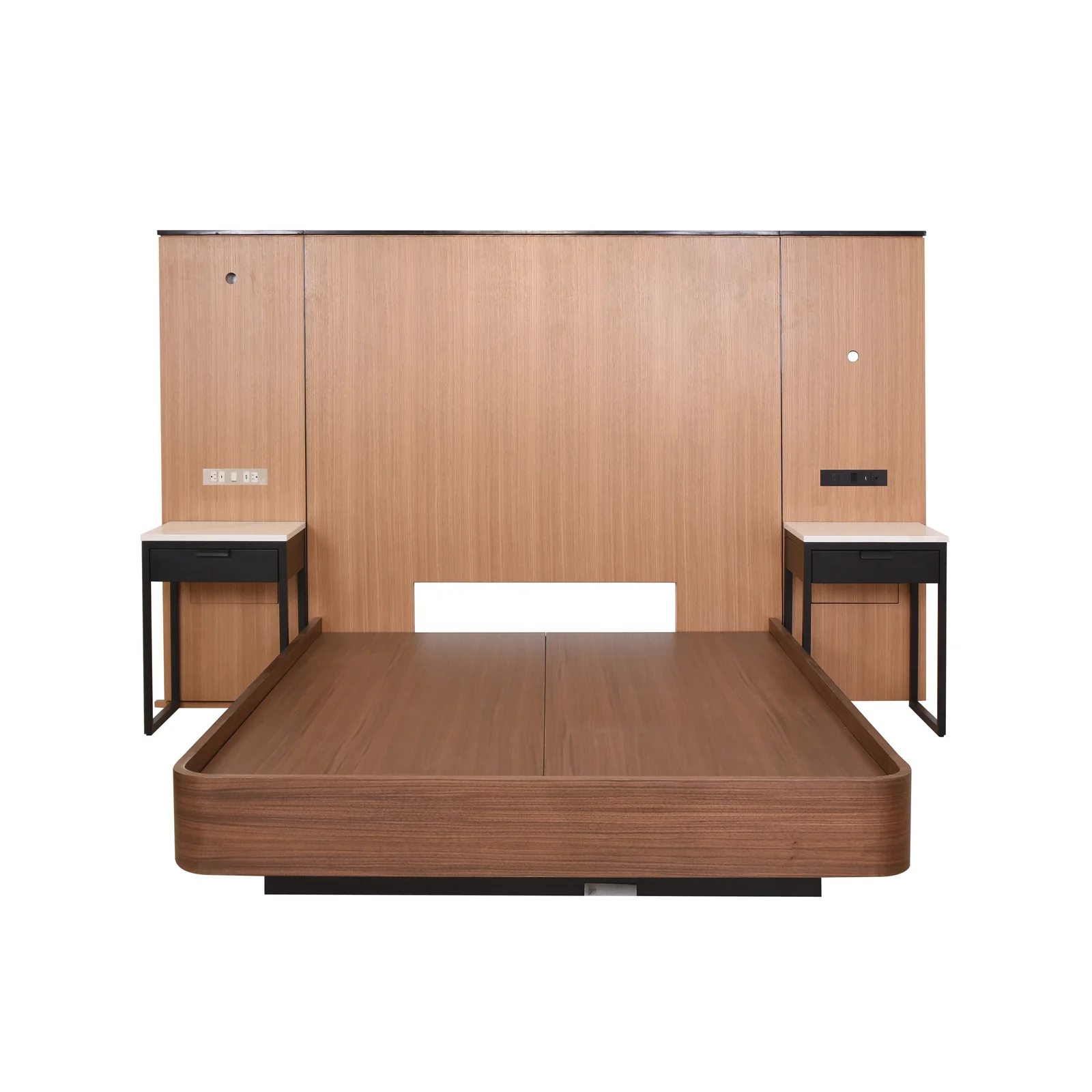
A metal bed frame does not choose the headboard material
Start with two records. The bed-support record identifies the approved frame or platform, mattress support, movement if any, permitted connection points and project drawing. The headboard record identifies whether the assembly is wall-supported, bed-connected or otherwise coordinated, plus its own layers and interfaces. Do not infer one record from the other.
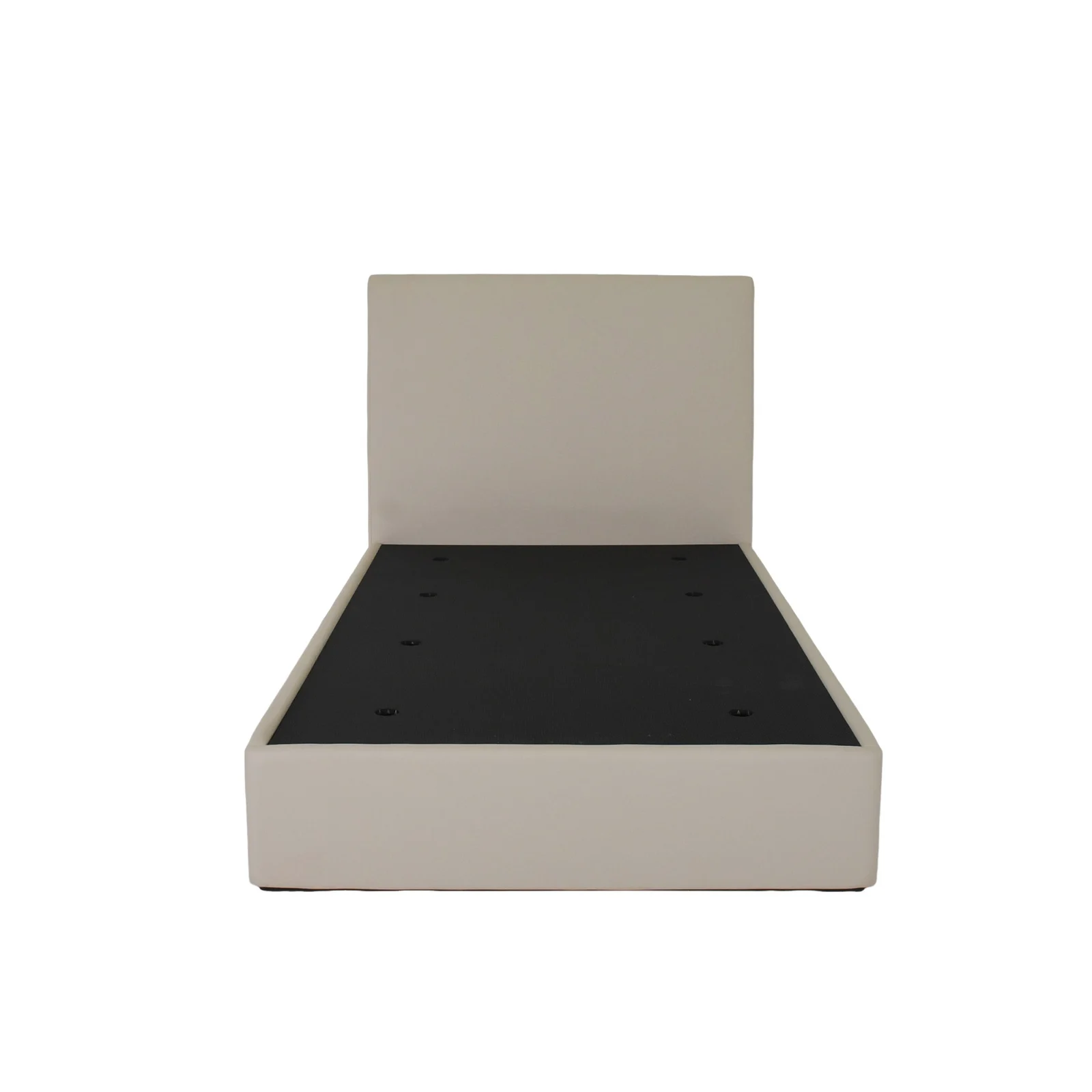
If a supplier describes a “king bed frame with headboard wood finish,” break the phrase into controlled fields: bed-frame model, headboard support route, visible finish reference, substrate or core, edge treatment, connection drawing and room-type datum. A commercial description may help identify the intended look; it is not a substitute for the project interface record.
Name every layer before comparing materials
The visible surface is only the first layer. For an upholstered headboard, the cover, seam layout, padding profile, panel or core, edge wrap, backing and service cut-outs may come from different sources and require different evidence. For a hard-surfaced headboard, the decorative face, panel construction, edge band or solid lipping, backing, trims and openings remain separate. Mixed systems add junctions between unlike materials.
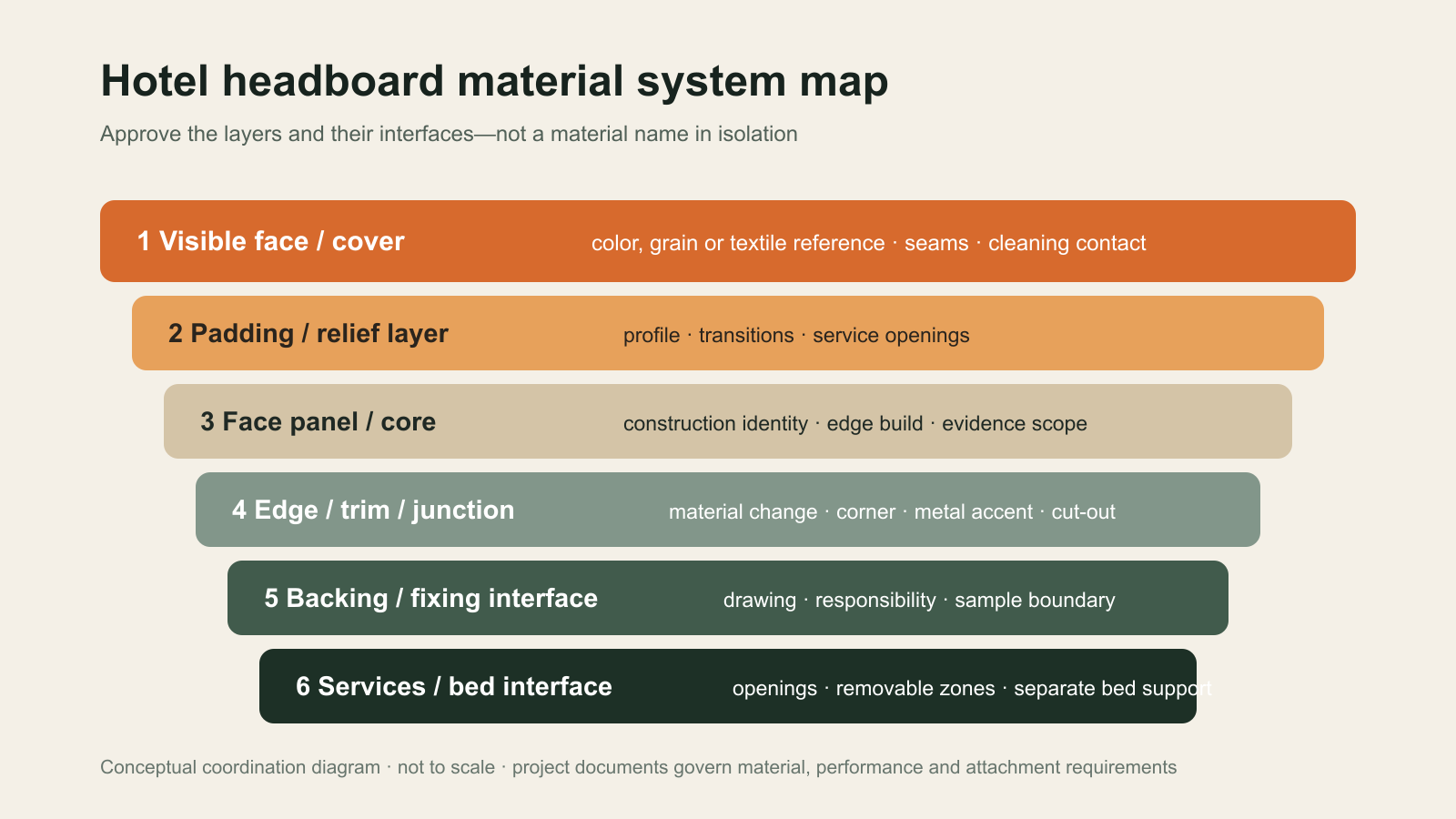
Use the six-layer map as a completeness check, not as a prescribed construction. Mark a layer “not applicable” only after the project team confirms it. An empty cell should mean evidence is pending—not that the visible finish has silently answered a hidden construction question.
Compare material families through like-for-like evidence
| Material-system lane | Evidence to place in the comparison | Common hold signal |
|---|---|---|
| Upholstered face | Exact cover identity, intended application, backing, padding and seam build, cleaning route, applicable test documents and complete panel sample | A fabric name or color swatch with no headboard application, fabrication or care context |
| Wood, veneer or panel face | Exact construction identity, face and core description, grain or lay-up direction where relevant, edge build, finish system, opening detail and representative sample | “Solid wood” or “wood veneer” used as a quality conclusion without component and construction evidence |
| Painted or laminate surface | Substrate, preparation, surface system, edge and cut-out treatment, color/gloss reference, repair boundary and junction sample | A surface code that omits substrate, edges, service openings or touch-up responsibility |
| Metal accent or hybrid | Exact component and finish identity, edge and junction geometry, adjacent-material contact, replaceability, drawing and approved combined sample | A metal color chip offered as proof of the assembled trim, corner or service detail |
These lanes do not rank one family above another. They force equivalent questions. The correct comparison is not “fabric versus solid wood” in the abstract; it is whether each proposed system can satisfy the same room, appearance, operations, interface and evidence brief.
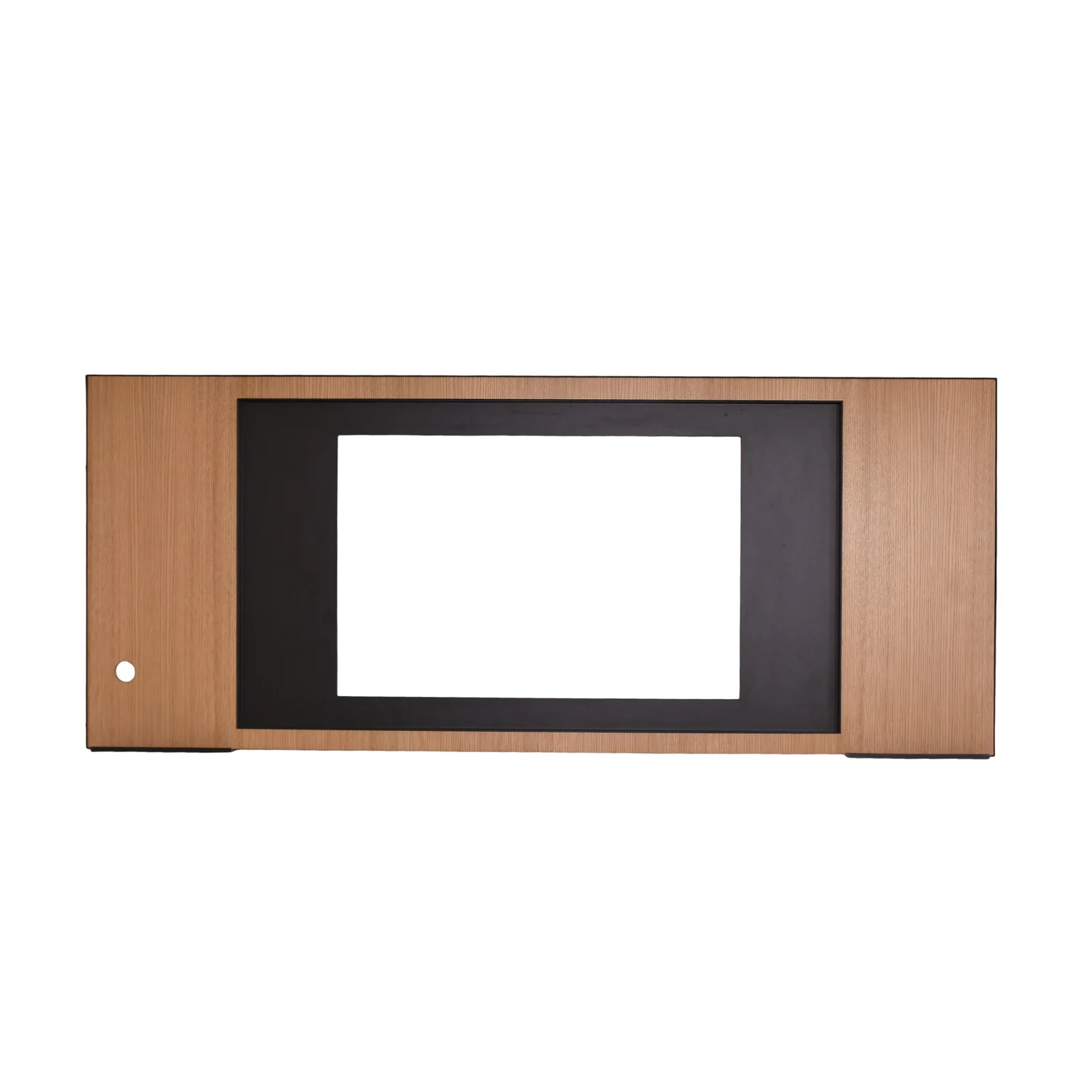
Keep test evidence inside its application boundary
For headboard fabric or a coated cover, record the exact material, intended headboard application, supplied construction, test method and result, document date, limitations and approving party. ACT’s performance guidance distinguishes intended application and construction, while its disclaimers make clear that guidance is not a warranty, safety assurance or legal determination. A passing result should therefore remain attached to the tested material and stated use—not become a general promise about the completed headboard.
ACT also notes for coated fabrics that fabrication variables such as foam density can influence stretch and set, and that laboratory results should not be extrapolated into field life. This is why a cover report and a finished-panel sample answer different questions. Fire, accessibility, environmental, chemical and local-code decisions must be handled by the project’s qualified parties using the applicable approved documents.
Use the same discipline for timber-toned surfaces. USDA’s Wood Handbook treats solid wood and wood-based composites as different material constructions, and documents that wood behavior changes with material, direction and moisture condition. Do not infer solid wood from grain appearance, or convert a generic wood property into a finished headboard result.
Map guest contact, cleaning contact and service access
Mark where heads, hands, luggage, housekeeping tools and cleaning products may contact the assembly. Separate high-touch face zones from upper decorative fields, stitched edges, bedside returns, base junctions and removable service panels. Record who cleans each zone, which approved instruction applies, what must remain accessible and how damage or staining will be escalated.
This map can change the material decision without declaring one material universally easier to maintain. A beautiful relief that traps soil beside a service plate may require a different edge or access detail. A replaceable textile panel may need a retained dye-lot or reference sample. A hard-surfaced field may still have vulnerable edges, junctions or repair limitations. Make these trade-offs visible before the room sample.
Trace every substitution through the consequence chain
A material substitution is not only a color change. Reopen the connected records: identity and supplier; face thickness and overall build-up; padding or relief; edge and corner geometry; mass and handling; backing and fixing interface; service-opening dimensions; junctions to trims and casework; appearance under project lighting; cleaning and repair instructions; applicable evidence; and the approved sample.
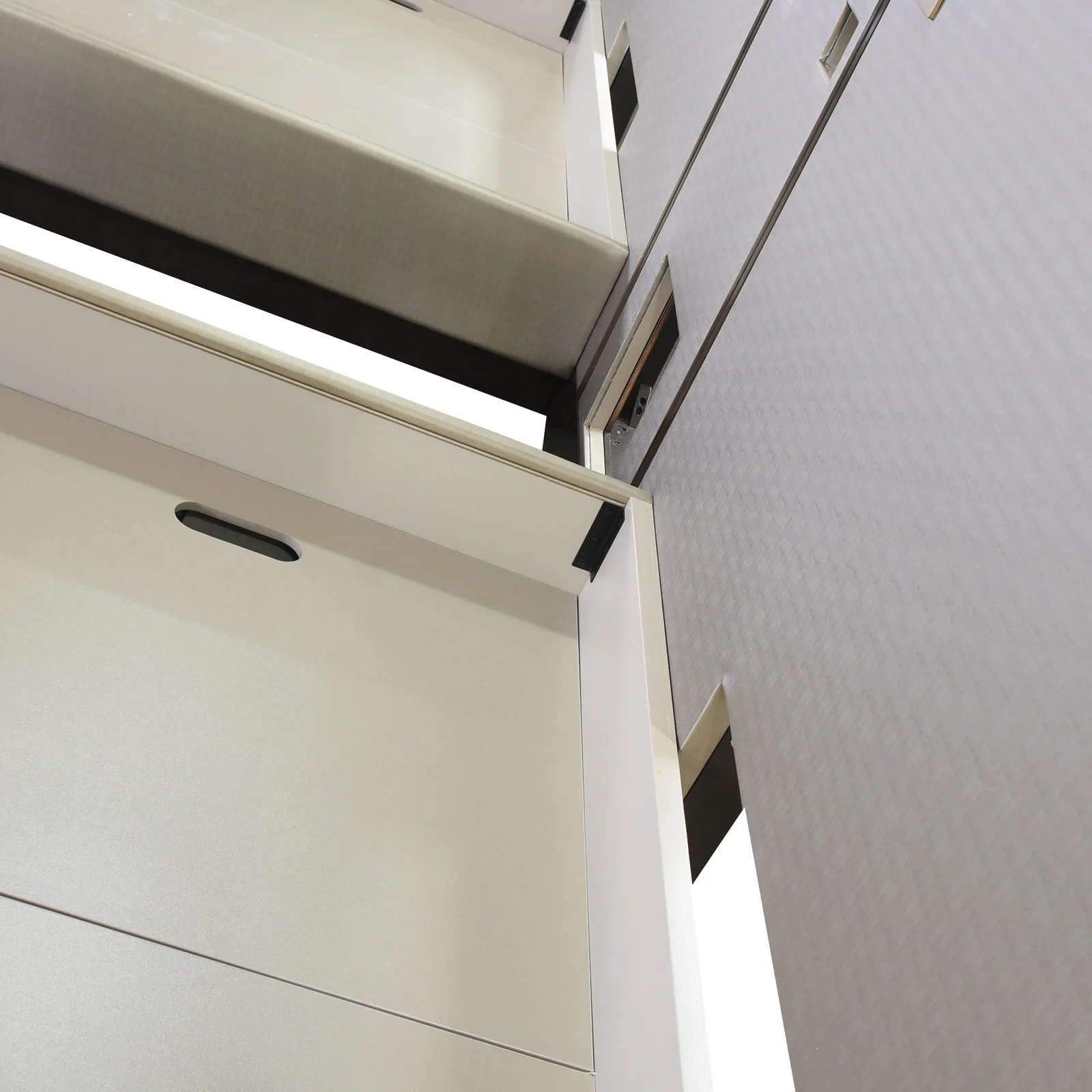
Assign an owner and disposition to every affected field: unchanged with evidence, revised and resubmitted, not applicable, or hold. A proposed equivalent stays on hold when the team cannot connect it to the released drawing and sample. Price, availability or visual similarity can explain why a change was proposed; they do not close its consequences.
Approve complete junctions, not orphan swatches
Use a sample ladder. Begin with identity documents and small color, grain or textile references. Move to a construction sample that includes the intended face, core or padding, seam or edge, trim and representative opening. Then review the critical junction at useful scale under agreed lighting and cleaning conditions. The room sample or first article should confirm the assembled relationships and record deviations before repetition.
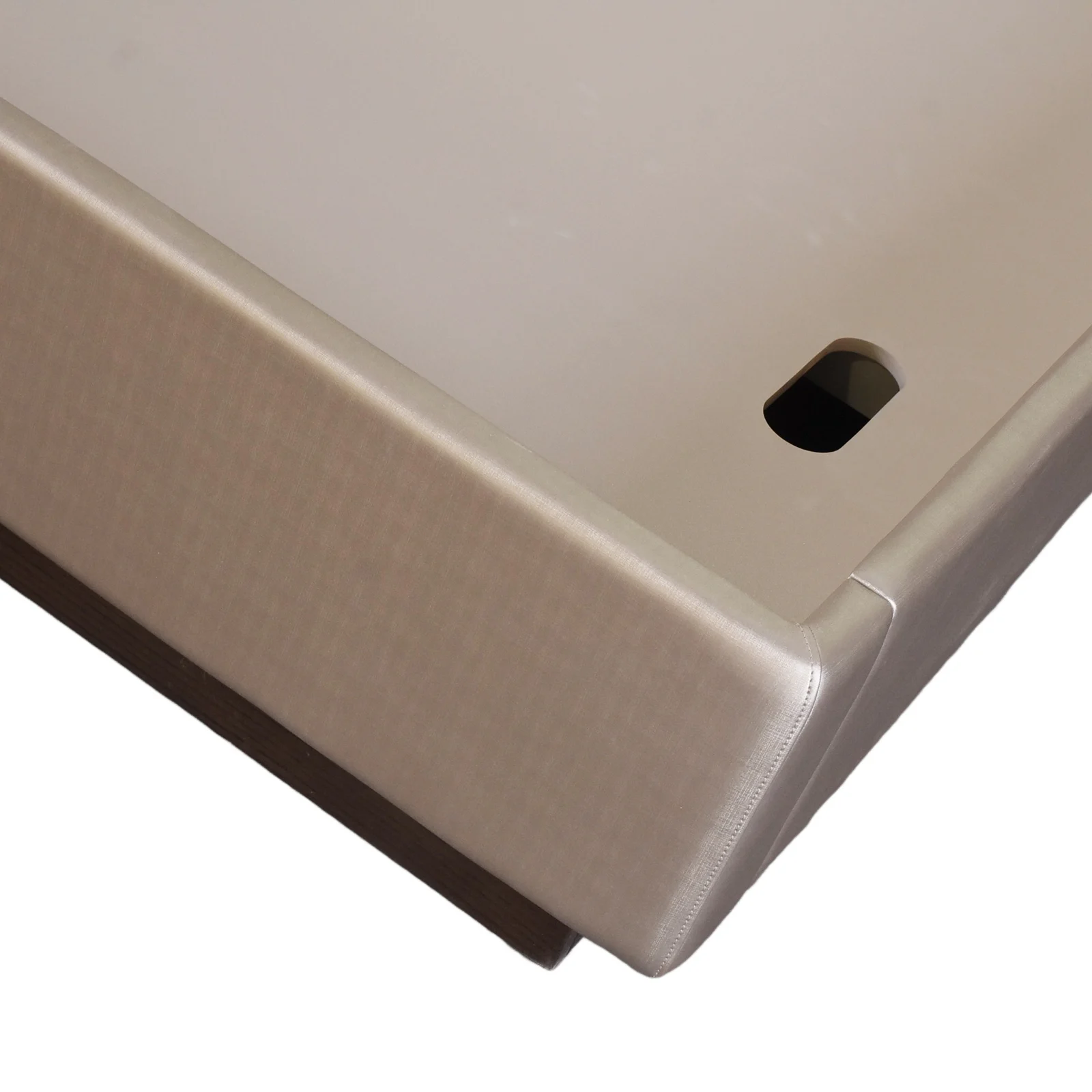
Set the observations and decision owner before each sample arrives. Color, gloss, grain, hand, seam alignment, edge quality, transition, service opening and cleaning response may require different reviewers. Approval should state exactly what the sample releases: a finish reference, one construction junction, one room type or a production population.
Freeze a material passport and replacement rule
After approval, freeze the material-system passport: layer names and identities, supplier references, drawing revision, finish and color references, applicable evidence, clean-and-care instructions, sample IDs, accepted deviations, room types, quantities, inspection points and named owners. Add photographs only as location records; do not let them replace the approved text and documents.
Define replacement equivalence while the original system is available. State whether a damaged face panel, trim or service cover can be replaced independently; which retained reference governs; how adjacent aging or color change will be judged; and which changes require a new sample. This turns future repair from visual guesswork into a controlled project decision.
Send Gainwell a decision-ready headboard brief
Package the room-type elevations, bed-support record, six-layer material passport, interface drawings, service-opening schedule, applicable tests, cleaning-contact map, sample ladder, acceptance criteria, quantities, delivery sequence, spares and change owners. Gainwell’s live Beds & Headboards page defines the product-family channel, while its Capabilities page shows the route from technical development and samples into production control.
Use the Luxury Hotels page for the broader project context, then share the decision-ready package through the Gainwell project contact. Final material, attachment, test, compliance, cleaning and release decisions remain subject to the project’s qualified parties and approved documents.
Frequently Asked Questions
Can a hotel headboard work with a metal bed frame?
Potentially, but material matching is not compatibility evidence. Confirm the exact bed frame or platform, headboard support route, permitted connection points, clearances, datums and approved drawing. The headboard may be upholstered, hard-surfaced or hybrid; its face material should remain a separate specification field.
Which headboard material is best for a hotel?
There is no universal winner. Choose the complete system that meets the room’s design, guest-contact, cleaning, service-access, interface, evidence, sample and replacement requirements. Compare each candidate through the same fields and keep missing evidence on hold.
What evidence is needed for an upholstered headboard cover?
Record the exact cover and intended headboard application, supplied construction, backing, padding and seam build, relevant test documents and limitations, cleaning instructions, finish reference and representative complete-panel sample. A fabric swatch or test label alone does not approve the finished assembly.
Is solid wood automatically better than a panel-based hotel headboard?
No. “Solid wood” and “panel-based” describe broad construction families, not automatic quality rankings. Compare the exact face, core, edge, finish, opening, movement, repair and sample evidence for the component and project. Do not identify either construction from appearance alone.
Can a metal headboard trim be approved from a finish sample alone?
Not when the decision includes the assembled trim. Review the exact component and finish together with edge geometry, corners, fixings or backing interface, adjacent materials, service openings, cleaning contact and a representative junction sample. A color chip answers only part of that record.
When does a headboard material change require a new sample?
Require a new or updated sample whenever the change can affect visible appearance, thickness, relief, seams, edges, weight, fixing interface, service openings, cleaning, repair or evidence scope. The project team should document which prior approvals remain valid and which are reopened.