

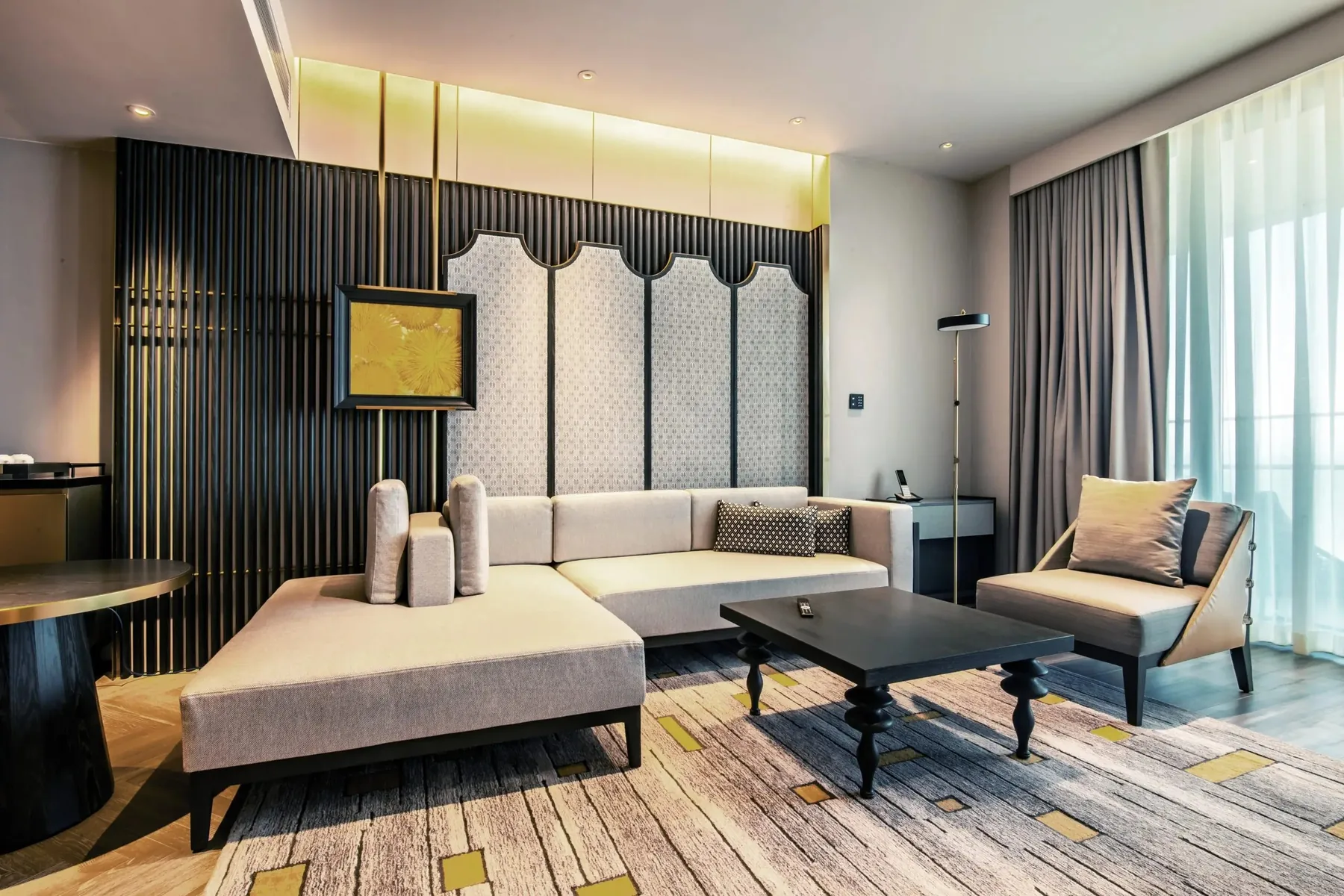
Loose furniture is furniture that can normally be placed, moved or replaced without becoming a permanent part of the building. In hospitality projects, it commonly includes chairs, sofas, tables, beds and freestanding casegoods that are identified and procured as individual FF&E items.
Movability is a useful starting point, but it is not the whole definition. A loose item may still need anti-tip restraints, limited floor fixing, power access or assembly on site. Conversely, an item that can technically be removed may belong to a fixed-furniture or millwork package because it depends on verified site dimensions, building substrates or concealed services.
The practical question is therefore not simply, “Can it move?” The project team must also establish how the item is designed, coded, purchased, installed, maintained and replaced. For the wider distinction between furniture, fixtures and equipment, see how FF&E scope is defined in hotel projects.
What Does Loose Furniture Mean in Hospitality?
In hospitality, loose furniture is an independently identifiable furniture item that is normally delivered to the finished space, placed in position and capable of being moved or replaced without material alteration to the building. It is usually recorded under its own item code, quantity, drawing or specification reference and approval status.
Three conditions make that definition useful. First, the item remains substantially independent of the walls, floor, ceiling and building services. Second, it can be procured and tracked as a complete item rather than as part of a site-built assembly. Third, its replacement would not normally require adjacent construction or finishes to be opened and remade. These conditions distinguish a lounge chair or freestanding desk from a built-in cabinet coordinated with a recess, wall finish and power connection.
“Loose” does not mean lightweight, standard, inexpensive or residential-grade. A large custom lobby sofa can still be loose furniture if it retains an independent product identity and limited building interfaces. Its construction, upholstery, finish and performance evidence may be developed specifically for intensive hospitality use; those requirements affect the specification, not the loose-or-fixed classification.
Within most hotel projects, loose furniture is controlled as part of the FF&E programme. The project schedule should still identify the actual procurement and installation boundary because FF&E is not a universal contract package. A clear record connects each loose item to its quantity, approved configuration, supplier, installer and room or area without asking the category name to carry responsibilities it cannot define.
Common Types of Loose Furniture in Hotels
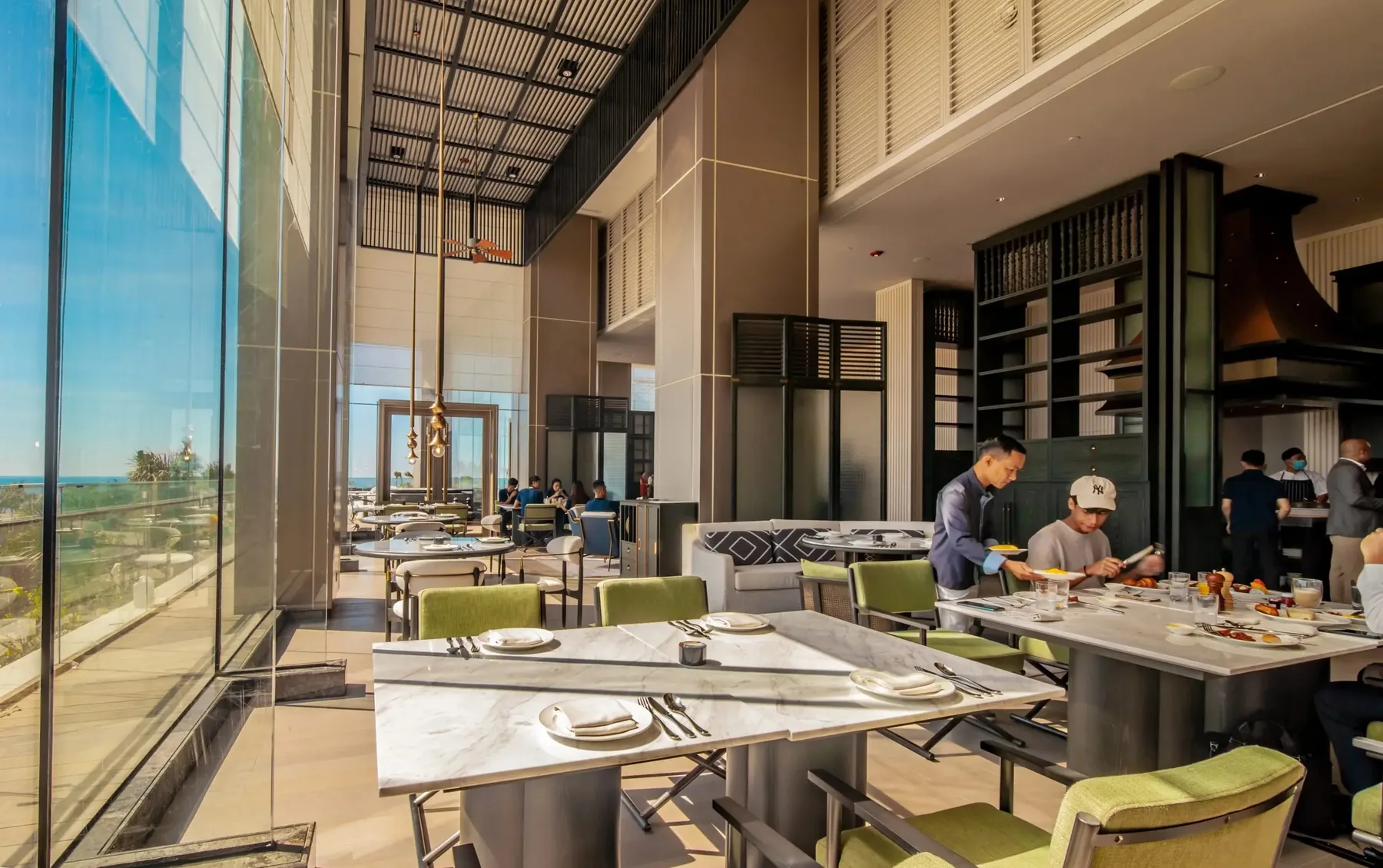
Loose furniture appears throughout guestrooms, suites, public areas, restaurants and outdoor spaces. A room-by-room view is more useful than a generic list because it also reveals where boundary questions are likely to occur.
| Hotel area | Typical loose furniture |
|---|---|
| Guestroom | Bed base, nightstand, desk, chair, luggage bench and occasional table |
| Suite | Sofa, armchair, dining table, console and coffee table |
| Lobby and lounge | Sofas, lounge chairs, side tables and communal tables |
| Restaurant and bar | Dining chairs, stools and movable tables |
| Outdoor area | Chairs, loungers, tables and movable daybeds |
These examples are typical, not automatic classifications. Product names can conceal different construction and interface conditions. A wardrobe may be a freestanding casegood or a built-in assembly. A banquette may be fully movable, fixed to the floor or divided into a fixed base and removable upholstered elements. A headboard may be a separate item behind the bed or part of a wall-wide system containing lights, switches and decorative panels.
The complete assembly, rather than the familiar name, should determine the project treatment.
Loose Furniture vs Fixed Furniture
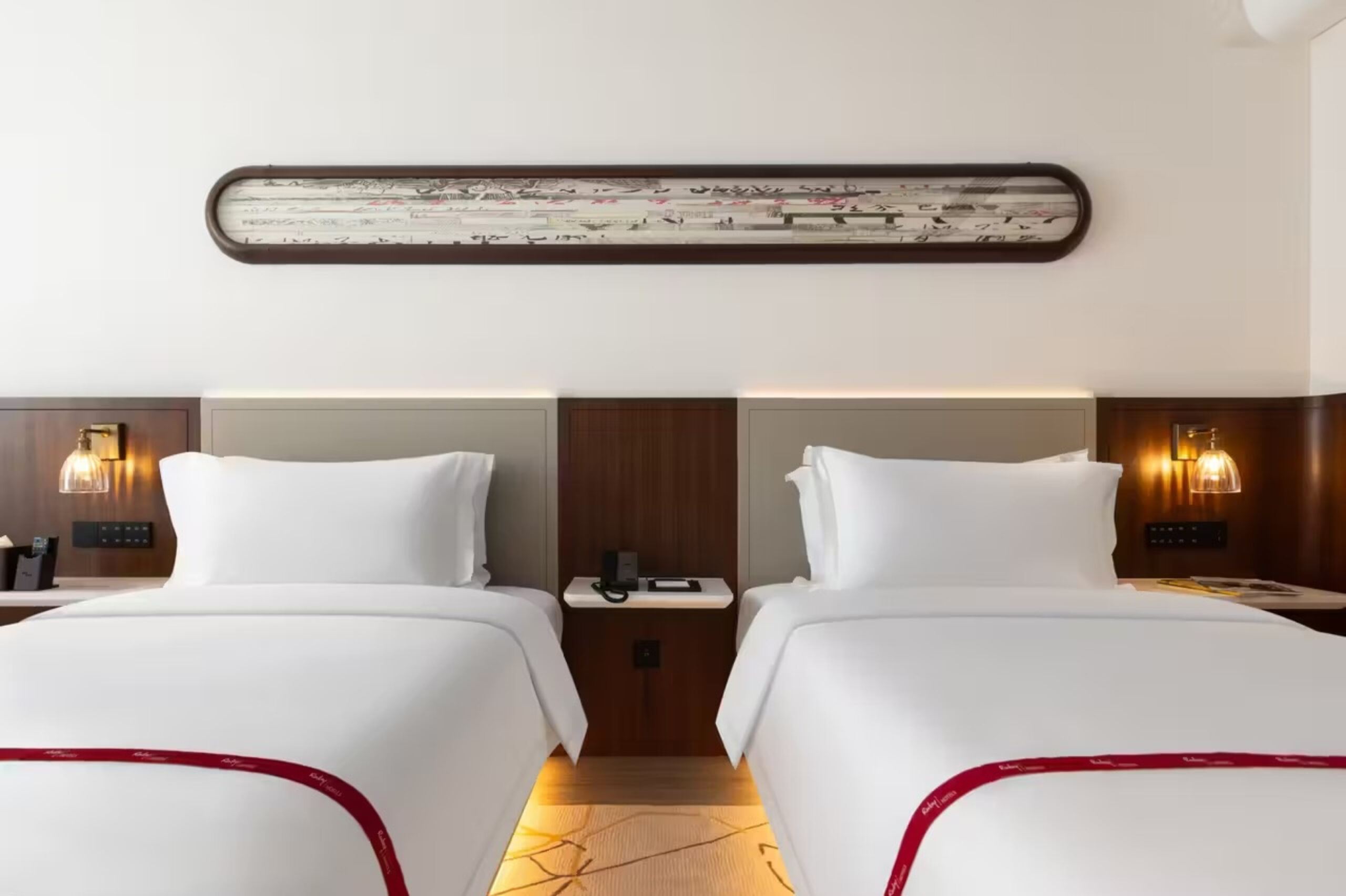
Loose and fixed furniture can use similar materials and serve similar functions. Their main difference is how they relate to the building and how much site coordination is required.
| Comparison field | Loose furniture |
|---|---|
| Relationship to the building | Normally independent of the building fabric |
| Site measurement dependency | Usually limited to fit, access and clearance checks |
| Procurement basis | Commonly coded and purchased as individual items |
| Installation | Placement, assembly or limited fixing |
| Service interfaces | Possible, but generally limited |
| Replacement | Usually item-based |
| Typical examples | Chairs, sofas, tables and freestanding casegoods |
Fixing alone does not settle the classification. A freestanding chest secured to a wall for stability may remain a loose furniture item because its principal construction, procurement and replacement logic are still independent of the room. The fixing should nevertheless appear in the installation scope, with the substrate and responsible party identified.
Removal is not a complete test either. Many fixed assemblies can eventually be dismantled, but doing so may disturb wall finishes, flooring, service connections or adjoining components. When an assembly depends on site dimensions, substrates and service coordination, the more relevant boundary may be architectural millwork and its project interfaces.
Which Hotel Furniture Items Sit on the Boundary?
Some hotel furniture cannot be classified reliably from its name. These items should be reviewed as complete assemblies so that no fixing, service or approval responsibility disappears between packages.
Headboards
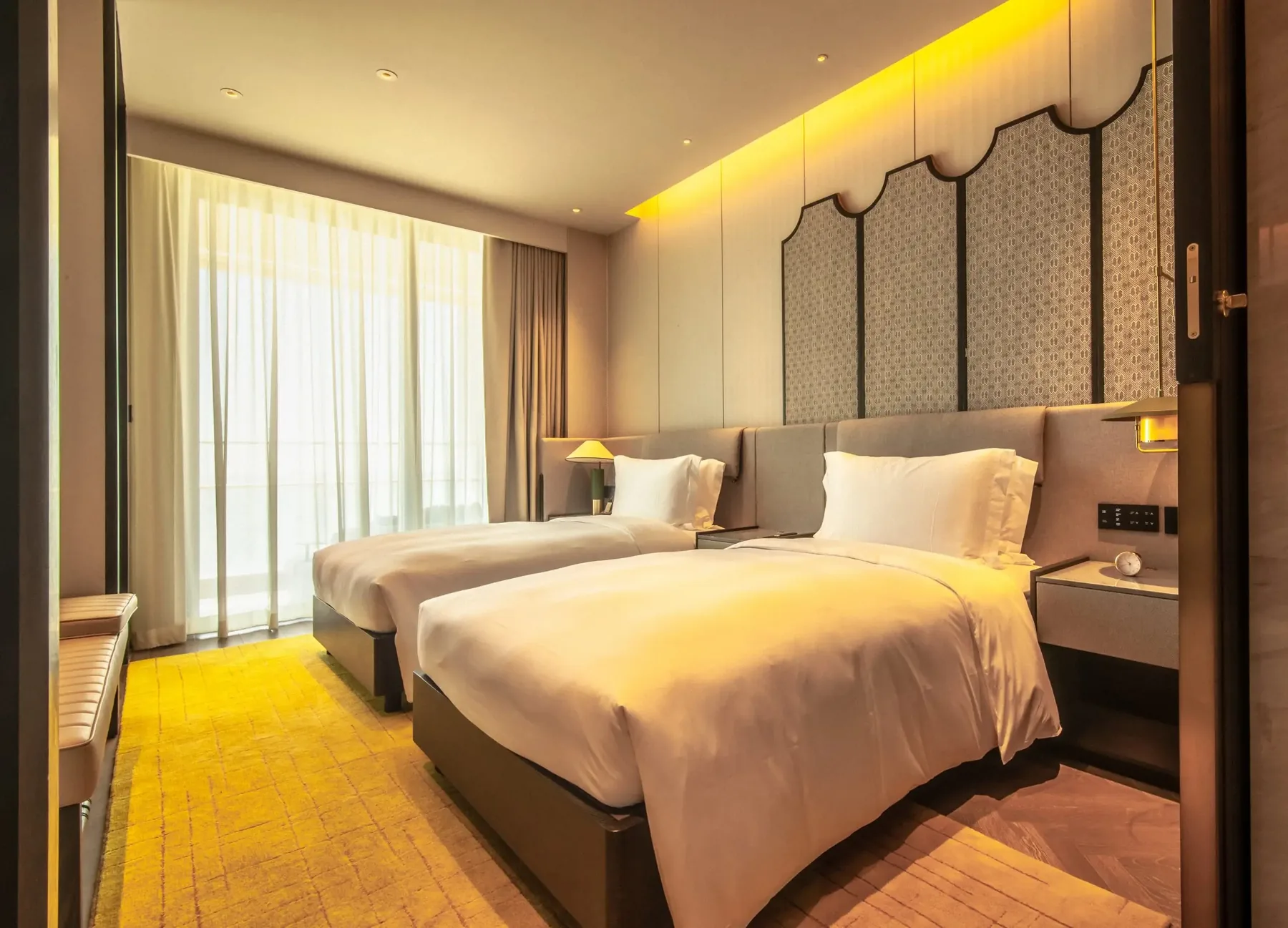
A standalone headboard supplied with a bed may be treated as loose furniture even when it has simple wall restraints. A wall-wide headboard system is different. Upholstered panels, timber surrounds, integrated lighting, switches, sockets and stone or metal details may connect several furniture and construction packages.
The project should identify which party supplies each component, prepares the wall, confirms setting-out points, provides electrical work and completes the final installation. Calling the whole system “a headboard” does not resolve those interfaces.
Wardrobes and minibar cabinets
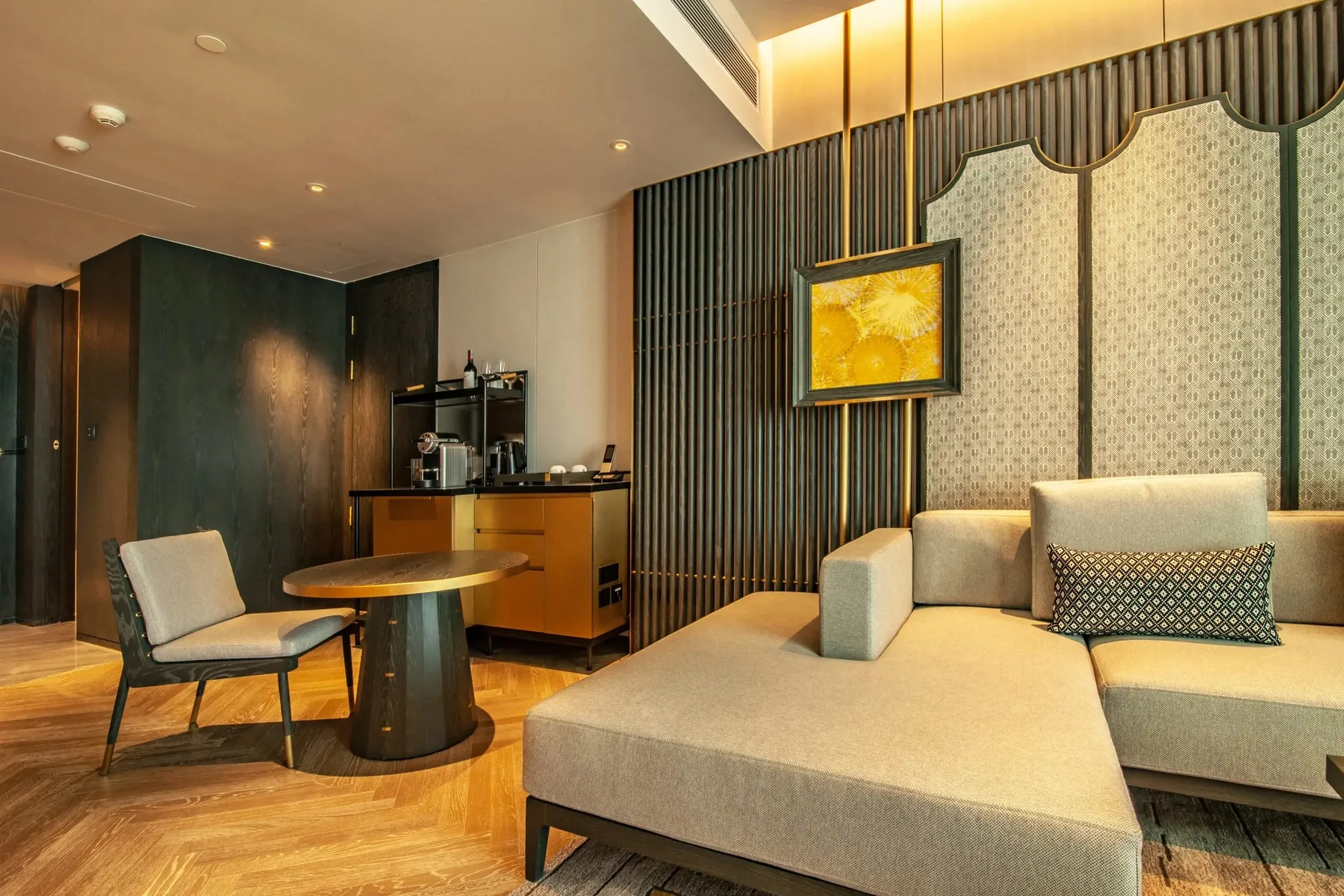
A wardrobe can be a freestanding casegood with its own finished sides and back, or it can be built into a recess and coordinated with skirting, ceilings and wall finishes. A minibar cabinet may look movable but still require ventilation clearances, power access and coordination with an appliance supplied under another package.
The schedule should describe the actual configuration instead of treating every wardrobe or minibar as the same furniture type.
Banquettes
Banquettes range from movable upholstered benches to fixed bases built against a wall. Some combine a fixed plinth with removable seat and back elements. Restaurant planning may also connect the banquette to partitions, power outlets, floor finishes or adjacent service furniture.
The classification should follow the base construction and building relationship while preserving a clear record for replaceable upholstery and cushions.
Reception and service furniture
A movable host stand may be loose furniture. A reception desk coordinated with floor boxes, data, lighting, stonework and wall finishes is more likely to be fixed furniture or millwork. Service stations can sit between these conditions, especially when equipment, plumbing or ventilation is involved.
For each boundary item, the useful outcome is not a perfect label. It is an agreed scope that names the complete assembly, its interfaces and the party responsible for each action.
How Should Loose and Fixed Furniture Be Classified in an FF&E Schedule?
An FF&E schedule should make the classification traceable without trying to replace the drawings and specifications. Four questions are usually enough to expose the relevant boundary:
- Can the complete item be moved without materially altering the surrounding building fabric? Consider the whole assembly, not only a removable panel or cushion.
- Is it purchased and tracked as an independent furniture item? Look for an item code, quantity, drawing, specification, approval reference and purchase package.
- Does it depend on site dimensions, substrates or building services? Record any required recess, blocking, fixing zone, power, data, plumbing or ventilation.
- Who supplies, installs, connects, maintains and replaces it? The classification should support named responsibilities rather than conceal them.
The result can be recorded in three practical states:
- Loose furniture: an independently identified FF&E item with limited building interfaces;
- Fixed furniture or millwork: an assembly integrated with the building and dependent on site coordination; or
- Coordinated assembly: a mixed item whose furniture, construction and service responsibilities must be divided explicitly.
This approach also explains the role of loose furniture within FF&E. Loose items are commonly coded and controlled as individual assets, while fixed furniture may still remain inside the broader FF&E programme. The project does not need one universal classification rule; it needs consistent records across the schedule, drawings, specifications, quotations and installation scope.
Why Does the Distinction Matter in Hospitality Projects?
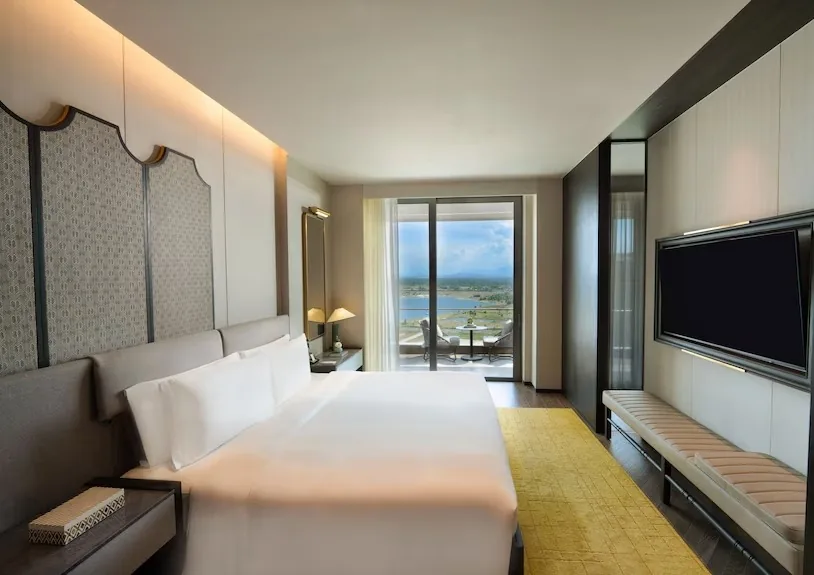
The loose-versus-fixed distinction matters because it changes the information needed to design, price, deliver and operate the furniture.
During design, loose furniture is coordinated with room use, circulation, clearances and adjacent items. Fixed furniture requires those checks plus more detailed attention to site dimensions, substrates, finishes and services. A chair may be approved through drawings, finish samples and a prototype; a built-in cabinet may additionally require verified openings, wall build-ups and service positions.
During procurement, loose furniture is often quantified by item code, room type and area. Comparable quotations depend on bidders pricing the same revision, materials, quantities and delivery scope. Fixed assemblies usually require more site information and a clearer statement of what adjacent work is included or excluded.
During delivery and installation, loose furniture places greater emphasis on package coding, access, assembly, placement and limited restraints. Fixed furniture places greater emphasis on measurement, setting out, interface readiness and installation sequence. A delivery team can place a loose table after the floor is protected; a reception counter may need coordinated work before several surrounding finishes can close.
During operation, loose items are generally easier to relocate or replace individually. That flexibility still depends on useful records. The operator needs to know the item identity, finish, upholstery, approved configuration and any fixing or service requirement. Fixed assemblies may require a broader repair plan because intervention can affect connected finishes or equipment.
The distinction therefore supports real project decisions, but it should not become a substitute for them. A well-managed schedule records both the classification and the interfaces that matter.
A Practical Definition for Hotel FF&E Teams
Loose furniture is normally an independently identified FF&E item that can be placed, moved or replaced without materially altering the building. Typical examples include chairs, sofas, tables, beds and freestanding casegoods used in guestrooms and public areas.
That definition remains subject to the complete assembly. Safety restraints do not automatically turn a loose item into fixed furniture, and removability does not automatically turn an integrated assembly into loose furniture. Site dimensions, substrates, services, procurement identity and lifecycle responsibility complete the classification.
For hotel teams, the most useful result is a coordinated record: each item has a stable identity, an agreed loose or fixed status, visible interfaces and named responsibilities. That gives designers, procurement teams, suppliers, installers and operators the same basis for decisions.
Gainwell develops coordinated loose and fixed furniture for hospitality interiors. For a hospitality furniture project review, share the room types, furniture schedule, drawings, quantities, material direction, destination and target programme so the relevant scope and interfaces can be reviewed.
Frequently Asked Questions
How should loose furniture quantities be controlled across hotel room types?
Use the approved room and area schedule rather than multiplying one typical-room list by the total key count. Link each furniture code to the room types or public-area zones where it occurs, record the current population of each type and identify any accessible, connecting or suite variants. Reconcile that quantity basis whenever the room mix or layout changes.
When does a loose furniture item need a prototype rather than only a finish sample?
A prototype is useful when the decision depends on proportion, comfort, ergonomics, construction, stability, hardware, upholstery execution or interaction with nearby elements. A finish sample can approve colour, sheen, texture or a material transition, but it cannot demonstrate the complete item. The approval record should state exactly which decisions the prototype closes and which remain open.
What should happen when a loose furniture design changes after approval?
Record the changed attribute against the item code and current revision, then identify every affected drawing, sample, quotation, production batch and room quantity. Reopen only the approvals affected by the change. A fabric substitution may require renewed appearance and performance evidence, while a dimensional change may also require layout, access, packaging and prototype review.
Who normally installs loose furniture in a hotel?
The responsible party varies by contract. The furniture supplier, a specialist installer, a logistics provider or the main contractor may assemble and place loose items. The appointment should state who receives, moves, assembles, positions, fixes, protects and signs off each item, including how damage or missing components are recorded.
Can fixed furniture still be included in the FF&E package?
Yes. Some hotel projects procure loose furniture, fixed furniture and selected millwork within one FF&E programme, while others assign fixed assemblies to a construction or joinery package. The schedule, specification, tender documents and responsibility matrix should use the same boundary so that supply, installation and service interfaces remain visible.