
Hotel casegoods are the cabinet-based and related hard furniture items used for storage, work, display and equipment accommodation in hotel rooms. Common examples include nightstands, dressers, wardrobes, television cabinets and minibar cabinets. Hotel suppliers sometimes use the term more broadly for a coordinated guestroom furniture package, so the exact contents should be identified in the item list.
Casegoods can be freestanding, attached for stability or built into a particular location. The category is also not limited to solid wood: a cabinet may combine panel materials, veneer, laminate, stone, metal and glass. Understanding what the term describes—and what it leaves open—helps owners, designers and procurement teams discuss the same furniture scope.
What Are Hotel Casegoods?
Storage is the clearest starting point. A dresser organises belongings in drawers, a wardrobe provides hanging and shelving space, and a minibar cabinet houses equipment and service items. Their bodies, compartments and working surfaces give them a recognisable furniture function. This makes cabinet construction a useful way to understand the category, although hotel suppliers may extend a casegoods collection to include matching desks, consoles and headboards.
There is no single material or fixing method that makes an item a casegood.
A cabinet can combine an engineered-panel body, veneered doors, solid timber edging, metal supports and a stone top. It may stand independently or fit into a particular location. Those choices affect how it is made, installed and maintained, but they do not replace its identity as a storage or related hard-furniture item.
The practical boundary is the supplier’s item list. If a quotation includes a “casegoods package,” check which products that phrase covers rather than expecting every hard furniture item in the room to be included. Once the category is understood, the next step is to identify its actual contents.
What Furniture Is Included in a Hotel Casegoods Package?
Guestroom casegoods support several connected activities: putting belongings away, working, using equipment and keeping essential items within reach. Looking at those functions makes the category easier to understand than treating it as a list of wooden furniture. The following examples are common, although individual projects may group them differently.
Nightstands and Bedside Cabinets
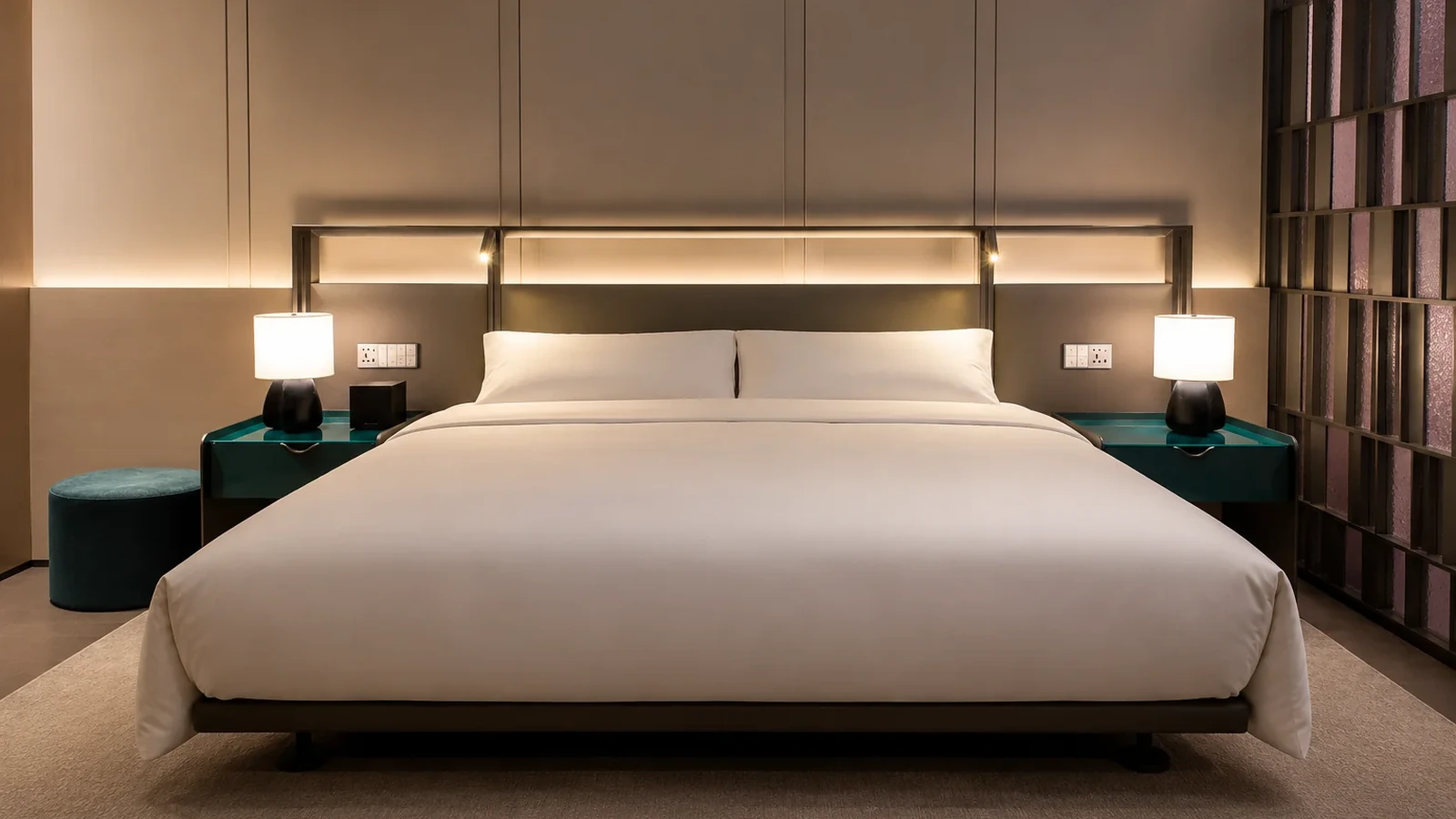
Nightstands illustrate how a simple-looking item can contain several requirements. An open bedside table may provide only a surface and shelf, while a cabinet version adds drawers, doors or concealed storage. Either may sit beside a separate headboard or form part of a wider assembly. The furniture description should identify the actual configuration, particularly where outlets, lighting controls or cable access are incorporated.
Wardrobes, Media Units and Minibar Cabinets
Wardrobes, media units and minibar cabinets require similar clarity because their interiors serve different purposes. A wardrobe may contain hanging space, shelves, a safe and luggage storage; a minibar cabinet may accommodate an appliance that has its own ventilation and service requirements. The cabinet and its contents should be distinguished so that including a minibar unit in the furniture schedule does not silently imply that refrigeration equipment or electrical work is included.
Current casegoods and storage furniture examples show how the category can cover bedside units, wardrobes, minibar cabinets, consoles and service storage. These product families provide a starting point for identifying the furniture, while dimensions, internal arrangements and material combinations remain specific to the design.
Headboards, Bed Bases, Desks and Tables
Headboards and bed bases need particular attention when reviewing a package. Some suppliers include them with casegoods because they are developed alongside the rest of the guestroom’s hard furniture. Others list them as separate categories. The same principle applies to desks and tables: their inclusion should be visible in the item list rather than inferred from a collection name. Upholstered chairs, sofas and mattresses are generally described separately, even when one supplier provides the complete room package.
How Do Casegoods Differ from Other Furniture Categories?
These terms describe different aspects of furniture, so they can overlap. Casegoods identifies a product category, upholstery describes a form of soft construction, loose and fixed furniture describe installation relationships, and architectural millwork describes interior elements coordinated with the building. Comparing them helps clarify a package without forcing every item into only one category.
Casegoods vs Upholstered Furniture
Casegoods typically centre on cabinets, storage units and related hard furniture, while upholstered furniture uses padding and a covering material to create soft surfaces. A sofa or padded lounge chair is therefore normally discussed as upholstered seating rather than casegoods. The distinction helps teams organise design information, materials and suppliers, but it does not mean a finished item can contain only one type of construction.
A storage bench with an upholstered seat is a useful example. Its cabinet body, doors or drawers may be developed as casegoods, while the cushion and covering belong to the upholstery construction. Both parts still need to work as one product. Seat removal, cleaning access, hinge movement and the relationship between the cushion and cabinet should be resolved together rather than left between two descriptions.
Casegoods vs Loose and Fixed Furniture
Casegoods describes what an item is; loose and fixed describe how it relates to its location. A wardrobe with finished external sides and a complete independent body may be freestanding. Another wardrobe may be fitted into a recess and coordinated with the floor, ceiling and adjacent finishes. Both can appear within a casegoods package, even though their measurement and installation requirements differ.
Simple fixing does not settle the classification by itself. A freestanding cabinet may need a restraint for stability while retaining its identity as an independent product. Conversely, an assembly that can eventually be dismantled may still depend heavily on the building. For a closer explanation of those installation relationships, see fixed furniture in hotel projects. Within the casegoods list, the important point is to record the actual arrangement rather than treating the category as proof that an item is either movable or built in.
Casegoods vs Architectural Millwork
Casegoods and architectural millwork can overlap where custom cabinets become closely integrated with an interior. A standalone minibar cabinet can be specified as a complete furniture item, while an assembly fitted between walls and coordinated with decorative panels may also form part of the millwork package. The distinction is shaped by construction and project scope, not simply by whether the item was custom-made.
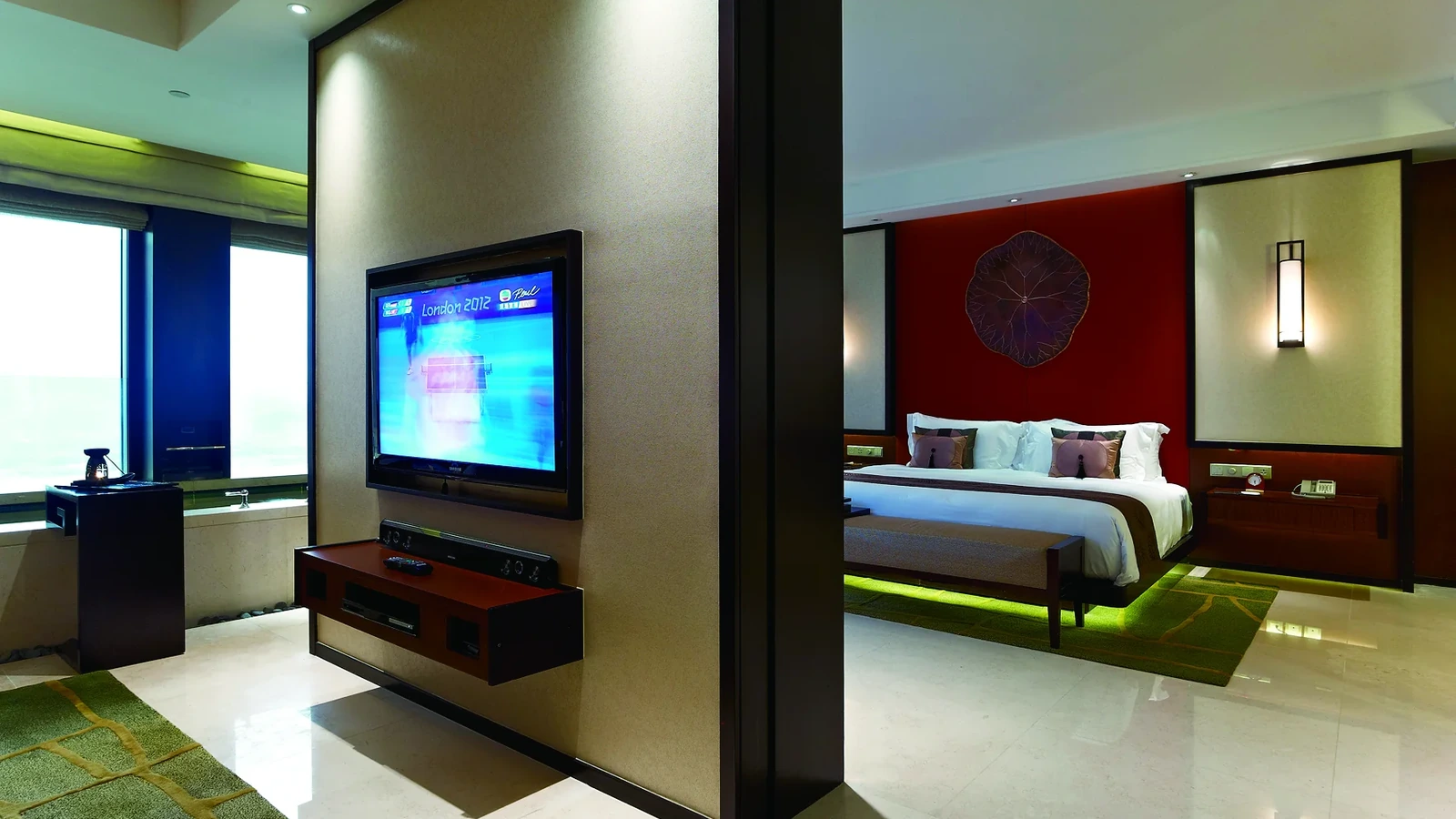
The useful questions concern the complete assembly: which dimensions require site verification, what supports the cabinet, how adjacent finishes meet it and where services connect. An integrated minibar may depend on a recess, ventilation openings, a supplied appliance and electrical access. Those relationships need an agreed owner even if the project continues to call the finished assembly casegoods. The label helps organise the package; drawings and scope descriptions explain how it will work.
Why Should Hotel Casegoods Be Coordinated as a Set?
Casegoods serve connected functions within a limited room area. A desk, wardrobe and luggage unit may each work in isolation yet compete for circulation or access when placed together. Planning them as a set allows the design team to consider where guests put bags, unpack clothes, work and use room equipment. This is particularly important around doors, drawers and appliances, where an item’s operating space can be larger than its closed footprint.
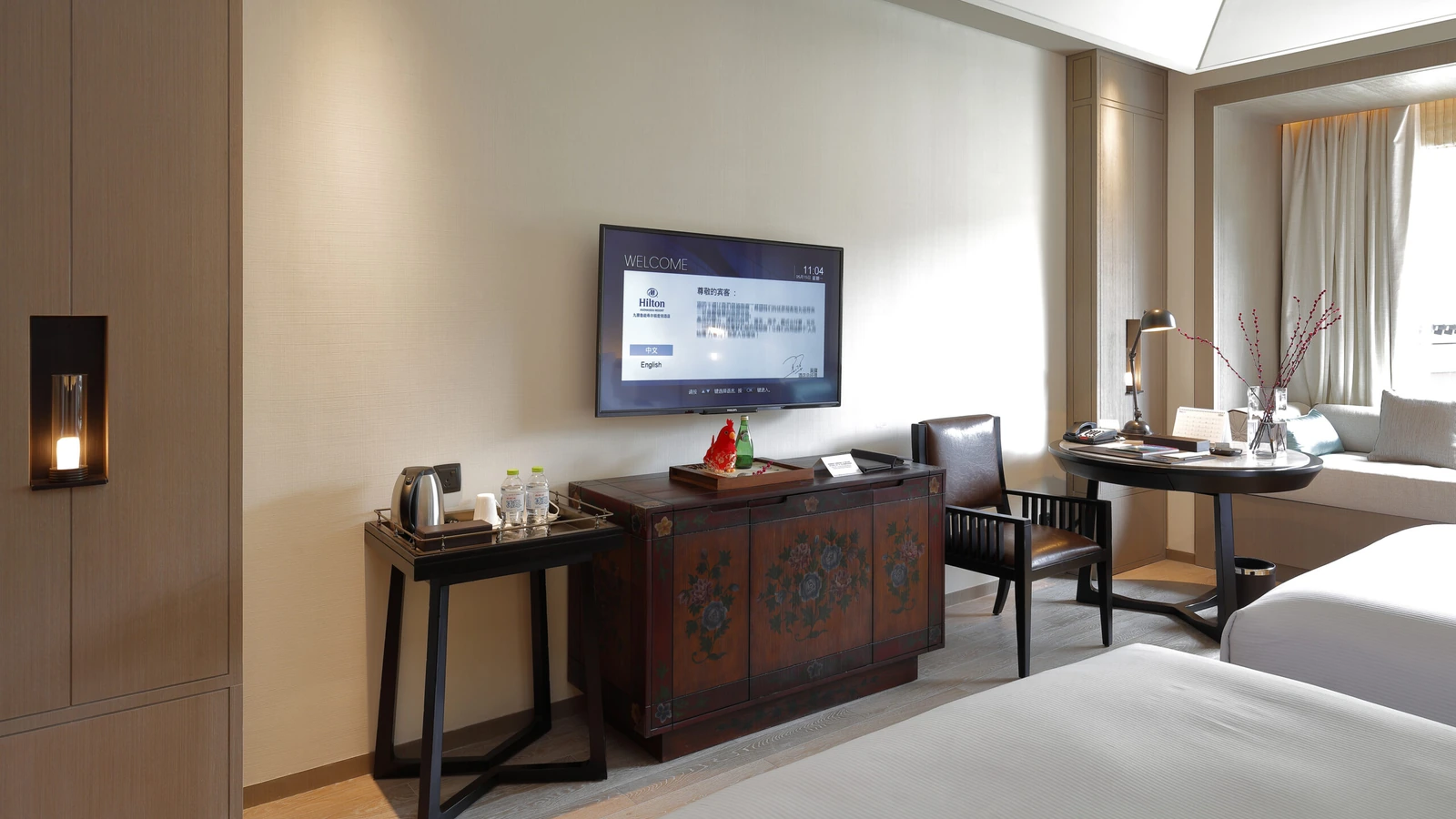
Coordination also creates a consistent visual relationship between products. Cabinet proportions, top thicknesses, leg profiles, handles and material transitions affect how the room reads as a whole. A coordinated set does not require identical finishes on every surface; it requires deliberate relationships between the pieces. A stone-topped bedside cabinet and a veneered media unit can belong to the same room concept when their scale, detailing and surrounding materials have been considered together.
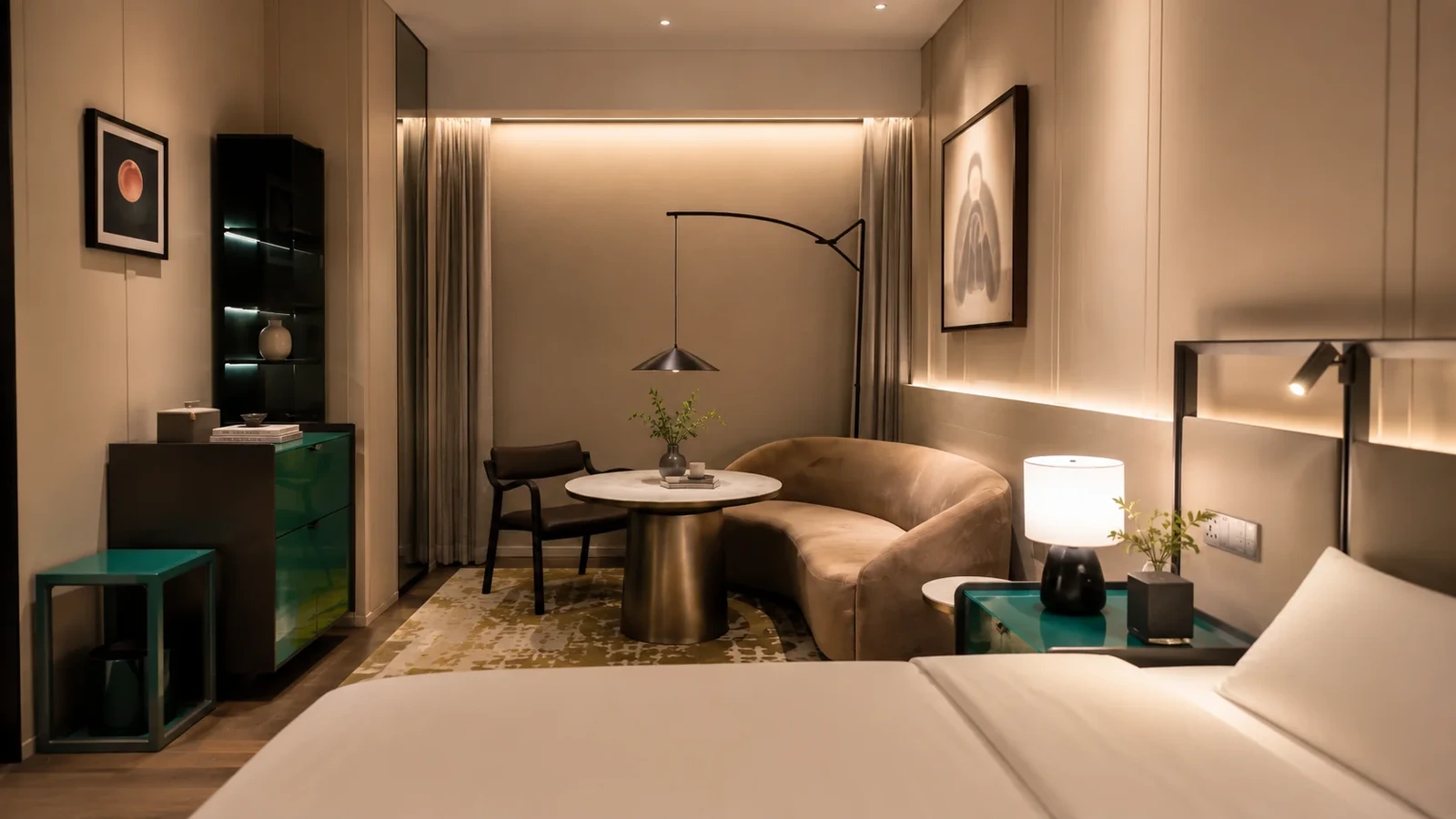
The coordinated guestroom furniture at Ritz-Carlton Beijing provides an application example involving casegoods, upholstered seating and occasional furniture within one room environment. The public project description identifies cabinets, consoles and shelving alongside other furniture categories. It illustrates the value of considering the complete furniture composition without suggesting that all pieces share one construction or installation method.
Different room types may use a common design language while requiring different furniture configurations. A suite may need additional storage, a connecting room may have a different wall arrangement, and another layout may require different access or operating clearances. Coordination therefore means identifying what can remain common and what needs to change. Repeating the same item everywhere is useful only where the room function and layout support it.
Maintenance adds another reason to plan the family together. Consistent product references, hardware information and finish records make replacement and repair easier to manage. Where practical, removable tops, replaceable doors or accessible hardware may allow intervention without replacing the entire item, but those features need to be designed and documented. Visual similarity alone does not establish that parts are interchangeable.
Hotel casegoods are therefore more than a collection of cabinets purchased under one heading. They are identifiable furniture items whose functions, dimensions, materials and interfaces need to work together. A clear item list establishes the scope, while coordinated design turns those individual products into a usable guestroom.
Plan Hotel Casegoods with Gainwell
A guestroom should feel coherent while giving guests useful storage, comfortable working space and straightforward access to everyday items. Gainwell can help develop casegoods alongside the surrounding furniture, reviewing internal layouts, proportions, materials and finishes as a connected room scheme.
If you are turning a design concept into a furniture package, explore your hotel casegoods options to discuss how the pieces could work together. A room layout or a few reference images can provide a starting point for identifying suitable configurations and the details that need further development.
FAQs About Hotel Casegoods
Is Installation Included in a Hotel Casegoods Package?
Installation is included only where the quotation and scope expressly identify it. Check unloading, movement to the room, assembly, positioning, restraints, final fixing and any service connections separately. The supplier may provide the furniture while another party completes part of the site work. An itemised scope makes those responsibilities easier to compare across proposals.
Can Existing Casegoods Be Retained During a Renovation?
Existing pieces may be retained where their condition, function and dimensions suit the revised room. Inspect cabinet bodies, hardware, surfaces and connections, then check compatibility with new layouts and adjacent furniture. Repair or refinishing should also be assessed against the actual materials. A sample room can help confirm appearance and operation before repeating the approach across multiple guestrooms.
Can Individual Casegoods Components Be Replaced?
Sometimes, depending on the construction, connection method and availability of matching components. Keep the item code, dimensions, hardware references and finish information so a replacement can be checked against the original. Colour and sheen may differ between new and aged surfaces, so review the proposed replacement in context before approving a wider repair programme.