Custom hospitality furniture since 1995 · China & Vietnam manufacturing

FF&E Meaning: What It Includes in Hotel Projects

FF&E means furniture, fixtures and equipment. In a hotel project, it is the group of assets that helps turn designed rooms and public areas into usable, guest-ready spaces. Beds, nightstands, desks, loose seating, tables, decorative lamps, mirrors and selected equipment are familiar examples.

The short definition is only a starting point. FF&E is not a universal list, and the word fixture does not automatically mean every item attached to a wall or floor. A headboard can be loose furniture, a fixed furniture assembly or part of an architectural millwork package. The project’s drawings, specifications, schedules and responsibility matrix must decide the actual boundary.
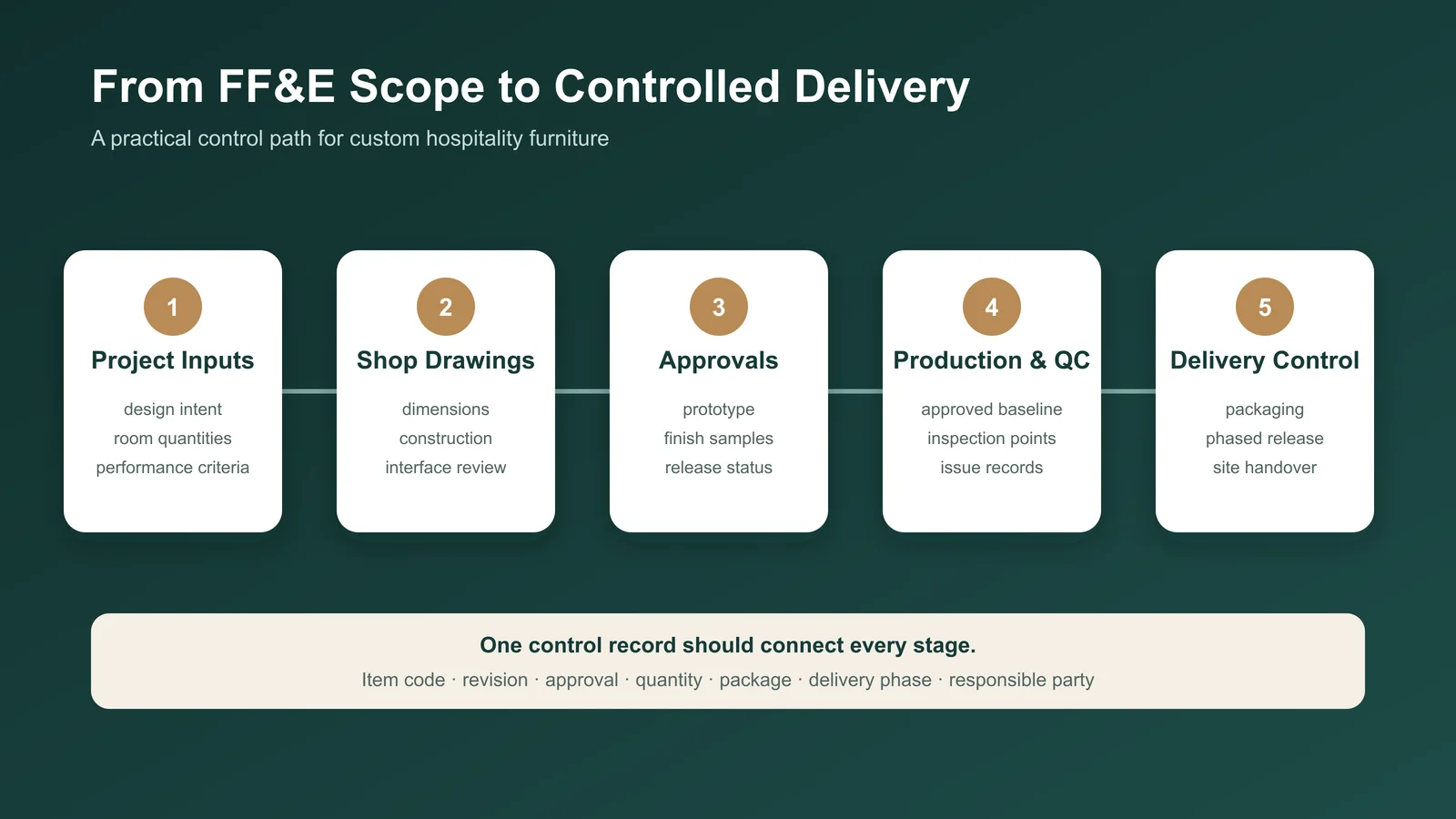
FF&E project workflow from scope definition to handover
A shared item identity should connect scope, approval, production, delivery and handover.

What does FF&E stand for?

The three parts of the acronym provide a useful working framework:

This article uses FF&E as a hospitality project term. It does not provide an accounting, depreciation, tax or legal definition; those classifications require advice based on the relevant contract and jurisdiction.

Hotel FF&E examples by space

A room-by-room view is more dependable than a generic master list. It exposes quantities, finishes and interfaces at the place where the item will be used.

Hotel areaTypical FF&E examplesBoundary to confirm
GuestroomBed, headboard, nightstand, desk, chair, luggage bench, loose wardrobe and decorative lightingWall fixing, power, data, integrated controls and any built-in cabinetry
SuiteSofa, lounge chairs, dining table, console, side tables and feature piecesFloor boxes, stone or glass by others, and attachment of large assemblies
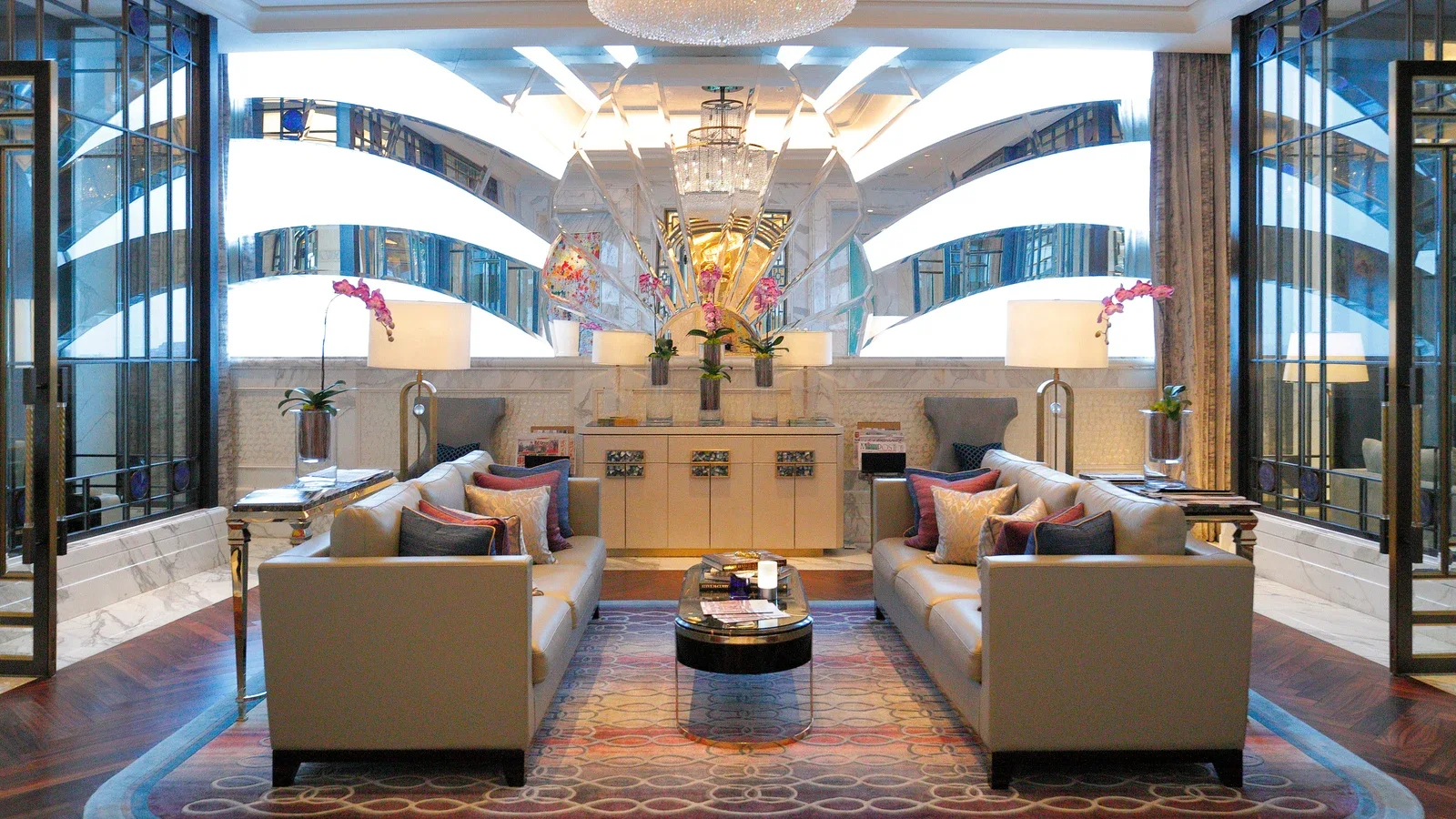
Lobby and loungeReception furniture, sofas, armchairs, communal tables, screens and decorative objectsFixed bases, concealed services, specialist finishes and public-area installation sequence
Restaurant and barDining chairs, bar stools, tables, host stand, banquettes and service stationsBanquette bases, kitchen interfaces, floor fixing and service access
Outdoor areasChairs, loungers, tables, daybeds, planters and umbrellasWind strategy, drainage, anchoring, storage and local weather exposure

Gainwell’s current luxury-hotel furniture scope covers guestrooms, suites and public areas, including loose and fixed furniture systems. That company-level range illustrates the variety of a hotel package, but the live proposal still needs to identify every included item and service.
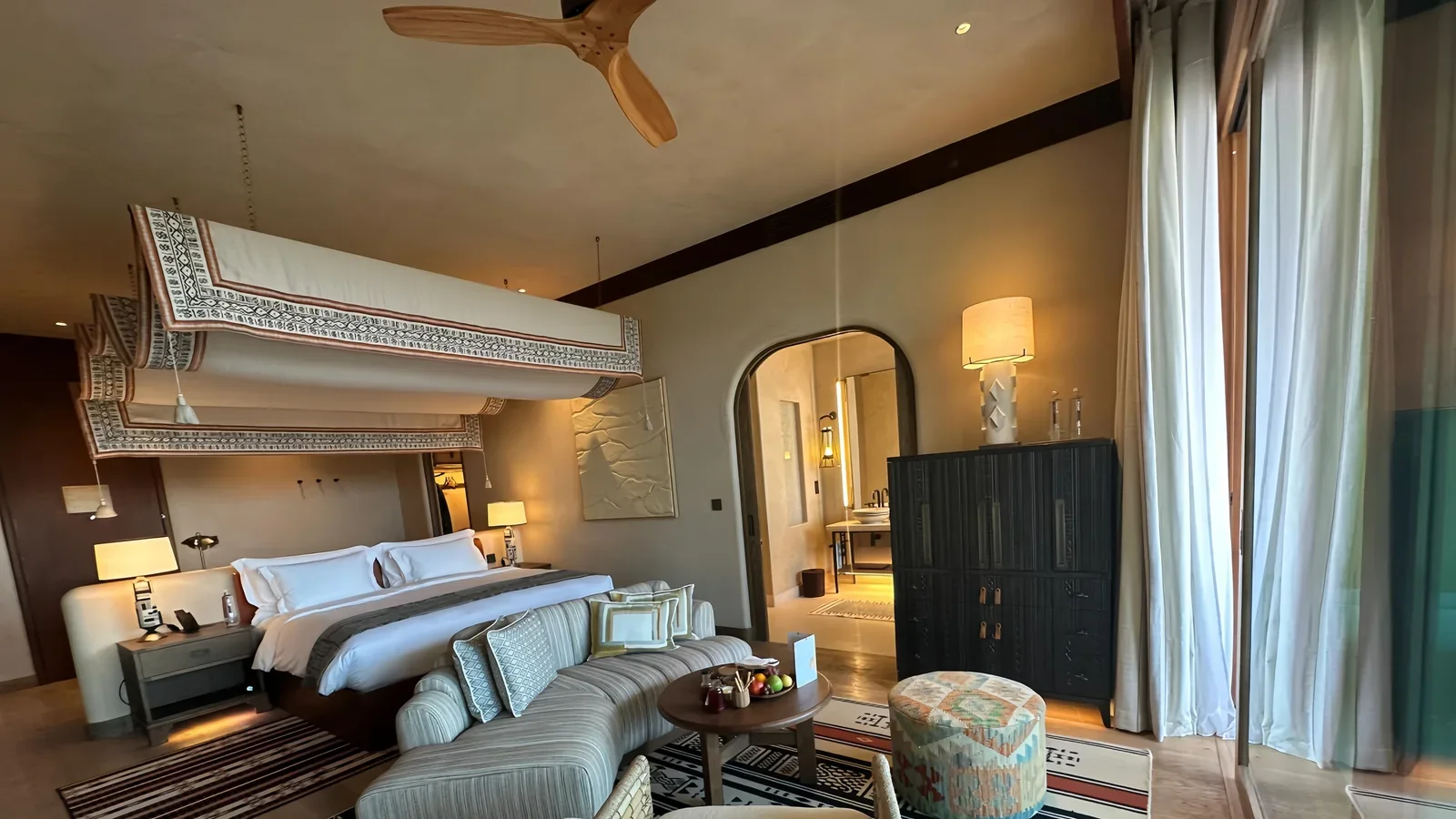
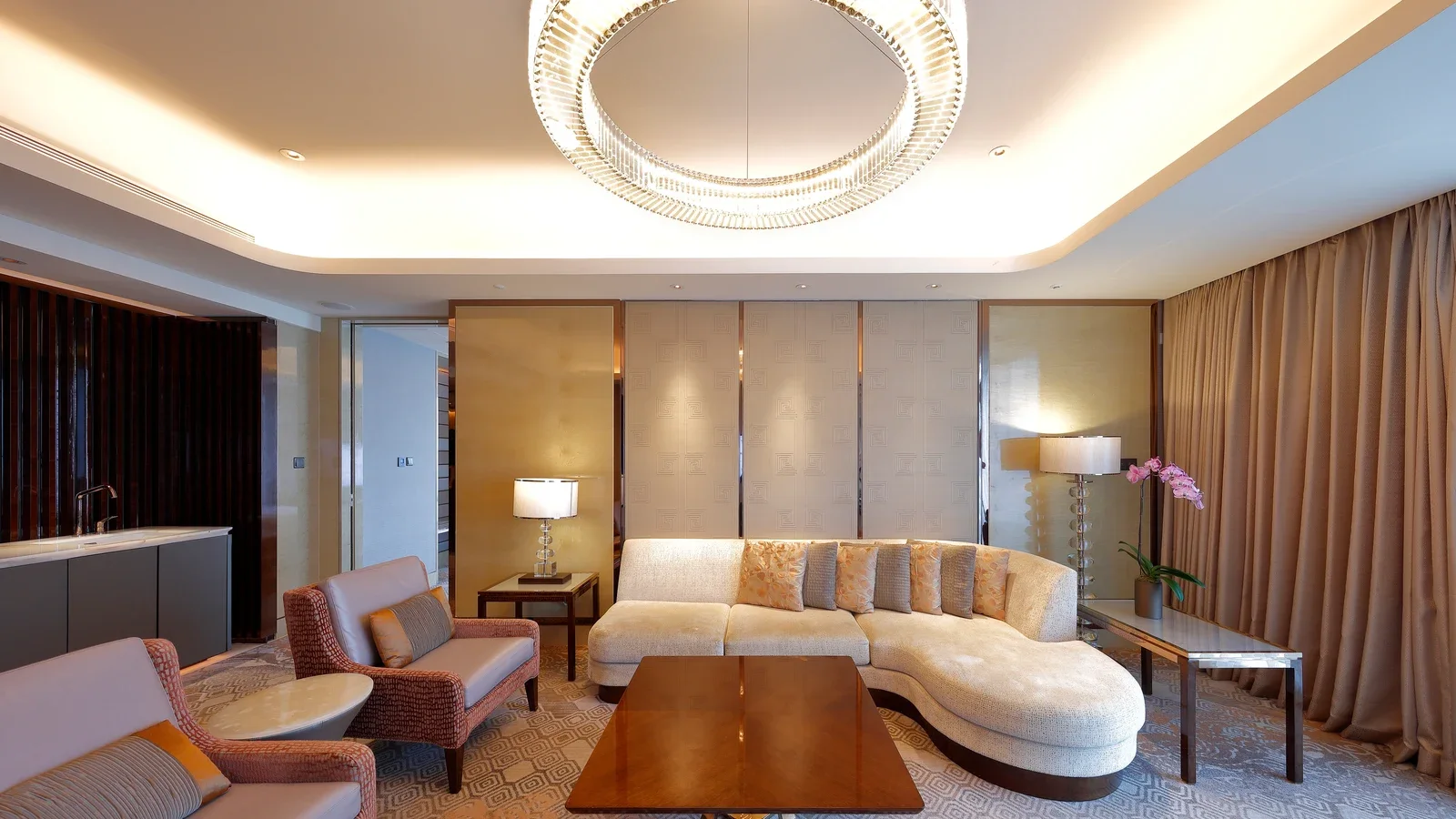
Hotel guestroom with bed, seating, tables, cabinet and lighting
A guestroom can look complete while one required asset, interface, responsibility or handover record still prevents the agreed use state.

FF&E vs OS&E vs fixed construction

Teams often lose time when they treat these labels as self-explanatory. Use them as coordination groups, then name the real owner of each action.

CategoryWorking project meaningControl question
FF&EFurniture and selected fixtures or equipment developed and purchased as project assetsWhich item code, drawing, sample and purchase package control it?
OS&EOperating supplies and equipment needed to run the propertyIs it managed through operating inventory, replenishment or a specialist operating package?
Fixed constructionBuilding fabric and coordinated architectural or services workWhich trade owns the substrate, connection, tolerance, inspection and completion?

The categories can meet in one assembly. A minibar appliance may be operating equipment, the cabinet may be FF&E or millwork, and the power and ventilation may belong to building services. Classification is useful only when these handovers are visible.

Use five tests to decide whether an item belongs in FF&E

  1. Movement test: Can the complete item be removed without material work to the building? Movability supports an FF&E classification, but it is not decisive.
  2. Interface test: Does it require wall or floor fixing, power, data, plumbing, ventilation, fire stopping, blocking or a precisely prepared recess?
  3. Procurement test: Which schedule, specification, tender package and purchase order will control it?
  4. Lifecycle test: Who will inspect, maintain, replace and record the asset after handover?
  5. Responsibility test: Who designs, details, supplies, delivers, installs, connects, protects and accepts the complete assembly?

An answer such as “by others” does not pass the responsibility test. Replace it with the named organization, the required output and the date when the interface must be resolved.
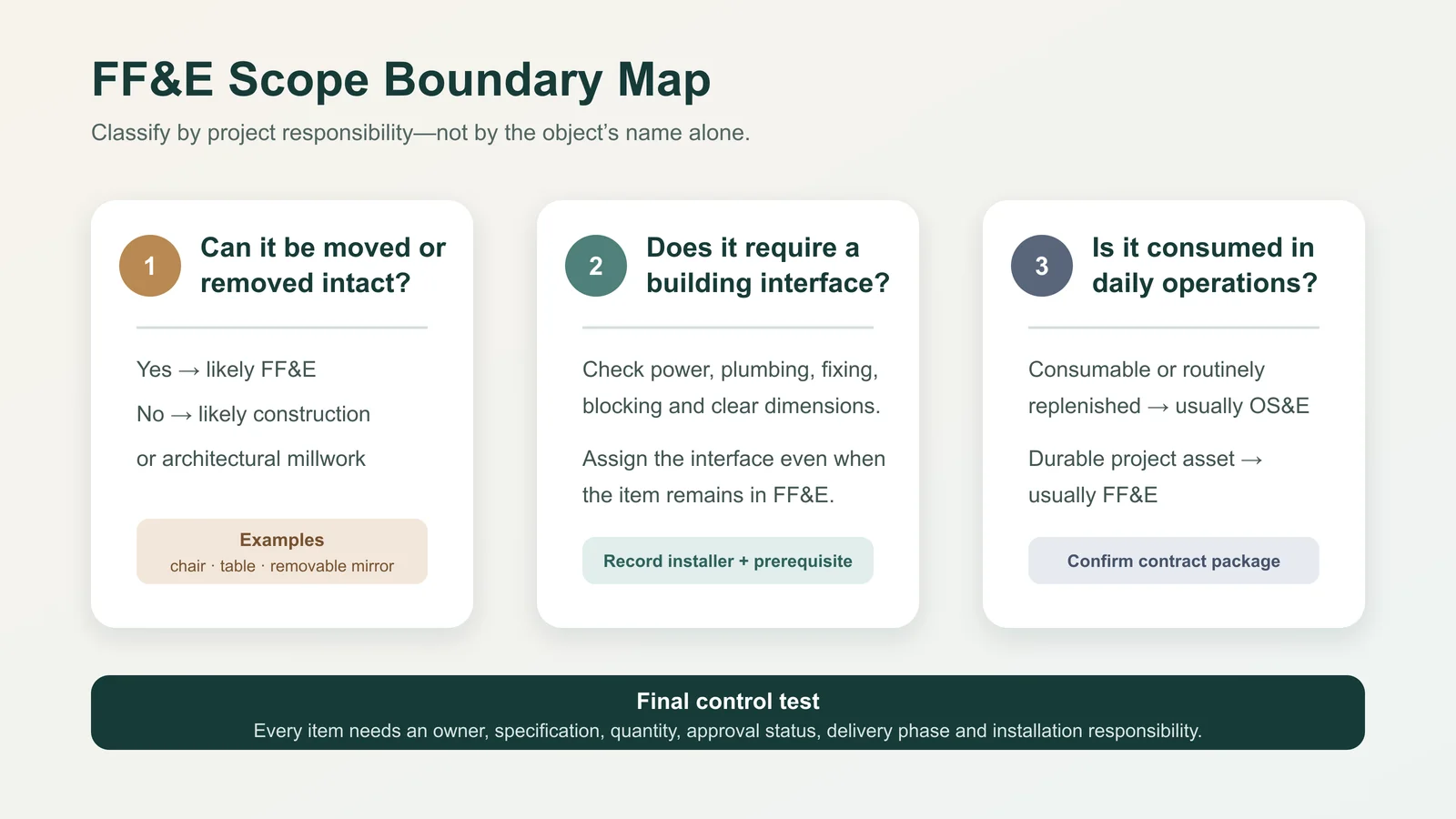
FF&E scope boundary map for hotel project items
The acronym starts the classification; the project documents complete it.

A worked example: the guestroom headboard wall

Consider a headboard that appears to be one furniture item. The visible upholstered panels may be manufactured with the casegoods, while the wall substrate is prepared by the main contractor. Decorative lights may come from a lighting supplier. Switches, sockets and wiring belong to electrical work. Metal trims or stone ledges may come from additional specialists.

Calling the whole arrangement “FF&E” does not coordinate it. The project needs a composite elevation, agreed setting-out points and a responsibility line for each material, fixing, service and approval. The furniture supplier should know the actual substrate and connection zones before production release; the site team should know the furniture tolerances before closing the wall.

The same method applies to banquettes, vanity units, wardrobes, reception desks and minibar cabinets: review the complete assembly first, then assign its parts without losing the interface between them.
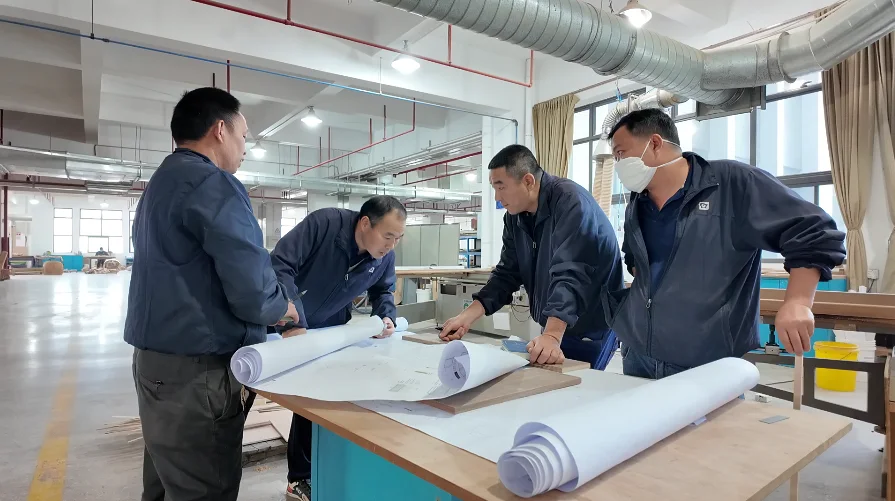
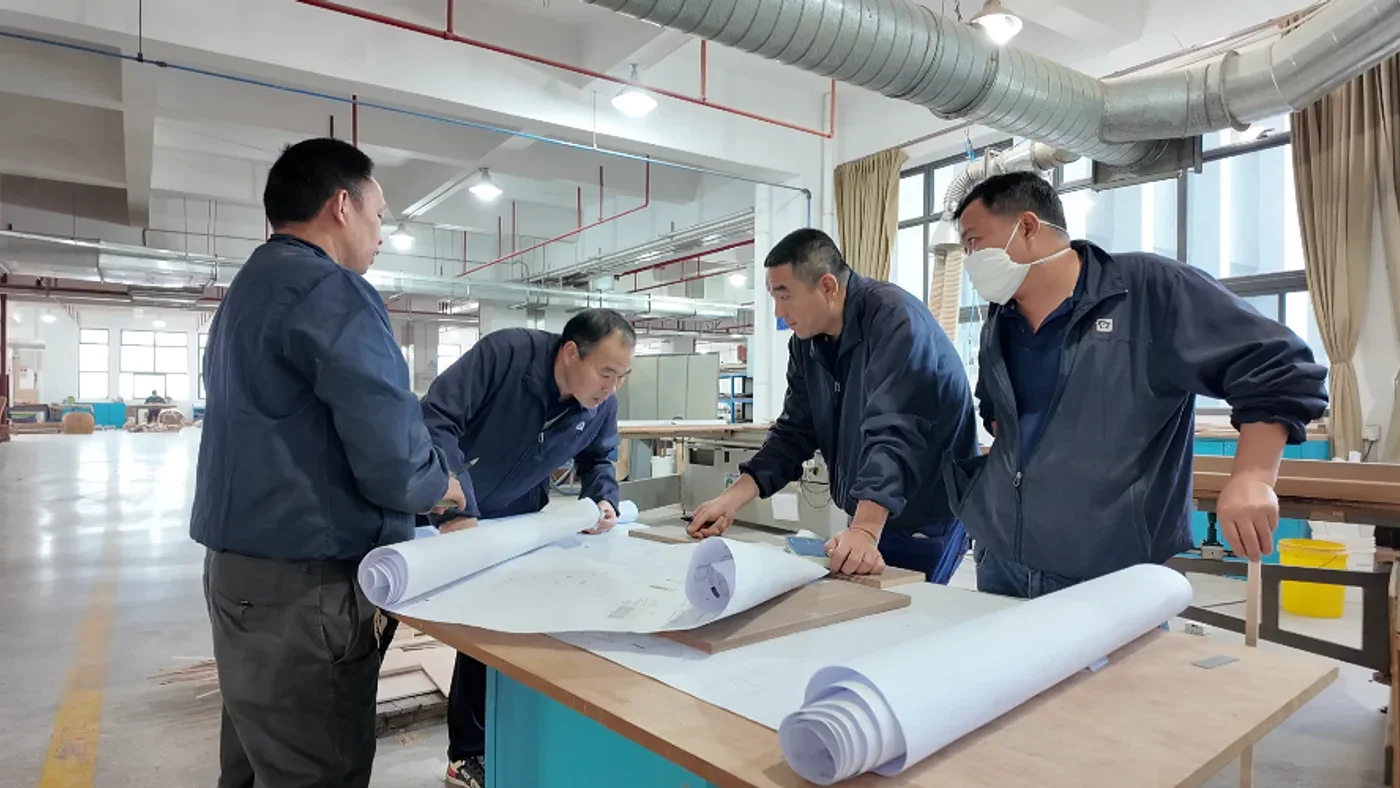
Gainwell team reviewing furniture drawings at a factory worktable
The schedule should name the controlling drawing and revision; the drawing remains the source for the detail it contains.

Build a minimum FF&E scope register

Give every item a stable code and record enough information for another team member to trace the current decision. A useful minimum register includes:

Use three clear states for scope: included; excluded with a named owner; or open with an owner and decision date. This is more actionable than adding another note to an uncontrolled spreadsheet.

How FF&E moves from design to handover

A controlled FF&E path generally connects the room or area schedule to design development, technical documentation, quotation, sample or prototype approval, production release, inspection, packaging, delivery, installation and handover. The stages may overlap, but each release should point to the same item code and approved revision.

The Gainwell capabilities workflow describes support across shop drawings, prototyping, manufacturing, quality control, packaging, delivery and installation. This is relevant when a project needs one furniture partner across several stages; it is not a promise that every service is included in every appointment.

At each handover, transfer a decision record rather than only a physical item. For example, production release should identify the approved drawing and finish; shipment release should identify the inspected batch and package code; site acceptance should connect the installed piece to the room and exception record.

Common FF&E scope mistakes

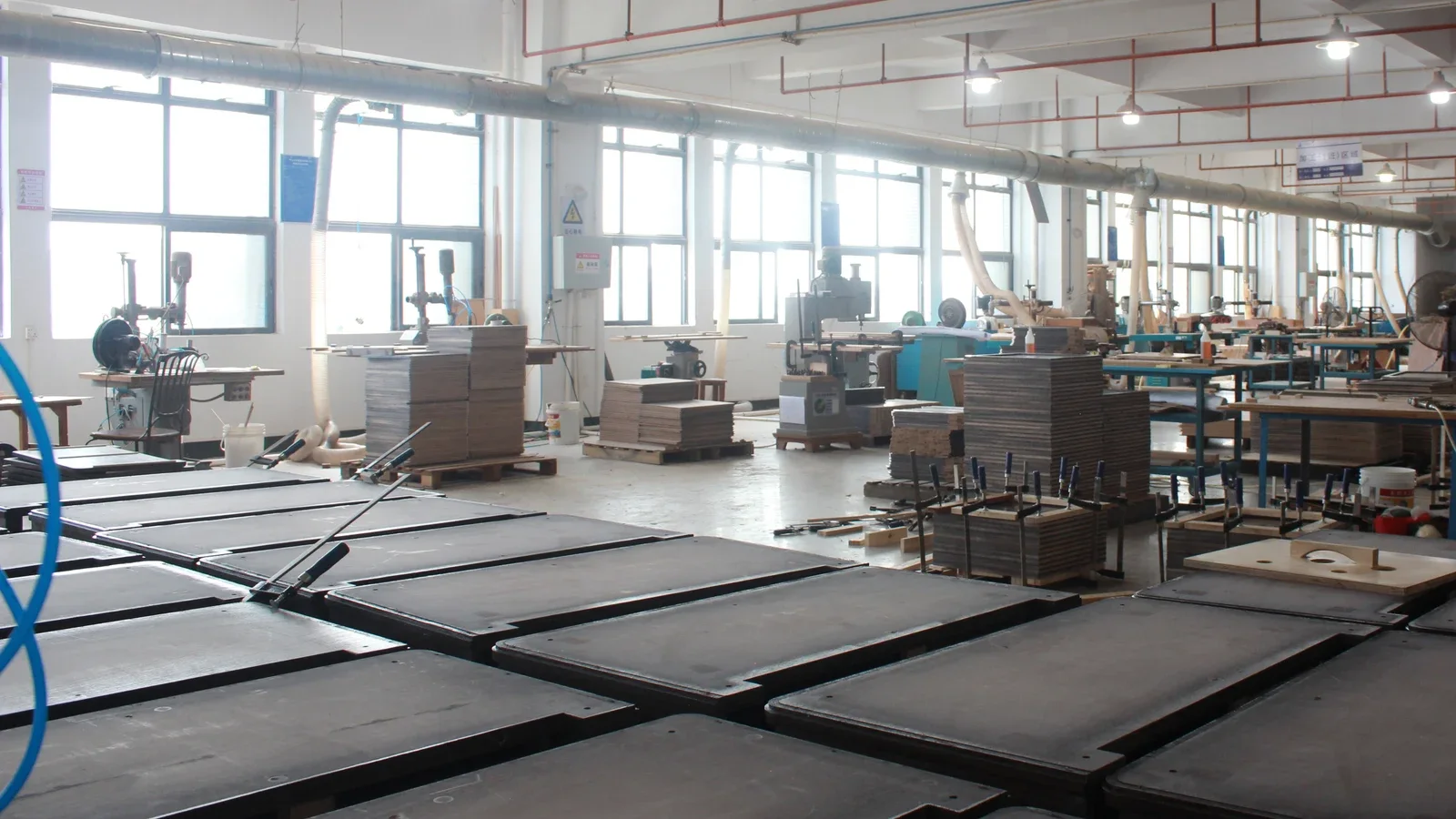
Furniture panels organized in production groups inside a workshop
A management total becomes reviewable only when it can be traced to an asset population, quantity basis, cost boundary and current evidence state.

FF&E scope checklist before an RFQ

  1. Confirm the room types, public-area zones and current quantity basis.
  2. Assign one stable code to every furniture or equipment item.
  3. Link each code to its latest drawing, specification and finish reference.
  4. Run the five boundary tests on fixed, powered or multi-trade assemblies.
  5. Name who supplies, installs, connects, protects and accepts each item.
  6. Record inclusions, exclusions and open decisions in the same register.
  7. Issue the RFQ from one controlled information set and state its revision date.

Frequently asked questions

Is built-in furniture always excluded from FF&E?

No. Some hotel projects include fixed furniture or millwork in the FF&E programme; others place it in a construction or specialist joinery package. The drawings, schedules and responsibility matrix should classify the actual assembly.

Is all equipment part of FF&E?

No. Equipment can sit in FF&E, OS&E, kitchen, AV, security, spa or another specialist package. Its purpose, connections, procurement route and lifecycle owner all influence the decision.

Who usually buys hotel FF&E?

The owner may buy directly, appoint an FF&E procurement firm or contract through another project party. The commercial route should state who tenders, purchases, expedites, pays, receives and accepts each package.

What should a manufacturer receive before pricing?

Provide current drawings, item codes, quantities, material and finish direction, required samples or prototypes, destination, delivery phases, responsibility boundaries and the target approval programme. Mark unresolved information rather than allowing bidders to make different assumptions.

If your hotel scope includes custom loose or fixed furniture, review Gainwell’s current product systems. Then share a coded FF&E brief with Gainwell so the team can confirm the relevant product and service scope for the project.


What Is an FF&E Reserve? Hotel Planning, Scope and Governance

A hotel may report a substantial FF&E reserve balance and still be unable to answer four practical questions: which renewal packages are eligible, which are approved, which are already committed, and which needs remain unfunded. The balance appears reassuring only because unlike claims have been added together.

An FF&E reserve is an agreement-governed funding mechanism commonly connected to defined hotel furniture, fixtures and equipment replacements, renewals or additions. It is not a universal percentage, an asset-condition survey, a project budget or automatic permission to spend. The operational task is to connect the applicable rules to a specific asset population, eligible intervention, evidence package, authorized commitment and reconciled closeout.

This article provides an owner-side planning method, not legal, accounting, tax, lending, valuation or investment advice. The executed management, franchise, loan, lease and other relevant agreements—and the property’s qualified advisers—control the actual definition, funding, custody, approvals, accounting and permitted uses.

Outdoor hotel dining area with seating, tables and umbrellas
A reserve claim should name the property area, asset population and proposed intervention before funding coverage is assessed.

Separate four records before discussing the reserve

Teams often use “reserve plan” to describe four different things. Keep them separate and linked:

RecordQuestion answeredWhat it cannot prove alone
Governing rulesWhat creates the reserve, how it is funded or held, what uses may qualify and who controls approvals?Which assets currently need intervention
Authoritative financial recordWhat balance, additions, withdrawals, restrictions and commitments are recognized by the responsible finance parties?That an unapproved project is eligible or affordable
Property need pipelineWhich defined asset populations may require repair, refurbishment, replacement or another action, and when?That the reserve may fund the proposed treatment
Project evidenceWhat scope, quantities, technical basis, commercial basis, approvals and completion evidence exist for one package?That reserve authority or cash is available

The four records should reconcile at decision points, but they should not be collapsed into one spreadsheet column. A furniture condition observation is not a withdrawal right. An available balance is not an approved furniture specification.

Issue a one-page reserve charter

Before screening projects, ask the authorized legal, finance, ownership, operating and lending parties to confirm a plain-language charter that points back to the controlling documents. At minimum, record:

Use the charter as a routing index, not as a home-made interpretation of the contract. If the responsible parties cannot confirm a field, mark the related project claim as unresolved. Do not convert silence into eligibility.

Why is there no universal FF&E reserve percentage?

Current primary evidence shows why copying a percentage is unsafe. A hotel owner’s 2025 annual report filed with the SEC states that reserve amounts for its covered hotels are determined under the respective management and franchise agreements, reports a range for that portfolio and notes that some reserve funds need not be spent each year. A separate publicly filed hotel management agreement example contains its own staged contribution, estimate, approval, carry-forward and additional-funding provisions.

Those are examples of variation, not instructions for another hotel. A different property may have different agreements, revenue definitions, priorities, custody, lender rights, eligible scope, funding gaps or owner contribution rules. Use the actual documents and authoritative financial records; do not adopt a percentage from search results, a competing hotel or this article.

Run every proposed package through six eligibility gates

A project should not enter the funded plan simply because it concerns furniture. Test it through a six-gate funnel:

  1. Authority gate: which document and version govern this property, and who is qualified to interpret the relevant clause?
  2. Asset gate: is the proposed population within the defined reserve scope, or does it belong to operating supplies, building systems, owner-funded work or another account?
  3. Intervention gate: does the proposed repair, renewal, replacement, addition or related action match an allowed use under the property’s rules?
  4. Evidence gate: are location, quantity, current condition, reason, scope, estimate basis and dependencies clear enough for the required review?
  5. Funding gate: what available amount remains after protected balances and approved commitments, and is supplementary funding or another source required?
  6. Decision gate: has the authorized party approved the scope, amount, timing, conditions and withdrawal or reimbursement route?

Use four outcomes: eligible for approval, conditionally eligible, outside the confirmed reserve scope or unresolved. “Planned” should not hide which gate is open.

Labeled finish containers and sample boards on storage shelves
A finish direction becomes usable when the project identifies the controlling reference, reviewed attributes, permitted variation and current status.

Define the claim boundary by population and intervention

The same hotel area may contain loose furniture, upholstered furniture, fixed pieces, millwork, floor and wall finishes, lighting, equipment and operating supplies. Visible proximity does not give them the same reserve treatment.

Write the proposed claim as:

Property + area or room family + asset IDs + quantity basis + current reference + proposed intervention + exclusions.

For example, “replace selected guestroom lounge chairs” is incomplete. A reviewable population might identify the affected room families, chair code, verified count, whether frames, upholstery or complete units are proposed, and which guestrooms, spare items, freight, site work or adjacent finishes are excluded or awaiting confirmation.

Hospitality suite with sofa, lounge chairs, tables and cabinetry
One space can contain several asset groups; do not assume the same reserve eligibility, authority or treatment applies to every visible element.

Build a need-to-funding coverage bridge

Maintain a planning bridge beside—not instead of—the authoritative accounting record:

Confirmed available funding − approved commitments − protected or restricted amount = planning capacity.

Then compare planning capacity with three claim classes:

Do not subtract every unapproved need from the reserve balance as if it were a liability. Do not present planning capacity as unrestricted cash or permission to spend. Reconcile all terms, dates and figures with the responsible finance party.

Show coverage as a claim stack, not one percentage

Consider an illustrative planning snapshot. The authoritative record shows 1,000 units of confirmed available funding after its own restrictions. The property pipeline contains 550 units of approved commitments, 250 units of conditionally eligible claims and 400 units of unapproved needs.

Claim classIllustrative amountHow to read it
Approved commitments550Reserved planning capacity falls to 450, subject to the authoritative record and actual payment timing
Conditional claims250Could consume part of the remaining capacity if conditions and approvals are completed
Unapproved needs400Signals a potential future funding gap but is not an authorized reserve claim

The reserve appears to cover 1,000 units of needs only if all claim classes are treated as equivalent. They are not. The useful output is a coverage narrative: current commitments fit the confirmed capacity; conditional claims could leave 200 units; further needs require prioritization, later funding or another authorized source if they mature. The numbers demonstrate the method only, not a target, forecast or recommendation.

Create one reserve decision card for each claim

The decision card should let an approver understand the claim without reconstructing it from the asset register, budget and procurement correspondence:

Decision-card fieldRequired answer
PopulationWhich property, areas, room families, asset IDs and quantities are included?
Intervention and reasonWhat is proposed, what observable evidence supports it and which alternatives were considered?
Eligibility basisWhich charter field and confirmed interpretation support or limit the use?
Commercial basisWhat estimate, quotation, allowance, exclusions, taxes, freight, site work or other basis has been reviewed?
Funding positionWhich claim class applies, what planning capacity remains and is another funding source needed?
Authority and conditionsWho decides, what is approved, what remains conditional and when does approval expire or require refresh?
Closeout ruleWhich commitment, invoice, receipt, asset, completion and residual records must reconcile?

The card links to detailed evidence; it should not copy every drawing or contract clause into another uncontrolled file.

Lock the commitment before work proceeds

An approval becomes a commitment only when the project can identify the approved population, current scope, amount or agreed commercial basis, funding source, authorized signatory, commitment reference, conditions and permitted changes. Record that state as a commitment lock.

If a purchase order, contract or instruction differs from the approved decision card, return the claim to the affected gate. Do not assume that an approval for a planning allowance authorizes a different quantity, finish, supplier scope, freight basis, installation boundary or schedule.

Hospitality lounge with sofas chairs tables and storage furniture
Public-area furniture is easier to control when each composition is an asset group with its own quantity, maturity, rate basis and decision owner.

Test every change for reserve impact

For each proposed change after the commitment lock, ask:

  1. Does the affected asset population expand, shrink or move?
  2. Does the intervention remain within the confirmed eligibility basis?
  3. Does the authorized amount or commercial basis change?
  4. Does timing change the available funding or payment sequence?
  5. Does another agreement, lender, owner, operator or project approval become necessary?
  6. Which reserve, commitment and project records must be reissued?

A furniture specification change is not automatically a reserve change, but it can alter scope, amount, population or authority. Run the test before implementation, not only when the final invoice arrives.

Close each use through a four-way reconciliation

A reserve-funded package should close only when four views agree:

Record unused authorization, cost variance, excluded items, credits, proceeds, open defects and transferred obligations according to the charter and authoritative systems. A package is not closed merely because furniture arrived or the reserve account moved.

Report governance health, not a reassuring balance

A concise owner-side panel can show:

A red, amber or green label is useful only when its rule is defined. Preserve amounts, populations, evidence states and need dates behind the color.

Where does Gainwell enter a reserve-funded furniture renewal?

Gainwell’s current hospitality product categories include loose, upholstered and fixed furniture and architectural millwork, while its capability workflow describes technical development, prototypes, manufacturing, quality control, packaging, delivery and installation support. The company’s luxury-hotel context spans guestrooms, suites and public areas. These pages can help organize a defined furniture package; they do not determine whether a hotel may use its reserve.

Before seeking manufacturer input, prepare the asset population, current references, proposed intervention, observable evidence, quantity basis, decision horizon, technical and operating requirements, commercial boundary and approval route. Share the defined hotel furniture renewal brief with Gainwell so the live team can confirm applicable products, development inputs, services and responsibility boundaries.

FF&E Project Management: Roles, Control Gates and Reporting

The weekly FF&E report is green. The approved guestroom finish is recorded in a meeting note, the drawing register still points to the previous finish, the quotation carries a conditional alternative, production is waiting for a release, and the room schedule says nothing changed. Every team is active, but the project has five versions of one decision.

FF&E project management is the control of decision transactions across workflows. Each material issue should identify the affected baseline, evidence required, person with authority, permitted outcome, downstream records to update, verification owner and proof of closure. The goal is not to absorb design, procurement, manufacturing, logistics, construction or installation into one giant checklist. It is to keep an authorized decision intact while it crosses those boundaries.

This guide provides an owner-side control model. The live contract, project governance plan and responsible professionals still determine approval authority, technical review, commercial effect, site release, safety, code and acceptance requirements.

Large furniture manufacturing campus with connected buildings
A project-control system must keep one authorized decision aligned across every team and record that uses it.

Define roles by decision rights, not attendance

A meeting invite shows participation; it does not show authority. For each recurring decision class, name the role that performs each verb:

Decision verbWhat the role ownsEvidence of completion
ProposeStates the requested change or decision as a bounded question and identifies the current baselineIssue statement with source, population and required-by point
AnalyzeAssembles relevant design, technical, commercial, production, logistics, site and operations effectsOptions and impacts linked to controlled evidence
DecideSelects, rejects, conditions or returns the proposal within delegated authorityNamed authority, outcome, conditions and decision timestamp
ImplementUpdates the records, instructions and work packages that consume the decisionNew versions, acknowledgements and affected-population status
VerifyChecks that the approved outcome reached every required consumer and that conditions were closedPropagation and closure evidence

One person may hold several roles when the contract allows it. The map still matters because it shows which capacity that person is acting in. “Everyone agreed” is not a substitute for a named decision right, and “project manager” should not become an unlimited authority label.

Make every material issue a decision transaction

Use one record from question to retirement. Do not split the request, approval, downstream updates and verification across disconnected email chains. A practical decision transaction record contains:

  1. Identity: transaction ID, package, item, room family or area and the exact affected population.
  2. Baseline: the current drawing, specification, finish reference, quantity, commercial record, release or destination plan that may change.
  3. Question: one answerable decision, written without hiding several approvals in the same sentence.
  4. Trigger and need point: why the decision is needed and which downstream commitment will become constrained.
  5. Evidence: the controlled facts, options, limitations and unresolved assumptions supplied for analysis.
  6. Authority: the named decision role and any separate reviewers required by the live project.
  7. Outcome: accept, accept with conditions, return for evidence or reject/retire.
  8. Propagation: every register, drawing, specification, commercial document, work package and team that must receive the outcome.
  9. Verification and closure: who confirms implementation, which conditions remain and what proves the transaction can be closed.

The record is not another minutes template. It is the authoritative route for one decision. Meeting notes may link to it, but they should not create a parallel approval.

Triage incoming work as a decision, action or evidence request

Project queues become noisy when three different kinds of work share one status column. Classify each new item before assigning it:

“Confirm finish” is too vague. If the finish reference is missing, request evidence. If two accepted references conflict, raise a decision. If the finish is approved but one register remains old, assign an implementation action. Triage prevents the decision queue from becoming an undifferentiated list of reminders.

Use one gate contract at every cross-workflow handoff

A control gate should not be a date with a color beside it. Define the contract for passing that gate before the package arrives. The same five-part structure can be used at design release, commercial authorization, production release, shipment release, site work-front release or operational handover without rewriting the specialist process behind each point.

Gate contract fieldQuestion it must answer
Entry evidenceWhich exact records, versions, reviews and unresolved exceptions must be present?
Decision authorityWhich role can release, condition, return or reject the package at this gate?
Allowed outcomesWhat does each outcome permit downstream teams to do, and what remains prohibited?
Propagation targetsWhich consumers must receive the gate outcome and updated baseline before acting?
Exit proofWhat demonstrates that the release was implemented and any conditions were closed?

Use four explicit outcomes: released, conditionally released, returned for evidence and retired. A conditional release must state the permitted work, affected population, exposure owner, expiry or next gate and closure requirement. Otherwise “conditional” becomes an invisible permanent exception.

Gainwell team reviewing hotel furniture drawings in the factory
A furniture package should connect its room or area demand to the current drawing, finish, interface and decision record.

Run a decision-latency clock without inventing a universal SLA

Elapsed time alone does not explain why a decision is stuck. Give the clock a state:

  1. Question forming: the affected baseline or population is not yet clear.
  2. Evidence building: named inputs are being produced or reconciled.
  3. Authority pending: the evidence pack is accepted for decision and awaits the authorized role.
  4. Propagation pending: the decision exists, but one or more consumers have not implemented or acknowledged it.
  5. Verification pending: implementation is reported, but closure proof or a condition remains open.

The project should set its own trigger for review or escalation based on the next affected commitment, delegated authority and contract. Do not import a universal number of days. A recently raised decision can require immediate attention if it controls a wide population; an older question may be harmless if no accepted downstream action depends on it.

Map propagation before authorizing the change

A decision is incomplete if the project cannot name its consumers. Build the propagation map during analysis, not after approval. For each proposed change, ask which of these branches can be affected:

For each affected consumer, record the previous version, required new version, implementation owner, acknowledgement or verification method and status. “Team notified” is not enough if the live work package still carries the superseded baseline.

Grouped upholstered lounge chairs in several fabric combinations
A release decision should identify the population it governs; visible similarity alone does not prove that every unit carries the same approved input.

Worked example: propagate one finish change

Assume a guestroom lounge chair finish is reconsidered after a controlled sample review but before the relevant production release. The example shows governance logic only; the live project team must determine design acceptability, technical suitability, commercial effect and release authority.

Transaction stepExample recordControl question
Bound the populationChair code CH-14 in guestroom families A and B; suites excluded pending a separate checkWhich units would inherit this decision?
Name the baselineCurrent finish reference, drawing revision, sample record and commercial basisWhat exactly would change from what?
Build evidenceRevised finish reference, visible comparison, technical review, cost/schedule analysis and open limitationsIs the authorized role deciding from controlled information?
Record the outcomeApproved for families A and B subject to one named sample condition; suite decision remains openWhat is permitted, conditional or still prohibited?
PropagateUpdate finish schedule, chair submittal, commercial change record, production release, inspection reference and room-family dataHas every consumer received the same decision?
Verify and retireUpdated versions acknowledged; condition closed against its evidence; suite branch remains a separate transactionCan this record close without hiding a surviving obligation?

The project manager does not approve every specialist conclusion. The project manager ensures that the correct conclusions reach the correct authority, then protects the outcome while it moves through the affected systems.

Track decision debt, not only open decisions

Decision debt is the unresolved obligation left behind when work has moved farther than its authority or evidence. It includes:

Record the debt against the decision transaction, affected population, next commitment and accountable owner. Closing the activity that exposed the debt does not close the debt itself.

Labeled finish containers and sample boards on storage shelves
A finish direction becomes usable when the project identifies the controlling reference, reviewed attributes, permitted variation and current status.

Report four views from the same controlled records

A weekly report should not ask every audience to read the full transaction log. Create four views from the same source records:

Reporting viewWhat it should exposeUseful decision
Decision queueQuestion, population, authority, clock state, need point and next actionWhich decision requires attention now?
Gate readinessApproaching gate, missing entry evidence, allowed outcome and controlling conditionWhich package may advance, return or remain held?
Propagation exposureApproved changes with unupdated consumers or unacknowledged populationsWhere could teams act on different baselines?
Decision debtExpired conditions, incomplete verification, superseded live records and residual obligationsWhat must be retired before the next commitment or handover?

Use color only after defining the rule behind it. A report can be concise while still showing the denominator: four of five required evidence records accepted, two of seven consumer systems updated, or three of twenty affected rooms verified. A percentage without its population and gate meaning can create false confidence.

Run meetings around decisions, not status narration

Issue the decision queue before the meeting. Use the live session for matters that require authority, cross-functional analysis or exception routing. A compact agenda can follow five questions:

  1. Which new issue changes an accepted baseline or population?
  2. Which evidence request blocks an approaching gate?
  3. Which decision has the greatest downstream propagation exposure?
  4. Which condition or debt must be closed before the next commitment?
  5. Which completed transaction can be retired from active reporting?

Record the answer in the transaction, not only in the minutes. Routine actions can remain in a separate action queue, and specialist reviews can occur in their controlled systems with the relevant evidence linked back to the decision.

Retire authority at closeout

A decision record should leave the active queue only when its outcome is implemented, every required consumer is updated or explicitly exempted, conditions are closed or transferred, superseded instructions are controlled, verification is complete and any residual obligation has a named owner and destination record.

Retirement is different from deletion. Preserve the approved baseline, authority, propagation evidence and closure proof according to the project’s information-governance requirements. The active dashboard becomes smaller because the transaction is complete, not because it has aged out of view.

Where does Gainwell fit in FF&E project management?

Gainwell currently presents custom product categories covering loose, upholstered and fixed furniture together with architectural millwork. The company’s published capability workflow follows work from development and prototypes through manufacturing, quality control, packaging, delivery and installation support. Its luxury-hotel context includes guestrooms, suites and public areas. These are company-level capabilities, not a claim that Gainwell automatically holds owner-side authority or every project-management responsibility.

For a project-control review, prepare the active furniture packages, current baselines, decision-rights map, approaching gates, open transactions, propagation gaps and reporting expectations. Share the controlled FF&E project brief with Gainwell so the live team can confirm which products, services, evidence and responsibilities apply.

Hotel Furniture Installation: Site Readiness, Sequencing and Handover

A hotel floor may show twenty rooms as “available,” yet an installation crew can lose continuity after the first few doors. One room lacks the correct furniture set, another belongs to a handed variant, the lift slot closes, a corridor remains shared with another trade, or no one can approve a field exception. The problem is not simply furniture assembly. It is a broken flow between the route, room, product and decision.

Hotel furniture installation should be released as complete room-family or area waves. For each wave, the destination, access path, correct furniture set, current references, product-specific work method, decision authority and handover evidence must stay aligned for the full work window. Releasing isolated rooms or counting delivered pieces does not prove that the installation team has executable work.

This guide is an owner-side coordination method. It does not replace the installer’s approved method, the manufacturer’s instructions, the contractor’s site controls or the responsible professionals’ safety, permit and acceptance requirements.

Hotel room with bed, built-in desk, shelving and coordinated furniture
A first completed room is useful only when the project records which room family, furniture set, interfaces and visible conditions it represents.

Start with the installation boundary, not the crew date

“Installation included” is not a usable scope description. Before mobilization, list the physical verbs that may occur between site receipt and room acceptance, then assign each verb by furniture package and location.

Boundary groupQuestions to closeRecord
Custody and movementWho receives, checks, stages and moves each coded item to its final room or zone?Handoff point, condition record, destination identity and custody owner
Physical workWho unpacks, assembles, positions, adjusts, fixes or coordinates a specialist connection?Product and activity scope linked to the approved project information
Protection and wasteWho protects the asset and adjacent finishes, controls packaging and records any later custody change?Protection state, removal boundary and responsible party
Inspection and closeoutWho checks the room, raises an exception, authorizes a disposition and accepts closure?Inspection authority, exception route and evidence requirement

The same organization may own several groups, but the live responsibility matrix must say so. A furniture manufacturer, installation contractor and site team can all provide support without sharing the same legal or operational scope.

Define an installable room set

A room that is visually finished is not automatically an installable room. Use one gate that tests the whole work unit. A room enters the ready-work queue only when all project-defined conditions are accepted or covered by an authorized, time-limited condition.

  1. Destination: the exact room, room family and current source plan are identified.
  2. Room condition: the authorized site party has released the space for the planned furniture activity and protection state.
  3. Furniture set: the correct coded items, parts and approved substitutions for that room are available and traceable.
  4. Route: the unloading, staging, vertical and horizontal path and room entry are available for the actual item and time window.
  5. Interfaces: the project has accepted the relevant dimensions, supports, services, adjacent finishes and other package dependencies.
  6. Information: the current drawings, room schedule, product references and authorized method or manufacturer instructions are accessible.
  7. Resources: the responsible team confirms its people, tools, equipment, protection and consumables for that activity.
  8. Decision route: a named role can stop, clarify, disposition and re-release the room without inventing a field solution.

Use ready, conditional or hold. A conditional room must show the condition, affected work, owner and expiry. Otherwise it belongs on hold.

Map route-to-room capacity before forming the wave

The planned furniture set must pass through a shared route. Map the sequence from the agreed site handoff to the destination: unloading window, receiving point, staging area, lift or stair route as applicable, corridor, room entry, packaging exit and any return path.

For each segment, record the item or furniture family it can accept, the authorized time window, competing users, decision owner and evidence of release. Do not convert the map into a generic lifting or traffic method; those methods belong to the responsible site parties.

The route constraint is the segment that limits the proposed wave under the accepted conditions. If twelve rooms are physically ready but the controlled route can support only the furniture sets for six before the work window closes, the viable wave is not twelve. Change the wave, route slot or handoff plan—do not label the other six rooms “in progress.”

Form waves by room family and furniture set

A hotel installation wave is a group of rooms or one defined area that can move through the same controlled installation path. The wave card should contain:

Do not form a wave only because rooms are adjacent. Rooms with different handed arrangements, fixed interfaces, furniture sets or work methods may need separate branches even when they share a corridor.

Gainwell team reviewing furniture in a full-scale mock-up room
The first-of-type review should convert observations into a signed decision record before repetition.

Use a pilot wave to expose false readiness

Consider an illustrative twelve-room release. The site dashboard shows all twelve as construction-complete. When the installation gate is applied, ten match the current room schedule, eight have an accepted route slot, seven have complete coded furniture sets and six share the first-of-family condition. The executable pilot wave contains six rooms—not twelve, ten, eight or seven.

Rooms screenedRemaining roomsDecision
Shown as construction-complete12Screen; this status alone does not release furniture work
Match current room identity and schedule10Hold two until identity or controlled information is reconciled
Have an accepted route slot8Move two to a later route window
Have a complete coded furniture set7Hold one at the item-set boundary
Share the verified first-of-family condition6Release six as the pilot wave; branch the remaining variant

The numbers are an example of the decision logic, not a labor rate or recommended wave size. A larger or smaller project should use its actual room families, route conditions, work scope and approval rules.

Verify the first room, then control what transfers

The first completed room is a transfer decision. Record the room family, handed arrangement, furniture-set version, current drawing references, visible position and alignment, relevant interfaces, product-specific work reference, observations, authorized corrections and approval authority.

Then divide the result into three lists:

A photograph or “sample room approved” note cannot show this boundary by itself. Transfer only what the record says the first room represents.

Keep a room-family variance map beside the sequence

Build a compact matrix with room families down the rows and installation-relevant differences across the columns. Include handed layout, furniture-set version, fixed/loose split, dimensional interface, service dependency, access condition, protection state, inspection branch and required first-of-family reference.

When a change is authorized, update the affected cells and identify every future or completed wave that inherited the previous condition. This prevents a drawing or product change from being treated only as a procurement record while the repeat-room sequence continues on an obsolete basis.

Hospitality room with bed, desk, storage, sofa, tables and television
A furniture-dense room can require several work and interface branches; sequence them as one space outcome, not as unrelated delivered items.

Protect continuity with a ready-work queue

The wave plan should show more than one room labeled ready. It should show enough verified work to carry the responsible team through the agreed window without hiding blocked rooms inside the total.

Track four counts with explicit denominators:

If the ready-work queue falls below the project’s agreed coverage, pause expansion of the wave and resolve the controlling hold. Do not keep teams appearing productive by opening more incomplete rooms, moving untraceable items between floors or converting blocked work into an informal punch list.

Sequence public areas by work window, not room repetition

Lobby, restaurant, meeting and lounge furniture may not repeat like guestrooms. Create an area card around a defined guest or operating zone, then identify the work window and the dependency that controls it.

Area conditionSequence questionHandover boundary
Mixed loose and fixed furnitureWhich work or interface must close before the loose setting can be positioned and protected?Complete zone setting plus recorded fixed/loose exceptions
Shared guest or construction circulationWhich authorized window permits movement, work, inspection and packaging exit?Area returned under the agreed protection and custody state
Several coordinated furniture groupsWhich missing group prevents the area from supporting its intended use?Accepted operational grouping rather than isolated item completion
Late specialist dependencyCan furniture be completed without blocking or being damaged by that work?Explicit defer, temporary condition or later release—not assumed completion

Gainwell’s current luxury-hotel solution shows guestrooms, suites and public areas with different furniture contexts. The project sequence must still define the live area boundary, work parties and accepted use state.

Gainwell team wrapping furniture tables before shipment
Packaging should preserve both the furniture and the information needed to identify, handle and route each logistics unit.

Separate new-build and occupied-renovation release logic

An operating hotel introduces guest, staff, noise, access, protection, temporary storage and custody conditions that may not exist in a vacant new-build zone. Do not copy the same wave card without adding the operator’s authorized work window and room-out-of-service or area-return conditions.

For an occupied renovation, record who releases the room or zone, when custody changes, which routes and staging points are permitted, how incomplete work is isolated under the project plan, who accepts the area back and which open conditions prevent operational return. The responsible hotel and site professionals must define all guest, worker, fire, security and local requirements.

Route each exception to a wave decision

An exception record is useful only when it changes the room or wave decision. Use four routing outcomes:

OutcomeMeaningRequired record
ContinueThe observed condition matches the accepted basis and the work can proceedNormal installation and inspection record
Conditional continuationAn authorized limitation permits defined work for a stated period or scopeCondition, owner, affected rooms, expiry and required closeout
Hold roomThe room leaves the executable wave while unaffected rooms retain their accepted basisHold reason, protected state, decision owner and re-screen requirement
Hold waveThe issue may affect the shared product, reference, method, route or first-of-family decisionAffected population, stop boundary, disposition authority and controlled re-release

The site team should not improvise a technical solution to protect the schedule. Record the observable condition, protect the item and area under the approved plan, obtain the responsible disposition, update the controlled information and reapply the relevant gate.

Hand over the wave as room-level evidence

A wave is not complete because every package has been opened or every planned labor hour has been used. The handover pack should allow the owner and operator to identify what was installed, where, against which accepted basis and with which surviving exception.

Include the final room list, room-family and furniture-set version, installed item identity, applicable first-of-family record, inspection outcome, exception status, protection and custody transfer, care or replacement information supplied for the actual item and the authority accepting the wave. Keep detailed product and method records in their controlled systems; the wave pack should link to them rather than create another uncontrolled copy.

The broader cross-category FF&E installation process should remain in its own controlled resource. This hotel-furniture method answers a narrower question: whether the next defined room family or public-area zone can move through the site as coherent, repeatable work.

Where does Gainwell fit in the installation workstream?

Gainwell’s current product scope includes custom loose, upholstered and fixed furniture and architectural millwork. Its capability workflow describes development, prototypes, manufacturing, quality control, packaging, delivery support and installation support. Those are company-level statements, not a universal promise that Gainwell owns every on-site activity.

Before requesting a furniture-workstream review, prepare the room-family matrix, coded furniture sets, route and area constraints, wave plan, first-of-family records, current project information, proposed site-support boundary and unresolved exceptions. Share the controlled hotel furniture installation brief with Gainwell so the live team can confirm which products, services, evidence and responsibilities apply.

Hotel Furniture Procurement: From Scope Freeze to Shipment Release

Hotel furniture procurement is the work of converting hotel demand into furniture packages that can be priced on the same basis, proven through a controlled prototype, repeated in production and handed over for shipment without losing the approved design. The critical object is not the purchase order. It is the package definition behind the order.

Three proposals can show similar totals while pricing different realities: one may assume every guestroom is identical, another may exclude finish development, and a third may price public-area items without resolved site interfaces. Comparing the totals first hides those differences.

This guide is for an owner-side procurement lead preparing custom guestroom and public-area furniture. Operating models, appointment boundaries and the wider commercial process across furniture, fixtures and equipment belong to the broader FF&E procurement task. Here, the narrower task is to make the hotel furniture package quotable, prototypeable and repeatable.

Gainwell team reviewing hotel furniture drawings in the factory
A furniture package should connect its room or area demand to the current drawing, finish, interface and decision record.

Split hotel furniture into three demand paths before creating bid packages

A hotel does not create furniture demand in one uniform way. Separate three paths before deciding which supplier or commercial package should carry them.

Furniture pathDemand unitMain uncertaintyUseful release unit
Repeated guestrooms and suitesRoom family multiplied by units per roomVariants, handed units, approved room counts and whether one prototype represents every configurationRoom-family item batch tied to one revision and approval basis
Public-area loose furnitureNamed area, use setting and item mixLate design development, many finishes, low quantities and coordination between unlike piecesItem or coordinated area group, released only when its own decisions are closed
Fixed furniture and millworkExact location and construction interfaceField dimensions, wall build-up, services, adjacent finishes, access and installer responsibilityLocation or zone after interface evidence is accepted

The three paths may sit under one commercial contract, but they should not inherit one release rule. Repetition makes guestrooms sensitive to small uncontrolled variants. Public areas are sensitive to mixed design decisions. Fixed furniture is sensitive to site truth.

Gainwell’s current hospitality furniture product overview groups loose, upholstered and fixed furniture with architectural millwork. Use that range only as a category reference: the live procurement package still needs to state exactly what is included.

Build demand from room families and named areas, not from a flat shopping list

Begin with a room-family map. A family is a set of rooms that uses the same controlled furniture configuration for procurement purposes. It is not automatically the same as a marketing room name, an architectural room tag or a rate category.

For each family, record the approved room count, its furniture variant, units required per room and the document that proves the configuration. Then calculate base item demand across families:

Base item demand = the sum of (approved room-family count × units of that item per room).

Add owner-approved spares or replacement stock as separate quantities. Do not bury them inside the room multiplier, because the operator, procurement team and manufacturer need to distinguish installed demand from retained stock.

Consider an illustrative 180-key hotel with 90 standard kings, 60 double queens, 10 accessible kings and 20 suites. If the controlled package assigns one lounge chair to each standard king, one to each accessible king, two to each suite and none to the double-queen family, base demand is 140 chairs—not 180. The example does not set a project standard; it shows why a room count alone is not a furniture quantity.

Public areas need a different map. Use an exact zone and setting—such as lobby conversation group L-03—then list its coordinated pieces. Fixed furniture needs the exact location plus the interface information that will permit release. This prevents a manually entered grand total from concealing where demand came from.

Give every furniture package a scope-maturity state

“Designed” and “approved” are too broad to manage a custom package. Use four maturity states so quotations and releases do not outrun the available evidence.

  1. Visual intent: the team can see the form, proportion and design direction, but dimensions, construction, materials or interfaces still require development.
  2. Quote-ready: the package can be priced against a named revision, quantity basis and visible assumptions. Alternatives and exclusions can be identified.
  3. Prototype-ready: the characteristics to be tested or reviewed are stated; input materials, dimensions, interfaces and decision authority are sufficient to build a meaningful sample.
  4. Repeat-production-ready: approved prototype deltas, current drawings, material and finish controls, required evidence, quantities and production checks form one controlled basis.

A quote-ready package may still be unsuitable for production. That is not a failure if the remaining assumptions are named and priced transparently. The failure occurs when a quote is treated as proof that the underlying furniture is fully resolved.

Choose a package architecture that matches repetition and interfaces

Do not default to either one supplier for everything or one supplier per item. Choose the split by asking where coordination value is created and where a boundary can be controlled.

ArchitectureMay fit whenWatch for
Integrated furniture packageGuestroom, public-area and fixed pieces share a finish language, technical-development route or coordinated release needA broad award can hide category-specific capability, site interfaces or late public-area decisions
Guestroom package plus public-area packageGuestrooms offer substantial repetition while public areas remain bespoke and develop on a different clockShared finishes, upholstery or decorative metal references need one owner across both packages
Split by manufacturing disciplineCasegoods, upholstery, metalwork or millwork require clearly different evidence and the owner can manage interfacesMore contracts create more finish matching, coordination, packaging and responsibility boundaries
Location-based fixed-furniture packageField dimensions, wall conditions and site sequence dominate the workDo not disconnect the fixed work from loose pieces that must align visually or physically

A defensible split has a named reason, a clean quantity boundary, controlled shared references and an owner for every cross-package interface. If the owner-side team cannot maintain those boundaries, additional packages may create administration without creating control.

Labeled finish containers and sample boards on storage shelves
A finish direction becomes usable when the project identifies the controlling reference, reviewed attributes, permitted variation and current status.

Make the quote basis visible before comparing prices

Give each bidder a package-basis card. It should state the room families or areas included, item codes, quantities, current references, material and finish basis, prototype work, required project evidence, packaging basis, destination input, exclusions and open decisions. Ask the bidder to respond against that card rather than substitute a differently structured summary.

Keep five price-bearing units separate where they exist:

When a proposal changes the basis—by simplifying a detail, substituting a material, excluding a prototype, changing the quantity break or moving a responsibility—preserve the submitted offer and add a comparison adjustment or unresolved exception. Do not silently rewrite the proposal into apparent compliance.

Turn the prototype into a repeatability record

A prototype is not a miniature contract, and “approved” is not a complete instruction. Before review, list the characteristics the prototype is meant to resolve: overall dimensions and proportion, visible construction, comfort where relevant, finish color and sheen, pattern or grain direction, upholstery execution, hardware action, adjacent-item alignment, maintainability inputs supplied by the project, and interfaces visible at the sample stage.

After review, create a prototype variance register:

RecordQuestion it must answer
Reviewed characteristicWhat exactly did the reviewers see, touch, measure or operate?
Decision and limitationWhat was accepted, rejected or held—and what was outside this review?
Required deltaWhat must change in the drawing, material, finish, hardware, quantity or price basis?
Controlled referenceWhich updated document or physical control sample carries the decision forward?
Production checkWhich observable characteristic will show that repeated units follow the approved basis?

Record project-specific tolerances, tests and acceptance authority in the applicable controlled documents. Do not infer them from a photograph or a broad product category. Gainwell’s current manufacturing capability workflow describes technical development, prototypes, manufacturing, quality control and delivery support; a live proposal must confirm the exact deliverables and responsibilities.

Rows of upholstered lounge chairs in a Gainwell production area
Repeatability is controlled by the current drawing, approved material and finish references, recorded prototype deltas and defined production checks—not by visual memory alone.

Run six award-readiness tests before accepting the recommendation

A proposal may be commercially attractive while the package remains unsafe to award without conditions. Test the recommendation against six questions:

  1. Demand: Can every priced quantity be traced to a room family, named area, fixed location, approved spare or explicitly identified allowance?
  2. Basis: Did the finalists price the same controlled requirement, with alternatives and exclusions visible?
  3. Proof route: Are the necessary drawings, finish samples, prototypes, tests and approval authorities defined for this package?
  4. Repeatability: Does the plan explain how approved characteristics will transfer from one sample to repeated production?
  5. Interfaces: Are site dimensions, services, adjacent work, nominated inputs and cross-package finish ownership assigned?
  6. Programme handoff: Are decision dates, production-release inputs, packaging needs and destination phases expressed as project dependencies rather than unsupported guarantees?

An exception does not automatically prevent award. It needs an owner, a due decision, a consequence and a rule for whether work may proceed. Transfer every surviving qualification into the purchase order or contract basis. A recommendation spreadsheet cannot control production after award if its exceptions disappear from the obligation.

Gainwell team wrapping furniture tables before shipment
Packaging should preserve both the furniture and the information needed to identify, handle and route each logistics unit.

Use three release lanes after award

After award, the procurement team should not push every item through one approval queue.

Release laneRelease only whenHold when
Repeated guestroomsThe room-family configuration, controlled revision, quantity and prototype deltas apply to the named batchA variant has been assumed to match another room family or a late change has not reached the production basis
Public-area loose furnitureEach item or coordinated group has its own resolved design, finish, quantity and cross-item referenceOne visually important piece is being released merely because an unrelated area is ready
Fixed furniture and millworkRequired field dimensions and construction interfaces are evidenced for the named location or zoneThe drawing still depends on an unverified wall, floor, service, access or adjacent-trade condition

This separation lets a stable guestroom batch proceed while a public-area detail or one site-dependent fixed location remains held. It also makes the cost and programme consequence of a late decision visible at the correct scope.

Define shipment release as a procurement handover, not a freight instruction

The furniture procurement team’s work reaches a useful boundary when the correct completed batch can be identified against the approved and ordered basis. Shipment coordination then needs a clean handover rather than another interpretation exercise.

Prepare a shipment-readiness dossier for each release batch:

This dossier does not book transport, clear customs or accept installed work. It proves which furniture basis procurement is handing to the logistics process. If quantity, identity, exception status or destination phase cannot be reconciled, shipment release should remain a visible decision rather than an assumed calendar event.

Measure controlled readiness, not only committed spend

Purchase-order value answers a financial question; it does not show whether furniture can be repeated and released. Add a small readiness board with counts that can be traced:

Do not combine the measures into a decorative percentage unless the denominator and blocking logic are clear. A small unresolved room-family variant may affect many repeated units, while a high-value public-area piece may affect only one location.

What should the owner send for a furniture procurement review?

Prepare the room-family and public-area map, current item schedule, available drawings and specifications, finish and material references, prototype decisions, fixed-interface status, quantity basis, requested package split, commercial response format and target destination phases. Mark what is controlled, assumed and still awaiting an owner, designer, operator or site decision.

Gainwell can review whether the defined loose, upholstered or fixed furniture and millwork package aligns with its published development and manufacturing workflow. Exact products, services, evidence, responsibilities, production location, programme and commercial terms must be confirmed for the live project. Share the controlled hotel furniture brief with Gainwell.

FF&E Logistics for Hospitality Projects: A Handover Control Guide

A hotel container can arrive on the booked day and still be operationally late. The furniture needed for the first room wave may sit behind public-area pieces. One floor may not be released. Package labels may identify only a purchase order, not a room or item. Transport has finished, but the next team cannot use what arrived.

FF&E logistics is the controlled synchronization of four clocks: product readiness, transport movement, site readiness and destination demand. Throughout that movement, every furniture item and physical package must retain a traceable identity, custody state and next destination.

This is why logistics is more than freight, storage or an estimated arrival date. A useful plan tells the project team which room wave can be completed, which units may move next, who will receive them and what happens when the physical arrival does not match the digital plan.

Gainwell team wrapping furniture tables before shipment
Packaging should preserve both the furniture and the information needed to identify, handle and route each logistics unit.

Control four clocks, not one ETA

An estimated time of arrival describes one transport event. Hospitality delivery succeeds only when four different schedules agree closely enough for the next handover.

ClockQuestion it must answerEvidence to controlFailure signal
Product readinessWhich approved items and quantities are genuinely releasable?Current item codes, release status, inspection result, packing status and open exceptionsA booking exists for goods that are incomplete, held or based on an old revision
Transport movementWhich logistics units are moving, through which planned events and custody points?Booking and unit references, planned milestones, current location, event source and next updateAn ETA changes but no affected action or destination wave is identified
Site readinessCan the destination receive, protect, route and segregate the units?Receiving window, access status, handling scope, suitable staging condition and receiving authorityThe vehicle can arrive, but the site cannot accept the load
Destination demandWhich room, floor or public-area wave needs which complete set next?Room-wave sequence, units per room, no-arrive-before condition and required handover dateMany pieces arrive while the first required rooms remain incomplete

The four clocks do not need to show the same date. They need a controlled decision rule. If product readiness advances while the site clock slips, the project may hold at origin, use a suitable receiving facility, change the destination wave or replan the movement—subject to the live contract, product conditions, cost and responsible-party approval.

Plan backward from the room or area that must work

Forward planning begins with “factory complete” and asks where the goods can go. Destination-led planning begins with the room or area required by the project and works backward to the last safe decision point.

  1. Name the destination wave. Use a specific floor, room-type group, outlet or public-area phase rather than “hotel delivery.”
  2. Define usable completion. State which furniture items and accepted conditions make that wave ready for its next authorized activity.
  3. Set the receiving condition. Identify the permitted window, route, handling scope, protection and staging rule.
  4. Choose the flow path. Decide whether the units move directly, through cross-dock, through consolidation storage or remain at origin until a gate is met.
  5. Calculate the release point. Work backward through project-specific handling, transport and document events, keeping durations as controlled planning inputs rather than universal promises.
  6. Define the replan date. Before booking becomes an irreversible commitment, state when changed product or site evidence will trigger another decision.

This method makes the opening programme a demand signal without pretending the target date controls external transport events. It also exposes when an early shipment would merely move inventory into the wrong place.

Give every physical unit a passport

The FF&E schedule controls item identity. The logistics plan must extend that identity through the physical units that people actually count, move and receive.

Identity levelExample purposeRelationship
Item or variantDefines the furniture identity, finish, handedness or approved configurationOne item may be split across several packages
Logistics unitIdentifies one carton, crate, pallet or other controlled handling unitOne unit may contain one item, components or a controlled mixed set
Shipment movementGroups units under a booking, container, vehicle or transfer eventOne shipment serves one or more destination waves
Destination waveStates the room, floor, zone or phase that will consume the unitsOne wave may require units from several shipments

A practical logistics-unit passport records the unique package ID; linked item codes, variants and quantities; package count; origin; planned destination wave; handling information required by the project; current custody and location; shipment reference; condition or exception state; and the document revision that describes the contents.

For projects that adopt GS1, the GS1 Logistic Label Guideline provides a scalable model in which an SSCC uniquely identifies a logistics unit and connects the physical unit with electronic data. GS1 labelling is an option, not a requirement for every furniture package. Whatever system is selected, the identifier must remain unique, readable at handover and resolvable in the project’s current records.

Large furniture manufacturing campus with connected buildings
A project-control system must keep one authorized decision aligned across every team and record that uses it.

Measure complete room sets, not only delivered pieces

Piece count can make an incomplete hotel wave look healthy. A room cannot consume “92% of its furniture” if one missing category blocks the agreed completion state.

For one repeated room type, an illustrative control calculation is:

Complete room sets available = the smallest whole-number result of available quantity ÷ units required per room across every required item.

Assume a 20-room wave requires one bed, two nightstands, one desk and one wardrobe per room. The received, identified and usable quantities are illustrative:

ItemUnits required per roomAvailable quantityRoom sets supported
Bed12020
Nightstand23417
Desk12020
Wardrobe11818

The shipment contains 92 of the 100 planned pieces, so a piece-count report shows 92%. The same inventory supports only 17 complete room sets, or 85% of the 20-room wave. The nightstands are the immediate constraint, followed by wardrobes.

Use the project’s accepted quantity state—not an unverified advance shipping notice—and keep room variants separate. A left-hand and right-hand unit may not be interchangeable. The live team must also decide whether an item truly blocks the next room activity or can follow under an approved exception.

Gainwell team reviewing several furniture types before release
A shipment may be numerically complete while a destination wave is still missing one item needed to complete each room set.

Sequence the load around demand and safe handling

The first item needed on site should not become the least accessible unit by accident. Connect destination sequence to the packing and loading brief:

Destination sequence never overrides cargo safety, mass distribution, securement or applicable transport requirements. UNECE describes the joint IMO/ILO/UNECE CTU Code as a non-mandatory global code of practice for handling and packing cargo transport units. The appointed packer, carrier and other qualified parties must determine the live method and applicable obligations.

Choose the flow mode that matches readiness

There is no universally superior path. Select the mode by destination certainty, consolidation need, handling risk, inventory visibility and commercial responsibility.

Flow modeUse it whenEvidence required before commitmentWarning sign
Direct to siteA verified receiving window and route align with a coherent destination waveCurrent site release, receiving authority, unload plan and package-to-wave mapThe plan depends on a construction forecast with no fallback location
Cross-dockUnits need rapid sorting or vehicle transfer without planned long-term storageInbound identity, outbound wave, dwell rule, space, labor and exception processMixed or unidentified units require investigation that the short window cannot absorb
Consolidation warehouseMultiple origins or release dates must be assembled into usable destination wavesReceipt and condition process, unique location control, inventory visibility and outbound build ruleThe facility only records pallets, while the project needs item- and room-level lineage
Hold at originGoods are releasable but the next destination cannot yet accept them and an approved hold is feasibleProduct protection condition, responsibility, duration review point and revised release triggerThe hold has no owner, condition check or decision date

A mode decision is incomplete without its exception route. If the site release fails after dispatch, the team must know who can authorize a redirect, where the units can be received and how the new custody event will be recorded.

Hotel room with bed, built-in desk, shelving and coordinated furniture
A first completed room is useful only when the project records which room family, furniture set, interfaces and visible conditions it represents.

Require two-sided proof at every custody handover

A sender’s dispatch record proves what the sender says left. A receiver’s record proves what was actually presented and how it was treated. Both are needed to close a handover.

Proof fieldSender declaresReceiver confirms
IdentityLogistics-unit IDs, shipment reference and destination waveIDs scanned or recorded against the expected list
QuantityPackage and item quantities releasedQuantity received, short, over or segregated
Observable conditionRelease and package-condition evidence at transferVisible condition at receipt without guessing cause
CustodyNamed transfer point, time and receiving partyNamed accepting party, location and receipt time
ExceptionKnown condition or limitation communicatedNew exception ID, containment and next decision owner

The record does not by itself decide title, liability, insurance coverage or contractual remedy. It preserves the evidence the authorized commercial and project parties need.

Separate ETA, receiving window and required-on-site date

These dates answer different questions:

Every ETA update should state the source event, what changed, which destination wave is affected, the next expected evidence, the action owner and the next decision time. This turns tracking data into a project response. “Delayed three days” is incomplete if the receiving window moved five days and no room wave is exposed; “on time” is also incomplete if the site cannot receive.

Route arrival exceptions into explicit action lanes

At receipt, classify the observable exception before discussing cause:

Then assign one authorized action lane: continue to the planned destination, accept and segregate, hold in the current custody, redirect under a new instruction, or reject/return under the project’s formal procedure. Every lane needs the physical location, affected unit IDs, affected room-set count, owner, deadline and closure evidence.

Do not overwrite the expected quantity or destination to make the record reconcile. Preserve the expected state, record the actual state and link the approved disposition.

Rows of upholstered lounge chairs in a Gainwell production area
Repeatability is controlled by the current drawing, approved material and finish references, recorded prototype deltas and defined production checks—not by visual memory alone.

Keep the installation boundary visible

Logistics can include final-mile delivery, distribution or even installation services in a commercial appointment, but the control boundary should remain explicit. This article’s logistics outcome is: the correct units are accepted into the correct destination wave, under the agreed conditions, with traceable custody and open exceptions.

A separate FF&E installation guide should begin with released items and zones, then control physical placement, assembly, fixing where applicable, inspection and handover. Keeping the two records connected but distinct prevents a delivery receipt from being mistaken for an installed or accepted room.

Build one destination-demand control board

Use one row per destination wave or controlled logistics unit, depending on the decision level. A compact board should expose:

The board reads from the item schedule, shipment documents, receiving record and site-release evidence. It should not become another editable master for all of them. When a status changes, preserve who changed it, when, why and which evidence supports the transition.

What should you send Gainwell before logistics release?

Gainwell’s current capability workflow describes pre-shipment review, project-specific packaging, project coding, packing lists, shipment documents, international delivery and installation support. Those are company-level capabilities, not an automatic scope for every project.

For a useful review, provide the current item schedule, approved release basis, room and area waves, package hierarchy, destination and market, target receiving windows, access and staging constraints, required documentation, responsibility matrix and known exceptions. The live proposal must confirm the products, production location, packing method, services, tests, transport responsibilities, destinations and programme.

Start with the first repeated room wave and calculate how many complete sets the current release can support. Share the project brief with Gainwell so the team can review the manufacturing, packaging and delivery inputs relevant to the confirmed scope.