


To clean outdoor furniture cushions, identify what can be washed, remove loose dirt and treat the stain using a method approved for that cushion. Wash removable covers separately only when the care instructions permit it. For fixed covers, keep cleaning local and check the seams and underside before returning the cushion to service.
The important distinction is whether the spill is still on the surface or has reached the filling. A drink spilled on a dining chair may need only a small area of the cover cleaned. If liquid has run through a seam, wiping away the visible mark leaves part of the problem inside the cushion. In that case, take the cushion out of service and check what can be inspected, cleaned or replaced.
Identify the Cushion Construction Before Cleaning
Check the furniture model and care instructions first. A zip may allow access to the insert without making the cover machine-washable. Some removable covers require hand washing or spot cleaning, while some fixed covers are intended to be cleaned in place. The fabric supplier’s guidance is useful for identifying what the textile can tolerate, but the finished cushion may also have a backing, liner, trim or filling that needs different care. Where the instructions differ, confirm the method for the assembled cushion with the furniture supplier.
Look at where the cushion is used as well as how it is made. A dining chair pad may be thin and easy to remove, while a pool lounger cushion can have several sections and attachments that are slow to inspect. An outdoor sofa may use separate seat and back cushions that look alike but differ in construction. The range of outdoor seating and loungers illustrates why one care instruction is unlikely to cover every item on a hotel terrace. Identify the configuration on site before applying a method to the whole group.
Match the First Cleaning Step to the Stain
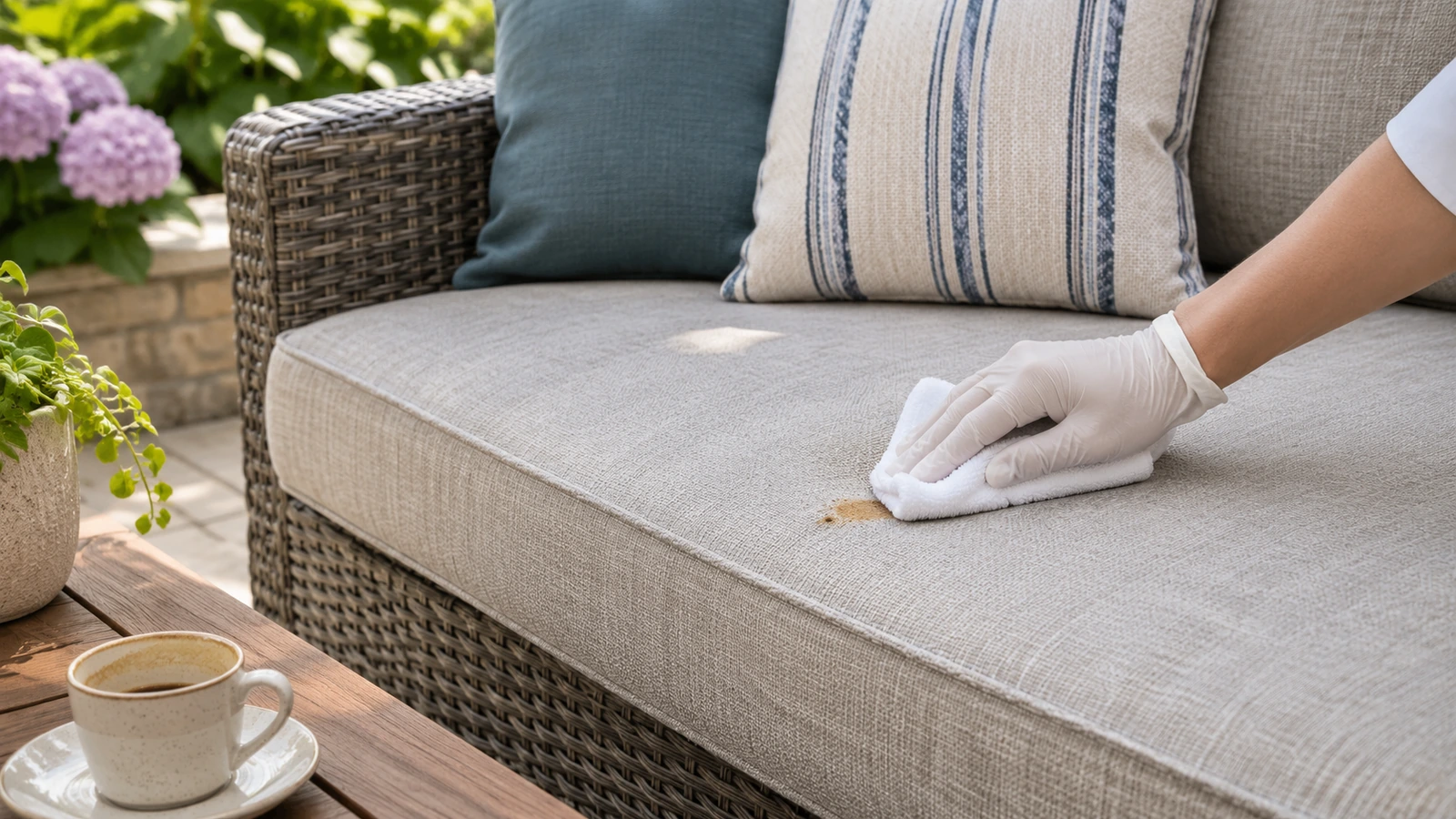
The first step should remove as much surface contamination as possible without spreading it. Where the care instructions allow, lift loose solids and blot fresh liquid before using a cleaner. Sand and dry grit are better dealt with while loose, using a method suitable for the fabric. Working a damp cloth across a gritty seat can drag particles over the surface and make it harder to tell where the original mark was.
| What you find | First step | When to stop and reassess |
|---|---|---|
| Dry sand, dust or crumbs | Lift or remove loose particles with a tool approved for the surface | The weave snags, the surface changes or debris is lodged inside a damaged seam |
| Fresh drink or food spill | Lift solids and blot liquid; check nearby seams before applying cleaner | The spill has reached the underside, liner or filling |
| Oily mark | Check the approved stain treatment and test it in a discreet area | The fabric changes colour or texture, or the stain spreads |
| Unknown mark or suspected internal contamination | Record the location and remove the cushion from use if its condition is uncertain | The source cannot be identified, filling is exposed or further treatment falls outside routine care |
Assess a test area once it has dried. A wet patch can temporarily hide colour loss, leave a darker ring or make the stain appear to have gone. If the test changes the fabric’s appearance, stop before treating the rest of the cushion. Follow the specified method for removing cleaner residue rather than introducing another product to counteract the first.
Wash Removable Covers Without Affecting Fit
Before taking covers off a group of cushions, identify which cover belongs to which insert. Covers that look identical on a terrace can differ at the corners, seams or attachment points. Keeping them together also helps if only one cover needs further inspection. Once the cover is off, check the liner and filling separately. A wash that is appropriate for the cover does not necessarily address a spill that has reached the insert.
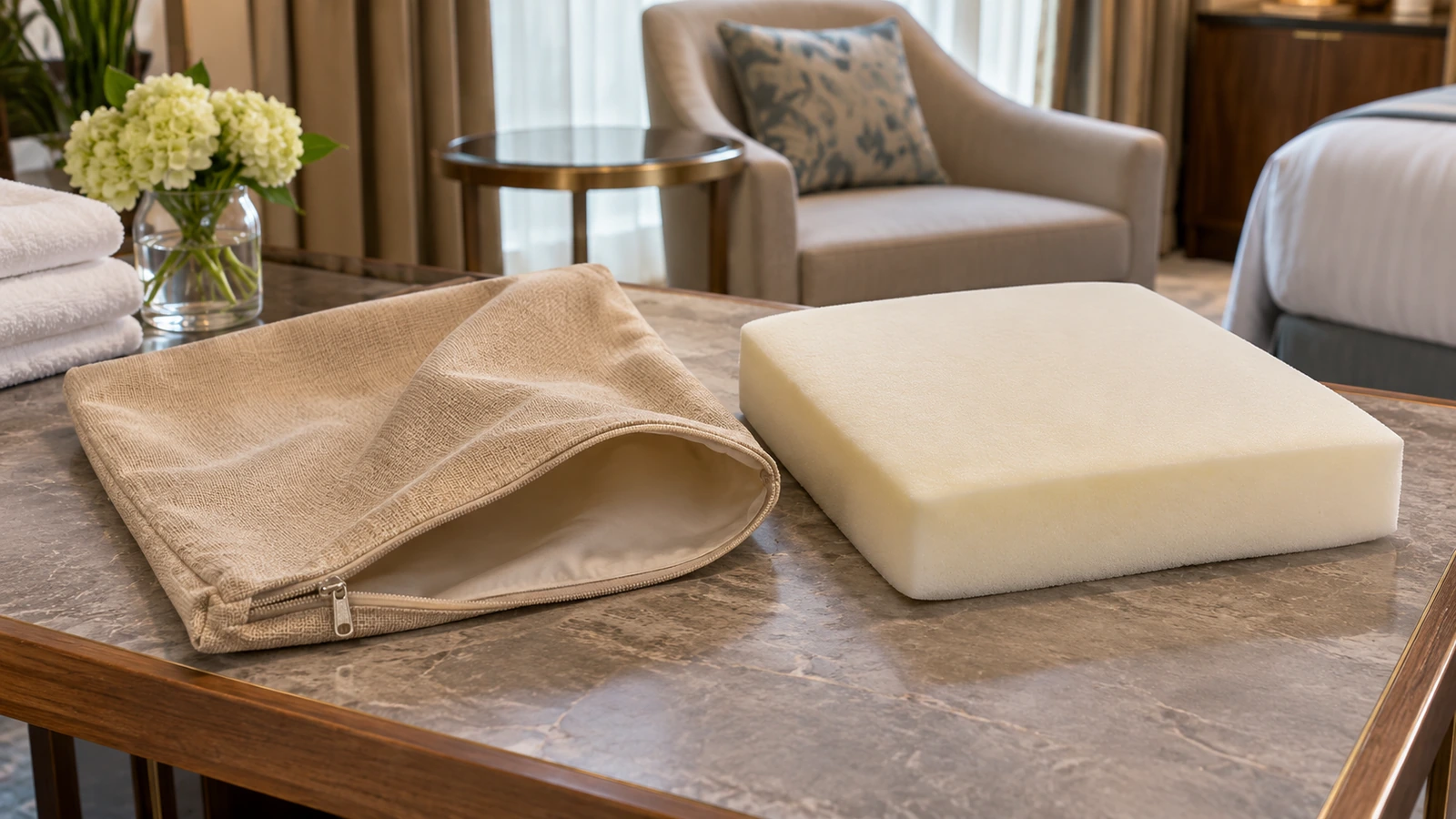
Use the wash method, detergent and drying conditions stated for the cover. Where machine washing is permitted, check the specified settings; where it is not, use the approved alternative. Take particular care with trims and fastenings that may need to be handled a certain way during washing. If a mark remains after the approved process, check the cause before repeating the wash or using a stronger cleaner.
Refit the cover in the condition specified by the supplier. The seams should sit in their original positions, corners should align with the insert, and the closure should work without being forced. A cover that has changed shape or puts the zip under strain needs inspection before the cushion goes back into service.
Spot-Clean Fixed Cushions Without Soaking the Insert
On a restaurant terrace, a drink may land in the middle of a fixed seat pad and run towards its edge. Deal with the free liquid first, then inspect the seam and underside before deciding whether surface cleaning is enough. If the contamination is confined to the cover and spot cleaning is permitted, test the approved method, work on the affected area and remove cleaner residue as instructed. Adding more liquid can extend the problem beyond the original stain, especially around stitching and attachment points.
Where a cushion can be lifted or turned safely, check the side hidden against the frame. The surface may show a small mark while the underside shows that liquid has travelled further. If the filling is wet, a seam has opened or the liner cannot be inspected without dismantling the cushion, remove it from the guest area and use the hotel’s procedure for further assessment. Surface cleaning should stop where the problem has moved beyond the surface.
Check the Seams, Underside and Insert Before Reuse
Inspect the cushion where it dries last: beneath folds, along stitched edges, around fastenings and where the underside rests against the frame. Look for remaining residue, staining that becomes visible after drying, or moisture in accessible parts of the liner and insert. A cover that feels dry at the centre can still be damp at a seam. When the interior cannot be checked and there is reason to believe it got wet, hold the cushion back rather than returning it based on touch alone.
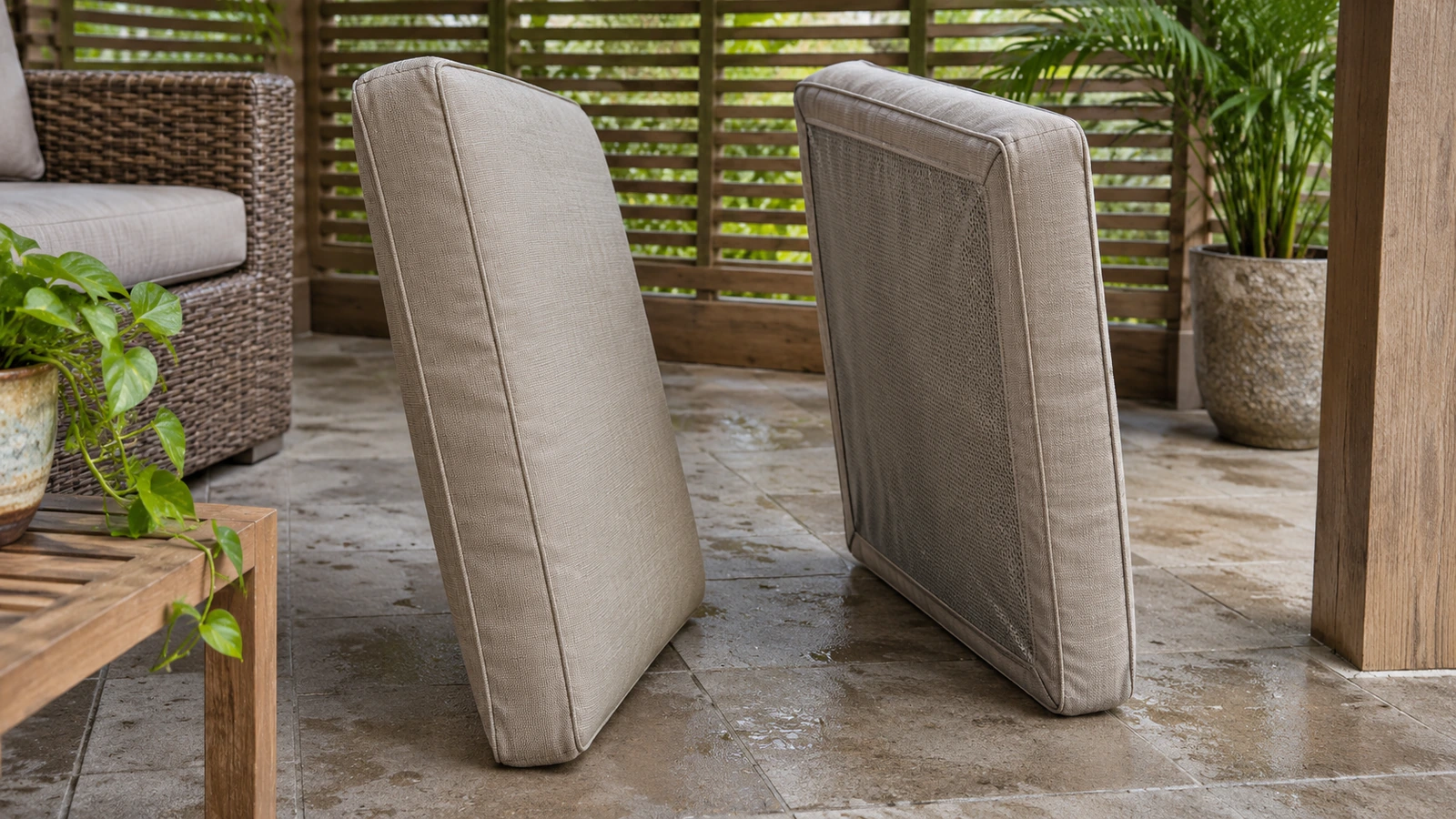
If cleaning liquid has reached the filling, the next decision is how to dry and assess the cushion. Follow the product’s instructions and use the guide to drying wet outdoor cushions for that part of the process. Reuse depends on the condition of the cushion, so a set time in the sun or a standard number of hours should not be the only check.
Decide What to Do When a Stain Keeps Returning
If a mark reappears after drying, compare it with what was recorded before cleaning. A ring at the edge of the treated area can point to remaining residue or contamination moving as the cushion dries, but the pattern alone does not establish the cause. A patch that stays pale or looks different from an angle may instead be a change in the fabric’s colour or texture. Applying more cleaner to an area of surface wear will not restore the original finish.
Check whether the return is local to the cover or associated with a damp liner, affected seam or marked underside. If the product instructions permit another treatment and the test area remains sound, a controlled second pass may be appropriate. If the stain keeps returning, the insert remains suspect or the surface has visibly changed, record the issue and ask the supplier whether the cover or insert can be treated or replaced separately. This gives the hotel a better choice than repeatedly cleaning the same cushion or discarding an otherwise usable seat.
Set a Cleaning Routine for Each Outdoor Zone
Separate cushions by care method and construction, rather than by colour or location alone. Dining terraces need a clear response to food and drink spills. Poolside staff need to distinguish surface marks from moisture that has reached the insert. A lounge with removable cushions may need a designated place to keep covers and inserts matched while they dry. The outdoor furniture at Six Senses Southern Dunes shows how seating and other outdoor furniture can be distributed across a resort. It illustrates the need to organise care by use area; it does not establish what cushion materials or cleaning methods were used on the project.
A short record for each cushion group can identify the model, permitted method, drying location and the person who decides when a questionable cushion can return to service. Keep a way to identify items awaiting inspection so that a dry-looking cushion is not inadvertently placed back on a seat during a busy reset. If a stain repeatedly appears at the same position on several cushions, review the cause across that group before treating every item as a separate incident.
The routine should leave staff with a clear decision at each stage: what they can clean immediately, what needs to dry and be checked, and what should remain out of service. That is more useful than a single cleaning recipe for the entire property.
Choose Cushions Your Team Can Keep Clean
A small spill should not routinely take an entire seat out of use. Choosing covers staff can remove and refit, inserts they can inspect, and components the hotel can order separately gives the team more options when a cushion is stained or damaged. For projects spanning dining terraces, pool decks and lounge areas, the integrated resort furniture solutions page shows the broader scope of furniture that can be planned together.
Gainwell can help review the cushion construction and maintenance needs of proposed hotel outdoor seating. Start with the intended use and the care task that currently causes the most downtime. That gives the design discussion a concrete goal, whether it is easier cover removal, better access for drying or the ability to replace a single component.
Frequently Asked Questions
What If the Cushion Care Label Is Missing?
Use the furniture model, purchase record or supplier information to retrieve the care instructions. Check that they cover the assembled cushion and the fabric actually supplied. If the method cannot be confirmed, hold off on machine washing or chemical treatment and ask the supplier for a suitable route.
Can a Replacement Cover Be Used on an Existing Insert?
Yes, where the insert is in suitable condition and the replacement is compatible. Check its shape, thickness, seam positions and closure as well as the overall dimensions. Before ordering replacements across a property, try one on the existing insert to see whether it fits without placing extra strain on the fabric or fastenings.
How Should Hotels Label Cushions from Different Furniture Sets?
Give each cushion group a reference tied to its furniture model and care instructions. Where covers and inserts are separated for cleaning, keep that reference with both pieces using a method that does not damage the material. The same reference can help staff identify a matching spare without relying on colour or appearance.