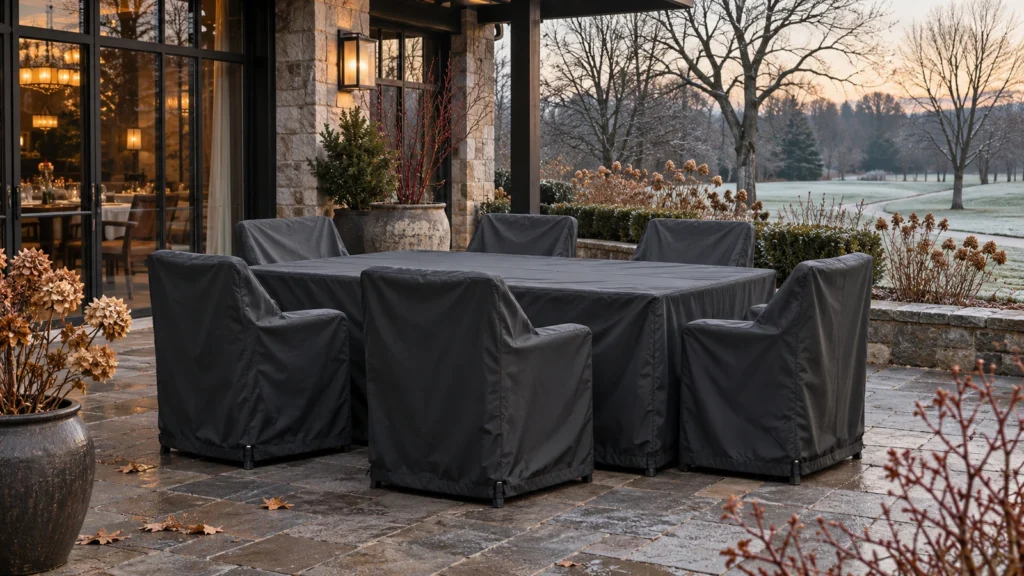


Clean outdoor furniture covers using the method specified for the finished cover, starting with loose dirt and treating only as much of the cover as necessary. Where the manufacturer permits washing, remove the cover if required, protect its coating and fasteners, and let both sides dry before refitting or storage. A cover is ready to reuse when it is dry, fits correctly and still performs its intended protective function.
A cover can look cleaner and still be in worse condition. A wash may remove dirt while opening a seam, damaging a coating or leaving residue on the face that touches the furniture. Hotels can reduce those problems by treating cleaning and inspection as one task rather than sending every cover through the same wash cycle.
Identify the Cover and Read Its Care Instructions
Find the label or product record before selecting a method. The relevant instructions are for the complete cover, including coatings, linings, seams, vents and closures. The name of the outer textile does not tell staff whether the assembled item can be soaked, machine washed, dried with heat or exposed to a particular cleaner. If instructions for the fabric and finished cover differ, confirm which apply to the assembled product.
Match the cover to the furniture before removing it. Individual outdoor chairs, tables and loungers can have very different protective arrangements, and a cover made for an entire dining set may have straps that only align when the chairs are placed in a particular position. A simple model or zone reference can prevent similar-looking covers from being refitted to the wrong item after washing.
If the furniture and cover came from different suppliers, keep their care instructions separate. A removable cushion cover may permit machine washing while the fitted furniture cover must be washed by hand. Likewise, an instruction for an uncoated fabric tells you little about a finished cover with a lining or taped seams. Where two covers look identical, mark the model on a removable storage tag before separating them. This helps the next shift use the right instructions without having to identify a fabric by touch or appearance.
Separate Surface Dirt from Damage Before Washing
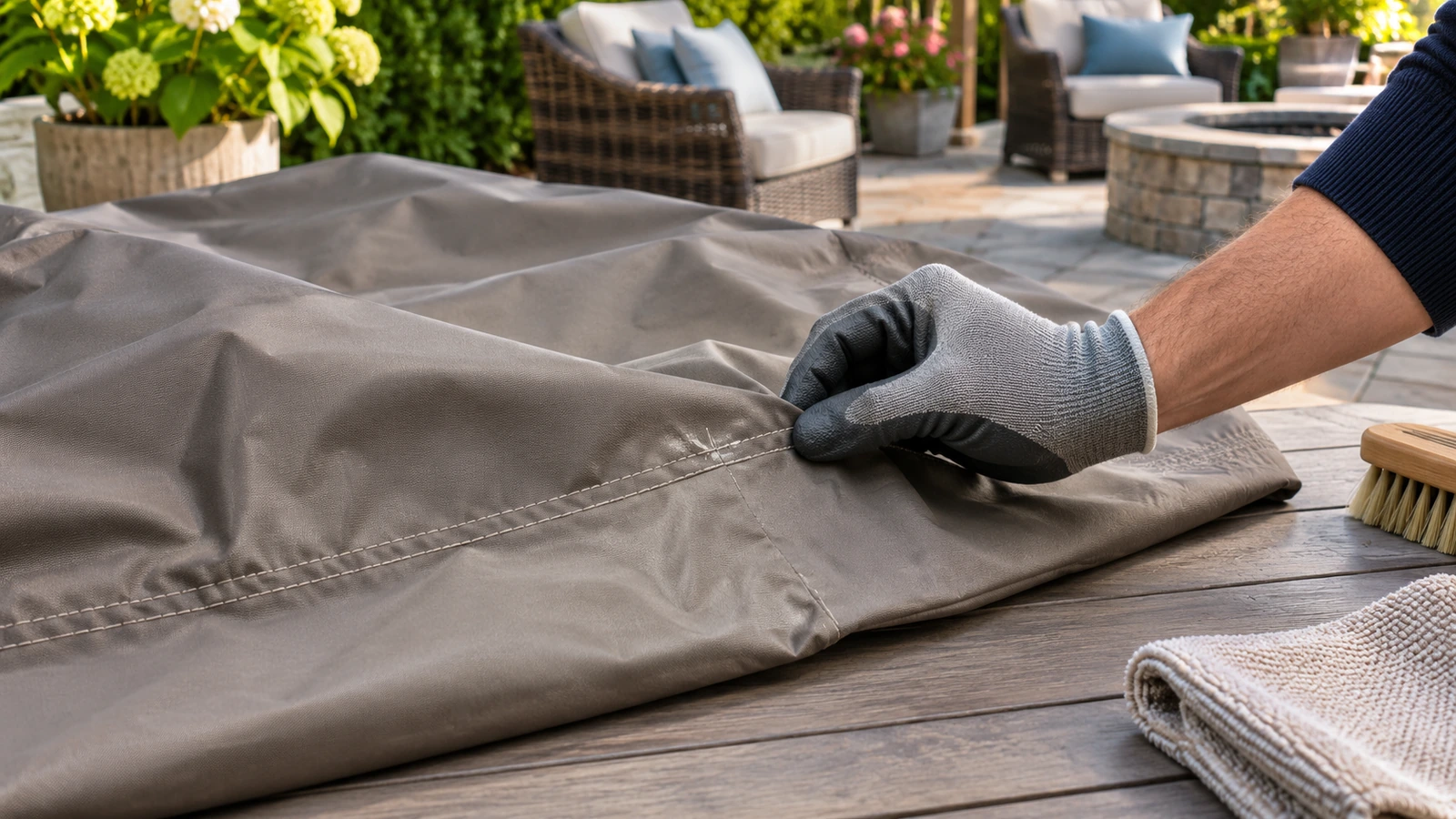
Lay the cover out where both faces can be examined. Check the exterior for loose sand, leaves, dried splashes and marks; then look underneath for transferred dirt, peeling material or a damp fold. Pay particular attention to corners that rub against furniture and seams that stretch when the cover is pulled into position.
- Loose dry debris: remove it with the method permitted for the cover before introducing water.
- A local stain on an intact surface: check the approved stain treatment and test where a change in appearance would be less visible.
- An open seam, peeling coating or damaged strap: record the condition before washing and determine whether the cover should be held back for assessment.
A thin spot or worn finish is not a stain. Repeated scrubbing may enlarge the damaged area without improving protection. If a mark cannot be identified, check the care record and inspect the same point on the furniture before attempting another treatment.
Pay particular attention to the underside where the cover touches armrests, table corners and the highest point of a lounger. Match each mark to the position of the furniture beneath it. Dirt spread across a broad area suggests a different problem from repeated wear along one narrow line. Photograph an open seam or rubbed patch before cleaning so the team can tell whether it has grown. Record both the location and the likely contact point. Otherwise, the clean cover may go straight back onto the edge that caused the damage.
Choose Spot Cleaning, Hand Washing or Machine Washing
Start with the smallest approved intervention that addresses the dirt. Spot cleaning can make sense for a small mark on an otherwise sound cover. Hand washing may be appropriate when a larger area needs cleaning and the instructions permit it. Machine washing is suitable only if the finished cover is labelled or confirmed for it, including any requirements for fasteners, cycle, detergent and drying.
Consider whether the cover can actually be handled by the chosen method. A large combination cover may not fit the available machine as instructed, and heavy wet fabric can strain seams if it is lifted by a strap. If the approved method cannot be carried out with the hotel’s equipment, ask the supplier about an alternative rather than increasing the wash intensity or improvising a different chemical treatment.
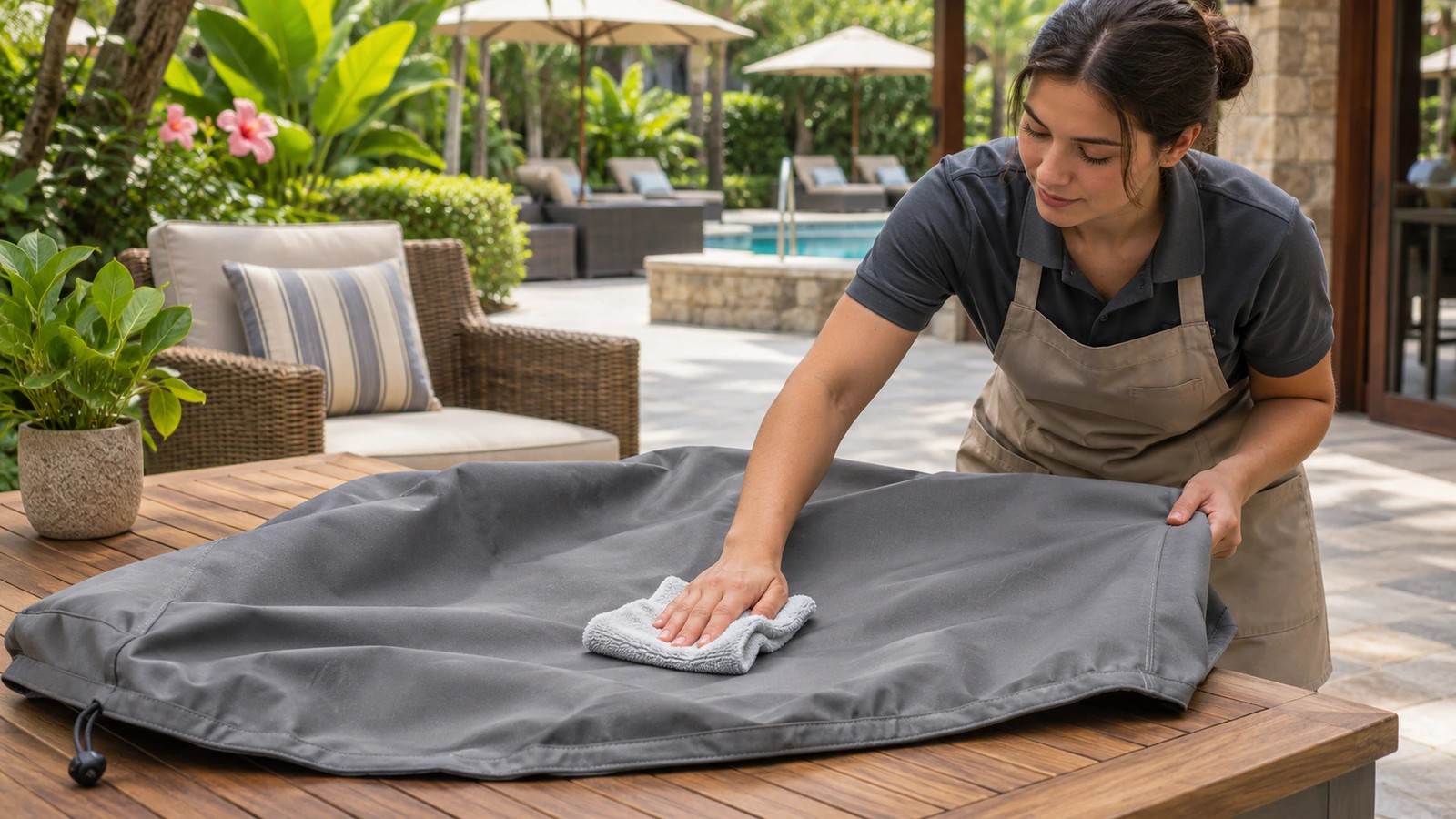
For an approved hand wash, support the cover on a clean surface so the weight of the wet fabric does not hang from a buckle or seam. Work on a manageable area and turn the cover carefully when you need to reach the reverse face. If machine washing is allowed, check the instructions for fastenings, load size and cycle settings. A cover that only just fits in the drum may be easier to handle at an approved laundry with suitable equipment, especially if staff would otherwise have to pull it out by its straps.
Clean the Cover Without Leaving Residue on the Furniture
If the cover is cleaned while fitted, check where liquid will run. Seams, openings and low points may direct it onto upholstery or beneath the furniture. Where this is likely, remove the cover and work on a suitable surface. Mark the inside and outside so the contact face does not pick up dirt from the floor while the exterior is being cleaned.
Follow the product instructions for applying cleaner and removing residues. A cleaner suitable for the outer face may be unsuitable for a lining, clear panel, buckle or nearby finish. Examine folds and stitched edges after treatment; cleaner left there can transfer when the cover is refitted. If cleaning causes tackiness, colour transfer or lifting of the coating, stop and keep the cover away from the furniture until its condition has been assessed.
Set up a separate work surface for covers from areas that collect sand or grit. If the cover is turned repeatedly on a dirty floor, the side that touches the furniture can pick up more debris than it had before washing. Check the work surface between covers, especially before laying down a light-coloured cover or exposing the lining. If cleaning must happen near furniture still in service, position the item so runoff cannot splash nearby cushions or collect around feet and fittings.
Dry Both Sides Before Refitting or Storage
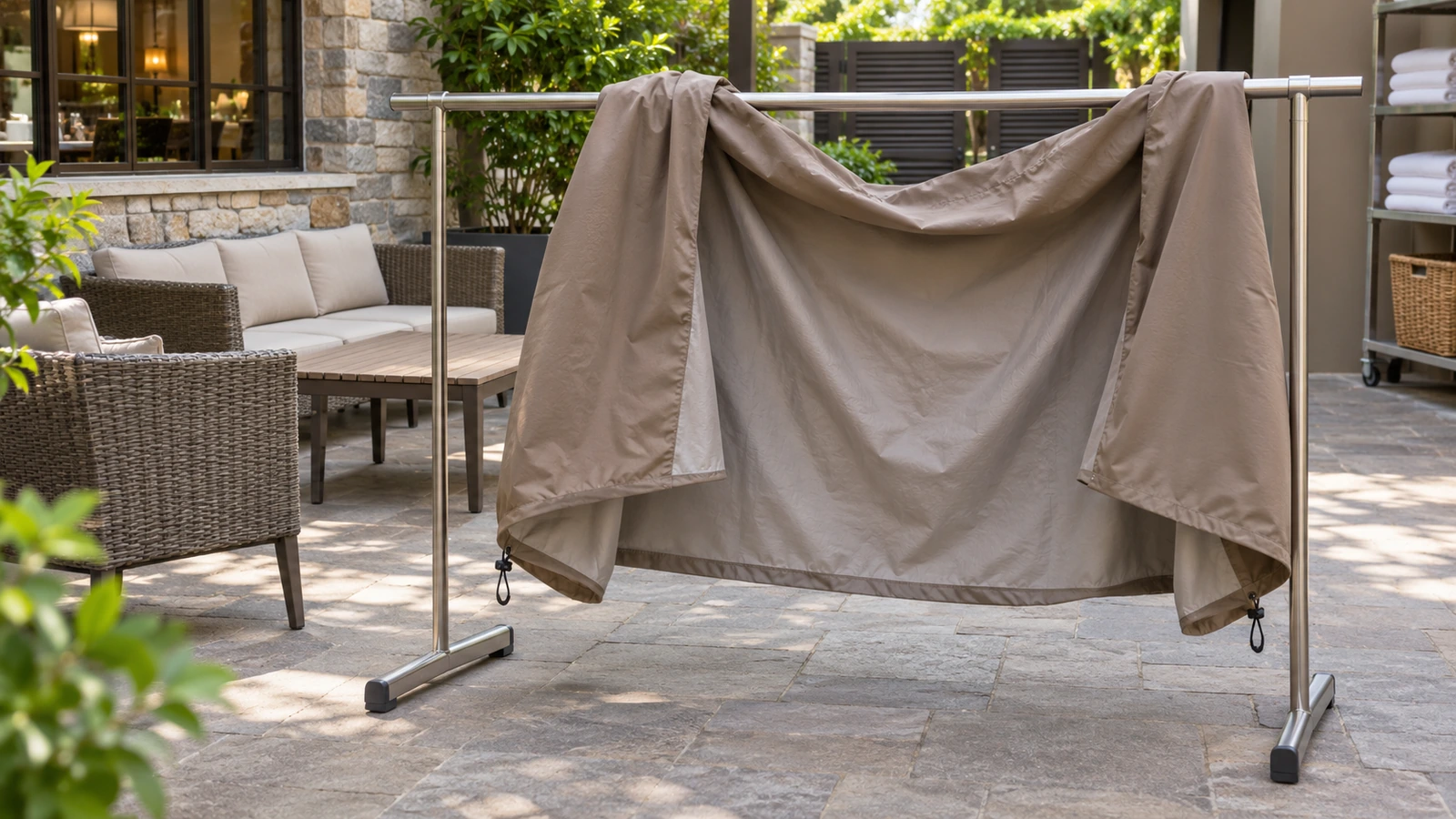
Dry the cover in the position and conditions allowed by its instructions. Give the underside, folded hems, pockets and strap attachments enough exposure to dry; these points may remain damp after broad surfaces feel dry. Use a clean drying location where the cover can be supported without hanging its weight from a fitting that was intended only to hold it in place.
Inspect the cover before folding it. If the two faces have been pressed together or the cover was folded to make room for another item, open it again and check the contact areas. Avoid packing a damp cover for storage or fitting it over furniture that still needs to dry.
Allow for drying time when scheduling a batch. Covers washed late in the day can still hold moisture in their hems when the evening team arrives to close the terrace. Set aside a clean, supported space for covers that are still drying and mark which ones are ready to use. For covers that have already been folded, open the thickest folds to check their condition. Dry corners alone are a poor indication of whether the centre of the folded cover is ready for storage.
Check Whether the Cover Still Does Its Job
Refit the cover to the intended furniture arrangement and check the shape. The seams should sit correctly, fasteners should reach without excessive tension, and the hem and vents should function as intended. A distorted or shrunken cover can put strain on stitching even if it looked intact while laid flat. Hold back covers with open seams, failing fastenings or unexplained loss of protection until the supplier confirms a repair or replacement route.
If failure repeatedly occurs at a sagging area or a sharp contact point, the way the cover fits deserves review. The guide to choosing outdoor furniture covers for hotels helps check the fit, drainage and fastening arrangement before the same problem returns on a replacement.
Check performance after the next normal use. For example, if a table cover was washed because staff found damp patches underneath it, inspect the same points after the next suitable weather event. A drip line under a seam, dampness at a low point and general moisture across the inside can call for different follow-up. Note what was observed and where. This gives the supplier or maintenance team something more specific to investigate than a report that a freshly cleaned cover still gets wet.
Organise Cover Cleaning Across the Property
Group covers by care method as well as location. A poolside lounger cover and a dining-set cover may be used on the same terrace but need different washing, handling and drying arrangements. Give staff a designated place for covers awaiting cleaning, those drying and those held for repair. Keep the model or location reference attached to the work record throughout that process.
A property renewing several outdoor areas can use integrated resort furniture solutions to see how outdoor furniture fits into a broader resort package. The practical question for the operator is whether the selected furniture groups can be covered, uncovered and cleaned with the staff and storage space available.
A short handover record can include the cover ID, cleaning method, date, condition at inspection and next action. Keep items waiting for a buckle, drying space or supplier advice separate from covers ready to refit. If a cover is shared between two configurations, record both so staff can check that the straps reach and the cover sits properly each time. Review repeated issues when planning replacements. A set that takes longer to identify, handle and dry can add work every week even when the fabric itself remains serviceable.
Make Outdoor Furniture Protection Easier to Maintain
If covers are awkward to remove or repeatedly rub against the same furniture edges, changing the furniture grouping may be as useful as changing the cover. Gainwell can discuss the size, configuration and handling of hotel outdoor furniture alongside the property’s protection routine. A photograph of the arrangement and a brief description of the task are enough to start the discussion.
Frequently Asked Questions
What If the Care Label Is Missing?
Look up the cover by its model, supplier or purchase record. If the record covers only the furniture and not the cover, request the separate care instructions before using a washing machine, heat or a cleaning product whose compatibility is uncertain.
Can a Broken Buckle Be Replaced Separately?
Ask whether an approved replacement and attachment method are available. A buckle that closes but does not hold the strap as intended can leave the cover insecure. Refit the repaired cover and check the fastening before returning it to use.
Why Does a Clean Cover Still Leave Marks on the Furniture?
Check the cover’s inner face and compare the mark with its folds, seams and contact points. Residue, retained moisture or friction may each require a different response. Hold the cover back if there is unexplained colour transfer or surface damage.