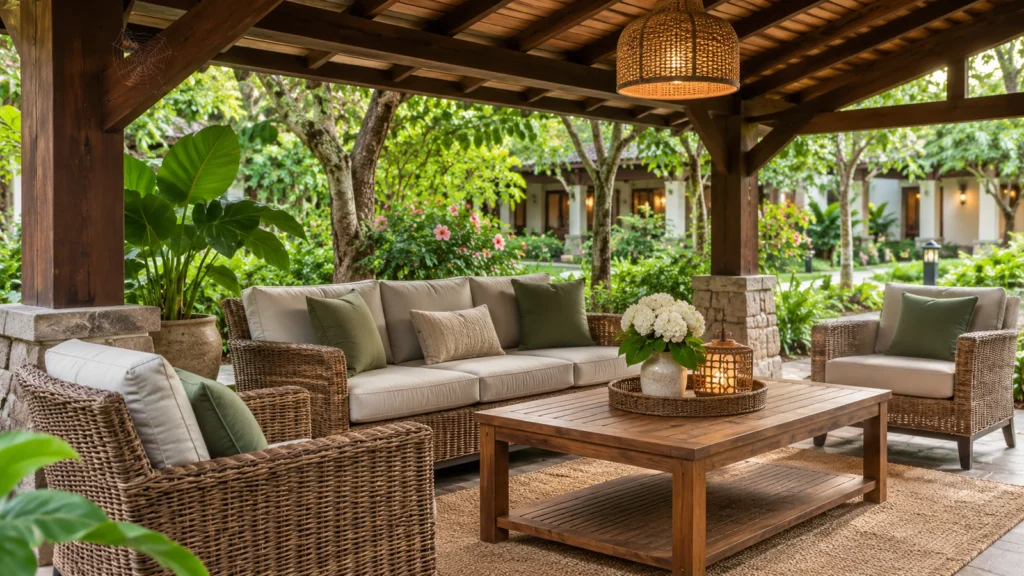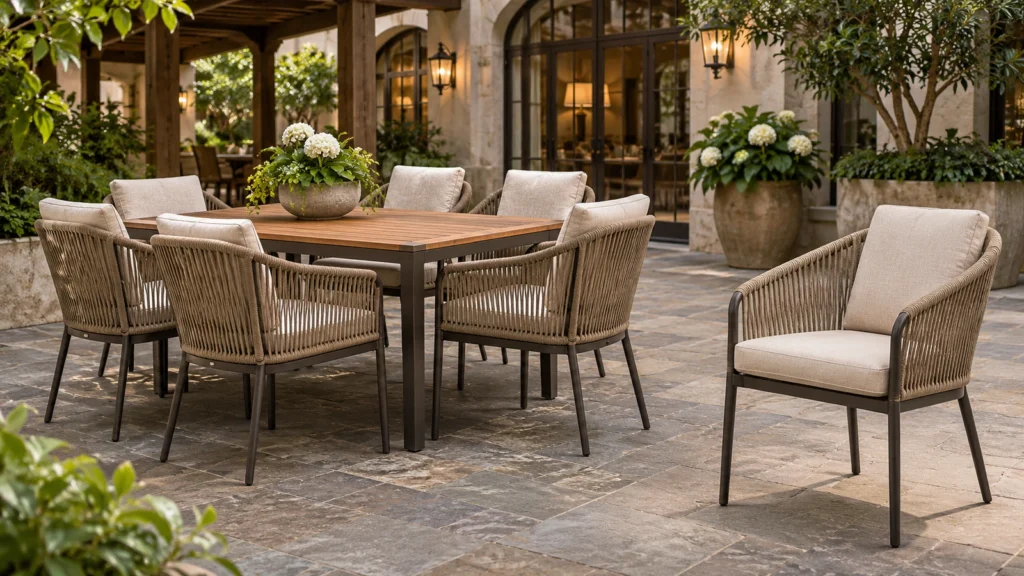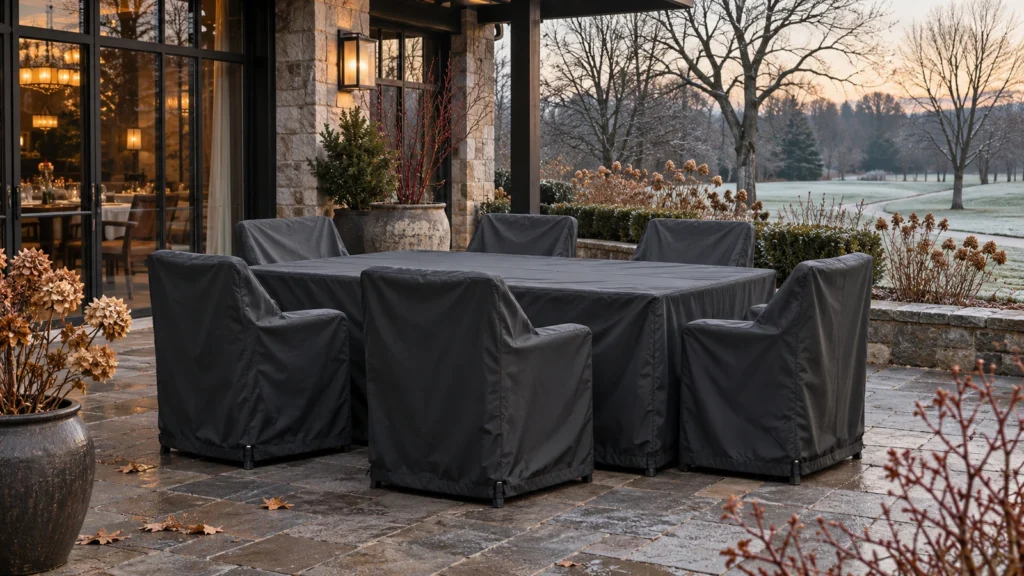

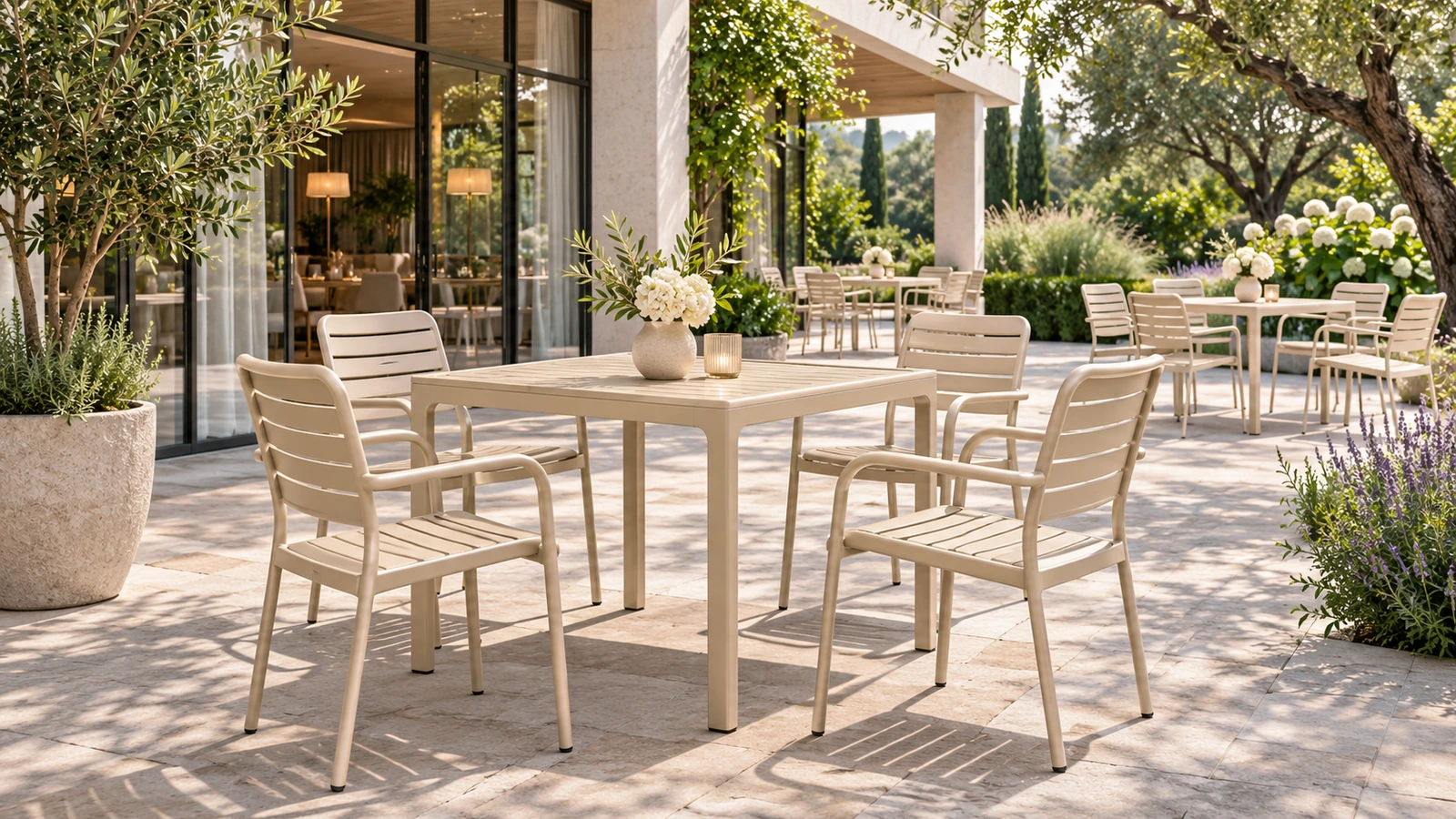
Aluminum is a good choice for outdoor furniture when staff need to move or rearrange it regularly and the finished product suits the site’s exposure. A lightweight aluminum dining chair can make a terrace easier to reset between services. On an exposed deck, that same low weight can make it harder to manage the furniture in windy conditions. The decision depends on the complete chair, table or lounger, including its weight, joints, finish, hardware and care requirements.
Start with the job the furniture has to do. A dining chair moved several times a day, a pool lounger with an adjustable back and a table left in place on a seafront terrace each put different demands on an aluminum frame.
What Are the Pros and Cons of Aluminum Outdoor Furniture?
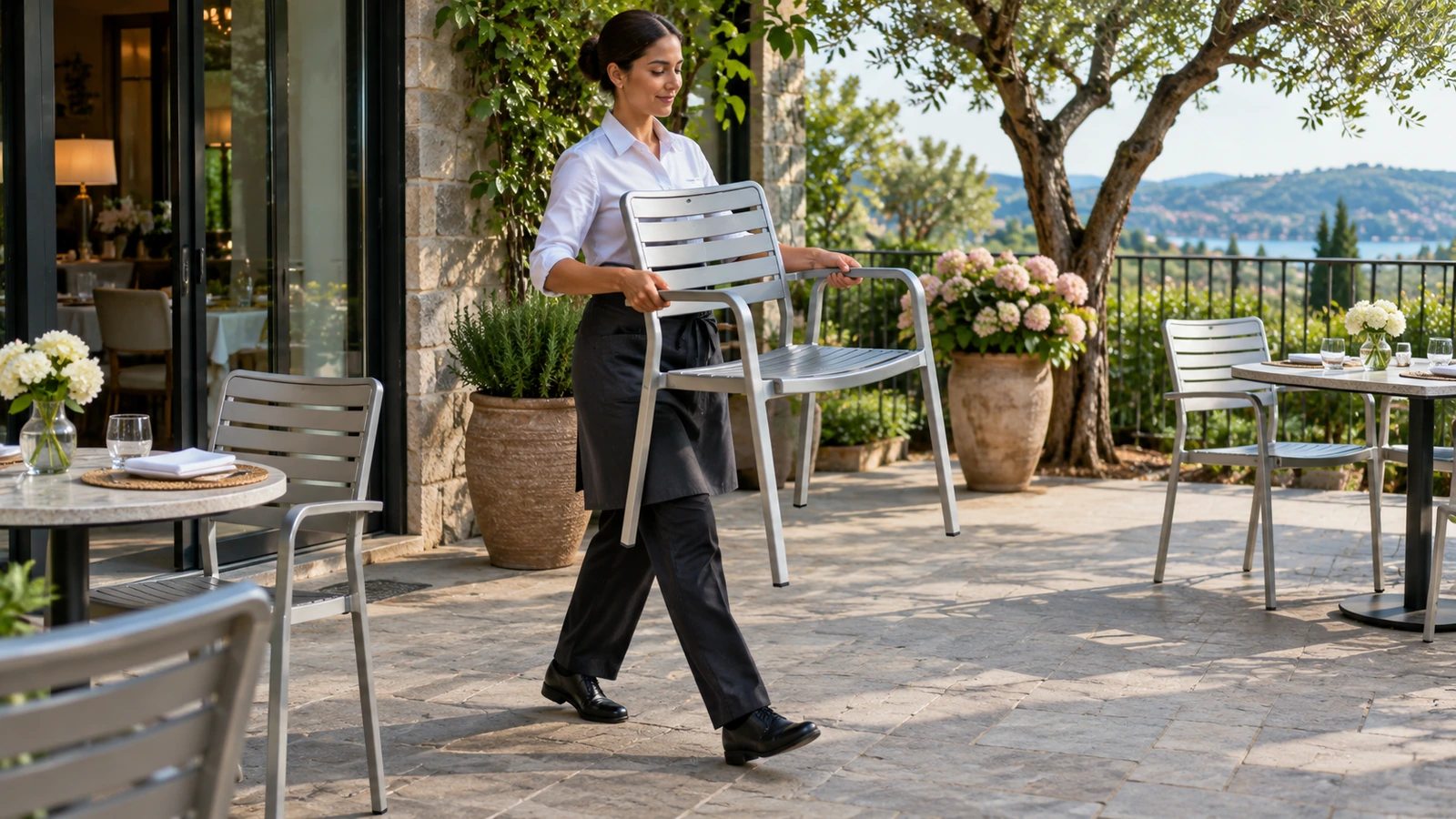
Weight is often the first advantage buyers notice. Depending on its construction, an aluminum chair may be easier for staff to lift and reposition than a heavier alternative. That can make a difference when the entire terrace needs to be cleared for cleaning. But the relevant comparison is between finished chairs: the seat, arms, base and fittings all contribute to weight, and a chair that is light on paper can still be awkward to carry if it offers no convenient grip.
| What you’re choosing for | Where aluminum can help | What to check on the finished furniture |
|---|---|---|
| Frequent moves and resets | A lighter frame can make repeated handling easier | Finished weight, grip points and the hotel’s wind procedure |
| A particular shape or profile | Tubular and cast components give designers different ways to form legs, arms and frames | How the sections are supported and joined; a slim profile alone says little about strength |
| Routine surface care | A suitable finish can be maintained within the hotel’s cleaning routine | Approved cleaning methods, access around joints, and wear at edges or stacking points |
| Keeping furniture in service | Some models allow worn feet or glides to be replaced separately | Whether the specific part is available and can be removed without damaging the frame |
The most useful trade-off is often between handling and the demands of the location. A chair intended for daily stacking needs a compatible shape and protected contact points as well as manageable weight. A table that rarely moves may have little to gain from a lighter frame, particularly if its top and base determine how staff handle it. When reviewing outdoor seating, tables and loungers, assess each furniture type against its own use rather than carrying the same reasons for choosing aluminum across the entire collection.
Does Aluminum Outdoor Furniture Rust or Corrode?
Aluminum does not form iron rust, but it can corrode. The distinction matters because the frame is only one part of the furniture. A chair may have an aluminum frame, steel fasteners and a protective finish, with each showing a different kind of deterioration. An orange streak near a bolt may come from the fastener or from transferred iron contamination. White deposits can have several causes, and blistering shows that the coating needs closer inspection without necessarily revealing why it failed. Colour is a clue; the location and condition of the affected part are more useful for identifying the source.
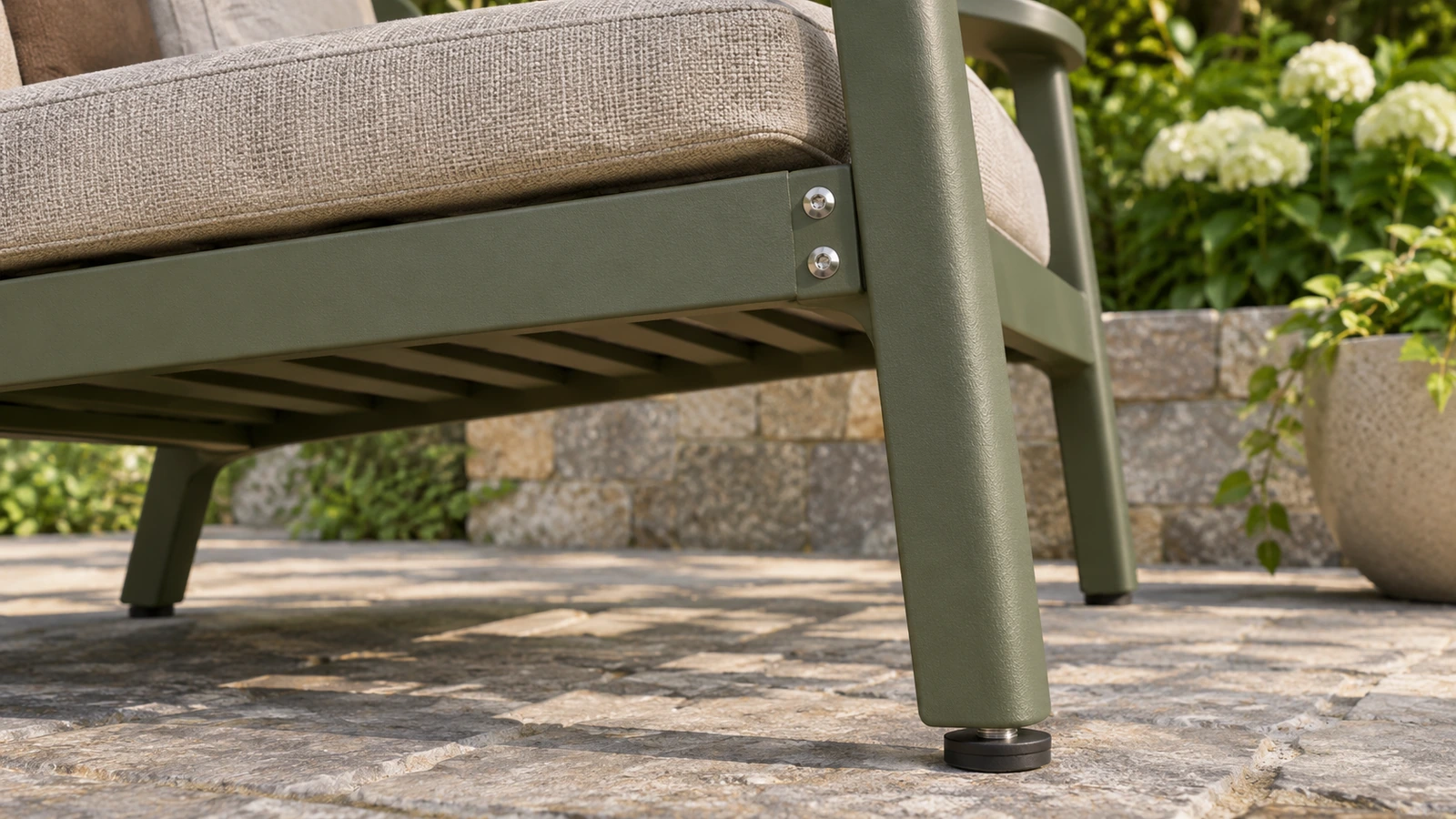
For selection, inspect the areas that a finish sample cannot show: the underside of welded joints, edges around holes, the points where metal fittings meet the frame and the feet that repeatedly contact the floor. Ask the supplier to identify the fastener materials, describe how the relevant parts are protected and explain how staff can reach those areas for cleaning. The fact that a frame is powder-coated does not establish how well every edge or joint is protected, or whether the complete item is suited to salt exposure or frequent poolside splash.
Also consider how the furniture will wear in its assigned role. Repeated stacking can rub the same points, and dragging a chair with a damaged glide can expose the foot to further wear. Knowing where contact occurs helps the team evaluate the finish and construction before ordering, when an alternative detail or a different model is still an option.
Where Does Aluminum Furniture Work Well in Hotels?
Outdoor dining areas are a good place to consider aluminum when staff routinely move chairs for cleaning or change table groups between services. Try lifting the proposed chair from the position staff will actually use, then check how it fits beneath the table and whether it can be stacked as the manufacturer intends. A chair may be easy to carry but awkward to store if the arms catch during stacking or the approved stack does not fit the available space. Where chairs stay in place most of the time, the handling advantage may matter less than comfort, finish care or the way the feet meet the floor.
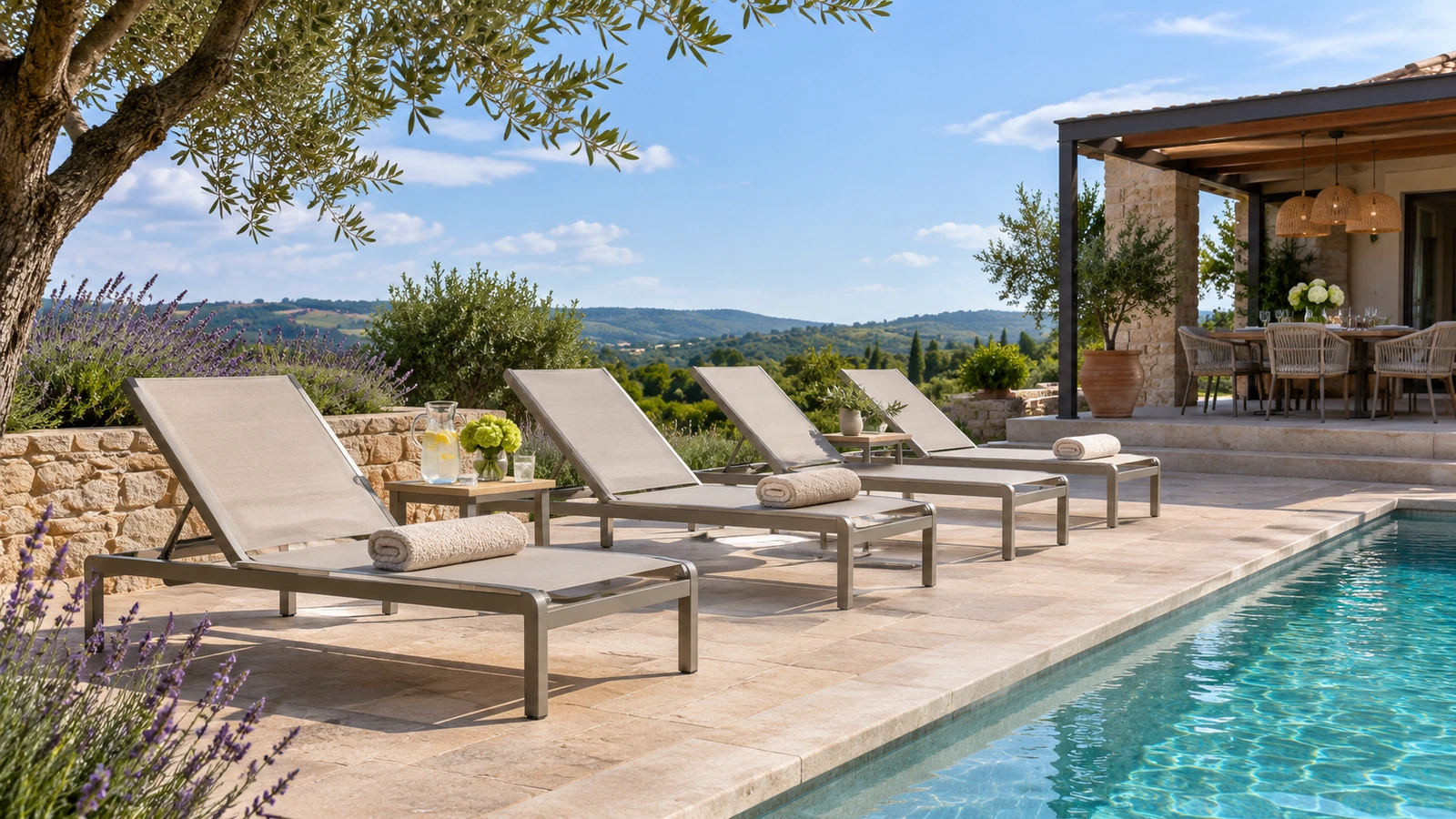
Pool decks shift the decision towards wet use, drainage and cleaning access. For a lounger, look at the backrest mechanism, the points where its hardware meets the frame and the space beneath the seat or cushion. Check what happens after use by a wet guest: where water collects, how staff reach the affected surfaces and which parts need separate care. The aluminum frame may suit the location while a cushion, adjustable fitting or poorly accessible joint makes the complete lounger less practical.
Uncovered and coastal terraces need separate checks for wind and salt exposure. A light chair may be convenient to bring indoors when the area closes, but that only helps if the hotel has a workable relocation route, adequate storage and a clear procedure. Salt exposure raises different questions about the finish, fasteners, concealed joints and the care staff can provide. A sheltered dining terrace and a seafront deck can share a design direction without using the same model or hardware configuration.
The outdoor furniture at Six Senses Southern Dunes illustrates how seating, tables and loungers can serve different parts of a resort. The case is useful for thinking about furniture by zone; the choice of aluminum for any one of those roles still depends on the proposed product and its location.
What to Check Before Shortlisting Aluminum Outdoor Furniture
Consider two aluminum dining chairs that look similar in a catalogue. One has a grip staff can use comfortably, glides that can be replaced and a stacking arrangement approved for that model. The other looks equally suitable on the plan, but its shape makes it awkward to carry and the manufacturer does not list it as stackable. If the terrace is cleared every evening, the first chair is a stronger candidate. If the chairs remain in place and storage is irrelevant, other factors may decide the comparison. The material is the same; the operating consequences are different.
Use the following checks to compare the actual models:
- Confirm the finished construction. Ask which components are aluminum and identify the materials used for the fasteners, brackets and moving parts. Check the frame sections and joints against the intended use.
- Verify handling and storage. Confirm the finished weight, try the intended grip and check the manufacturer’s stacking instructions where stacking is needed. Compare the resulting arrangement with the available storage space.
- Inspect finish and care access. Look around welds, holes, feet and contact points, then check whether staff can carry out the specified cleaning and inspection routine.
- Confirm commercial use and parts support. Check the manufacturer’s stated application, any exposure limits and which wear components can be ordered separately. Keep those details against the proposed model so they remain useful after purchase.
A representative sample helps answer questions about handling and use: staff can move the chair, reset it at the table and see whether they can reach the areas they need to clean. Strength, stability and weathering require evidence appropriate to the product and application; a short handling trial answers a different question. If the aluminum options still fall short on exposure, handling or care, compare outdoor furniture materials by exposure before committing to a furniture family.
Shortlist aluminum when the finished furniture offers a practical advantage the hotel can use, whether that is easier handling, a suitable frame design or replaceable wear parts. If the model is difficult to protect, clean or maintain in its assigned location, the material name offers little reason to keep it on the list.
Find Outdoor Furniture That Fits the Way Your Hotel Operates
A chair for a terrace that resets twice a day needs different details from a lounger that stays beside the pool. Gainwell can help compare furniture configurations around those differences, so you can weigh frame construction, finish and maintenance needs alongside appearance. If you are considering aluminum outdoor furniture, a few site photographs and a brief description of how staff move or store the furniture are enough to start discussing which configurations are worth exploring.
Frequently Asked Questions
Can Aluminum Outdoor Furniture Be Left Outside Year-Round?
That depends on the complete product and the conditions during closure. Check the manufacturer’s instructions for the frame, finish, cushions and moving components, including whether any parts should be removed or stored separately. If furniture stays outside during a seasonal closure, assign responsibility for inspecting it and checking its condition before the area reopens.
Can Damaged Powder-Coated Aluminum Be Touched Up?
A small scratch may be suitable for the manufacturer’s approved touch-up method. Ask for the finish reference and confirm how the surface should be prepared. If the coating is lifting around a joint, damage is spreading beyond the original mark, or the frame or connection is affected, have the area assessed before covering it with paint.
Can Replacement Glides Be Ordered for Aluminum Patio Chairs?
Some models use replaceable glides. When requesting a part, provide the chair’s model reference and identify the foot profile and attachment method. Check the replacement’s fit and suitability for the floor. A similar-looking glide can sit at a different height or attach differently, leaving the chair uneven or the part insecure.