

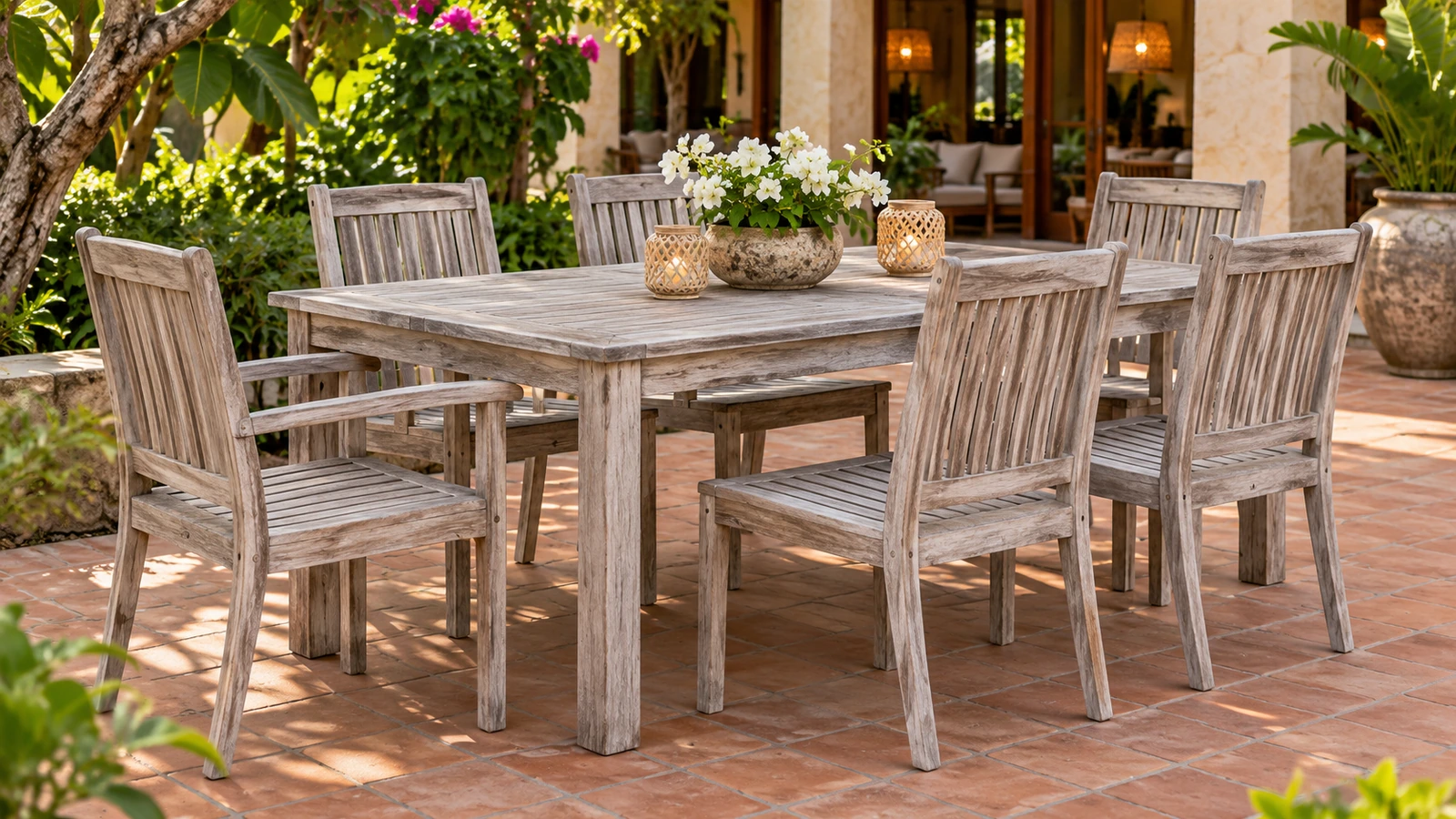
Restore teak outdoor furniture by deciding which condition you want to change, identifying the existing surface treatment and checking whether the furniture is sound. Grey, weathered teak may need only approved cleaning if the hotel accepts its appearance. Failed coatings, persistent surface damage and loose structural connections each call for a different response. The restoration should address the observed problem without removing more sound material than necessary.
The decision matters when a property has a whole terrace of furniture. Treating every item alike can make differences more visible if some pieces have been oiled, coated or repaired in the past. An agreed appearance target and a trial on one suitable item give the team a better basis for deciding what to retain, refinish or replace.
Decide What You Want to Restore
Start with the desired result. A hotel may want to keep the silver-grey appearance of weathered teak while removing dirt, bring a heavily marked tabletop closer to the surrounding pieces, or make a chair safe and useful again. These are separate outcomes. A cosmetic change does not resolve a loose joint, and ordinary weathering alone does not establish that a frame is unsound.
Set a realistic comparison point. For a group exposed differently to sun and rain, matching an old catalogue image may be less useful than agreeing what level of variation is acceptable in the existing setting. Decide which surfaces guests see together, which items can be grouped separately and whether the property can maintain the appearance it is seeking after restoration.
Write down what a satisfactory result would look like before starting. On a shaded restaurant terrace, the priority might be a clean surface that sits comfortably against clothing. On a pool deck, the visual priority might be a coherent group of loungers in daylight. Inspect pieces where they are normally used and note which faces guests actually see. This makes it easier to distinguish a genuine finish problem from colour variation that becomes obvious only when the item is turned over in the workshop.
Identify the Existing Finish and the Condition of the Wood
Check the supplier’s care instructions and any records of cleaning, oiling, sealing or previous repairs. Exposed areas and undersides may have aged differently, but their colour alone does not establish which treatment was applied. Inspect edges, the underside, feet, end grain and joints so the assessment covers more than the most visible surfaces.
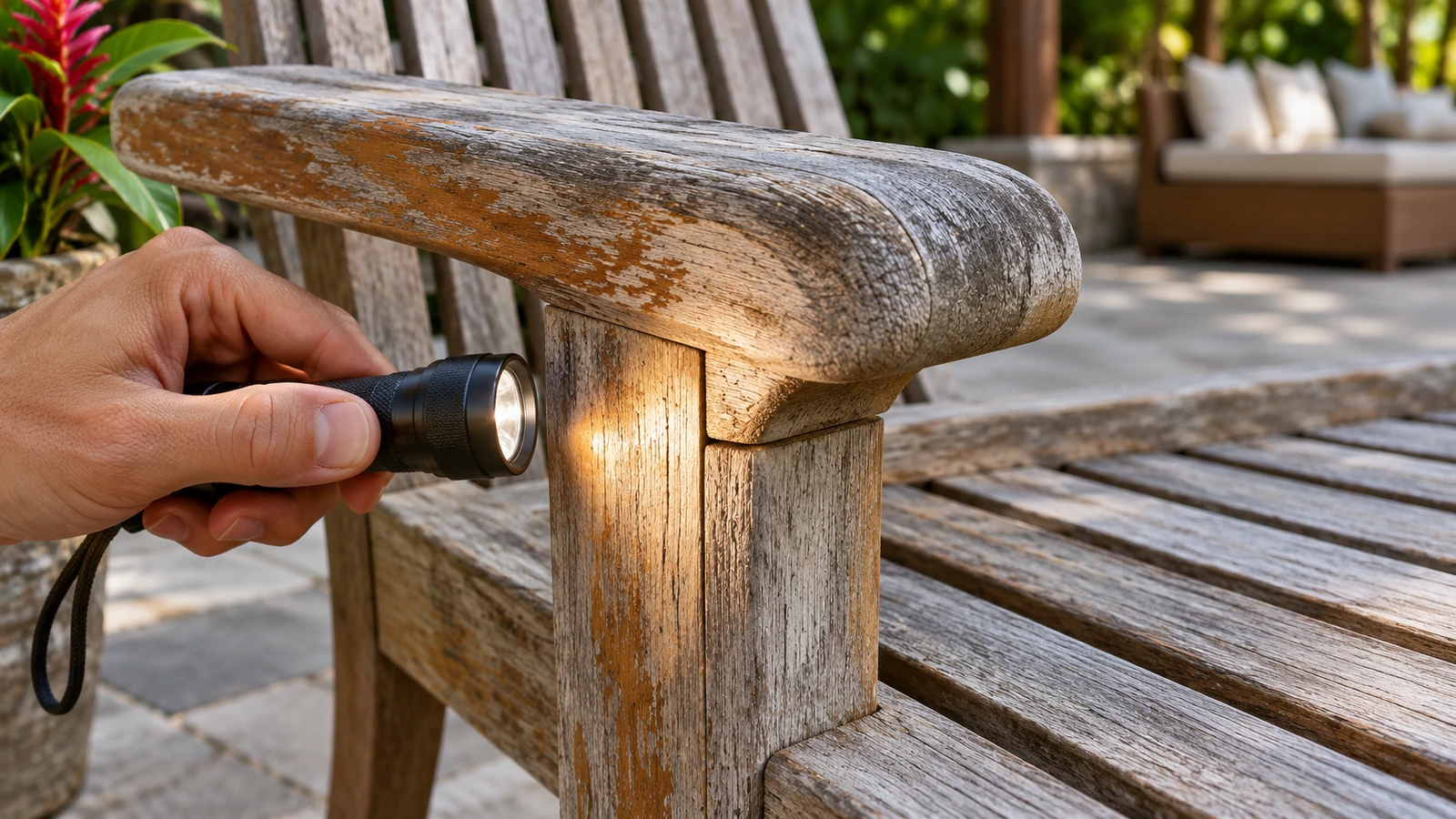
Look for raised fibres, persistent marks, an old coating that is lifting, and damage at connections. Distinguish a cosmetic mark from a crack or movement that affects support. A chair with a loose leg or uncertain structural condition should stay out of guest use while it is assessed. If the furniture may only have a teak face or veneer, identify the construction before considering abrasion; a method suitable for solid timber may remove a thin surface.
Compare the exposed faces with a protected area on the same piece, such as the underside of a top. The contrast can show where weathering is concentrated and where an older treatment may still be present. Use the comparison as a clue and verify it against the maintenance record or supplier guidance. On a slatted seat, check the ends of the slats and their attachments as well as the faces. A finish issue on the surface and a defect at a fixing can coexist, and each needs its own decision.
Choose Between Cleaning, Refinishing and Repair
Choose the least intervention that meets the stated goal. If the surface is sound and the hotel accepts the colour, an approved cleaning method may be enough. If an existing finish has failed, or the property needs a different appearance, evaluate a compatible refinishing system. Where the problem involves a damaged slat, fixing or joint, establish whether that component can be repaired or replaced independently.
- Clean where contamination is the problem and the existing surface is worth retaining.
- Refinish where a surface treatment or appearance must change and the substrate is suitable.
- Seek repair assessment where movement, cracking or part damage affects use or support.
Avoid scheduling sanding, oiling and sealing as automatic consecutive steps. Any preparation and finish need to work as one system for the particular wood and previous treatment. A new finish that looks suitable when first applied may still be inappropriate if it cannot be maintained in the hotel’s setting.
A useful trial starts with the least aggressive approved cleaning method and an assessment after the surface has dried. If the remaining concern is colour, compare the result with the target before considering a more involved treatment. If preparation is required for refinishing, find out what the intended finish needs from the substrate and whether the old treatment has to be removed. Note the effect on edges, joints and nearby materials. For instance, a procedure suitable for a solid teak top can require different handling where teak meets a metal frame or upholstered component.
Test the Restoration on One Representative Piece
Choose an item that represents the material, weathering and old treatment found in the group. Try the approved method on a limited area first and assess the surface after the required drying period. Look at colour, texture, edges and whether a visible transition remains. A wet surface can look richer or more even than it will after drying.
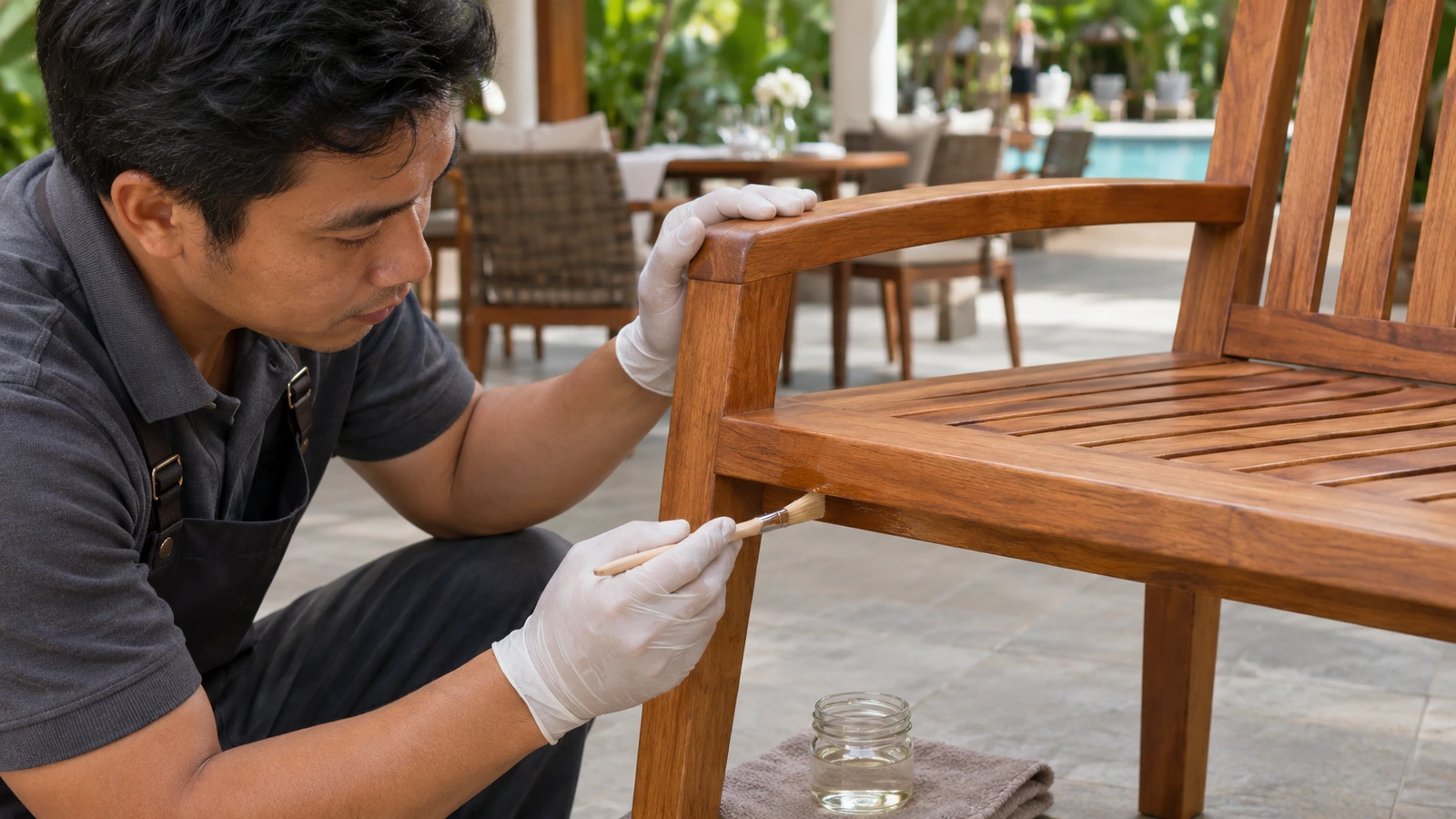
If refinishing is justified, follow the selected system’s preparation, application and cure requirements. Protect joints, adjacent fittings and details that could be altered by aggressive preparation. Stop if the test reveals an unknown coating, fragile edges, unexpected colour change or damage extending beyond the area under review. A successful test should show both an acceptable appearance and a repeatable method.
Record the product, preparation, application conditions and time between stages for the trial piece. Also note how the team will handle the same work on less accessible faces. A result achieved on an easy-to-reach table top may be difficult to reproduce between closely spaced slats. Give the trial time to reach the condition specified for use before approving more pieces. If the test reveals an uneven appearance or impractical turnaround, adjust the scope while only one item is out of service.
Check Colour Consistency Across the Furniture Set
Put the trial piece beside the furniture it will be used with, in the light guests will see. Compare the visible tops, edges and other areas that are read together. A tabletop under a canopy may have weathered differently from matching tables in direct rain. Even identical treatment may therefore produce a different result.
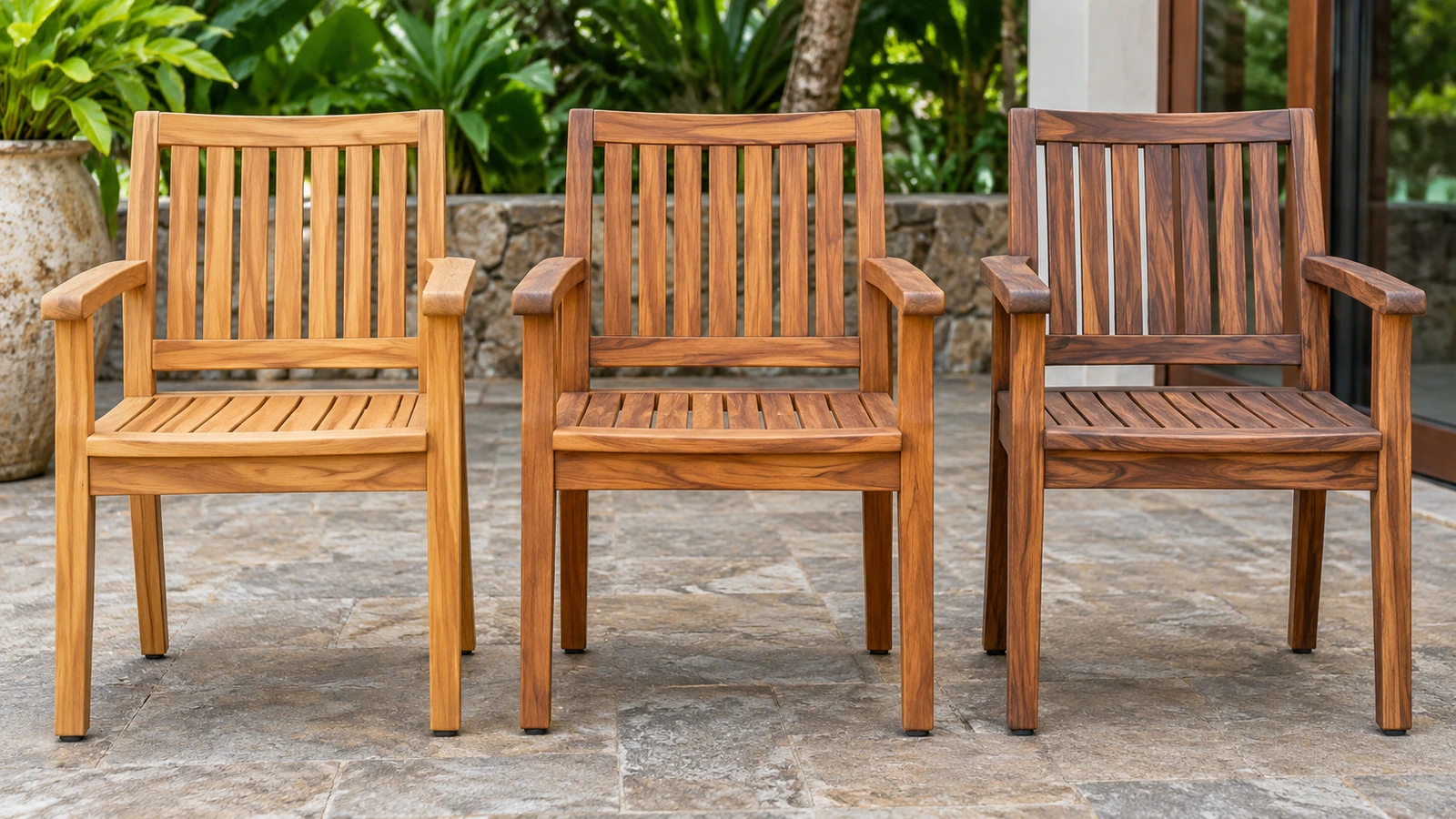
Decide whether to accept some variation, treat a complete visual group or use the refinished piece in a separate area. Record that decision before the work is repeated. Trying to force every chair or table to the same colour through progressively heavier treatment can remove material without solving the visual mismatch.
Keep the comparison group small enough to reflect what guests see together. A lounge cluster may need a close match across four arms and two table tops, while groups at opposite ends of a terrace may tolerate a broader range. Plan the order of work around these groups so a heavily refinished chair is less likely to be returned next to three pieces waiting for treatment. Take a reference photo under similar light each time the work moves from one group to another.
Verify the Finish and Structure Before Reuse
Confirm the surface has reached the condition specified for normal handling and use. A finish that feels dry may not yet be ready for wet exposure, stacking or contact with cushions. Inspect supports, fasteners and adjustments separately from appearance, and obtain suitable assessment for repaired load-bearing components before returning them to guest areas.
Once a piece is fit to return, update its care record to reflect what was actually applied. The hotel teak furniture maintenance guide covers ongoing care after that decision; the revised product and finish instructions should govern the specific furniture.
Check the interfaces that a guest or attendant will touch, including seat edges, arms, the underside of a handhold and corners used to lift a table. Run the appropriate visual and tactile inspection after the prescribed cure or drying period. Where components were removed, confirm the correct pieces are back in their intended positions and record any outstanding issue before handover. If the original complaint was movement at a connection, release should depend on the repair assessment for that connection as well as the appearance of the wood.
Decide Which Pieces Are Worth Keeping
Compare the condition after trial with the effort required to maintain it, the availability of replacement parts and the disruption of taking furniture out of service. A sound table that needs a manageable surface treatment is different from a chair whose support has failed repeatedly. Decisions can be made by item or condition group rather than treating the whole collection as one replacement lot.
Where replacement is justified, compare outdoor seating and tables around the intended use, access to wear parts and the appearance that needs to be maintained. For renewals involving several areas, integrated resort furniture solutions provides a wider furniture planning context. Neither page establishes that an existing item can be restored or that a replacement will exactly match aged timber.
Consider whether the restored piece will fit the property’s next maintenance cycle. A finish that can be maintained with the staff, space and closure window available may be a better fit for a busy terrace than one that requires frequent specialist work. For a large set, compare the cost and downtime of completing a visual group with the cost of selective replacement. Include the time required to source a compatible part or match an adjoining finish, since delays can affect the number of usable seats during the season.
Keep the Outdoor Look With a More Workable Care Routine
A replacement piece can retain the design direction while addressing the parts that caused recurring maintenance. Gainwell can discuss hotel outdoor furniture configurations with finish, appearance and care requirements considered together. A photograph of the existing set and the intended location can help distinguish details worth preserving from those that could change.
For replacement pieces, ask how the timber is supplied, what appearance changes the supplier anticipates and what the approved care method requires from the hotel. It also helps to check how exposed slats and other serviceable parts are attached. A sample can clarify the initial appearance, while the care instructions and parts information help the property judge whether it can maintain that appearance across a season.
Frequently Asked Questions
Can One Refinished Chair Match an Older Set?
It may be close, but the final appearance depends on the timber, prior treatments and how the other pieces have aged. Compare a dry trial with adjacent items in their usual location before deciding whether to refinish one chair or treat a visible group together.
Can a Damaged Teak Slat Be Replaced Separately?
That depends on how the slat is attached and what it supports. Confirm the part, dimensions, attachment and appropriate repair procedure. If the slat is part of the load-bearing structure, have the repair assessed before the item is used again.
Should a Previously Coated Piece Be Treated Like Bare Teak?
No single treatment covers both conditions. Establish whether a coating remains and check compatibility before applying a cleaner or new finish. If the existing system cannot be confirmed, arrange a limited assessment or trial before treating the whole piece.